
Incense Holder Types: A Practical Home Setup Guide
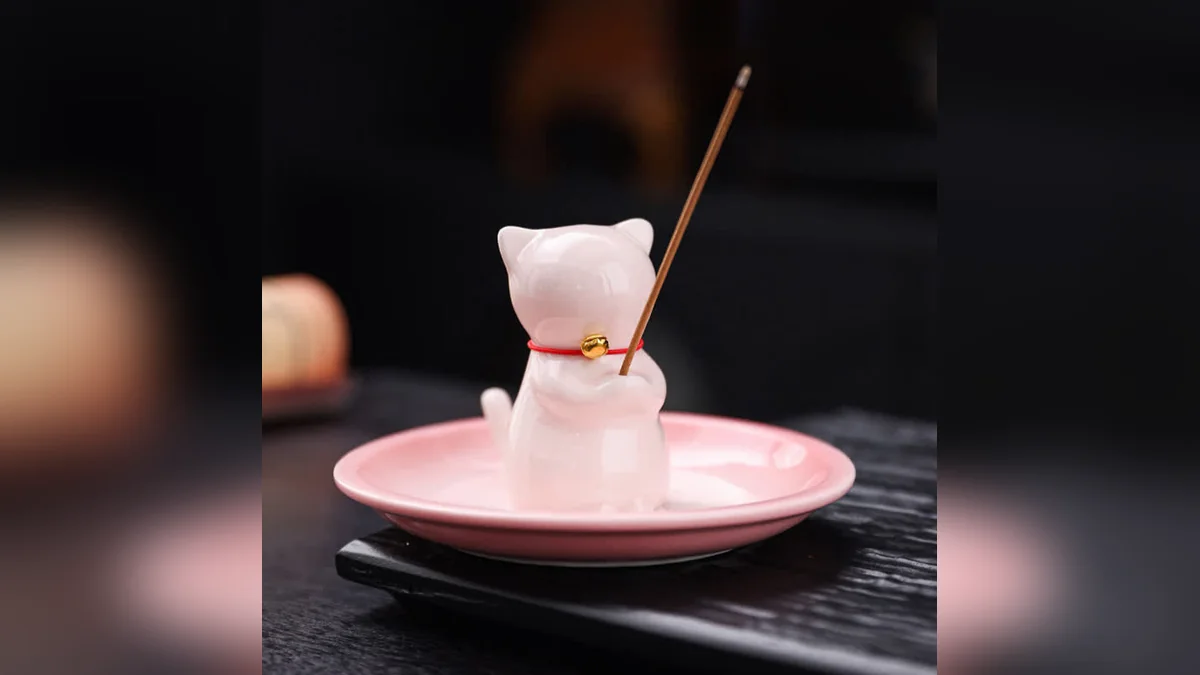
A tray catches falling ash beneath a burning incense stick, keeping it off the surrounding surface. That simple arrangement depends on the right support, enough space, and a secure base. The main incense holder types include stick holders, cone dishes, coil supports, bowl-style burners, and specialized backflow burners. Choose according to the incense format and where its ash will fall.
In Buddhist home altar practice, incense may be placed toward the front as an offering, with arrangements varying by tradition.
Step 1: Match incense holder types to your incense
Start with the incense you intend to burn. Similar-looking holders can provide different kinds of support, and a decorative opening does not establish compatibility.
- Stick holders: A hole or support holds the stick upright or at an angle. The receiving tray needs to cover the area beneath the burning portion.
- Cone dishes: A suitable dish supports a cone on its base and receives the ash as the cone burns down. Confirm that the dish is intended for direct incense burning.
- Coil supports: These suspend or support a coil while allowing clearance around its burning path. Match the support to the coil’s dimensions.
- Bowl-style burners: Their setup depends on the intended incense and any required insert or support. A bowl shape alone does not establish what can burn inside it.
- Backflow burners: These require compatible backflow cones and the correct placement over the burner opening. Our backflow burner setup guide covers that separate arrangement.
Material and appearance are only part of the decision. Check the stated compatibility and package contents before assuming a burner arrives ready for your chosen incense.
Step 2: Reserve a clear, stable burning area
Choose a level, noncombustible, heat-resistant surface with room around the holder. Keep curtains, paper, dried flowers, hanging decorations, and loose clothing away from the burning area. Leave clear space overhead, too; an open shelf can still place combustible material above the ember.
Ventilate the room without directing a fan or strong draft across the incense. Moving air can carry ash beyond a narrow tray. A place beside an open window may therefore need reconsideration even when the holder itself stands securely.
For an altar arrangement, leave enough access to place and remove incense without reaching over candles or other burning offerings. Traditional placement should accommodate practical fire safety. Keep the setup beyond the reach of children and pets, away from table edges and busy walkways.
Step 3: Check support and ash coverage before lighting
Try the fit with unlit incense. A stick should sit securely without being forced into an opening. If it leans unpredictably, slips through, or needs improvised packing to stay in place, choose a compatible support instead.
Next, look at the entire burning portion from above. For an angled stick, the tip can extend well beyond a short holder. Place an additional suitable ash-catching dish beneath the exposed area if necessary, making sure the complete arrangement remains stable.
For cones and coils, follow the incense and burner instructions for seating and clearance. Do not infer compatibility from a photograph or from the number of openings. Keep the first setup simple: one supported piece of incense makes its fit and ash path easier to observe.
Step 4: Attend the burn and reset after cooling
Have the holder fully arranged before lighting incense. For the lighting sequence, consult our instructions on burning incense sticks. Once burning begins, leave the holder in place and remain present.
Watch where ash lands. If it falls outside the receiving area, extinguish the incense before adjusting the arrangement. Avoid lifting or rotating a hot burner to correct its position.
Extinguish incense before leaving the room. Allow the incense remains, ash, and holder to cool completely before handling or disposal. Empty cooled residue carefully, then follow the product’s care instructions. Check for cracks, loose components, or blocked openings before setting up the next burn.
Common setup mistakes to avoid
- Choosing by decoration alone: Confirm incense compatibility before considering color or motif.
- Confusing support with ash collection: A hole can hold a stick while leaving its falling ash outside the base.
- Assuming accessories are included: Read the package contents before planning the setup.
- Filling every opening: Multiple holes do not require multiple burning sticks.
- Putting a holder directly on furniture: Use a suitable heat-resistant, noncombustible surface beneath the arrangement.
- Clearing ash too soon: Wait until the remains and holder are completely cool.
Four Buddha Stones burners to consider for your setup
Our product specifications provide different details for these burners. Use the stated dimensions and package contents to plan your space, and confirm any unstated compatibility before burning incense.
Ceramic Kawaii Cat Incense Burner with Ash Catching Tray is ceramic and explicitly compatible with stick incense. Its size is Approx. 4.84 × 4.84 × 2.60 in / 12.3 × 12.3 × 6.6 cm (L × W × H). Options are Black, Blue, Green, Pink, White, and Yellow. The package contains one burner without incense. Its handmade nature means slight variations in color, shape, and size may occur.
Ceramic Stick Blessing Incense Burner Decoration is categorized as a decoration, ornament, and incense burner. It is ceramic, with a stated size of 22.8*3.6cm. The package contains one incense burner without incense. “Blessing” expresses a traditional wish in the product name; it does not promise a result. Check the fit of your intended incense before use.
Colorful Ceramic Incense Burner uses ceramic and zinc alloy and measures 4*2.9in (10cm*7.3cm). The package contains one burner without incense or an incense holder. Account for those exclusions when preparing your setup, and verify which support your intended incense requires.
Creative Six-hole Lotus Incense Burner is alloy and measures 3.5*0.5in (8.8cm*1.3cm). Its package contains one burner without incense or an incense holder. Before use, confirm compatibility and check that the receiving area beneath your incense will catch falling ash.
FAQ
Can one holder work with both sticks and cones?
Some designs accommodate more than one format, but compatibility needs to be stated for the particular burner. A stick opening does not establish that the surrounding surface can support a burning cone. Check instructions and required accessories for each intended format.
Does incense have to stand in the center of an altar?
Placement varies across Buddhist traditions and household arrangements. Incense commonly occupies a position in front of devotional objects, but there is no single layout for every home. Follow your tradition while keeping clear access and sufficient distance from combustible objects.
Why does ash fall outside a holder that fits the stick?
The support may fit while the tray is too short for the stick’s angle or length. Drafts can also move falling ash. Check the unlit stick’s position above the receiving area, then adjust the setup only after extinguishing the incense and allowing everything to cool.
Shop the story
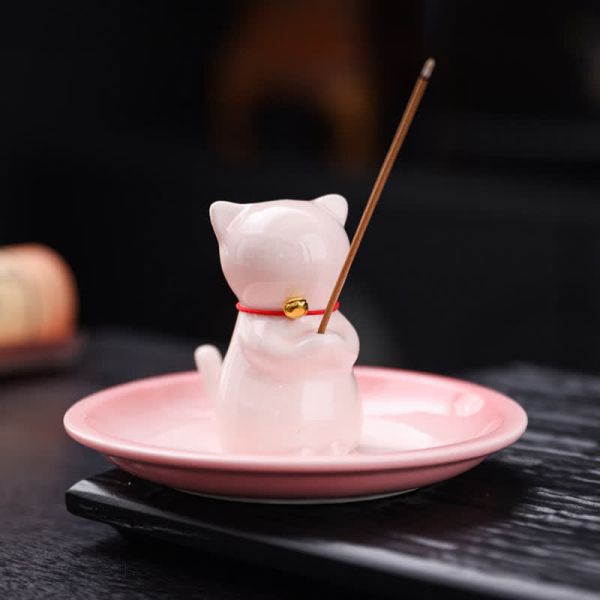 Buddha Stones Ceramic Kawaii Cat Incense Burner with Ash Catching Tray Without IncenseAs low as $53.59 Regular Price $75.48
 Buddha Stones Ceramic Stick Blessing Incense Burner DecorationSpecial Price $39.59 Regular Price $54.99
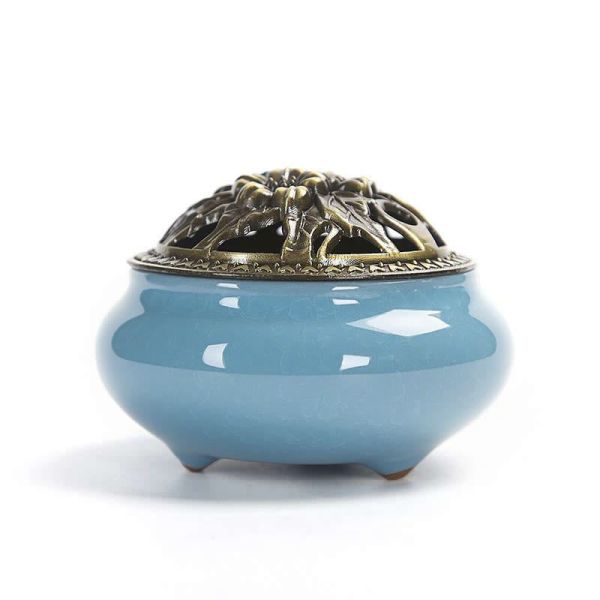 Buddha Stones Colorful Ceramic Incense BurnerAs low as $23.59 Regular Price $31.45
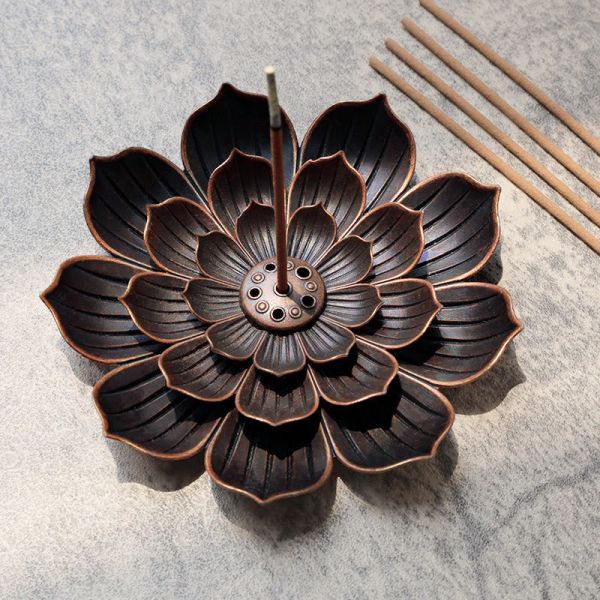 Buddha Stones Creative Six-hole Lotus Incense BurnerSpecial Price $19.59 Regular Price $26.12