
How to Wear Rings: Fit, Finger Choice, and Pairing
A ring can slide onto a finger easily yet crowd the neighboring finger when you close your hand. That simple fitting check matters more than copying a photograph. Learning how to wear rings means choosing a finger, checking the fit during ordinary movements, and arranging other jewelry so the pieces work together.
Start with these questions
- What will your hands be doing? Typing, handling fabric, or carrying bags may influence the placement and profile you prefer.
- Which finger has room? Consider both the band and any wider decorative part, including clearance beside neighboring fingers.
- Are you choosing one focal piece or several? Decide which ring should draw attention before adding another.
- Does the ring carry personal or religious meaning? Choose a symbol with an understanding of its associations, rather than assigning it a universal meaning.
- Will a bracelet complete the arrangement? A wrist accent can add color without requiring another ring.
How to wear rings on different fingers
Begin with the finger where the ring fits properly. A preferred look cannot compensate for a band that slips off or needs force to remove. The same finger on your other hand may need a different size, so do not assume a ring can move freely between hands.
The index finger puts a design in a prominent position, but check its clearance from the thumb when gripping an object. A middle-finger ring sits near the center of the hand; a broad design there needs space on both sides. A ring on the little finger should stay in place when your hand hangs naturally.
Ring-finger customs vary by culture, religion, and personal practice. Wedding and engagement jewelry may guide your arrangement, but decorative rings have no single required hand. If a symbol has religious significance, learn its context before choosing it as a decorative motif.
For multiple rings, try separate fingers before stacking bands together. Leave enough space for bending, and avoid arrangements in which raised details repeatedly knock against another ring.
Choose materials and color separately
Read the material specification before deciding from a photograph or color option. Our featured rings use either 925 Sterling Silver or Titanium Steel, as specified below. Gold and Silver option names should not be read as additional statements about metal composition or surface treatment.
Matching metal colors creates a consistent look, while mixing them is also a valid styling choice. Repeat one color elsewhere, such as in a bracelet detail, if you want a connection between pieces. Start with the jewelry you intend to keep in the arrangement, then judge additions beside it.
Check size, width, and fit together
A ring should pass the knuckle with gentle resistance and sit securely at the base of the finger. It should also come off without force. Check the fit with your hand open, loosely closed, and resting around an everyday object. If neighboring fingers cannot settle naturally, reconsider the placement or design.
Band width, decorative dimensions, and ring size describe different things. A measurement attached to a hexagram detail is not a finger circumference or a US ring size. Compare equivalent specifications when shopping; do not compare one ring’s band width with another ring’s decorative measurement as though they describe the same feature.
An adjustable size does not establish an unlimited fitting range. Avoid repeatedly bending a band to move it between fingers, and do not force an adjustment when the method or limits are unclear. For a separate measuring walkthrough, use our ring size guide before selecting a fixed size.
Build care into your wearing routine
Put rings on after lotions and other cosmetics have dried. Remove them before washing, swimming, cleaning, cooking, or tasks that could catch or scrape the jewelry. Keep a designated dish or pouch nearby so taking a ring off does not mean leaving it on a sink edge.
For routine care, gently wipe away surface marks with a clean, soft cloth. Do not assume a cleaning product suits a ring simply because it works on another metal. Avoid abrasive cleaners, and check care instructions before using a soak, dip, or polishing compound.
Keep pieces dry and separated in individual compartments or pouches so they do not rub together. Our silver jewelry cleaning guide covers silver care in more detail. Treat a movable detail gently; do not force it if it stops moving freely.
Compare our rings and a bracelet pairing
Use the specifications below to narrow your choices. Words such as “Lucky,” “Blessing,” and “Protection” in product names express traditional wishes only. They provide no guarantee of luck, protection, or a particular result.
An adjustable silver ring
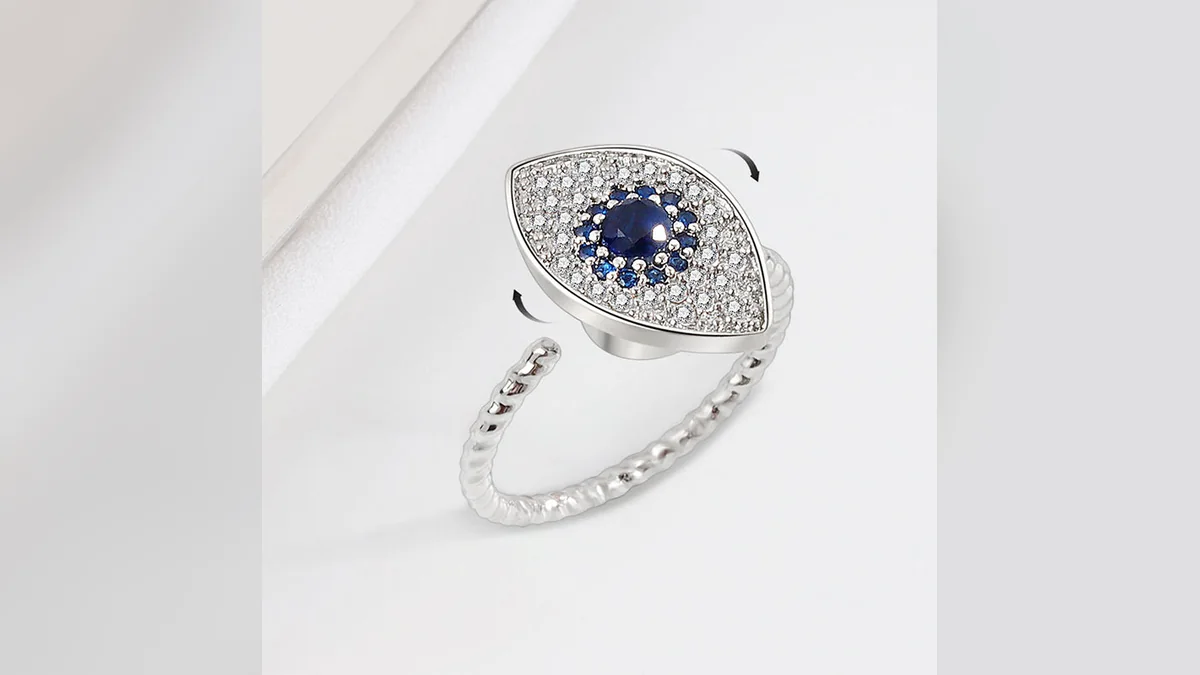
Our 925 Sterling Silver Evil Eye Rotatable Ring has an Adjustable size, a Ring Width of 14.5mm, and a Weight of 1.95g. Its material is 925 Sterling Silver, with Gold and Silver options. Consider the stated width when deciding how much space to leave beside it; the adjustable description does not specify a size range.
A 22mm hexagram option
The Buddha Stones 12 Constellations of the Zodiac Ring uses Titanium Steel. Its specifications give Size: 22mm (Hexagram) and Weight: 20g. Options include Gold, Silver, US7, US8, US9, US10, US11, and US12. Choose your finger size separately from the hexagram measurement.
An 18mm hexagram option
Our Buddha Stones 12 Constellations of the Zodiac Star of David Ring has Material: Titanium Steel, Size: 18mm (Hexagram), and Weight: 14g. Gold, Silver, US7, US8, US9, US10, US11, and US12 are among its options. Compare its stated dimensions and weight with the preceding ring when deciding between them.
A red accent at the wrist
The Buddha Stones 12 Chinese Zodiac Red String Bracelet combines 925 Sterling Silver and Red String. Its Perimeter is 14+3.5cm, and it is Unisex. Options include Dog, Dragon, Goat, Horse, Monkey, Ox, Pig, and Rabbit. Pairing a ring with a bracelet lets you add a different color at the wrist while keeping the fingers less crowded.
FAQ
How many rings should I wear at once?
There is no required number. Start with one and add another only if your fingers still bend freely and the pieces do not collide. A single broad design may already provide the amount of detail you want.
Can I wear a silver-colored ring with a gold-colored ring?
Yes. Check the arrangement as a whole: spacing and proportion matter more than matching every color. Keep one ring as the focal piece, then use the other as a quieter accent if their designs compete.
Should a decorative ring face me or face outward?
Choose the direction that makes sense for the design and its use. Outward-facing lettering is easier for someone opposite you to read; inward-facing lettering is easier for you to read. Check that the chosen direction leaves the ring sitting comfortably.
Shop the story
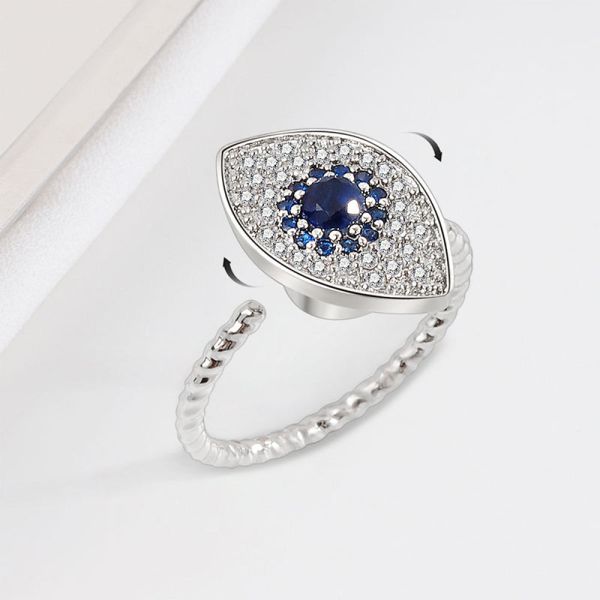 925 Sterling Silver Evil Eye Protection Blessing Rotatable RingAs low as $55.59 Regular Price $74.12
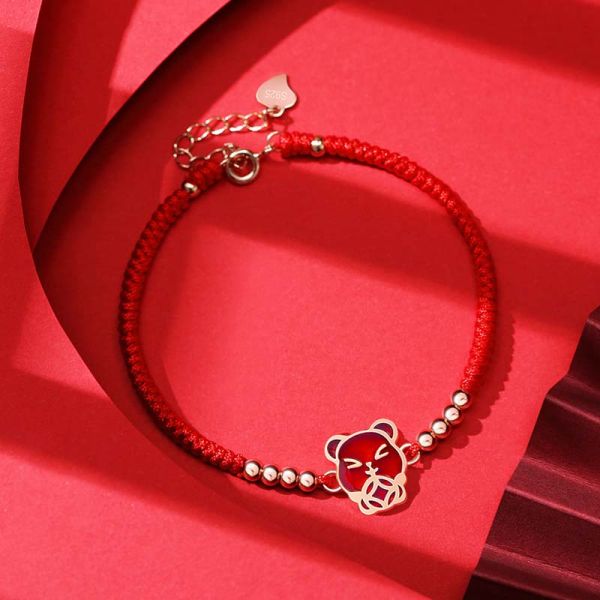 Buddha Stones 12 Chinese Zodiac Lucky Red String BraceletAs low as $55.59 Regular Price $76.15
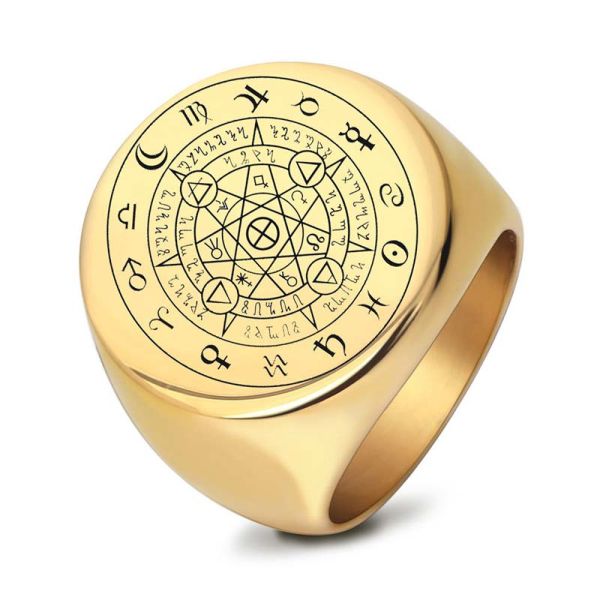 Buddha Stones 12 Constellations of the Zodiac Protection Blessing RingAs low as $22.59 Regular Price $31.38
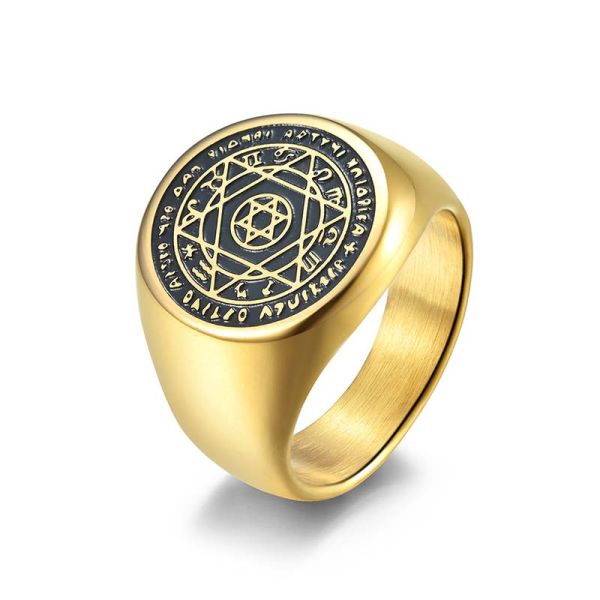 Buddha Stones 12 Constellations of the Zodiac Star of David Protection RingAs low as $22.59 Regular Price $31.82