
How to Wear a Men's Scarf: Five Practical Styles
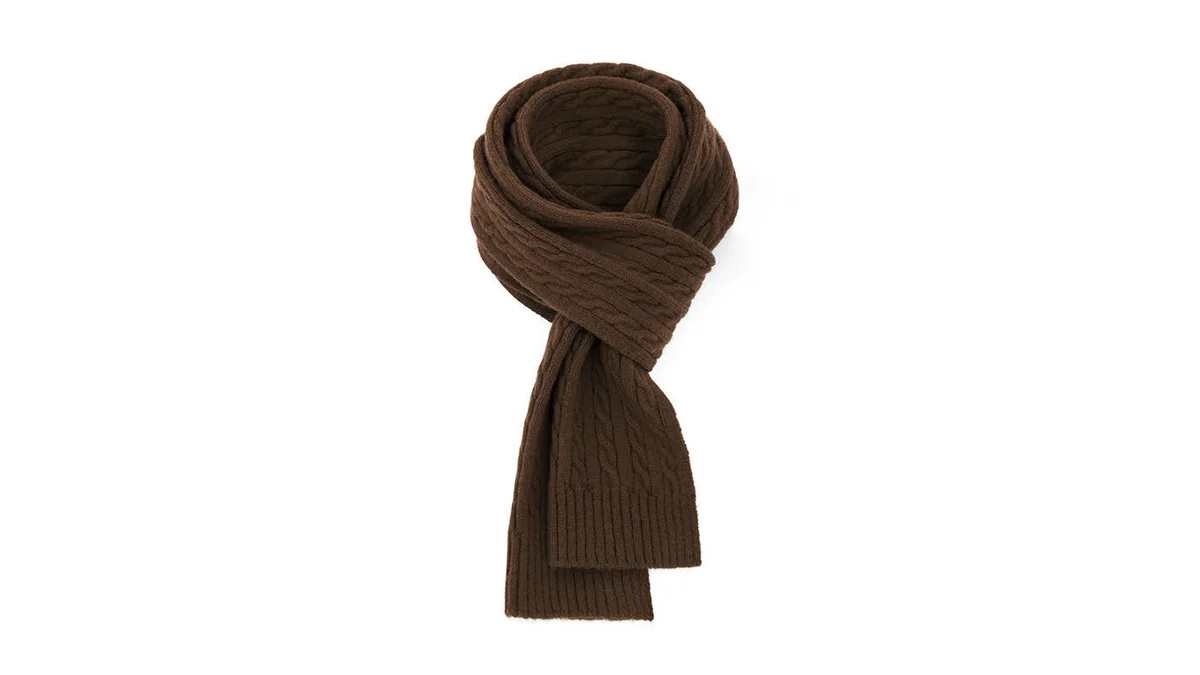
The length of your scarf decides which knots will work. Learning how to wear a men's scarf starts with five options: a simple drape, a once-around loop, a folded Parisian loop, a four-in-hand knot, or a wide wrap. Choose among them by length, thickness, and the collar of your coat. We suggest starting with the least complicated arrangement that fits your outfit, then checking that the ends sit neatly before you leave.
How to wear a men's scarf: length, width, and fabric
Around 170-180 cm of length is enough for most knots, though the result depends on fabric thickness and how loosely you tie it. Folding a scarf in half uses up length before you begin; wrapping it around your neck does too. If the ends barely reach through a loop, switch to a drape or once-around instead of pulling harder.
Width changes the shape around your collar. A narrower scarf is easier to arrange inside coat lapels. Wider, longer pieces can spread across your shoulders as a wrap over a coat, or fold lengthwise for a less expansive neck loop. Keep the folds loose so they lie together without becoming a stiff roll.
Thick knits suit simple loops because extra crossings create bulk. Thinner woven fabrics generally knot more neatly. Material names alone do not tell you how bulky a knot will be, so consider the fabric's construction as well. With a high coat collar, leave room for the scarf; with open lapels, arrange the ends down the front. Tuck loose ends inside your coat for wind.
Five ways to wear it
Put on your coat before making the final adjustments. A knot that looks proportionate over a shirt may sit differently once the collar and lapels surround it. Keep any arrangement loose enough to turn your head freely.
The simple drape
The drape leaves the scarf untied and shows its full length down the front. It works particularly well between open lapels, where the coat gives the ends a clear place to sit.
- Place the center of the scarf behind your neck.
- Bring both ends forward and adjust them to roughly equal lengths.
- Lay the ends flat along your chest, inside or outside the coat opening.
If one side keeps bunching, lift the scarf off your collar and reset the center. A small difference between the ends is fine; there is no need to make them perfectly level.
The once-around
This method adds one turn around the neck while leaving both ends in front. It is a useful starting point for a thick knit that would form a bulky folded knot.
- Drape the scarf around your neck with one end longer than the other.
- Take the longer end across the front, around the back of your neck, and forward again.
- Ease the loop away from your throat and adjust the hanging ends.
Keep the turn broad rather than twisting it into a rope. If the tails look too short, loosen the loop or return to the simple drape.
The Parisian, or European, loop
The Parisian loop gathers both ends through one fold. It gives the front a compact shape, but doubling the fabric makes thick scarves more substantial at the collar.
- Fold the scarf in half by bringing its two ends together.
- Drape the folded scarf behind your neck, with the folded loop on one side and both ends on the other.
- Pass both ends through the loop, then slide it upward gently.
Stop tightening while the fold still has some room. Spread the ends below the loop so they sit side by side instead of forming one thick bundle.
The four-in-hand knot
This interwoven scarf knot uses a twisted folded loop. Choose enough length to thread the ends separately, and favor a less bulky fabric so the crossings remain manageable.
- Fold the scarf in half and drape it behind your neck, leaving the loop on one side.
- Pull just one loose end through the loop.
- Twist the remaining loop once to create a second opening below the first crossing.
- Pass the other loose end through that opening, then gently arrange the knot and tails.
Keep the first end loose while threading the second. If either tail disappears into the knot, undo it and choose a simpler method; extra tightening will not create more usable length.
The over-the-shoulder wrap for wide scarves
A wide scarf can cover the shoulders without concentrating all its fabric at the neck. Leave it open across the back to make use of its width over a coat.
- Open the scarf and place its center across your upper back and shoulders.
- Let both ends fall forward, keeping one slightly longer.
- Bring the longer end across your chest and lay it over the opposite shoulder.
- Spread the fabric across that shoulder and check that the coat collar sits comfortably beneath it.
Keep the fold broad enough to stay on the shoulder. For more ways to arrange wider pieces, our shawl styling guide covers shoulder-based folds and wraps.
Our scarves: match the size to the method
These pairings use the stated dimensions as a starting point. The two wider options have shawl as their item type on our product pages, so their width is especially relevant when choosing a wrap. Dimensions are approximate.
| Product | Material and stated size | Methods to start with |
|---|---|---|
| Fall Winter Classic Cable Knit Cozy Men's Scarf | Polyester; approx. 170 cm × 24 cm / 66.9 in × 9.4 in | Simple drape or once-around. The narrower width suits arranging the ends inside a coat; keep the cable knit in a simple loop. |
| Fall Winter Reversible Plaid Tassel Classic Men's Scarf | Polyester; approx. 180 cm × 30 cm / 70.8 in × 11.8 in | Drape, once-around, or Parisian loop. Try the four-in-hand if the folded fabric leaves enough length for both tails. |
| Fall Winter Geometric Paisley Tassel Reversible Cozy Men's Scarf | Polyester; approx. 25.6 in × 77.0 in / 65 × 195 cm | Over-the-shoulder wrap, or a once-around with the width folded loosely. Its shawl dimensions give you room to spread it over a coat. |
| Spring Fall Crinkled Frayed Edge Wrap Men's Scarf | Viscose; approx. 78.7 in × 29.5 in / 200 × 75 cm | Over-the-shoulder wrap or loose drape. Fold the width before trying a once-around; leave room for the gathered fabric. |
Care after wearing
Our product pages recommend gentle washing or hand washing. Avoid harsh detergents, prolonged soaking, and high heat. Undo knots before washing so the folded sections can open out, and handle tassels or frayed edges gently.
Lay flat or hang to dry as appropriate. A flat drying surface can support a wet knit without leaving its weight hanging from one point. Let the scarf dry completely before folding it away in a clean, dry place. For the next wear, open the folds fully before choosing your knot so yesterday's arrangement does not dictate today's shape.
Shop the story
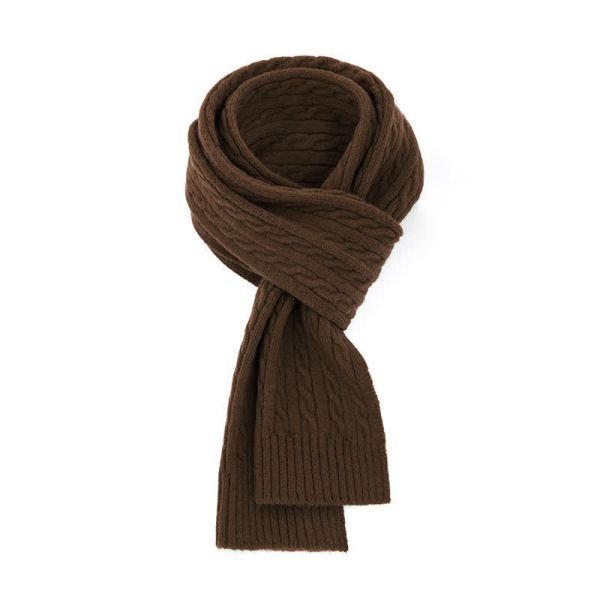 Buddha Stones Fall Winter Classic Cable Knit Cozy Men's ScarfAs low as $31.59 Regular Price $44.49
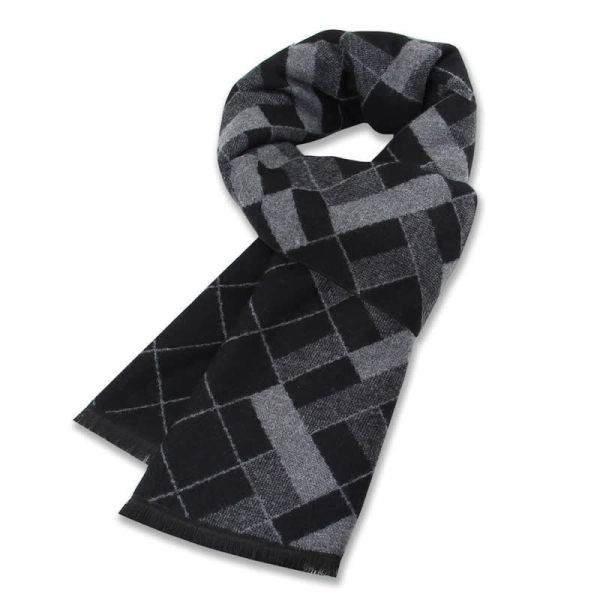 Buddha Stones Fall Winter Reversible Plaid Tassel Classic Men's ScarfAs low as $23.59 Regular Price $33.23
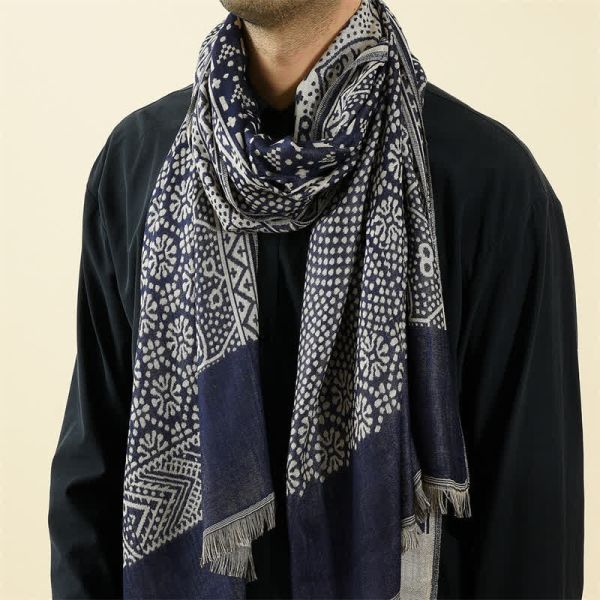 Buddha Stones Fall Winter Geometric Paisley Tassel Reversible Cozy Men's ScarfAs low as $23.59 Regular Price $31.45
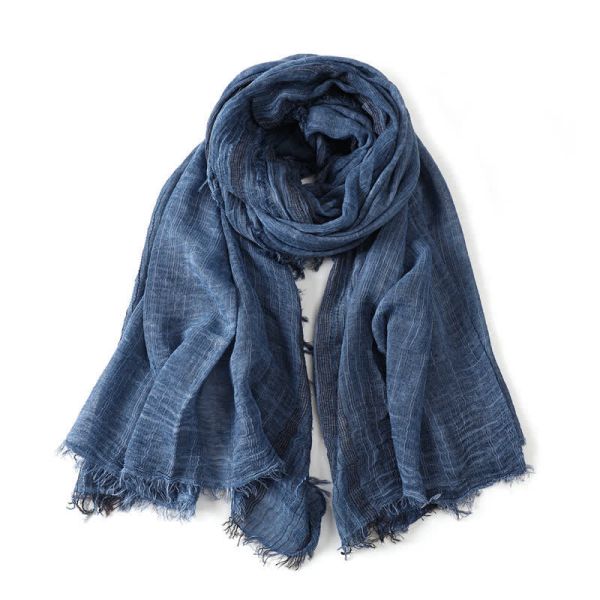 Buddha Stones Spring Fall Crinkled Frayed Edge Wrap Men's ScarfAs low as $19.59 Regular Price $27.59