
How to Wear a Shawl: Seven Drapes for Each Shape
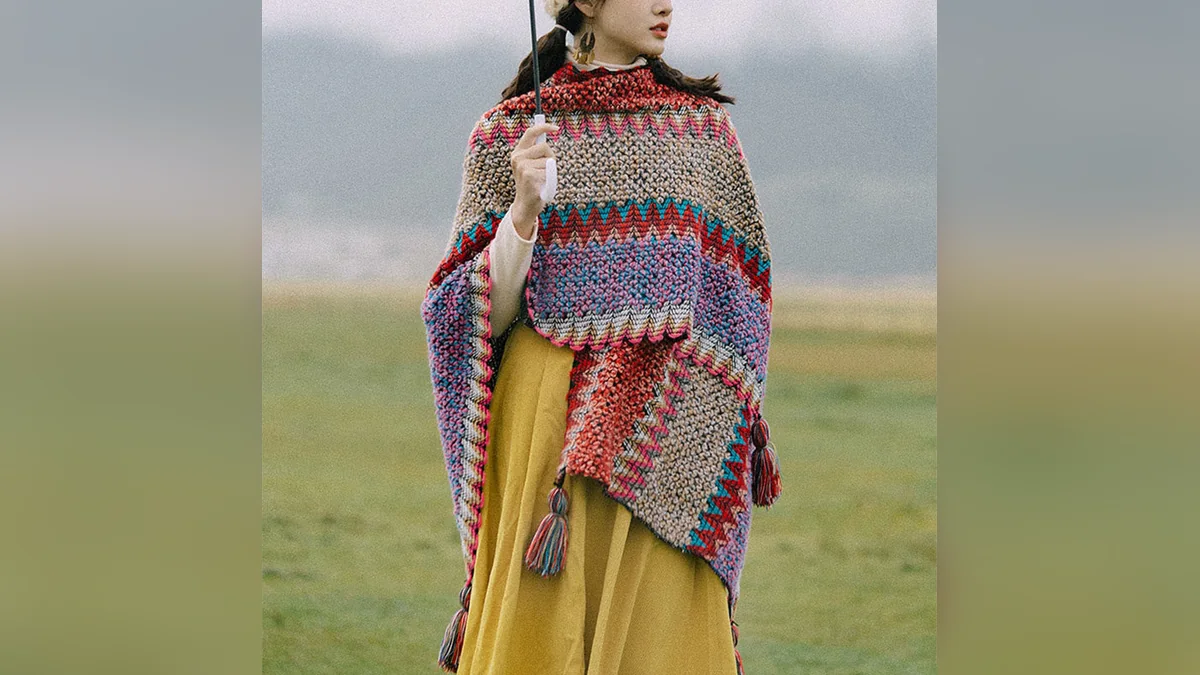
Shape decides more than pattern when you choose a shawl drape. Learning how to wear a shawl starts with its size and outline: a broad, near-square piece gives you corners to fold and overlap, while a long rectangle gives you ends to loop or throw over a shoulder. The same print can look quite different with its borders hanging vertically or its center folded into a triangle. At Buddha Stones, we suggest reading the dimensions before choosing a fold.
Square or long: read the size first
Large, near-square shawls around 130 × 150 cm lend themselves to triangle folds and broad wraps. The sides do not have to match exactly. Folding one corner toward the opposite corner creates a long upper edge, with a point below it and two ends you can bring forward. A slight mismatch between edges can remain visible as a layered border.
Long rectangles around 170–200 × 65–70 cm work as scarves and stoles. Their length gives you room for a front loop or an end thrown across the back, while their narrower width is easier to gather. Before starting, spread the shawl out and identify its long edges, short ends, and tassels. Keep those tassels outside knots and fastenings so they hang separately from the folded fabric.
How to wear a shawl: seven drapes
Drape 1: The open drape
Find the center of a long edge and place it behind your neck, letting the fabric spread across both shoulders. Bring the two ends forward, then adjust them until the borders hang at a similar height. Leave the front open and spread the back with your hands so the pattern lies across the fabric without a central twist. For a broad shawl, fold the upper edge down once if you want less fabric showing at the back.
Best shape: A long rectangular shawl for a stole effect, or a large near-square shawl for a wider back panel.
Drape 2: The one-shoulder throw
Begin with the shawl across both shoulders, leaving one end longer than the other at the front. Lift the longer end and lay it across the opposite shoulder, allowing its corner to fall down your back. Spread the crossing section so its border follows a clear diagonal instead of bunching into a rope. Adjust the shorter end to show a strip of pattern below the crossing fold.
Best shape: A long rectangle gives you an end to throw; a large near-square shawl works after a diagonal fold.
Drape 3: The triangle fold
Lay a large near-square shawl flat and bring one corner toward the opposite corner to form a triangle. Place the long folded edge across your shoulders with the point centered at your back. Bring the two side corners forward and let them hang, checking that the back point sits beneath the center of the fold. Leave the ends open so the triangular outline remains visible.
Best shape: A large square or near-square shawl, with enough width to keep the back point distinct.
Drape 4: The belted wrap
Drape the shawl evenly over a coat or sweater, with both ends hanging down the front. Smooth each front panel, then fasten a belt over those panels at your waist while leaving the back loose. Draw a little fabric above the belt if you prefer a softer fold, keeping tassels below the fastening. Check that the two front borders hang straight before arranging any overlapping edges.
Best shape: A long rectangle for two narrow panels, or a large near-square shawl for broader coverage over the garment.
Drape 5: The front-loop scarf knot
Fold a long shawl lengthwise into a narrower band, then fold it in half end to end. Place the doubled band behind your neck, with the loop on one side and both loose ends on the other. Pass the ends through the loop and draw them down, leaving the fold loose enough to reposition easily. Separate the ends with your fingers so the tassels hang free rather than catching inside the loop.
Best shape: A long rectangular shawl; a large square creates a much bulkier loop.
Drape 6: The poncho-style pullover
Choose a shawl constructed as a pullover with an existing head opening, and identify the front before putting it on. Pass your head through that opening, then let the fabric fall across both shoulders. Arrange the front and back panels so the borders hang without twisting, and separate any tassels caught beneath a fold. Reserve this method for a pullover design; a flat shawl needs a different drape.
Best shape: A broad, near-square pullover construction with a head opening, rather than a standard long rectangle.
Drape 7: The brooch-pinned cape
Spread the shawl over both shoulders and bring its upper front corners together just below the neckline. Overlap those corners slightly, leaving the rest of the front open like a cape. Fasten a brooch through the overlapping layers, placing its pin between knit loops where possible and avoiding tassels. Release the fabric gently and check that the fastening holds without pulling the surrounding stitches out of shape.
Best shape: A large square or near-square shawl makes a broad cape; a long rectangle makes a shallower shoulder covering.
Tibetan-pattern shawls
Geometric diamonds, stripes, and tassels are common design elements in Tibetan-style textiles. Here, we use Tibetan-style to describe the design, without making a claim about where a shawl was made. Folding changes how much of a motif you see: an open drape displays a broad section, while a scarf loop reveals smaller bands.
Our Tibetan Shawl Striped Diamond Pattern is 50% acrylic and 50% polyester, measures 130 × 150 cm, weighs 450 g, and comes in six color combinations.
The Tibetan Tassel Cloak Shawl lists red cardigan and red pullover styles. Its composition is 60% nylon, 25% polyester, and 15% cotton; listed sizes are 70 × 50 cm and 98 × 128 cm, with listed weights of 340 g and 480 g.
For a long rectangle, our polyester Tibetan Flower Branch Tassel Shawl comes in five colors. It measures 180 × 65 cm and weighs about 380 g, except khaki, which measures 200 × 65 cm and weighs about 350 g.
The polyester Tibetan Cashew Flower Vine Print Tassels Shawl comes in five colors, with a listed length of 170–185 cm and width of 69–70 cm. Jewelry and other accessories shown in its photos are not included.
Care for synthetic knits and tassels
Follow the care label first, including any instructions that differ from general advice for synthetic knits. Where washing is permitted, use a gentle cold wash or hand wash as directed. Remove a brooch before washing and unfold any knots so the fabric can be handled evenly.
Avoid wringing the shawl. Press out excess water gently, reshape the edges, and lay it flat to dry, supporting the whole piece rather than hanging it by its corners. Arrange tassels separately while the fabric is flat, and ease apart tangles with your fingers instead of pulling through a knot. Once dry, fold the shawl loosely with the tassels laid straight.
Start with the shape, choose one fold, and adjust the edges. A clear outline lets the pattern and tassels remain part of the drape.
Shop the story
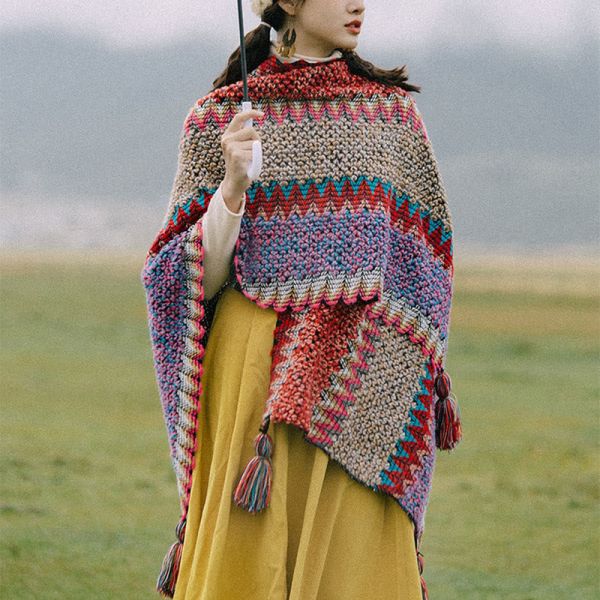 Buddha Stones Tibetan Shawl Warm Cloak Tibetan Tassel ScarfAs low as $33.59 Regular Price $44.79
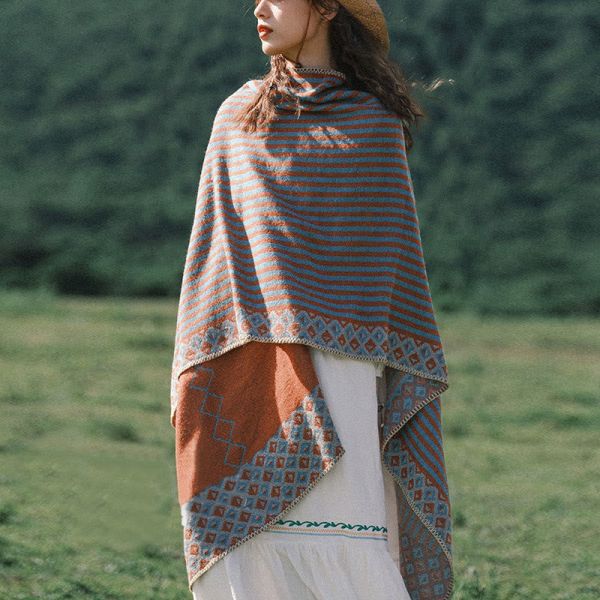 Buddha Stones Tibetan Shawl Striped Diamond Pattern Winter Warm Soft ScarfAs low as $43.59 Regular Price $59.71
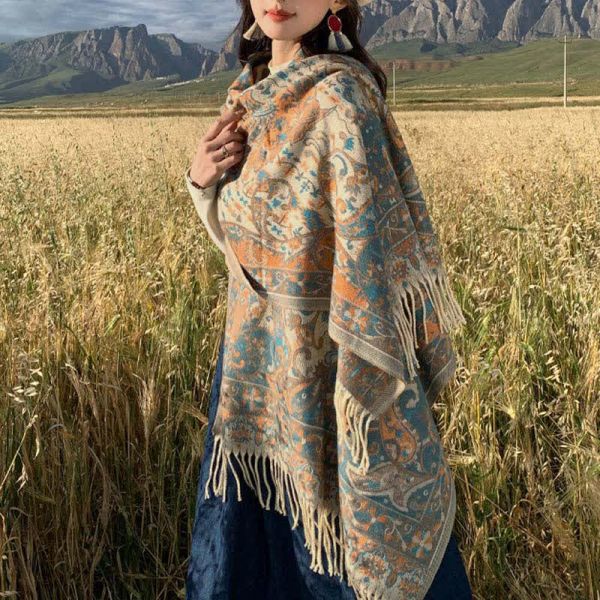 Buddha Stones Tibetan Flower Branch Tassel Shawl Cozy Travel Scarf WrapAs low as $41.59 Regular Price $55.45
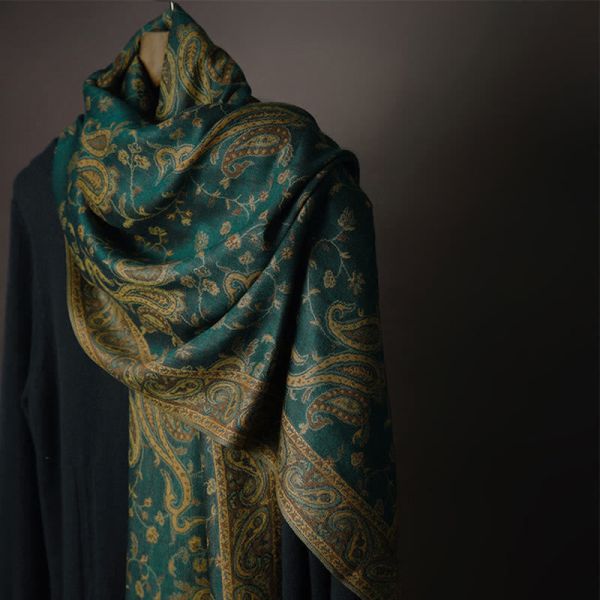 Buddha Stones Tibetan Cashew Flower Vine Print Tassels Shawl Fall Winter Soft Scarf WrapAs low as $22.59 Regular Price $30.53