
How to Choose a Shawl Size for the Coverage You Want
A shawl can cover both shoulders yet leave too little fabric for the ends to overlap. Knowing how to choose a shawl size starts with two measurements: length for wrapping and overlap, and width for coverage down your back and arms. Compare those measurements with your intended use and the clothing underneath.
Start with these questions
- Where do you want coverage? Choose between a narrow layer around your neck, coverage across your shoulders, or a wrap that reaches farther down your back.
- How will you secure it? Loose ends need enough length to hang where you want them; overlapping or tying the ends uses additional fabric.
- What will sit underneath? A coat or bulky sweater takes up more room than a thin shirt, so assess dimensions over the intended layer.
- Will you wear it mainly standing or sitting? Consider where the ends will fall near chair arms, a desk, or your lap.
- Do you want one main use or several? Prioritize your usual use, then check whether the same dimensions can accommodate a second arrangement.
How to choose a shawl size by length and width
Length determines how much fabric can travel around you. For a rectangular shawl, the long edge generally runs across your shoulders, leaving the ends in front. Bringing an end across your chest or around your neck uses some of that length. A measurement that works for an open drape may leave insufficient overlap for another arrangement.
Width determines the depth of coverage. More length cannot compensate for a narrow strip that stops above the area you want covered. Decide where the upper edge will sit, then measure down to your preferred lower edge. Check sleeve and elbow coverage separately if those matter to you.
Read both dimensions together. A long, narrow scarf and a shorter, broader shawl can serve different purposes even when their names sound similar. Check whether measurements describe the fabric itself and whether tassels are included. If that detail is unavailable, avoid relying on the outermost fringe for essential coverage.
Keep your comparison in one unit system. Switching between inches and centimeters can make small differences harder to judge.
Use material as a second decision
Fiber content helps you compare fabrics, but it does not establish fit. Polyester, rayon, and blends can appear in different fabric constructions. Thickness, texture, and construction also influence how much space folded layers occupy and how the fabric hangs.
Choose the dimensions first, then consider the care requirements and fabric description. Do not assume that a larger shawl will pack into less space because of its material name, or that a particular fiber guarantees a certain feel. Product photographs can help show the outline, but they cannot replace measurements.
For a blend, retain the full composition when comparing options. A rayon and acrylic blend should not be treated as interchangeable with a rayon item simply because both contain rayon.
Check the fit before settling on a size
Use a scarf or piece of fabric you already own as a measuring reference. Lay it flat, record its dimensions, and arrange it over the type of clothing you plan to wear. Identify what you would change: more overlap, a lower back edge, or less fabric at the neck.
Without a suitable reference, use a flexible tape to estimate the route across your shoulders and down the front. Let it follow the clothing rather than pulling it tight. Measure the desired back coverage separately. This gives you a starting point, not an exact prediction of drape.
Check movement as well as appearance: reach forward, bend your elbows, and sit down. Note whether the upper edge slips or the ends interfere with your hands. For arrangement ideas after choosing dimensions, our guide to wearing a shawl covers that next step.
Keep the chosen dimensions through careful care
Read the care label before washing; fiber content alone is not a complete washing instruction. Avoid guessing about machine settings, drying methods, or ironing temperatures. If instructions are missing, clarify them before cleaning the item.
Measure a shawl flat without stretching it when checking its size. Pulling the corners taut can distort the comparison. Support the fabric during handling, and keep tassels free of knots rather than tugging them apart.
Fold for storage without forcing the shawl into a crowded space. Keep it away from exposed hooks or rough edges that could catch the fabric. Care cannot make an unsuitable size fit, so choose sufficient coverage at the start.
Compare these Buddha Stones dimensions
Our product measurements below offer distinct proportions to compare with your coverage needs. Use the stated dimensions rather than the words “scarf” or “shawl” alone.
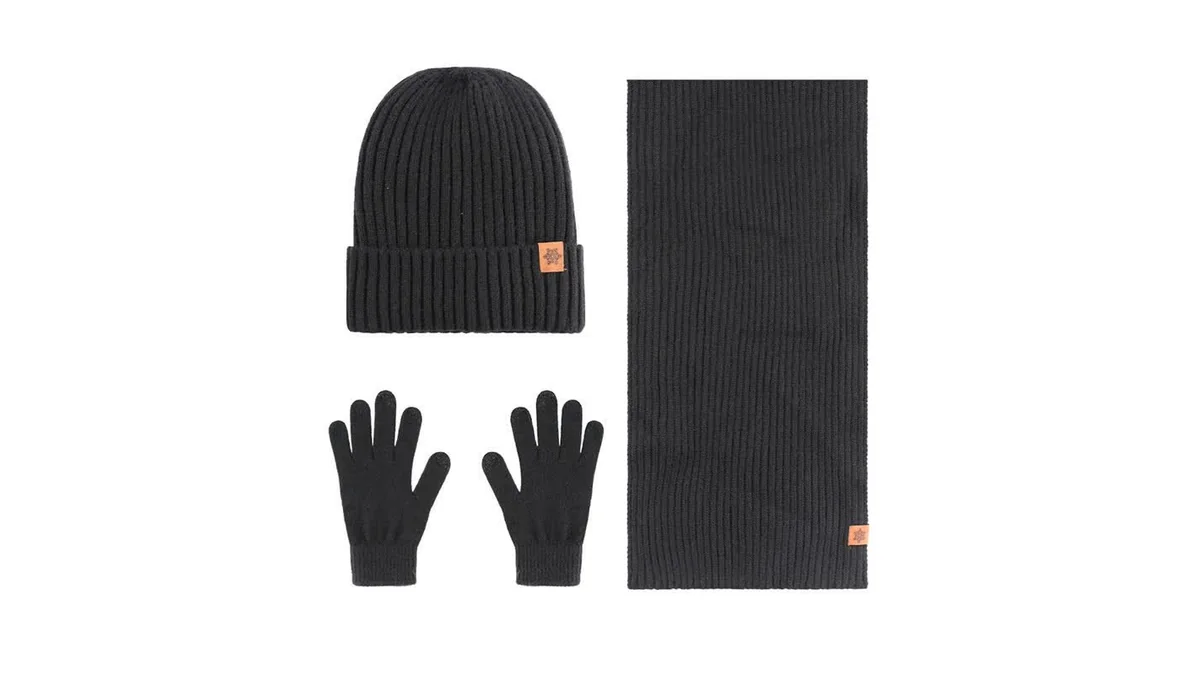
The Buddha Stones Winter Ribbed Knit Scarf, Hat, and Gloves Set is polyester and includes one scarf, one hat, and gloves. Scarf dimensions: Approx. 70.9 in × 10.2 in / 180 × 26 cm (L x W). Compare its narrow width with your needs if neck coverage is your main purpose.
The Buddha Stones Blue Geometry Batik Shawl is rayon, with a size of 90*95cm and a weight of About 180g. One shawl is included. Its two stated dimensions are close together; inspect the product shape when comparing it with a long rectangular option.
The Buddha Stones Fall Baroque Paisley Tassel Shawl is polyester, measuring Approx. 190 cm × 70 cm / 74.8 in × 27.6 in. One shawl is included. Options include Black Gold, Black Gray, Brown, Coffee, Khaki, and Light Gray.
The Buddha Stones Fall Cashew Flower Vines Scarf Shawl has a composition of 45% Rayon, 55% Acrylic. Its size is About 72.83*25.59 in (185*65 cm), and one shawl is included. Compare both dimensions with your reference fabric before choosing between these rectangular options.
Questions about shawl sizing
Does a shawl need to match my clothing size?
Clothing size alone is not a reliable guide to a loose wrap. Shoulder coverage, clothing layers, desired overlap, and where you want the ends to fall are more useful checks. For shaped garments, also look for any separate fit measurements supplied.
Should I always choose the larger shawl?
Extra fabric helps only when you need the additional coverage or overlap. It can also create unwanted folds around the neck or longer ends near your hands. Choose the dimensions that meet your main use without requiring constant rearranging.
Can I use a scarf as a shoulder shawl?
Check its width before deciding. Length may allow the ends to hang in front while the fabric still leaves much of your back uncovered. Measure the depth you need from shoulder level to your preferred lower edge, then compare it with the scarf width.
Shop the story
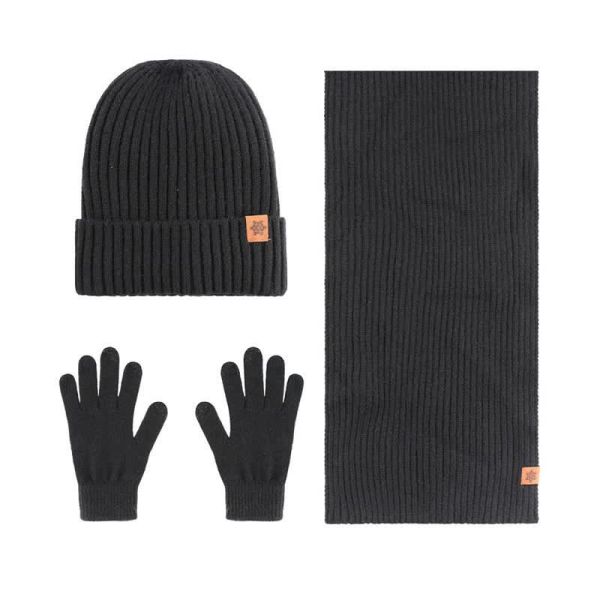 Buddha Stones 3Pcs Winter Ribbed Knit Matching Gift Set Men's Scarf Hat GlovesAs low as $41.59 Regular Price $56.97
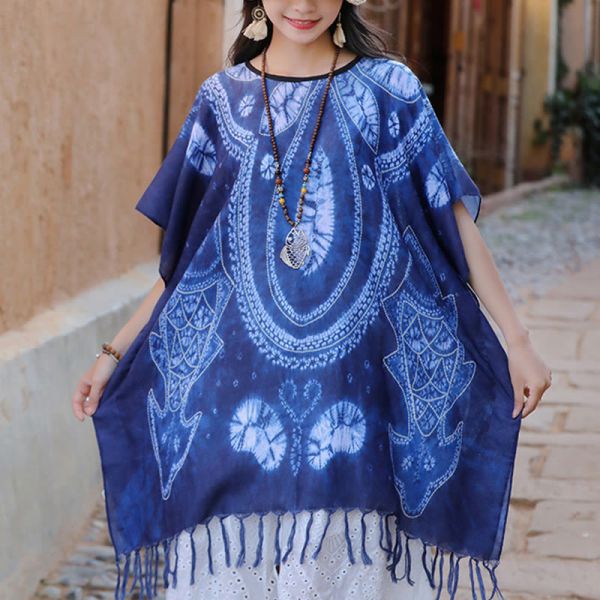 Buddha Stones Blue Geometry Batik Shawl Tassels Cozy Travel Pullover 90*95cmSpecial Price $37.59 Regular Price $51.49
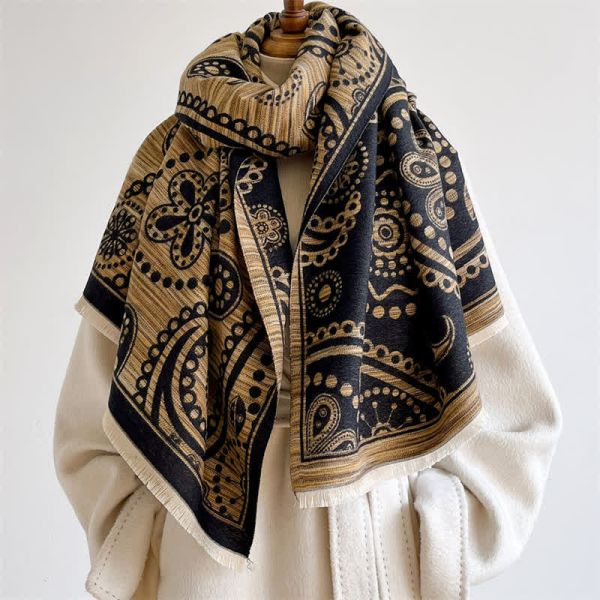 Buddha Stones Fall Baroque Paisley Cashew Flower Pattern Tassel ShawlAs low as $29.59 Regular Price $40.53
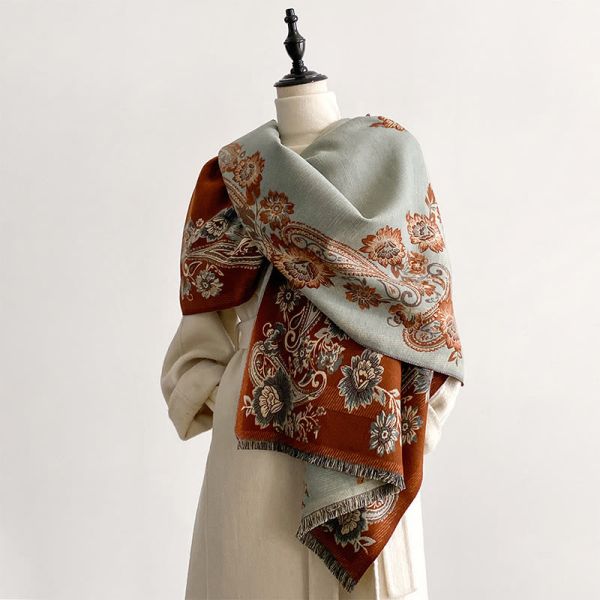 Buddha Stones Fall Cashew Flower Vines Pattern Warm Cozy Scarf ShawlAs low as $35.59 Regular Price $47.45