
Horse Symbolism in Chinese Art, Idioms, and Decor
Horses pulled chariots in China during the Shang dynasty. Their roles in transport, warfare, and court life helped make them enduring subjects in language and art. In Chinese culture, horse symbolism centers on speed, perseverance, success, and freedom. The familiar wish ma dao cheng gong (马到成功), “success on the horse’s arrival,” expresses hope for quick success. It belongs to the language of cultural symbolism: a horse image can convey that wish, but it cannot guarantee the result.
Year of the Fire Horse. 2026 is a Fire Horse year in the sixty-year cycle, beginning on Lunar New Year, February 17, 2026, and ending on February 5, 2027. The name combines the Horse zodiac sign with the Fire element.
Horses in Chinese history and art
Before the horse became a decorative motif, it was an animal whose speed mattered in practical terms. Horse-drawn chariots served in battle and displayed elite status. Later, mounted travel and cavalry gave horses continuing importance. These associations help explain why the animal could stand for both swift achievement and sustained effort: reaching a destination required more than a dramatic start.
Han Emperor Wu sought the celebrated “Heavenly Horses” of Ferghana in Central Asia. The story connects horses with imperial ambition and the pursuit of prized animals beyond China’s borders. The phrase also shows how admiration could lift a real horse into an almost legendary category. Historical animals and imagined steeds often occupy neighboring places in Chinese art.
The Eight Steeds of King Mu of Zhou belong to legend. These extraordinary horses carried the king on far-reaching travels and became a recurring artistic subject. Their story offers a different emphasis from a single victorious rider: a group of horses can suggest distance, movement, and the scale of an undertaking.
Tang dynasty sancai glazed horse figures give the subject a substantial ceramic form. The name means “three colors,” and the figures are associated with Tang tomb pottery. Their modeled bodies and colored glazes present another way to express the animal’s presence, quite different from a running horse outlined in ink.
The twentieth-century painter Xu Beihong is famous for ink paintings of galloping horses. Outstretched legs, flying manes, and sweeping tails make movement central to these images. Looking across these examples, you can see why posture matters: a standing horse, a traveling team, and a galloping animal need not carry precisely the same emphasis.
Words and idioms
Chinese expressions preserve several sides of the horse’s character. Some praise speed or initiative; others value experience. Reading them together gives a fuller picture than treating the horse only as a sign of winning.
- 马到成功 — Ma dao cheng gong: “Success on the horse’s arrival.” A common wish for quick success, often appropriate when someone begins an undertaking.
- 一马当先 — Yi ma dang xian: “One horse takes the lead.” An expression for going first or taking the initiative.
- 老马识途 — Lao ma shi tu: “An old horse knows the way.” It recognizes the value of experience and familiarity.
- 万马奔腾 — Wan ma ben teng: “Ten thousand horses galloping.” The image conveys sweeping movement and tremendous momentum.
These phrases also offer a useful way to read a horse motif on an object. A gift might express encouragement for a new venture, appreciation for someone’s persistence, or affection for an independent spirit. The meaning comes from the message shared between people, rather than a promised effect of the object.
The horse in the zodiac
The horse is the seventh animal of the Chinese zodiac. Recent Horse years include 1954, 1966, 1978, 1990, 2002, 2014, and 2026, but those numbers are shorthand for lunar years. A birthday in January or February needs checking against that year’s Lunar New Year boundary.
Traditional zodiac descriptions often associate the Horse with hard work, travel, and a free spirit. These are cultural characterizations, not reliable descriptions of everyone born under the sign. For the following animal year, our Year of the Goat 2027 post covers the next calendar change.
Horse decor at home
A horse figure can express a wish for progress without turning a room into a display of symbols. Start with its outline and the space around it. A raised head draws attention upward; a lowered head gives a different silhouette. Leave enough open space for the pose to be visible, and choose a stable surface away from a shelf edge.
Feng shui writers often suggest positioning a horse figure to face into the room or toward a doorway rather than out of a window. Treat this as a common suggestion, not a rule. Visibility, secure placement, and the way the figure relates to nearby objects are practical considerations you can assess directly.
In a separate Tibetan tradition, the windhorse, or lungta, appears on prayer flags as an auspicious emblem, discussed in our Tibetan prayer flags meaning post.
Horse symbolism in our products
A ceramic horse in two poses
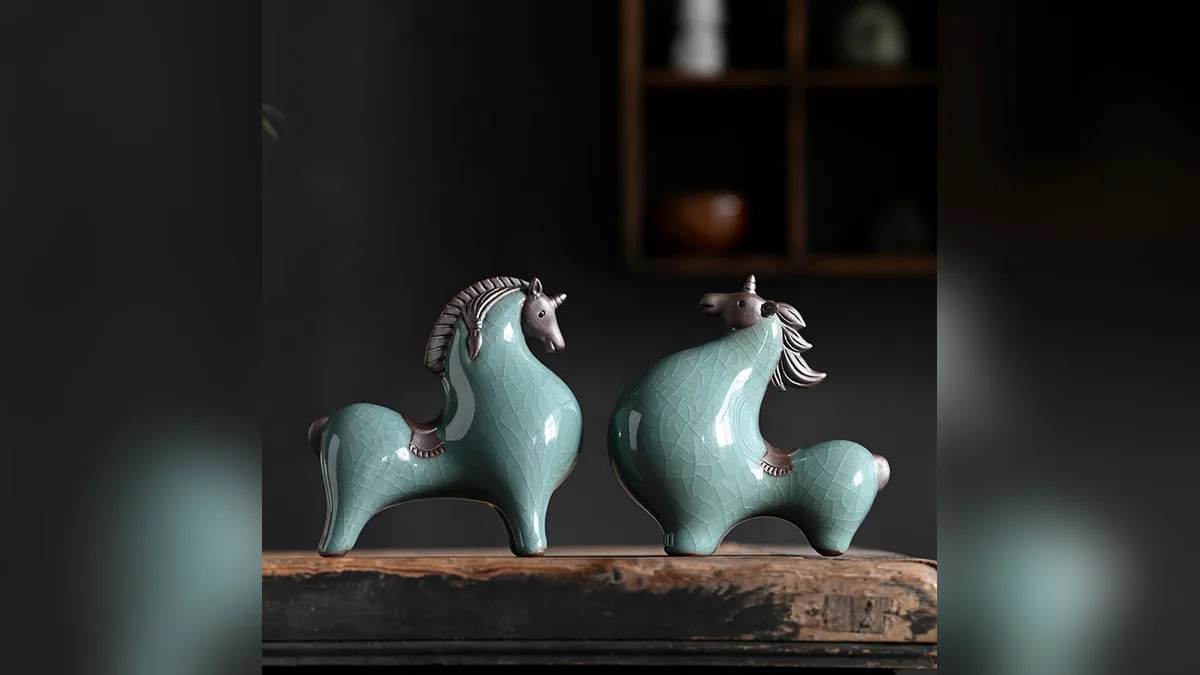
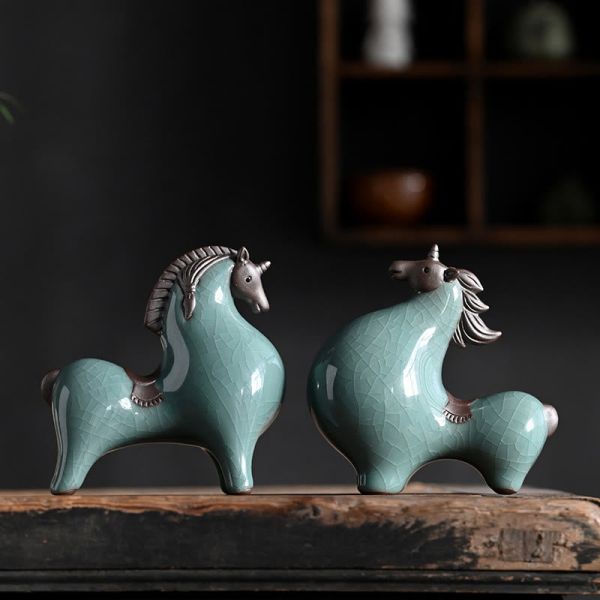
Our Head Down / Head Up Horse ceramic decoration offers two poses: Head Down Horse measures 11 × 10.5 × 5.5 cm, and Head Up Horse measures 10.5 × 10.5 × 5.5 cm. The material is ceramic, and the package contains one statue. “Success Freedom” in the name expresses traditional wishes for achievement and independence. The page’s description of Horse-year people as hard workers, travelers, and free spirits follows zodiac convention.
A zodiac motif for the tea table
The Chinese Zodiac ceramic teacup includes a Horse option among all twelve zodiac animals. The ceramic cup measures 7.5 × 4.8 cm and holds about 135 ml / 4.76 oz. The extra teaware in the photos is not part of the order. Choosing the Horse connects the cup with a particular sign or a favorite animal.
A horse charm with black obsidian
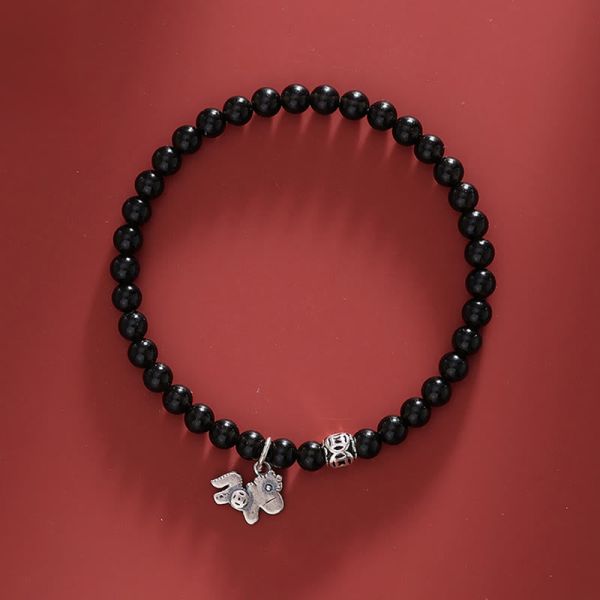
Our Year of the Horse silver and black obsidian bracelet uses 925 sterling silver and black obsidian, with premium elastic string. It accommodates a wrist circumference of 13-17 cm / 5.11-6.69 in. The black obsidian beads measure about 4 mm, and the horse charm is about 10 × 12 mm. “Strength” names a traditional wish associated with the design, rather than a benefit the bracelet provides.
A plush horse with an embroidered saddle pad
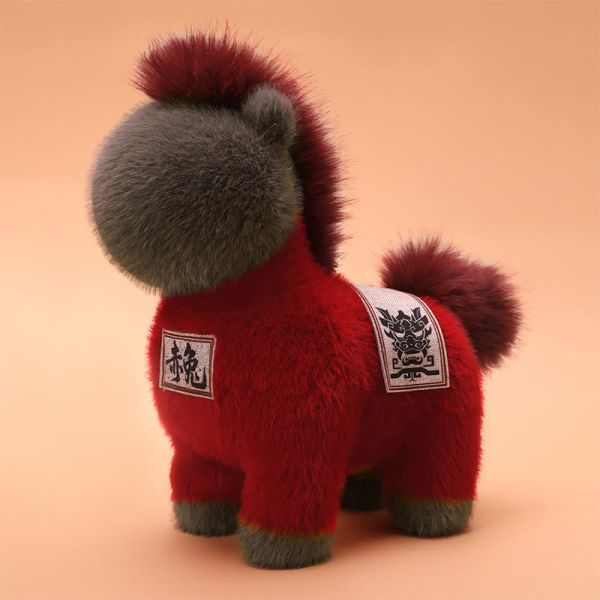
The Year of the Horse Embroidered Saddle Pad plush doll is made of polypropylene fiber and comes in beige, gray, or red. Four size options are available: about 25 × 23 × 25 cm, 35 × 32 × 35 cm, 45 × 42 × 45 cm, and 55 × 52 × 55 cm, given as length × width × height. Check the available display space against the chosen size.
A horse motif leaves room for personal interpretation. The quality you choose to honor might be persistence, the freedom to travel, or the experience of knowing the way.
Shop the story
 Buddha Stones Head Down Up Horse Ceramic Success Freedom Home DecorationAs low as $46.59 Regular Price $62.12
 Buddha Stones Chinese Zodiac Year Of The Horse Ceramic Teacup Kung Fu Tea Cup 135mlAs low as $23.59 Regular Price $31.88
 Buddha Stones Year Of The Horse 925 Sterling Silver Natural Black Obsidian Strength BraceletAs low as $67.59 Regular Price $93.88
 Buddha Stones Year Of The Horse Embroidered Saddle Pad Plush Doll Home DecorationAs low as $36.59 Regular Price $48.79