
Tibetan Prayer Flags Meaning and How to Hang Them
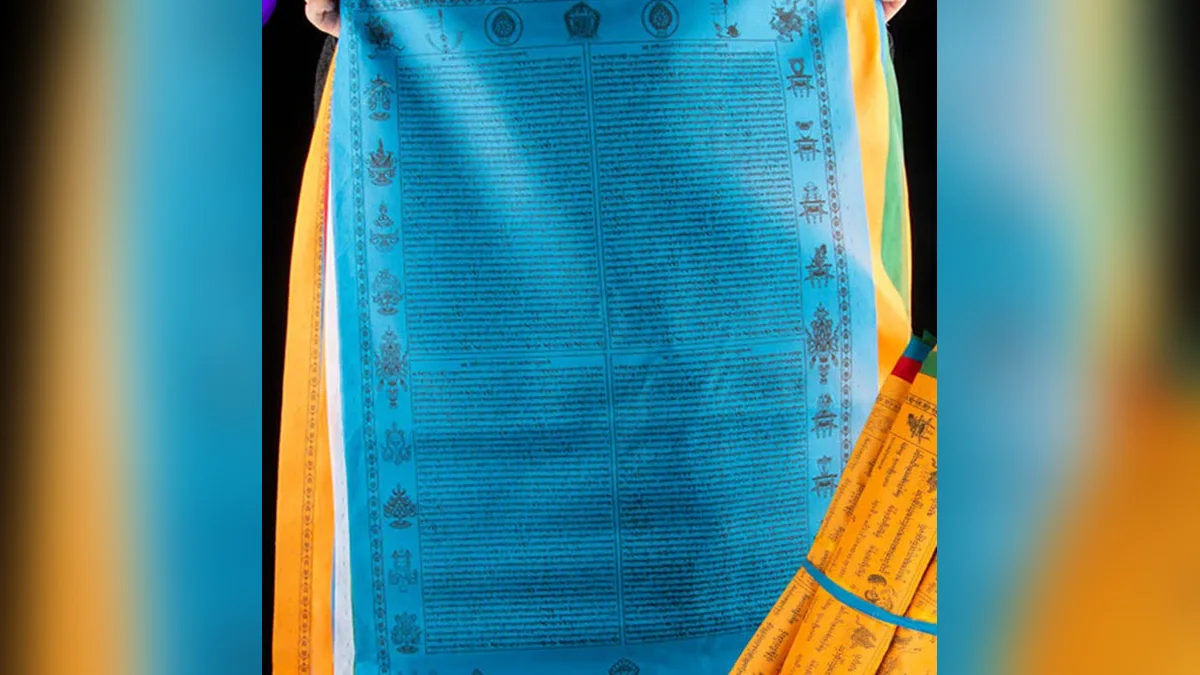
A string of Tibetan prayer flags is never meant to last. Cotton, polyester, whatever the cloth, it is left outdoors through rain, wind and direct sun until the printed mantras go pale and the fabric itself splits along the fold lines. Nobody treats this as a problem to solve with better fabric or a more sheltered spot. Understanding tibetan prayer flags meaning starts right there, with that built-in impermanence: the fading is not a flaw to prevent, it is part of how the tradition is supposed to work.
Tibetan prayer flags meaning
In Tibetan tradition, a prayer flag is cloth printed with prayers, mantras and auspicious images, hung outdoors so the wind can carry them. The belief behind tibetan prayer flags meaning is specific on one point: the wind does not carry a blessing back to the person who hung the flags. It carries the prayers outward instead, to everyone and everything the moving air happens to touch — neighbors, passersby, animals, the land itself. The person who ties the string to a post is, in that sense, doing the work for others more than for themselves.
At the center of many flags is a horse carrying a jewel on its back. This is the windhorse, or lung ta, and the jewel it carries is described as wish-fulfilling. Around the windhorse, the cloth is filled with short prayers and mantras printed in neat columns; one text that appears often on these flags is Om Mani Padme Hum, usually set in smaller type surrounding the central image.
The five colors always run in the same order: blue, white, red, green, yellow. Each is tied to one of five elements — blue to space or sky, white to air or wind, red to fire, green to water, yellow to earth. A set of flags is a small, fixed arrangement of the elements, strung in that exact sequence rather than reordered by preference or by what looks best against a particular wall or railing.
Most flags come in one of two formats. Horizontal lung ta are strung along a line, like a string of small flags above a doorway, path or rooftop, which is the shape most people picture first. Vertical darchor are long banners fixed to a tall pole instead of strung sideways, more common at monasteries and large outdoor sites than at an ordinary home.
How to hang prayer flags
However you plan to use them, the basic method for hanging prayer flags stays much the same from one setting to the next, whether the string is going up on a balcony or across a long garden fence.
- Pick a high spot where wind actually moves — a roofline, a balcony rail, a tree branch, a fence post facing open air. Flags hung in a sheltered corner barely move and do little of what they are made for, no matter how good they look there.
- Keep the five colors in their original order: blue, white, red, green, yellow. If a long string is cut into shorter sections for two separate spots, keep each section in that same sequence rather than reordering the colors to fit the space.
- String the flags so the line is taut and no part of the fabric touches the ground. Dragging on dirt or pavement is generally considered disrespectful to the images and text printed on the cloth, so a little slack is better taken up than left trailing.
- Choose a time to hang them. Many people simply wait for a clear, breezy morning and go from there. Others check the Tibetan lunar calendar for a date considered favorable, though this is a matter of personal or family custom rather than a fixed rule that applies everywhere.
- Once hung, leave the flags alone. Fading, fraying and color loss from sun and weather are expected, not a sign that something has gone wrong or that the flags need replacing right away.
When they fade
Old prayer flags are traditionally not thrown out with the household trash. Two options are common instead: burning the worn cloth, or leaving it in place to disintegrate naturally outdoors rather than pulling it down early and bagging it. Some people simply hang a new string next to the old one and let both exist together for a while, so the change from old to new happens gradually rather than all at once. None of these customs is universal — it varies by family and region — but the common thread is treating a worn flag as something to retire with care rather than something to discard without a second thought.
Choosing a set of flags
Prayer flags sit easily alongside other outdoor altar pieces if you are building toward a dedicated sacred space rather than hanging a single string on its own.
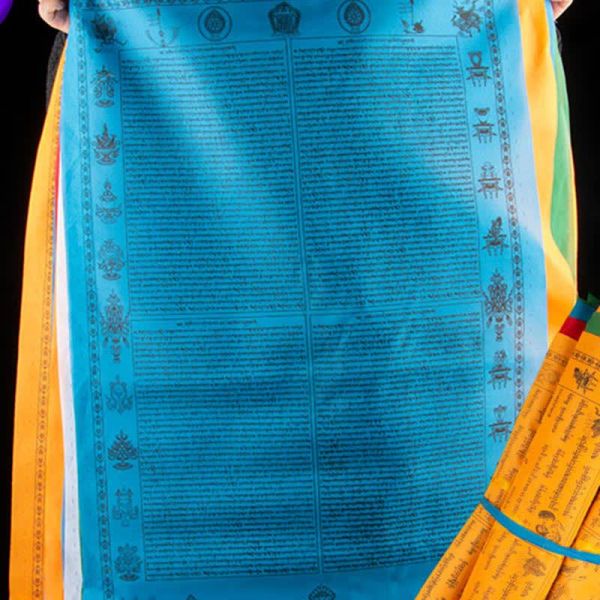
For a rooftop, balcony or garden fence that gets real wind, the Windhorse Happiness Auspicious Prayer Flag is sized for long outdoor runs: each printed polyester panel measures 60 by 88 centimeters, there are 20 flags on the string, and it runs 12 meters in total, which is enough to cover a long rail or stretch between two points some real distance apart.
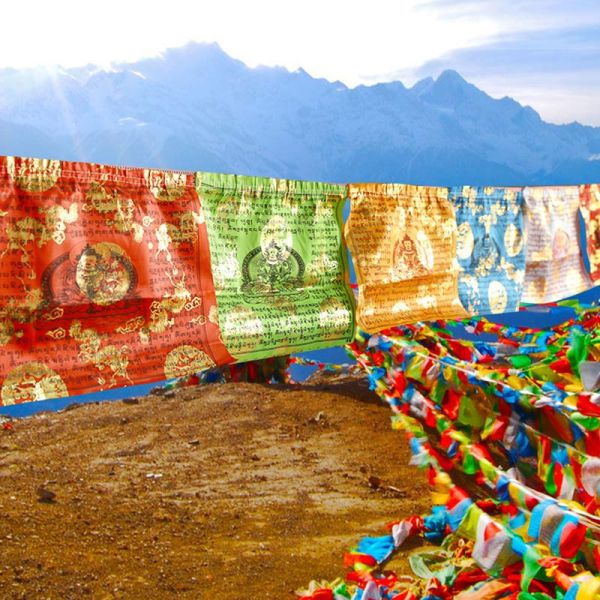
The Windhorse Blessing Longevity Sutra string carries the same five-color windhorse design on a set of 20 printed polyester flags finished with a knitted belt; each panel measures 28 by 35 centimeters, and the string runs 7 meters (22.96 feet) in total and weighs 104 grams.
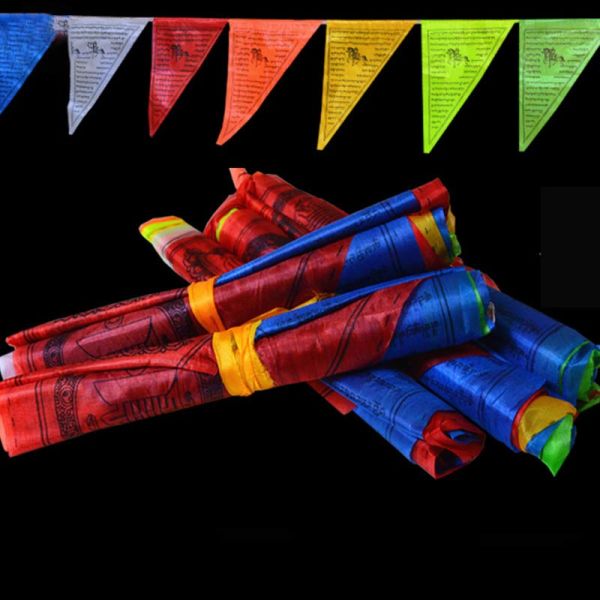
The 25-piece triangle flag string uses a different shape, small cloth triangles rather than rectangles, strung along a 6-meter line that weighs only 60 grams — light enough to hang somewhere a heavier string of rectangular flags would not suit.
For a car mirror, a bike or a small shelf, the Om Mani Padme Hum car flag is built at a smaller scale again: flocking fabric units measuring 11.3 by 8.3 centimeters, strung along just 0.85 meters and weighing 22 grams in total, closer to an accessory than an outdoor installation.
All sizes are hand-measured, so expect small differences between strings.
A set of prayer flags finishes its work by disappearing. The cloth that looks bright on the day it goes up will not look the same a year later, and that is close to the point of the whole practice: the flags are not kept for how they look, only hung to do their work in the wind until there is little left of the color but thread and a bare outline of the print.
Shop the story
 Buddha Stones Tibetan 5 Colors Windhorse Happiness Auspicious Outdoor Prayer FlagSpecial Price $59.59 Regular Price $81.63
 Buddha Stones Tibetan 5 Colors Windhorse Blessing Longevity Sutra Outdoor 20 Pcs Prayer Flag DecorationSpecial Price $27.59 Regular Price $37.79
 Tibetan Blessing Outdoor 25 Pcs Triangle Prayer Flag DecorationSpecial Price $25.59 Regular Price $35.54
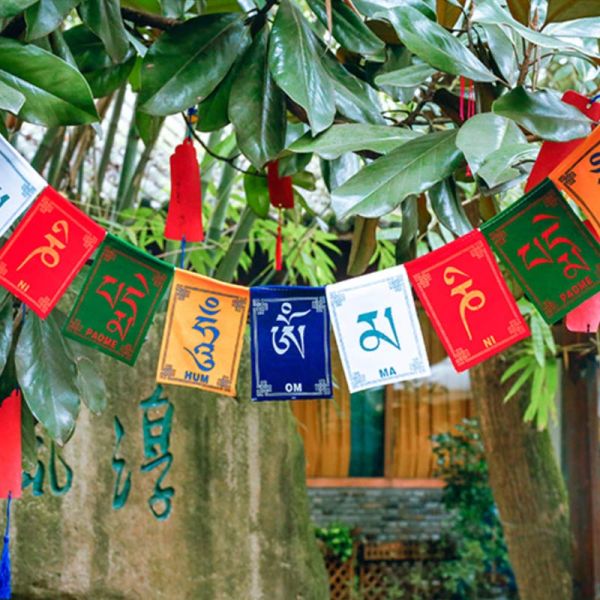 Tibetan Blessing Windhorse Om Mani Padme Hum Outdoor Car Prayer Flag DecorationSpecial Price $22.59 Regular Price $30.95