
Guru Bead Meaning: The Pause at the End of a Mala
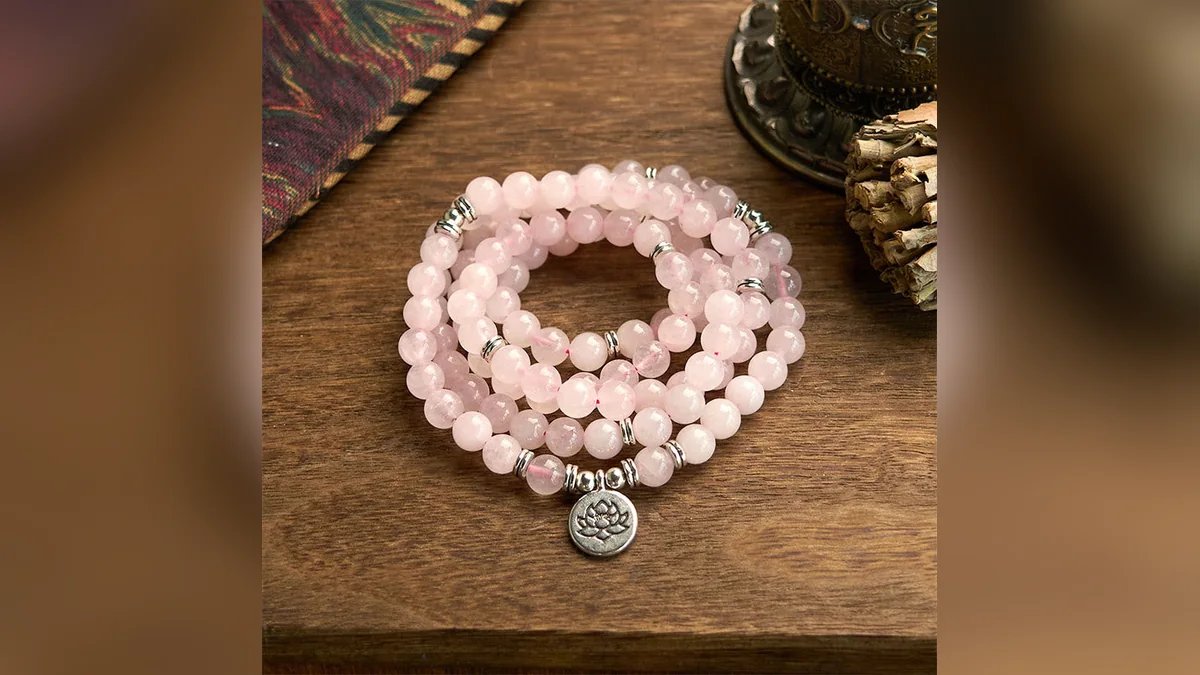
At the close of a round of recitations, a Buddhist practitioner reaches the larger bead where the mala joins. In many traditions, the fingers reverse direction there, leaving that bead uncounted. The traditional guru bead meaning is respect for the teacher and the teachings, expressed through a marker at the beginning and end of the counting strand. Ideas about luck, wealth, or protection belong to cultural and religious belief; a bead guarantees none of them.
That small turn gives the strand a different character from an endless loop. Counting has a boundary, and the boundary has meaning. The gesture also leaves room for an acknowledgment: instruction comes through others, and practice does not begin with the person holding the beads.
Guru Bead Meaning at the Turning Point
Guru is a Sanskrit word commonly translated as teacher. On a mala, the guru bead often represents the teacher or the instruction received from a teacher. Some practitioners also understand it through their particular lineage or devotional tradition. There is no single explanation that covers every Buddhist and Hindu use of prayer beads.
A common mala arrangement has 108 counting beads and a separate guru bead. In that arrangement, the guru bead sits outside the recitation count. Its distinct position makes the completed round recognizable without requiring a written tally. Size or shape may distinguish it, but its role comes from the practice associated with it.
In traditions that avoid crossing the guru bead, reaching it signals a reversal. The practitioner turns the strand and begins another round in the opposite direction. Other communities teach different handling customs, so guidance from a teacher takes precedence over a general description. The important detail is the relationship between the gesture and the tradition that gives it meaning.
For readers interested in a mantra often recited with a mala, our explanation of Om Mani Padme Hum provides context for the words. The mantra and the counting strand have related roles, but the bead itself does not supply the recitation.
The Craft Tradition Behind the Joining Bead
Stringing a mala involves a practical meeting point: the two ends of the strand must come together. A distinct joining bead can make that point visible. Depending on the construction, a tassel or another finishing element may sit below it. These details belong to the physical arrangement of the strand, while the teacher symbolism belongs to its religious use.
This distinction matters when looking at jewelry. A larger bead, an ornament, and a guru bead can resemble one another. Appearance alone cannot establish how an object was intended to be used. A product description that names a decorative feature does not necessarily identify it as a traditional counting marker.
Craft choices also vary. A joining bead may differ from its neighbors in shape, size, or material. There is no universal requirement that it be especially costly or elaborate. For someone following a specific practice, recognizing its place in the strand matters more than choosing an impressive centerpiece.
A Traditional Marker in Modern Jewelry
Today, mala strands also appear as necklaces and wrapped bracelets. Some people wear them as expressions of religious affiliation; others choose them for their design or as symbols of respect for a teaching. At Buddha Stones, we describe those meanings as tradition and leave personal devotion to the wearer.
A decorative focal point can remain decorative. If a strand is intended for recitation, identifying the counting beads and the point where a round ends is a useful first step. A photograph may show the arrangement, while the written specifications may describe only the materials and dimensions. Those are different kinds of information.
Receiving a mala as a gift does not create an obligation to invent a ritual. A simple acknowledgment of its symbolism is enough for someone wearing it as jewelry. For formal practice, a teacher or community can explain the customs they follow, including how they handle the joining bead.
Four Buddha Stones Malas: Details to Read Before Choosing
The specifications for these designs do not identify a guru bead. We describe their stated construction here so that a product name is not mistaken for confirmation of a particular counting arrangement. Words such as Protection in the names express traditional wishes and carry no promise of a result.
Our Rose Quartz Lotus Peace Bracelet is categorized as a bracelet and mala, with 108 beads, 8mm bead size, premium elastic string, and wrist circumference of 14-16cm. Its specifications identify Indian Agate and Alloy as the materials, despite Rose Quartz appearing in the name. That difference is worth recognizing when reading the title alongside the material information.
The Colorful Tiger Eye Multi-turn Protection Bracelet is also categorized as a bracelet and mala. It has 108 beads and premium elastic string; bead size is About 6mm, and wrist circumference is 14-16cm. The materials are Tiger Eye, Red Tiger Eye, Blue Tiger Eye, and Green Tiger Eye. Color tones, shades, and patterns may vary slightly because of material characteristics or production.
The Turquoise Inspired 108 Beads Multi Wrap Protection Mala uses synthetic turquoise and premium elastic string. Bead size options are 6mm, 8mm, and 10mm. Wrist circumference is Approx. 6.3–7.1 in (16-18 cm). It typically wraps 2–4 times around the wrist, depending on bead size and wrist circumference. Color, details, and overall appearance may vary slightly.
The Turquoise Tibetan Round 108 Bead Protection Mala combines synthetic turquoise with copper alloy and uses premium elastic string. Its bead size options are 6mm and 8mm, with wrist circumference of Approx. 6.3–7.1 in (16-18 cm). The typical wrap count is 2–4, depending on bead size and wrist circumference. Slight variations in color, details, and appearance are possible.
FAQ: The Guru Bead and the Completed Round
Does the guru bead count toward 108?
In the common arrangement of 108 counting beads plus a guru bead, it does not. The separate bead marks the boundary of the round. Mala designs and counting customs vary, so check the arrangement used in your tradition.
Must every mala have a guru bead?
No. Prayer bead designs differ, and some strands have no distinct guru bead. A jewelry title alone cannot establish that one is present or explain its intended role.
Why do some practitioners turn back there?
In those traditions, turning acknowledges the teacher represented by the bead. It is a gesture of respect. The round ends at the marker, and the next round begins with that acknowledgment.
Shop the story
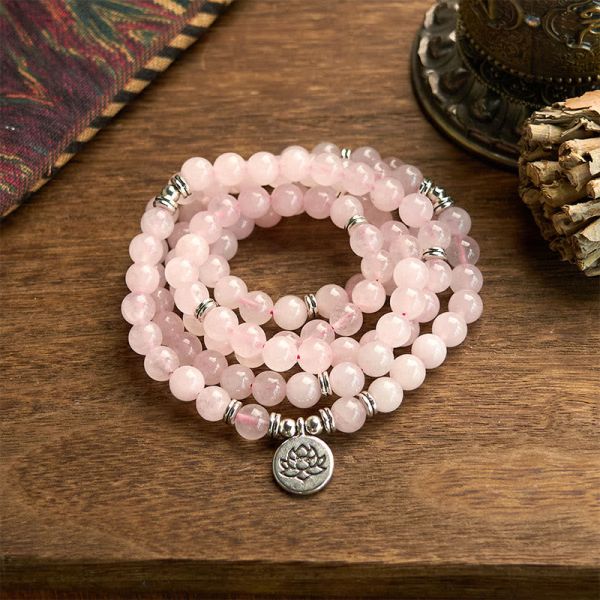 Buddha Stones 108 Mala Beads Natural Stone Rose Quartz Lotus Peace BraceletSpecial Price $26.59 Regular Price $35.93
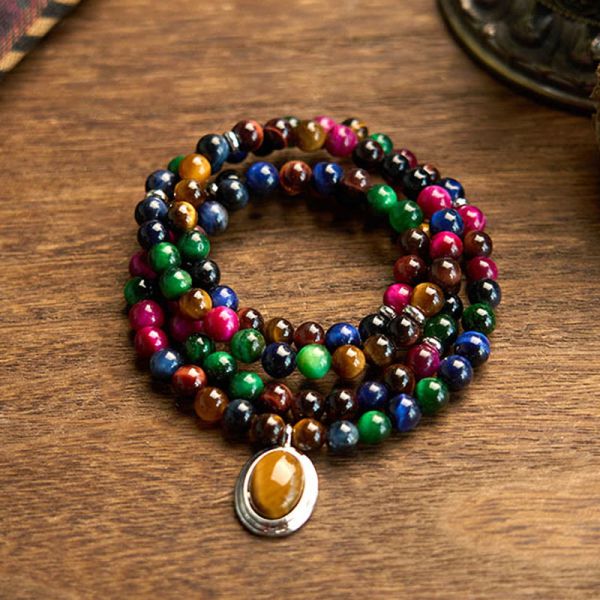 Buddha Stones 108 Mala Beads Natural Colorful Tiger Eye Stone Multi-turn Protection BraceletSpecial Price $39.59 Regular Price $52.79
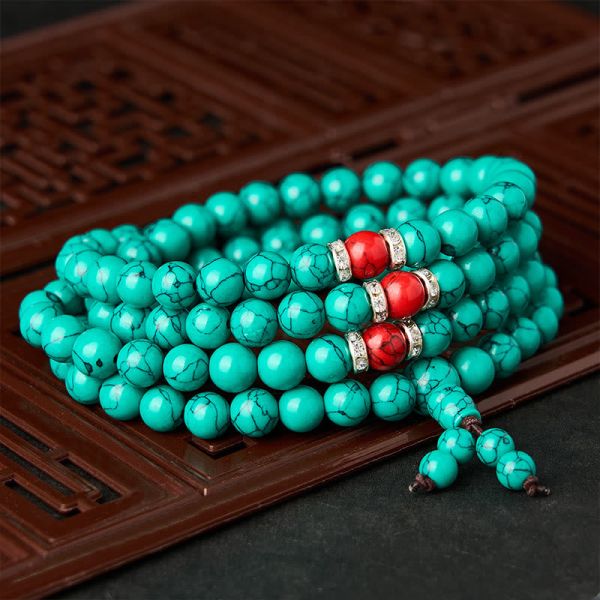 Buddha Stones Turquoise Inspired 108 Beads Multi Wrap Protection MalaAs low as $25.59 Regular Price $34.58
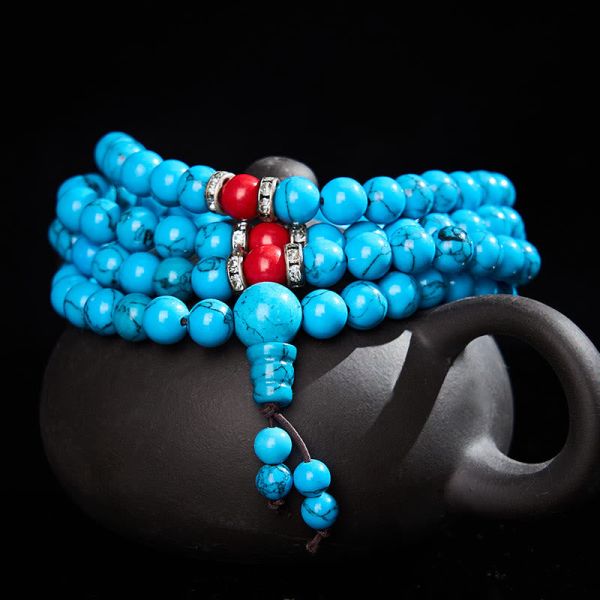 Buddha Stones Turquoise Tibetan Round 108 Bead Protection MalaAs low as $25.59 Regular Price $35.05