
Guanyin Statue Placement: A Practical Care Manual
Dust often settles in the folds and around the base of a displayed statue. Good guanyin statue placement means choosing a respectful, stable location that you can reach for regular care. This manual explains how to assess the surface, position the figure, remove loose dust, and recognize damage that calls for repair or retirement.
Guanyin is a bodhisattva associated with compassion in Buddhist traditions. Customs differ among communities and households, so follow your own tradition when it gives specific guidance. At Buddha Stones, we recommend beginning with a clean surface, secure support, and enough room to handle the figure safely.
Tools and materials for careful upkeep
Gather a few simple supplies before moving the statue. Keep cleaning tools free of grit and residue from other household jobs.
- A clean, soft brush for lifting loose dust from accessible details.
- A clean, dry, lint-free cloth for the display surface and suitable smooth areas.
- A padded tray or folded towel on a sturdy table for temporary support.
- A ruler or tape measure for checking the available display space.
- The maker’s care directions, if available, and a small light for inspecting the base.
Water and cleaning liquids are not default supplies. Paint, gilding, coatings, glued parts, and the underlying material may need different treatment. If you cannot identify the surface or its care requirements, limit the routine to gentle dry dusting.
Step-by-step routine for guanyin statue placement
- Check the proposed location. Choose a level shelf, cabinet, or dedicated stand with a sound base. Confirm that the furniture can support the statue together with anything else displayed there. Avoid shelves that sag, doors that strike the figure, and spots where passing bags or sleeves could catch projecting details.
- Allow room for respectful handling. In many Buddhist households, sacred figures occupy a raised, clean place. Choose a height that also lets you lift and return the statue securely. Leave space above and beside it so your hands can reach the base without brushing a crown, hand, or other delicate feature.
- Check exposure before setting it down. Keep the figure away from direct heat, strong sunlight, splashing water, and damp windowsills. Leave it clear of incense ash, candle flames, and hot vessels. A shelf beside a tea setup needs enough separation that pouring, wiping, and moving a kettle cannot disturb the statue.
- Lift from beneath. With clean, dry hands, support the base and steady a solid part of the body where its construction allows. Never lift by an attached ornament or projecting detail. For a figure that is awkward to handle, get help before moving it. Place it on the prepared padded surface while you clean the shelf.
- Prepare the display surface. Remove nearby objects and wipe the shelf. Let it dry completely before returning anything. If you use an existing stand or pad, check that it lies flat and does not rock or slide. Do not balance the statue across joints, uneven boards, or the edge of a shelf.
- Remove dust gently. Work from the upper areas toward the base with light brush strokes. Support the figure throughout. Leave firmly attached deposits alone, and stop if color transfers, flakes lift, or a component moves. Do not force a brush into a narrow opening or rub a fragile finish.
- Return and review. Set the base fully on its support, comfortably back from the edge. Follow your household or temple guidance for orientation. Keep a clear route for future cleaning. Recheck the arrangement whenever nearby furniture moves, and dust when buildup becomes visible rather than waiting for a thick layer.
What not to do around a sacred figure
Do not turn a general placement suggestion into a promise about household events. Compass directions and symbolic arrangements belong to particular traditions; positioning a statue cannot guarantee a desired result. Ask your temple for guidance if religious observance determines the arrangement.
Avoid soaking, spraying, abrasive pads, household polish, and scented oils unless the maker expressly approves a method for that particular finish. Do not scrape dark areas or try to make an intentionally textured surface uniformly shiny. Keep adhesive labels and tape away from decorated surfaces.
Do not crowd the base with objects that must be moved daily. If you maintain a separate tabletop garden, give its sand and tools their own work area. Our mini zen garden guide covers that distinct arrangement.
When to replace a support or retire the statue
A loose shelf bracket, rocking stand, or worn pad calls for attention before the statue goes back. Replace an unreliable support even when the figure itself looks unchanged.
Pause handling if you find a crack through the base, loose components, sharp chips, or flaking decoration. Keep detached fragments together without taping them to the surface. A conservator or qualified repair specialist can assess a valued or fragile figure; avoid improvised glue repairs.
Fading or minor surface wear does not automatically require replacement. If you decide to retire a sacred figure, ask a local Buddhist temple about the practice it follows. Until then, keep it supported in a clean, secure place.
Product references for a separate decor display
The following designs depict Ganesh, a snake, or a dragon. They are separate decor choices, not Guanyin figures. Words such as Wealth and Protection in product names express traditional wishes and do not guarantee results.
Ganesh in resin and sandstone material
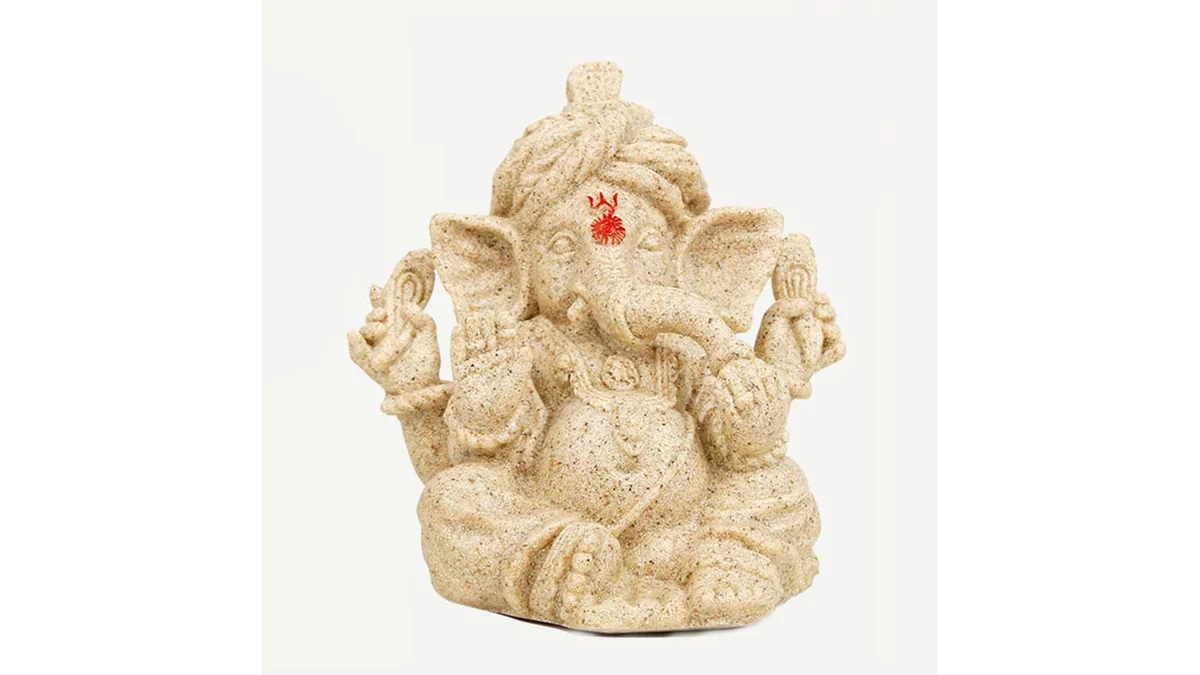
Our Ganesh Ganpati Elephant Statue is made with resin and natural sandstone material. Its size is 11*10.5*11.5cm (4.33*4.13*4.52IN), with Red&White and White options. Check the available space against these dimensions before selecting its display surface.
Liuli glass Ganesh figurine
The Handmade Ganesh Ganpati Liuli Crystal Art Piece is a Liuli Glassware/Crystal Glass decoration measuring 11.5*9*14.5cm(Length*Width*Height). Its net weight is 900g(N.W.). Include that weight when assessing the load on a shared shelf.
Snake designs with ingots and coin motifs
The resin Year Of The Snake Ingots Copper Coins Ball Statue has sizes of 5.5*4*7cm, 8*5.5*9.2cm, and 7*6*11cm(Length*Width*Height). Corresponding weights are about 120g, about 310g, and about 285g. The package includes one statue.
Dragon around a pillar
Our Handmade Flying Dragon Around The Pillar Statue measures 20*10*8cm and weighs about 1200g(N.W.). Its material is 80% Iron Powder, 20% Resin. Polished Version and Rust Version options are available. Handcrafted variation is noted, so do not assume an irregular surface needs polishing.
Keep the next care session straightforward
A useful arrangement leaves the base supported, the surrounding surface accessible, and delicate details clear of passing objects. Return cleaning tools to a clean storage spot after use. At the next dusting, check the support and finish again before touching the figure. Small, careful steps keep routine upkeep manageable and respect the role the statue holds in your home.
Shop the story
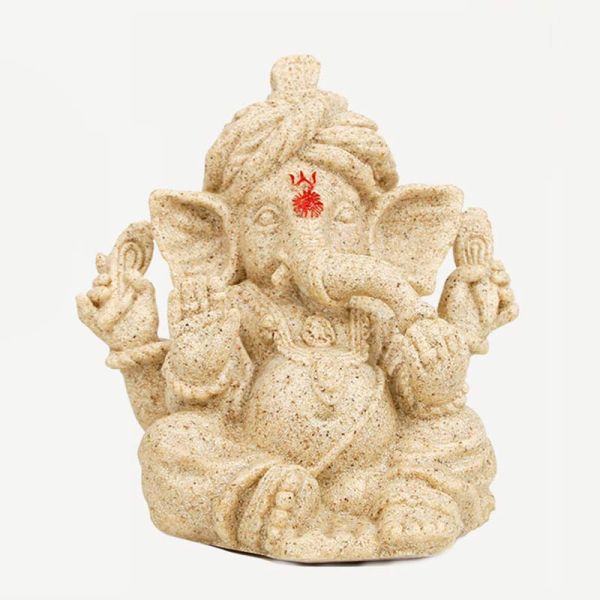 Buddha Stones Ganesh Ganpati Elephant Statue Transformation Home DecorationAs low as $56.59 Regular Price $79.70
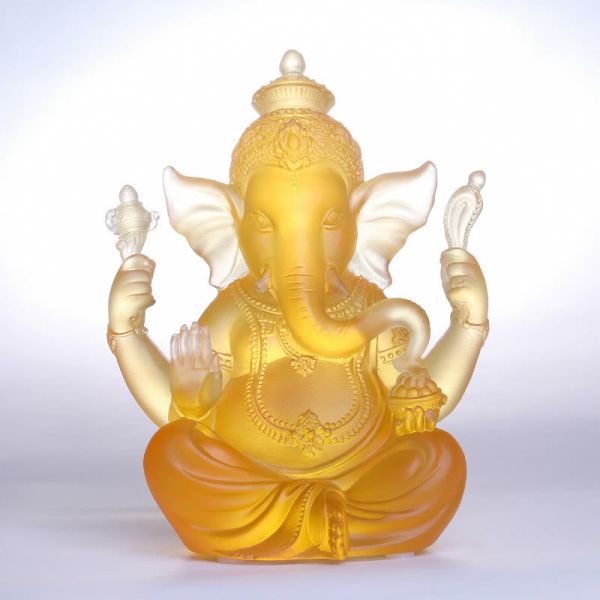 Buddha Stones Handmade Ganesh Ganpati Elephant Figurine Liuli Crystal Art Piece Protection Statue Home DecorationAs low as $389.59 Regular Price $541.10
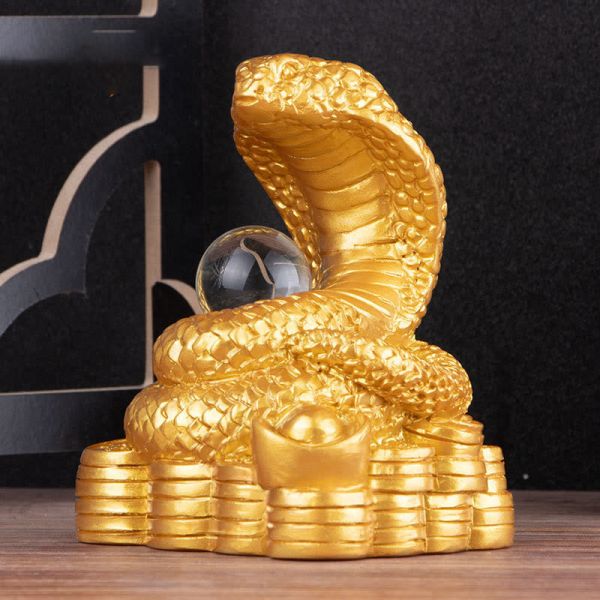 Buddha Stones Year Of The Snake Ingots Copper Coins Ball Wealth Resin Statue Home DecorationAs low as $25.59 Regular Price $34.58
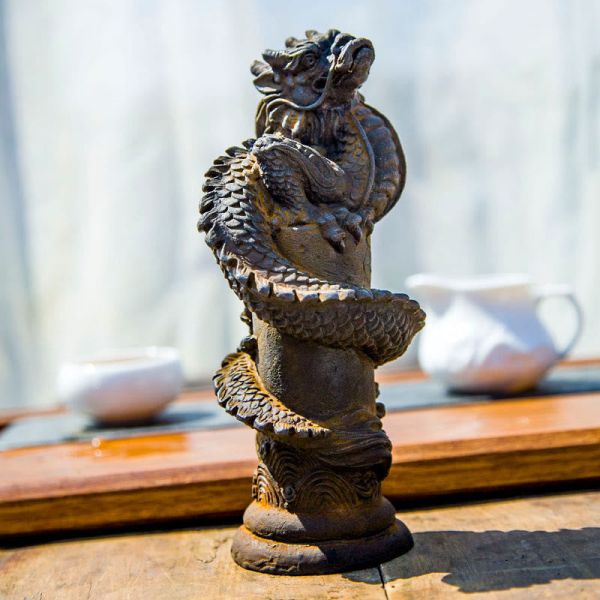 Buddha Stones Handmade Flying Dragon Around The Pillar Iron Powder Rust Cast Resin Statue Home DecorationAs low as $109.59 Regular Price $146.12