Green Aventurine Meaning: Myths, Facts, and Care
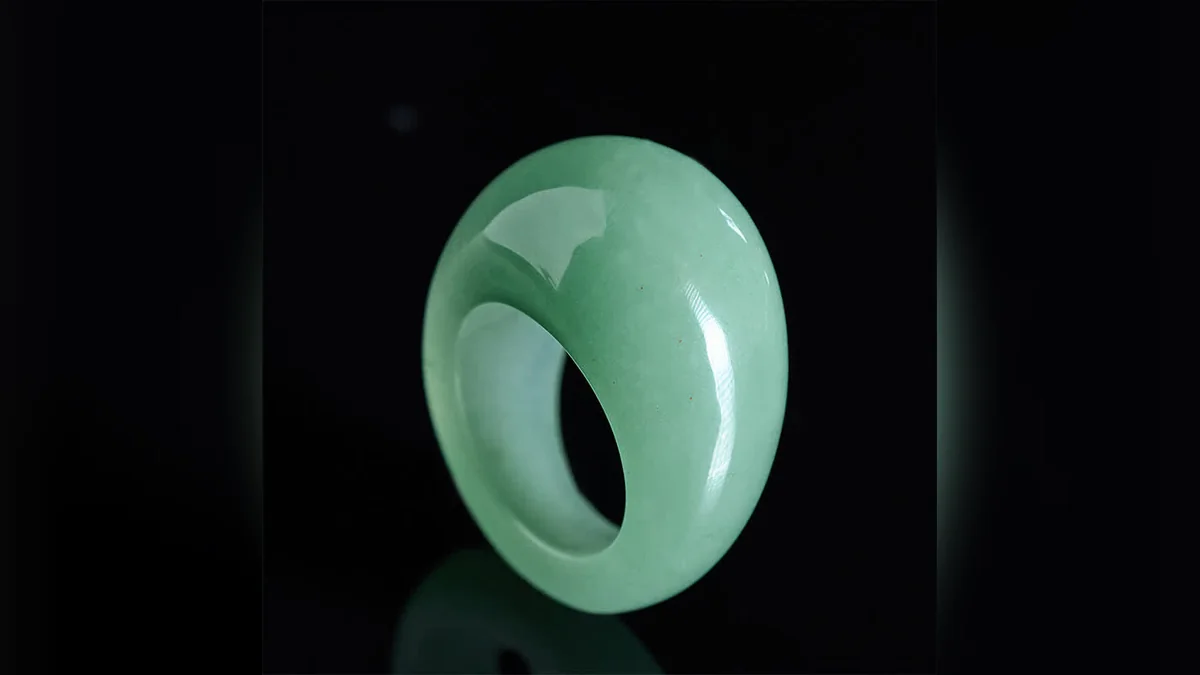
Tiny glittering flecks catch the light across green aventurine’s surface. That shimmer, called aventurescence, comes from inclusions within the stone. Green aventurine is a quartz-based material, often described as quartzite, whose green color and sparkle usually come from fuchsite mica. Green aventurine meaning centers on its reputation as a “stone of opportunity” and luck in modern crystal culture. Those associations are beliefs, not guarantees.
The details you can actually compare are color, sparkle, materials, dimensions, and care. A bracelet can carry a meaning you value without making a promise. The useful distinction is between what a stone represents and what its material or product description tells you.
Green Aventurine Meaning: Belief Versus Fact
Modern crystal culture often connects green aventurine with opportunity and good fortune. Someone might choose it as a symbolic gift for a new job or another beginning. That choice expresses a wish; it does not predict what happens next. We describe luck as an association, never a property that guarantees results.
Several familiar ideas blur the line between symbolism and material facts. These pairs help keep the two separate:
- Common belief: Its reputation for luck is a proven effect. What we can say: Luck is a traditional or modern symbolic association, with no guarantee. A stone cannot promise a favorable result.
- Common belief: More sparkle automatically means higher quality. What we can say: Sparkle depends partly on mica content and how those inclusions catch the light. A stronger shimmer may suit your taste, but it is not a complete quality assessment.
- Common belief: Green aventurine and jade are the same material. What we can say: They are different materials. Jade refers to nephrite or jadeite; green aventurine is quartz-based. Similar color does not make them interchangeable.
- Common belief: An evenly bright green color proves a stone is untreated. What we can say: Some green stones on the market are dyed. Very bright, even color deserves a closer look, although appearance alone cannot establish treatment.
There is room for personal preference here. You can enjoy the luck symbolism, prefer the green color, or simply like the glittering inclusions. None of those reasons requires a claim about what the stone will do.
The Name Comes from a Glass Story
The usual story links aventurine to the Italian phrase a ventura, meaning “by chance.” It connects the name with a sparkling glass, now commonly called goldstone, said to have been discovered by accident. Treat the accidental discovery as the usual naming story rather than a fully settled account.
The distinction matters because the glass story does not make green aventurine a kind of glass. Goldstone and aventurine can both have a glittering appearance, but they are different materials. The name preserves a connection through sparkle; it does not establish identical composition or origin.
Sparkle and Color Are Clues, Not Verdicts
Green aventurine can range from pale to deep green. Fuchsite mica usually accounts for its green color and aventurescence, but the visible effect varies. Under different lighting, flecks may stand out clearly or be less noticeable. A photograph captures one set of lighting conditions, so it cannot show every aspect of a stone’s appearance.
When comparing listings, look at the overall color and the distribution of visible flecks. Decide whether you prefer a quieter shimmer or a more noticeable sparkle. Neither preference needs to become a rule that one appearance is always superior.
Treatment is a separate question. If a green stone looks unusually vivid and uniform, ask the seller what is known about dye or other treatment. Color alone cannot confirm identity, treatment, or quality. A clear material description is more useful than an unsupported claim based on a photograph.
Choosing a Form: Product Details Over Promises
Once the symbolism is clear, the practical comparison becomes straightforward. Our listed options include bracelets, a stone ring, and a hairpin. Their dimensions and materials give you concrete points to check before choosing.
Round beads or mixed materials
Our Green Aventurine Four-leaf Clover round beaded bracelet lists 8 mm beads, elastic string, and a wrist circumference of 15 to 16 cm (5.9 to 6.3 in). Its listed materials are green aventurine and alloy. The product photos show beads in several shades, so compare the photos with that material list. The clover name adds another familiar association with luck, which remains symbolism rather than a promise.
The Green Aventurine Tiger Eye Sun Stone beads bracelet also lists 8 mm beads and elastic string for wrists measuring 15–16 cm, or about 5.9–6.3 in. Its materials are green aventurine, tiger eye, sun stone, and copper. Compare that material list with the clover bracelet’s list instead of assuming that similar sizing means the same construction.
A stone band with a fixed size
Our Natural Green Aventurine Wide ring is listed for women in US size 8, with an inner diameter of approximately 18.1 mm. Green aventurine is its only listed material. According to the page, you should measure across the knuckle, the broadest point of the finger, and go up a size if you land between two.
A stone band cannot be resized. Check the listed size against your measurements before choosing it; the advice to size up between sizes does not mean this listing offers additional sizes. The word “balance” in the full product name should also be read as symbolic wording, not a promised effect.
A hairpin option
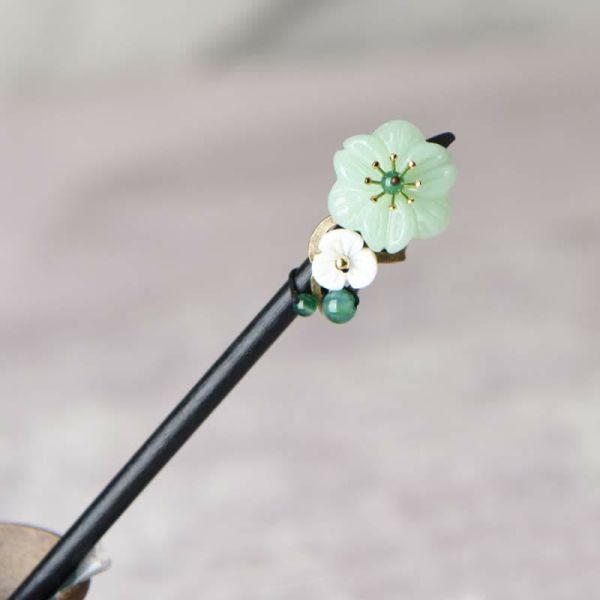
The Green Aventurine Flower Agate hairpin lists green aventurine and agate as its materials, with a hairpin length of 15-16 cm. That length gives you a practical dimension to compare with your preferred hairstyle. For general placement and securing methods, our guide to using a hair stick explains the basic technique.
Hardness Does Not Mean Damage-Proof
Green aventurine has a hardness of around 6.5 to 7 on the Mohs scale. The scale rates scratch resistance only, so a firm knock can still chip a bead or crack a band. Avoid knocks against hard surfaces, particularly with a stone band, and store jewelry so pieces do not rub against one another.
For routine care, use mild soap and water with a soft cloth, then rinse and dry gently. Keep cleaning brief, and account for any other listed materials in the item. Avoid prolonged soaking of elastic string or metal components. Our product pages advise removing these items before washing or sleeping.
Green aventurine meaning can remain a matter of symbolism while your choice rests on clear details. Notice the mica sparkle, compare the stated dimensions, and treat luck as a wish rather than an assurance. The stone’s appearance gives you plenty to appreciate on its own.
Shop the story
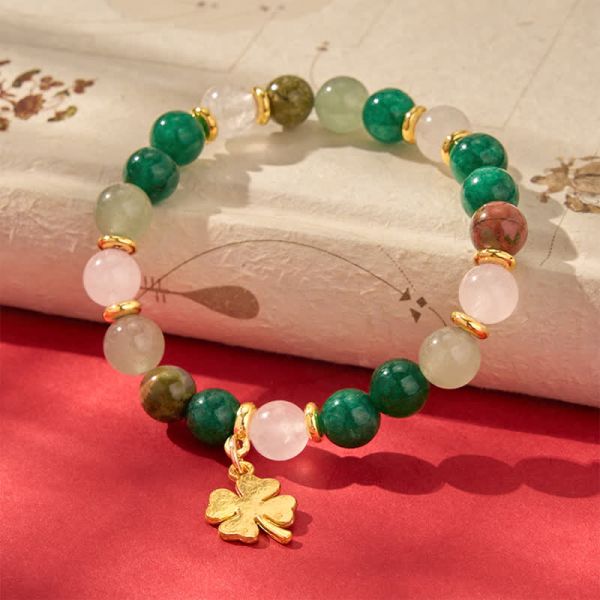 Buddha Stones Green Aventurine Four-leaf Clover Luck Round Beaded BraceletSpecial Price $25.59 Regular Price $34.58
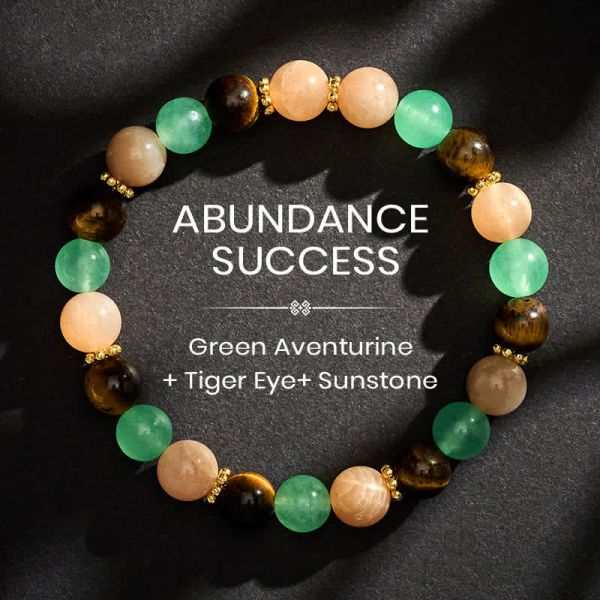 Buddha Stones Green Aventurine Tiger Eye Sun Stone Beads Luck BraceletSpecial Price $25.59 Regular Price $36.04
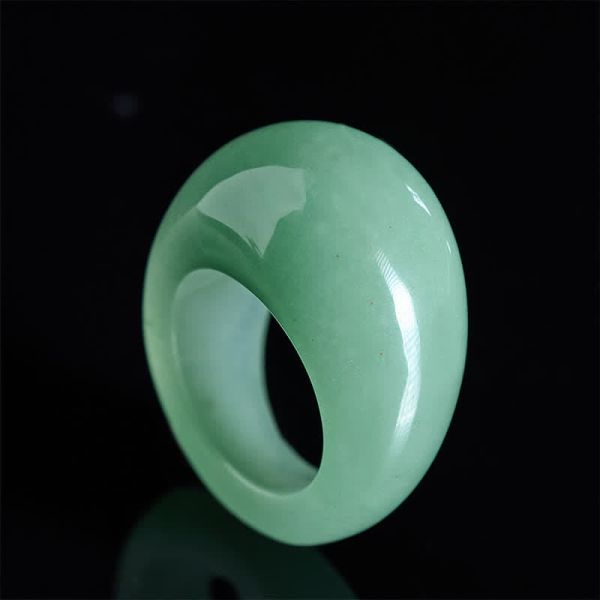 Buddha Stones Natural Green Aventurine Wide Balance RingSpecial Price $25.59 Regular Price $34.12