
Gaiwan vs Teapot: Set Up Your Tea Table with Care
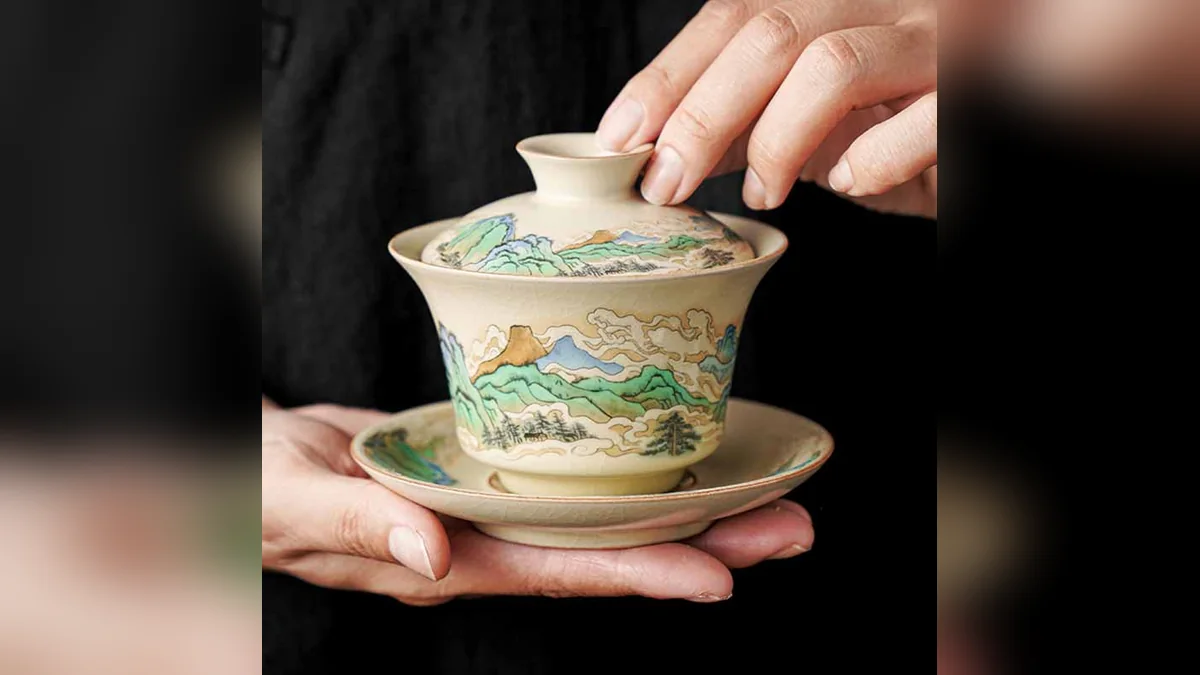
Tea streams through the gap between a gaiwan’s bowl and lid into a serving pitcher. A teapot directs its pour through a spout. For gaiwan vs teapot, choose the gaiwan if you want an open bowl for watching leaves and adjusting the lid; choose the teapot if you prefer pouring with a handle. In a traditional gongfu tea arrangement, either brewing vessel belongs on a tray within comfortable reach, with serving cups nearby.
Step 1: Make the gaiwan vs teapot choice by pouring style
A gaiwan generally has a bowl, lid, and saucer. During brewing, the lid holds back leaves as tea passes through a narrow opening. There is no handle to establish your grip, so the rim shape and your ability to control the lid matter. Some people pour with the saucer supporting the bowl; others lift the bowl and lid together.
A teapot provides a handle and spout, giving your hand a defined holding point. You still need to secure the lid appropriately and check that the pour stops cleanly. Choose by the handling you can manage comfortably, rather than treating either vessel as a required mark of experience. Both can serve repeated infusions in a gongfu setup.
Step 2: Match the brewing volume to your cups
Start with the amount of tea you intend to serve at one time. A smaller brewing vessel can suit one person using a small cup or several people sharing little pours. A larger vessel needs enough receiving capacity to empty the infusion without leaving tea sitting over the leaves.
Printed capacity is a reference, not the amount you must pour into the vessel. Leaves occupy space, and a gaiwan needs room below the rim for handling. If you use a serving pitcher, choose one that can receive the full working pour. Without a pitcher, arrange the cups close together and distribute tea among them in several passes.
Step 3: Arrange the table around the pouring route
Place a stable tray or another suitable water-resistant surface beneath the brewing area. Keep the brewing vessel near your pouring hand, the pitcher just ahead of it, and cups farther forward for serving. Leave a clear landing spot for a lid and enough space to put the vessel down without crossing over cups.
Keep the kettle where you can lift it without reaching across the tea service. A separate bowl can receive discarded water when your tray does not collect it. The useful traditional principle here is orderly service: water enters the brewing vessel, tea moves to the pitcher or cups, and discarded water has its own destination. There is no required compass direction for this working arrangement.
Step 4: Rehearse the movement with cool water
Before brewing, practice filling, lifting, pouring, and setting the vessel down using cool water. With a gaiwan, test a small lid opening and a grip that keeps your fingers clear of the pouring gap. If the bowl feels too wide to hold securely, reconsider the size before adding hot water.
With a teapot, check your grip on the handle and how the lid stays seated during a tilt. Watch where the stream lands and move the receiving vessel into that path. This rehearsal also reveals whether your cups or pitcher can take the pour. For more detail on lid handling, our gaiwan pouring instructions expand on that technique.
Step 5: Brew, empty, and reset the arrangement
Use the tea supplier’s brewing directions as your starting point for water temperature, leaf quantity, and steeping time. Warm the brewing vessel with water, empty it carefully, then add leaves and brewing water. Avoid filling a gaiwan to its rim. Keep the outside dry enough for a secure grip.
Once the infusion is ready, decant it into the pitcher or cups. Emptying the brewing liquid separates it from the leaves until the next infusion. Make adjustments to one brewing variable at a time so you can compare the resulting cups. After the session, remove spent leaves, rinse the vessel and lid, and allow the parts to dry before putting them away.
Step 6: Catch common setup mistakes
- Choosing capacity by appearance: Check the selected option and compare its volume with your receiving cups.
- Overfilling the gaiwan: Leave handling room below the rim and keep fingers away from escaping steam.
- Leaving nowhere for discarded water: Position a wastewater bowl before warming the teaware.
- Assuming a product photograph shows a complete set: Confirm the option contents before planning a matching service.
- Crowding the pour: Move decorative objects outside the kettle, vessel, and cup route.
Products for your brewing arrangement
Our Panorama of Rivers and Mountains and Flowers ceramic gaiwan offers 12cm*9cm*100ml options. The 4PCS Flower option combines one 12cm*9cm*100ml vessel with three 6.5*4cm*40ml cups. A Flower option with a gift box is also available. Choose the option that matches your planned service rather than assuming the pictured arrangement comes together.
The Blue and White Porcelain gongfu teapot and cup range has ceramic options including a Teapot 12cm*9cm*175ml, cups, a tea filter set, and a tea canister. These are separate selections on the product page. For the handled brewing setup described above, select the teapot option; a cup or canister selection serves a different purpose.
Our Dunhuang Color Thousand Buddhas and Flying Apsaras teacup range is ceramic, with options spanning about 90-160 milliliters. They include Dunhuang Flying apsaras 9cm*9.5cm*150ml and Dunhuang Thousand Buddhas 13.5cm*9.5cm*150ml. Compare the named option as well as its capacity when planning the space it will occupy.
The Dunhuang Flying Apsaras ceramic gaiwan and cup offers a Gaiwan Teacup 8.8cm*9cm*150ml option and a Cup 7cm*6cm*50ml option. Distinguish the brewing vessel from the drinking cup when selecting. Additional accessories shown for photography are excluded from the cup selection.
FAQ
Is a gaiwan or teapot easier for a beginner?
A handle can make a teapot’s grip more familiar. A gaiwan requires coordinating the bowl and lid, so practice that movement with cool water. The suitable choice is the one you can lift, pour, and set down securely.
Do you need a serving pitcher?
No. You can pour directly into cups, distributing the infusion in repeated passes. A pitcher receives the whole infusion before serving, which makes it convenient when sharing among several cups.
Does the gaiwan saucer have a traditional meaning?
In the traditional sancai interpretation, the lid represents heaven, the saucer represents earth, and the bowl represents humanity. This symbolism accompanies the practical arrangement: the bowl rests on the saucer, and the lid sits above it.
Shop the story
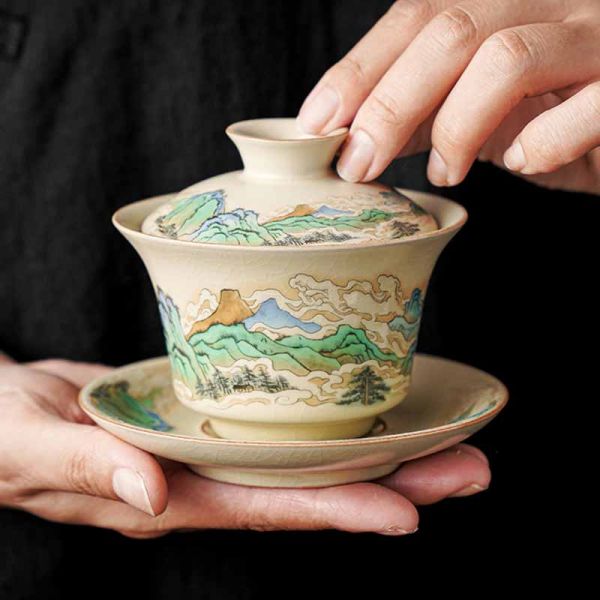 Buddha Stones A Panorama of Rivers and Mountains Flowers Ceramic Gaiwan Sancai Teacup Kung Fu Tea Cup And Saucer With LidAs low as $89.59 Regular Price $119.45
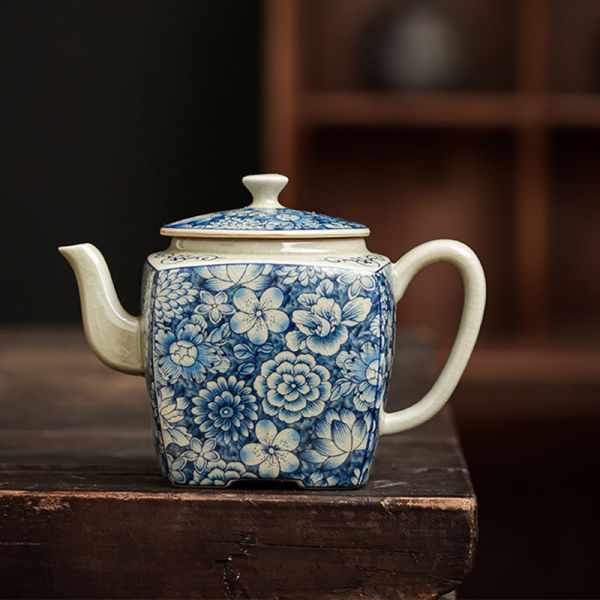 Buddha Stones Blue and White Porcelain Chinese Gongfu Tea Ceramic Kung Fu Teapot Cup Tea Filter CanisterAs low as $25.59 Regular Price $34.12
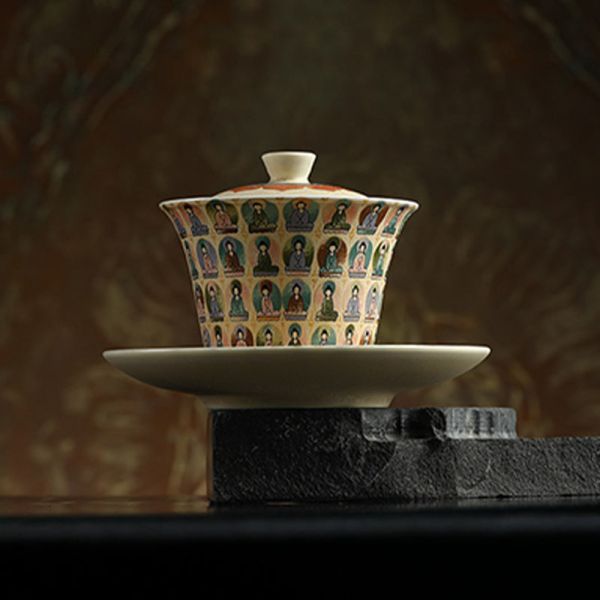 Buddha Stones Dunhuang Color Thousand Buddhas Flying Apsaras Pattern Gaiwan Teacup Kung Fu Tea Cup With LidAs low as $72.59 Regular Price $96.79
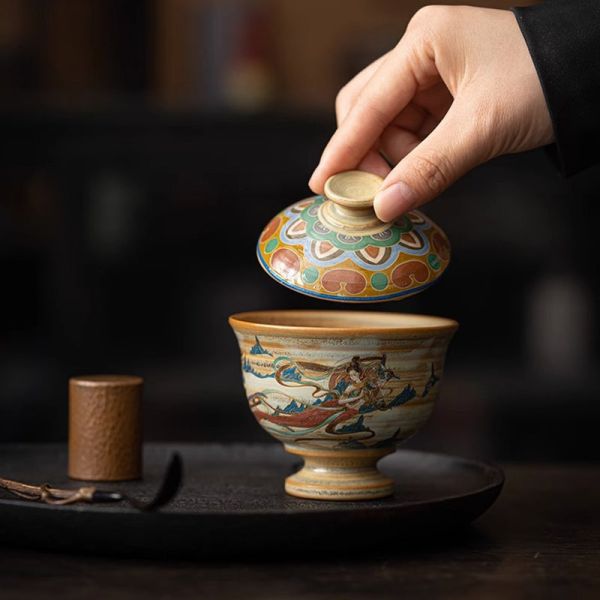 Buddha Stones Dunhuang Flying Apsaras Ceramic Gaiwan Sancai Teacup Kung Fu Tea Cup With LidAs low as $25.59 Regular Price $35.05