
Gaiwan Size Guide: Set Up for Your Tea Servings
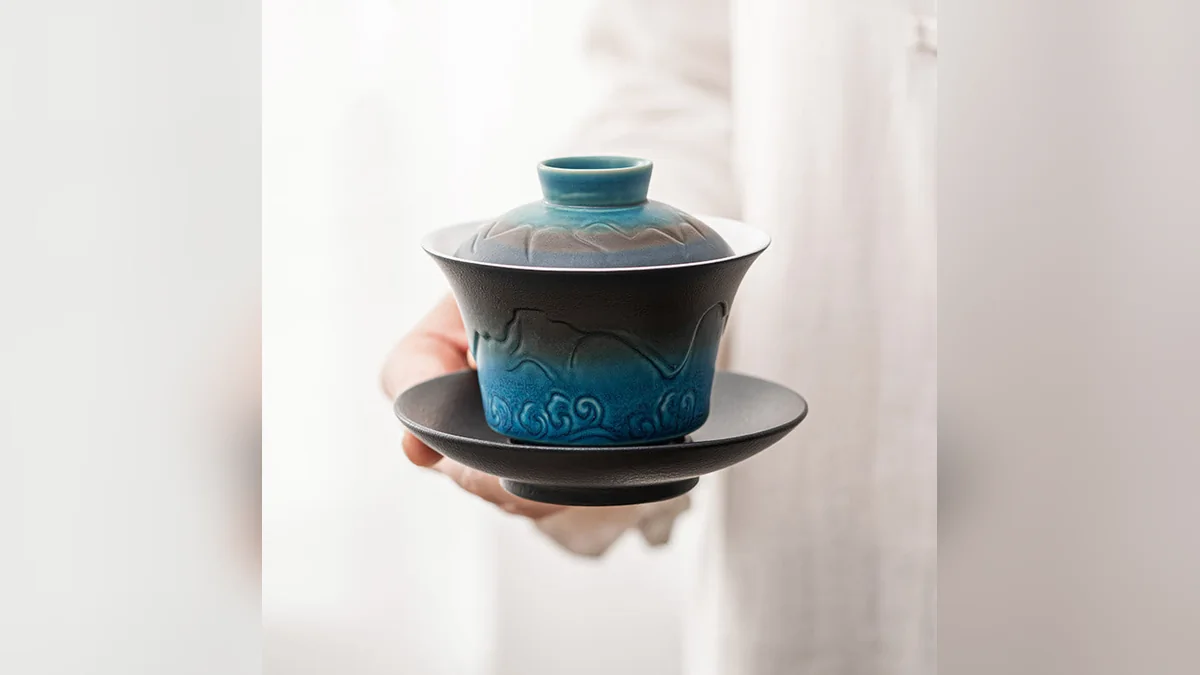
Tea flows from a tilted gaiwan into a serving pitcher while the lid holds back the leaves. The amount in that pour matters more than how large the bowl looks. This gaiwan size guide starts with 120-150ml for smaller servings and 200-230ml when you need more tea per infusion, subject to a comfortable grip. In a traditional three-part arrangement, the bowl rests on its saucer with the lid above. Keep this assembly within easy reach on a stable tea surface, leaving room beside it for pouring.
Step 1: Use this gaiwan size guide to plan your servings
Begin with the tea you want to distribute from one infusion. A gaiwan's stated capacity is a starting point: leaves occupy space, and a practical fill level leaves clearance below the rim. You should not expect the full stated capacity to arrive in your drinking cups.
For a solo setup with small cups, consider the 120ml or 150ml range first. A 200ml or 230ml bowl may suit a larger combined serving, provided you can hold and tip it securely. These are planning ranges, not fixed rules about how many people a vessel serves.
Gather the cups you intend to use. Fill them with cool water to your preferred drinking level, then empty that water into a measuring jug. This gives you a useful serving target. Compare that target with the gaiwan's usable pour rather than choosing by guest count alone.
Step 2: Check dimensions alongside your grip
Capacity does not tell you how a gaiwan will sit in your hand. A broader rim asks for a wider span; a different bowl profile changes where your fingers meet the rim. Two vessels with the same capacity can therefore handle differently.
Read the dimensions for the exact option you are considering. If the measurements do not identify which component or direction they describe, avoid treating them as a confirmed rim diameter. A saucer can contribute to a set's overall footprint without describing the width you must grip.
When you have a gaiwan available, check the empty vessel over a clear surface. Your chosen hold should let you control the lid and tilt the bowl without stretching your fingers to their limit. Follow with a cool-water pour. A larger capacity is only useful when the filled vessel remains manageable.
Step 3: Give the gaiwan a clear place on the tea surface
Place the saucer on a level, water-tolerant surface, with the bowl seated securely and the lid resting on top between pours. In the traditional sancai interpretation, the lid, bowl, and saucer represent heaven, humanity, and earth. This symbolism describes the arrangement; it does not require a compass direction or promise an outcome.
Position a serving pitcher near the pouring side, with drinking cups beyond the main handling area. Leave enough clearance to lift and return the gaiwan without passing over another vessel. Keep the kettle where its spout and cord, if present, do not cross that route.
Check the setup with the actual saucer in place. A space that fits the bowl alone may feel crowded once you add the lid, pitcher, and cups. Reserve a clean spot for the lid when removed, and keep decorative objects outside the working area.
Step 4: Establish a working fill level with cool water
Before brewing, use cool water to find a fill level that allows a controlled pour. Leave space beneath the rim and check that seating the lid does not push water over the edge. Decant into a measuring jug to learn the volume at that level.
This measurement describes your setup, not a correction to the stated product capacity. Once tea leaves are added, the available water volume changes again. Leaves that open broadly need room, so avoid filling the bowl with dry leaf simply because the vessel looks spacious.
Use the result to choose your cup arrangement. If one pour leaves the last cup short, use smaller servings or fewer cups. For brewing technique after sizing, our gaiwan handling and brewing instructions cover the next stage. Keep the sizing check separate from decisions about infusion time and water temperature.
Step 5: Adjust the setup when the serving changes
Revisit capacity when you change cups or regularly serve a different number of people. A larger drinking cup can change the required volume more than adding another small tasting cup. Check the combined serving before replacing the gaiwan.
If you move to a larger bowl, repeat the grip and cool-water checks. Increasing capacity also increases the amount you are lifting when filled. Allow additional space for the vessel's stated dimensions, and confirm that the pitcher can receive the pour without being filled to its edge.
Common sizing mistakes to avoid
- Counting nominal capacity as finished tea: allow for leaves and clearance beneath the rim.
- Buying by appearance alone: compare the selected option's capacity and dimensions before choosing a color or design.
- Assuming equal capacity means equal shape: check measurements separately from milliliters.
- Filling to compensate for too many cups: reduce serving sizes or reconsider the vessel capacity instead of crowding the rim.
- Skipping the dry placement check: arrange the saucer, pitcher, cups, and lid space before adding hot water.
Our gaiwan options from 120ml to 230ml
Our Retro Blue Ocean Sea Waves Gradient Ceramic Gaiwan has a capacity of 120 milliliters and a stated size of 11.3*9.3cm*120ml. Its options are Black Green Gradient, Black White Gradient, and Blue Black Gradient, with that same stated size. Use 120ml as the starting figure when planning smaller pours.
The Green Ocean Waves Design Gaiwan is ceramic with a capacity of 150 milliliters. The size options are 13.5cm*9.5cm*150ml and 9.5cm*8cm*150ml. Here, the capacity stays the same across two different stated sizes, making the selected dimensions especially relevant to your setup.
Our ceramic Vintage Brown Kiln Change Design Gaiwan offers 10cm*10.5cm*200ml and 10cm*10.5cm*230ml options. Its capacity range is 200-230 milliliters. Check the option before matching it to your intended serving volume.
The Retro Rust Glaze Ceramic Gaiwan has a capacity of 230 milliliters and a stated size of 11.2*10.2cm*230ml. Additional cup accessories shown in the photographs are display items excluded from the purchase; plan your pitcher and drinking cups separately.
FAQ: Choosing capacity for your tea setup
Is a 120ml gaiwan too small for two people?
Not necessarily. Two small servings may fit your intended pour, while two larger cups may not. Measure your preferred portions together and allow for the difference between stated capacity and usable tea volume.
Should a beginner choose 150ml or 230ml?
Start with serving needs and hand fit. A 150ml vessel is a reasonable size to consider for smaller pours, but capacity alone cannot confirm comfort. Check the dimensions and practice with cool water before handling hot tea.
Can I fill a larger gaiwan only partway?
Yes, but the bowl's width and handling requirements remain. A partial fill changes the water volume without changing the vessel's dimensions. For frequent small servings, compare a smaller option using the same cup, grip, and placement checks.
Shop the story
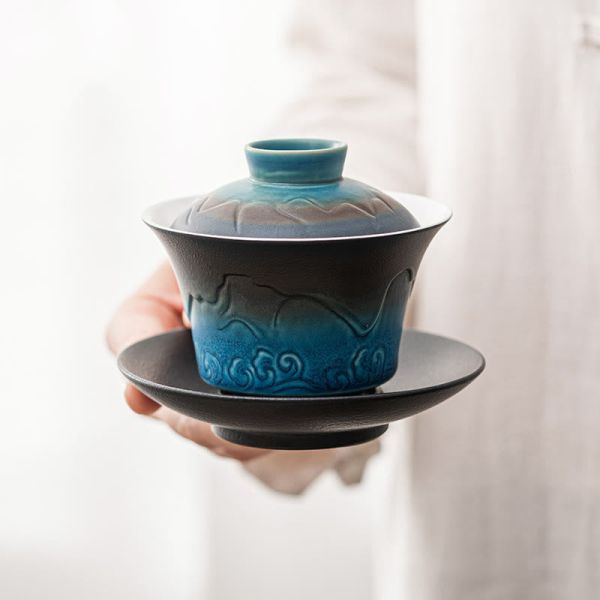 Buddha Stones Retro Blue Ocean Sea Waves Gradient Ceramic Gaiwan Sancai Teacup Kung Fu Tea Cup And Saucer With LidAs low as $45.59 Regular Price $62.45
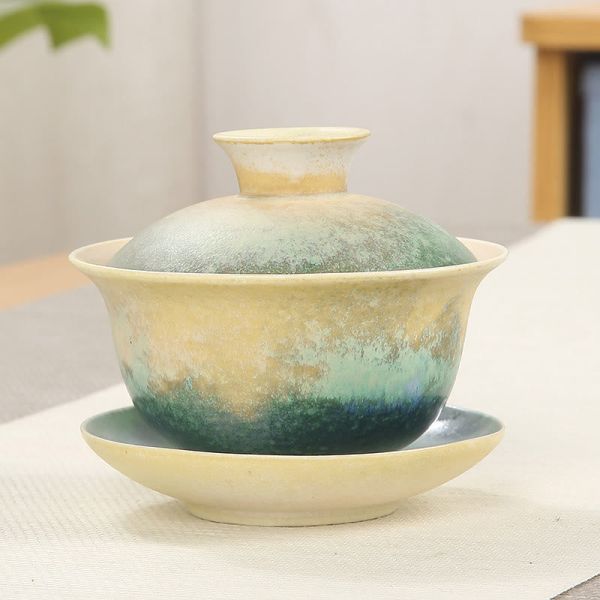 Buddha Stones Green Ocean Waves Design Porcelain Ceramic Gaiwan Sancai Teacup Kung Fu Tea Cup And Saucer With LidAs low as $27.59 Regular Price $37.79
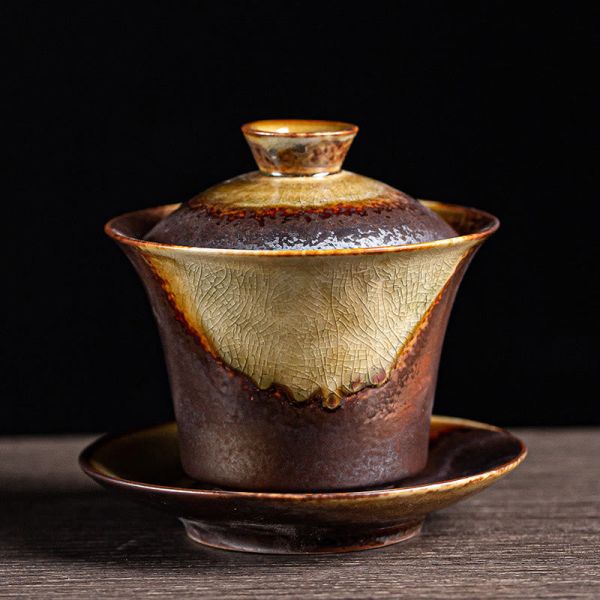 Buddha Stones Vintage Brown Kiln Change Design Porcelain Ceramic Gaiwan Sancai Teacup Kung Fu Tea Cup And Saucer With LidAs low as $42.59 Regular Price $59.15
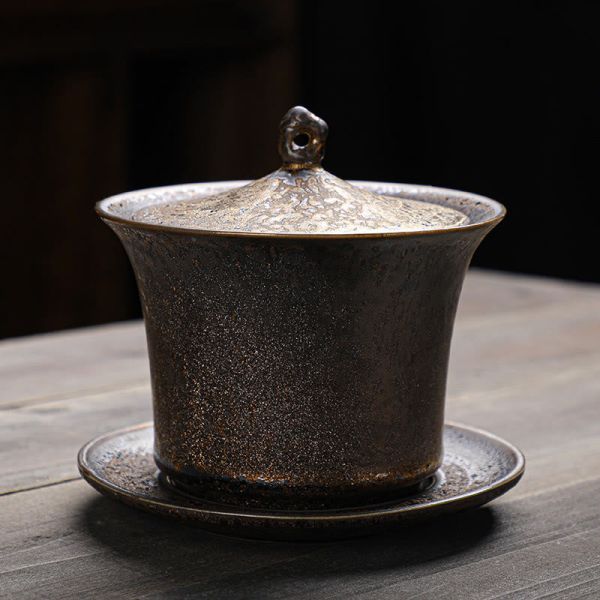 Buddha Stones Retro Rust Glaze Ceramic Gaiwan Sancai Teacup Kung Fu Tea Cup And Saucer With LidSpecial Price $33.59 Regular Price $44.79