Fu Character Meaning: Blessings, Customs, and Jewelry
Families paste the Chinese character 福 on doors at Lunar New Year, sometimes upside down. The fu character meaning is blessing, good fortune, and happiness. Fu is one of the most common auspicious characters in Chinese homes, and wearing or displaying it expresses a wish for those things. This is a cultural custom, not a guarantee that a particular outcome will follow.
A single character can carry a broad greeting, a family tradition, or a message on a gift. Knowing the meaning helps you read fu on a doorway, a ring, or a teacup without treating the object as a promise.
What is the fu character meaning in Chinese culture?
Fu (福) is a broad word for blessings and a fortunate, happy life. Depending on context, English translations emphasize blessing, happiness, or good fortune. These meanings overlap: the character expresses a generous wish for life to go well, rather than naming just one achievement or possession.
That breadth makes fu suitable for a New Year greeting or a gift to a household. It can include wishes for prosperity, but reducing it to money leaves out much of its meaning. When you encounter it on an object, read it as an auspicious message rooted in Chinese custom. The sentiment belongs to the design; it does not establish what will happen to the owner.
Why is fu hung upside down?
The explanation is a widely told wordplay. In Chinese, dao, meaning “upside down,” sounds like dao, meaning “arrived.” An inverted fu can therefore be read as “blessing has arrived.” The visual reversal turns a written wish into a spoken pun, which is why the placement is so often discussed during Lunar New Year.
Practice varies between households. Some display fu upright; some invert it only on certain doors or in certain places. Nobody should conclude that an upright character is a mistake or that every display should be turned over. If you are joining a household celebration, follow the host’s custom. The familiar pun explains an inversion, but it is not a universal placement rule.
What are the Five Blessings, or wu fu?
The Five Blessings, called wu fu, are traditionally listed as long life, wealth, health and peace, love of virtue, and a peaceful end of life. This is a traditional account of a fortunate life, rather than a list of benefits an ornament can deliver.
The list gives fu more depth than a simple wish for material success. Love of virtue places value on how a person lives, while the final blessing concerns a peaceful completion of life. Read together, the five describe hopes spanning a whole lifetime. Their appearance in decorative art expresses those hopes symbolically; owning the design does not ensure that they will be fulfilled.
How is fu different from lu, shou, and xi?
Fu means blessing; lu refers to career or rank; shou means longevity; and xi means joy. They are distinct characters with related auspicious meanings, and they often appear together in art and on teaware. Recognizing the differences helps you understand the message on a group of objects.
Fu offers the broad wish, while the others give more specific emphasis. A cup bearing shou expresses a longevity theme, for example, while xi emphasizes joy. When several characters form a set, their messages sit alongside one another. They do not all translate as “luck,” and a group of five auspicious characters is not automatically a depiction of the traditional Five Blessings.
Where does fu appear besides doors?
Fu appears in red paper cut-outs, calligraphy scrolls, jewelry, and keychains. It may stand alone or sit among other auspicious motifs. On a scroll, the written character is the central message; on a wearable object, it brings that same wish into a smaller format.
Bats can also stand for blessings in Chinese decorative art because the Chinese word for bat, fu, sounds like fu for blessing. This is a visual pun: the animal suggests the word through its name. Five bats can represent the Five Blessings. The connection is linguistic and symbolic, so a bat motif in this context can carry a favorable meaning even when the written character is absent.
Is it all right to wear fu jewelry if you are not Chinese?
Yes. You can wear fu jewelry with an understanding of its meaning and respect for the culture it comes from. You do not need to claim a Chinese identity or a particular religious practice to appreciate a wish for blessings and happiness.
Learn what the character says, and avoid treating it as a slogan detached from its context. If someone asks about it, a plain explanation is enough: it is the Chinese character for blessing and good fortune. For a gift, a short note explaining that wish can be more useful than any extravagant claim about the piece. Respectful appreciation starts with accurate words.
Fu Character Jewelry, Teacups, and Keychains
Our fu designs place the character on objects with different uses. Words such as “Blessing,” “Luck,” and “Wealth” in product names describe traditional wishes, not assured results. Materials, measurements, and included items provide the practical details for choosing among them.
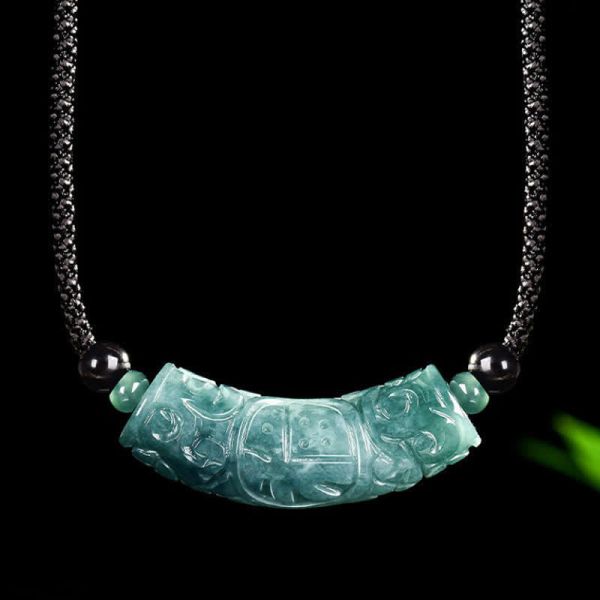
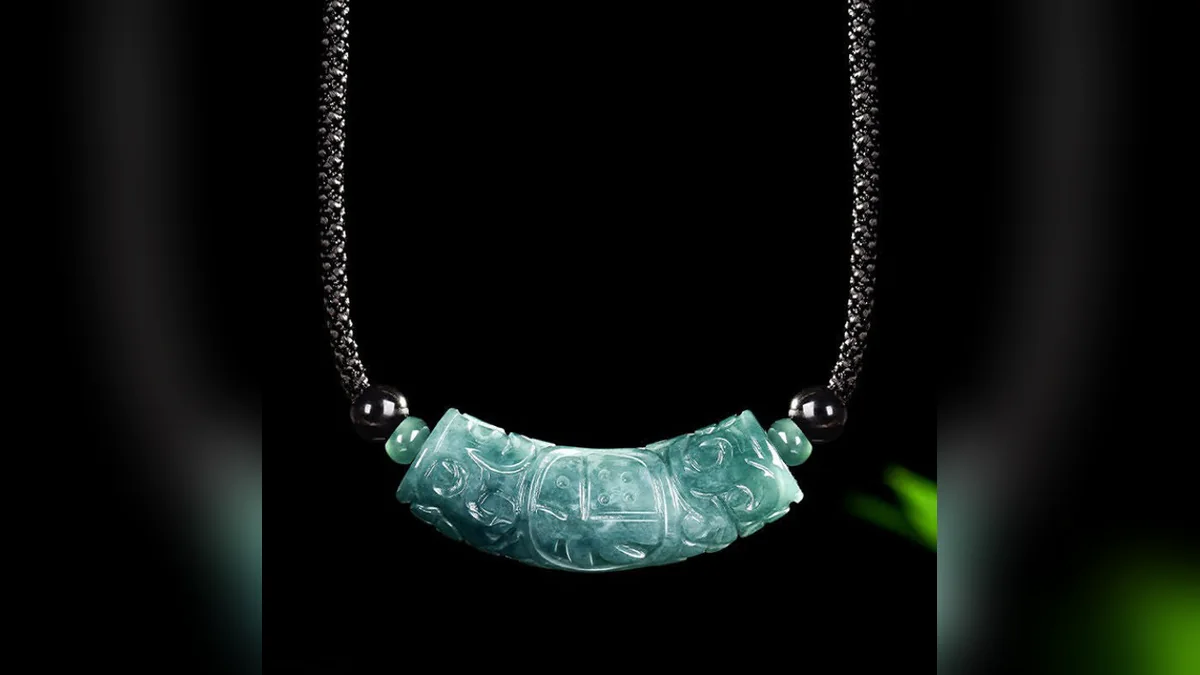
Jade engraved curved bar necklace
The Jade Fu Character Engraved Curved Bar Necklace is made of jade and rope. The necklace is about 50 cm (20 in), and the pendant is roughly 0.53 × 1.75 in / 13.5 × 44.5 mm. The engraved character gives the curved bar its fu theme.
The listing notes possible variations in the jade’s color, details, and overall appearance. Keep those variations in mind when comparing the product photograph with the listed design.
Vintage green jade ring
Our Vintage Green Jade Fu Character Pattern Ring is listed for women and uses jade and copper alloy. Sizes US 7, US 8, US 9, US 10, and US 11 correspond to approximate inner diameters of 17.3, 18.1, 18.9, 19.8, and 20.6 mm, respectively.
According to the listing, you should measure the knuckle, as the widest point of the finger, and consider sizing up if you fall between sizes. Our ring measurement guide explains how to take a measurement before selecting a size.
Hand painted ceramic teacup set
The Hand Painted Fu Character Ceramic Teacup Set with Gift Box includes five ceramic teacups and one gift box. The page explains their characters as lu for career, shou for longevity, xi for peace and joy, cai for wealth and prosperity, and fu for blessings.
Each cup measures 7.5 × 5.2 cm and holds 125 ml, about 4.4 oz. Kiln variation means the patterns differ slightly. Teapots shown in the photographs are props and are not included.
Copper blessing bag keychain
The Copper Fu Character Hand-Woven Blessing Bag Beaded Keychain uses copper and braided rope. The listing offers two options: a Fu Character version and a Wealth version.
Check the option name when choosing, since those two themes are distinct. The Fu Character version expresses the broad wish for blessings discussed here; the Wealth option names a more specific traditional wish for prosperity.
Shop the story
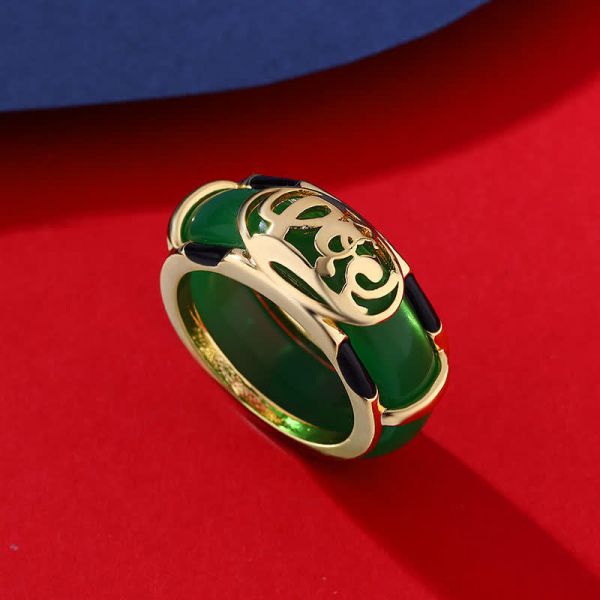 Buddha Stones Vintage Green Jade Fu Character Pattern RingAs low as $25.59 Regular Price $34.12
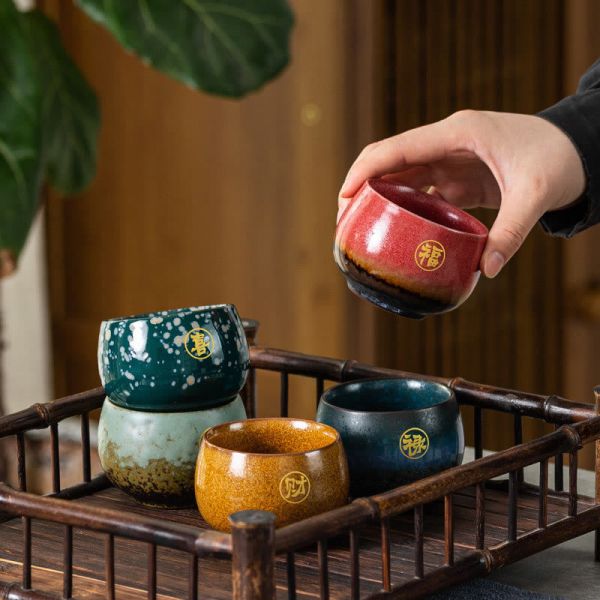 Buddha Stones Hand Painted Fu Character Ceramic Teacup Kung Fu Tea Cup With Gift BoxSpecial Price $89.59 Regular Price $122.73
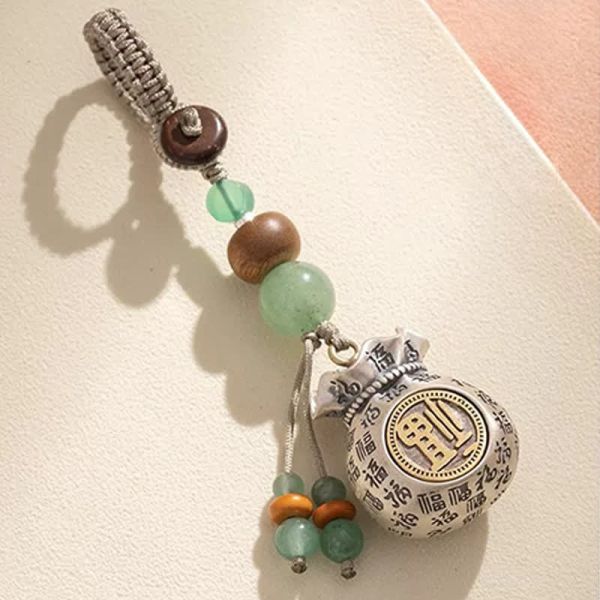 Buddha Stones Copper Fu Character Hand-Woven Blessing Bag Beaded KeychainsAs low as $25.59 Regular Price $34.12