
Frog Symbolism in Folklore, Art, and Everyday Objects
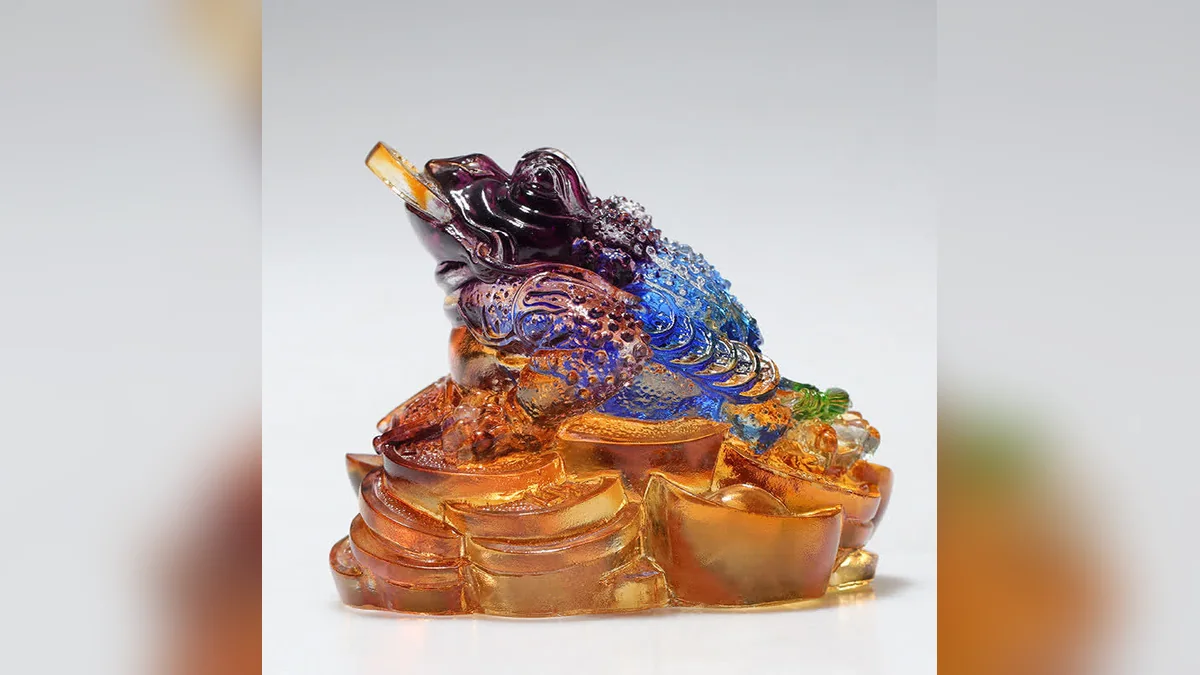
A frog motif often shows folded hind legs and round, raised eyes. Frog symbolism traditionally centers on renewal, fertility, rain, and the passage from one stage of life to another. Its meaning depends on the cultural setting. Some traditions also associate frogs or toads with luck, wealth, or protection. These are beliefs; a decorative object cannot guarantee those outcomes. At Buddha Stones, we distinguish the animal, its pose, and its surroundings before assigning a meaning.
Frog symbolism begins with water and change
There is no single origin story behind this widespread motif. Frogs live close to water, and their calls are familiar features of wet seasons. Their development from tadpoles into adults offers a visible image of transformation. Those observations help explain why people connect them with rainfall, seasonal renewal, and new beginnings.
Fertility, in this symbolic context, refers to associations with reproduction and abundance in nature. It should be understood as a traditional theme rather than a claim about what wearing or displaying a frog will do. A pond scene may simply celebrate animal life, while a ceremonial image may carry a more specific local meaning.
The enchanted frog in European tales
The familiar Frog Prince story gives the animal another role: a creature whose outward appearance conceals a different identity. Versions differ, so the popular image of a kiss should not be treated as a detail shared by every telling. Transformation is the useful connection here. A frog beside a crown may refer to that tale rather than to rain or prosperity.
This distinction matters when choosing words for a gift. You might describe the motif as a reminder of change or of looking beyond appearances. That is a personal reading of the story, rather than a promise that an object will change someone’s circumstances.
The separate language of the money toad
Chinese decorative traditions also include the three-legged money toad, often called a money frog in English. Its association with prosperity belongs to a particular symbolic tradition. It should not supply the meaning for every ordinary frog figure. Coins and the unusual number of legs help identify that context; a frog shown resting beside water may have a different purpose.
Reading the motif across different settings
Art and objects: start with the scene
A frog in a pond painting can belong to a close observation of nature. Reeds, ripples, insects, and other pond life establish the setting before any symbolic interpretation begins. A solitary frog presented as an emblem invites a different kind of attention. Look for repeated attributes, accompanying writing, or information about the object’s intended use.
Pose also changes the reading. A leaping animal emphasizes movement; a seated one emphasizes its compact shape. A frog posed like a meditating person uses a human gesture. That resemblance alone does not establish the figure as a Buddhist deity or a traditional religious image.
Textiles and jewelry: repetition or emphasis
On a printed or embroidered textile, repeated frogs can function as a decorative pattern. A frog among leaves and flowers may belong to a broader nature design. Without a documented cultural context, it is better to describe what appears on the fabric than to assign an elaborate hidden message.
Jewelry isolates the animal more closely. A pendant or charm makes the frog the central subject, while a crown, coin, flower, or inscription can narrow its meaning. The same outline can support several readings. Material and color alone do not prove which tradition a maker intended.
Festivals: let the occasion explain the animal
Festival imagery needs its own context. A frog on a seasonal banner, costume, or paper decoration does not automatically refer to wealth. Consider the event’s name, its local stories, and any explanation supplied by its organizers. The motif may relate to water, the season, a folktale, or a playful animal theme.
A useful caption names the actual occasion before explaining its symbols. Avoid treating a local custom as something observed throughout an entire country, or calling a contemporary frog decoration an ancient festival object without evidence.
Companion motifs that guide interpretation
A frog’s surroundings often say more than its color. These combinations offer starting points for reading a design, rather than fixed meanings that apply everywhere:
- Frog and water: A pond, flowing lines, or rain imagery places the animal within its habitat and may support a seasonal interpretation.
- Frog and coins: Coins can point toward a traditional prosperity wish, especially in a recognizable money-toad composition.
- Frog and crown: This pairing may refer to the enchanted prince of European fairy tales.
- Frog and lotus: The combination can be a pond scene. A lotus also has specific Buddhist associations, but the flower alone does not make the frog a Buddhist symbol.
Our discussion of lotus flower meaning in Buddhism explains the flower’s religious context separately. Keeping the two subjects distinct allows a design to carry several associations without forcing them into one explanation.
Frog decorations at Buddha Stones: materials and options
Liuli glass sizes and weights
Our Feng Shui Frog Liuli Crystal Art Piece is a decoration with the material specified as Liuli Glassware/Crystal Glass. Size options are 8*7*6cm, 11*9*10cm, and 17*13*12.5cm, given as length, width, and height. Specified weights are 1000g, 2000g, and 4000g.
Resin frogs alongside cat and dog options
The Meditating Zen Dog Cat Frog Decoration uses resin. Its frog options are Frog 9.5x12.5X5cm(300g) and Meditation Frog 12.8CMX5.5CMX10.3CM(300g). Other options are Meditation Cat 9CMX5.8CMX10.3CM(197g) and Meditation Dog 9CMX8CMX12CM(180g).
Copper/brass animal options
The Mini Frog Turtle Koi Fish Snail Crab Decoration has Copper/Brass as its specified material and a size of About 5cm. Options include Feng Shui Frog and Frog Decoration&Incense Burner, alongside Copper Coin Turtle, Crab, Koi Fish, Longevity Turtle, Snail, and Turtle.
Ceramic forms and color options
Our Meditating Ceramic Zen Frog Statue Decoration uses ceramic. Its size specifications are Praying Frog 10.4CMX5.3CMX9CM, Meditation Frog 10.8CMX3.5CMX8.7CM, and Frog 10.6CMX4.6CMX9.1CM. The option names also include Green and White.
A small animal with several possible meanings
Read a frog motif through its setting: water, a storybook crown, a coin, or a humanlike pose. We use traditional meanings to explain those visual choices, while leaving room for personal interpretation. Words such as Wealth in a product name express a traditional wish; they do not guarantee prosperity. The clearest description respects both the object you can see and the particular tradition behind it.
Shop the story
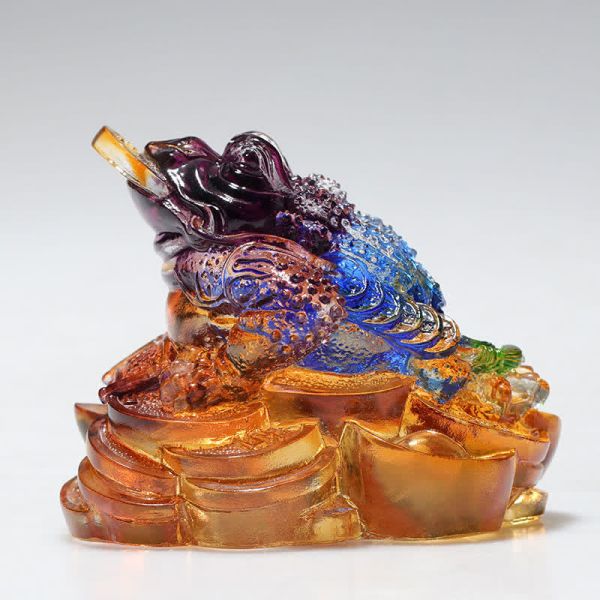 Buddha Stones Feng Shui Frog Handmade Liuli Crystal Art Piece Wealth Home Office DecorationAs low as $139.59 Regular Price $186.12
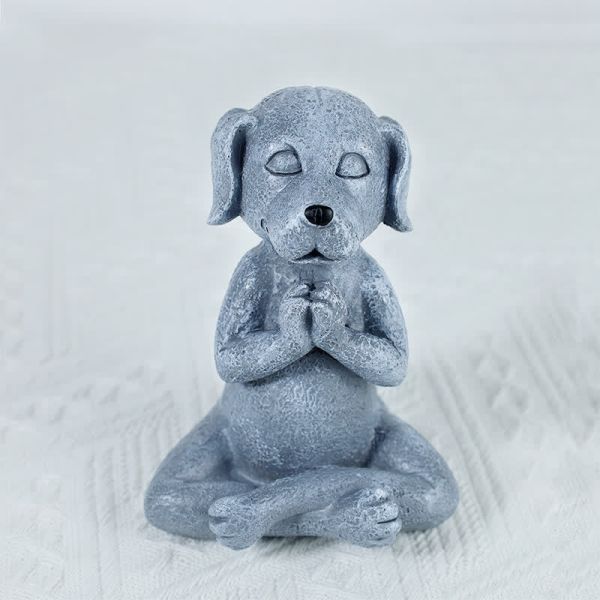 Buddha Stones Meditating Zen Dog Cat Frog DecorationAs low as $45.59 Regular Price $63.32
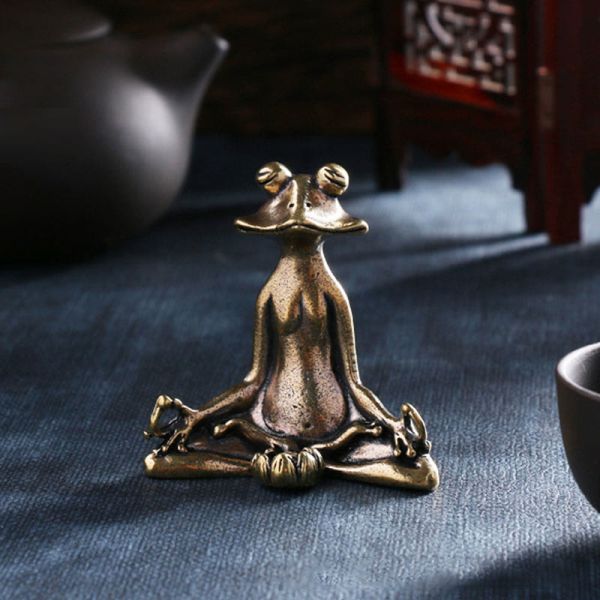 Buddha Stones Mini Small Frog Turtle Koi Fish Snail Crab Copper Wealth Home DecorationAs low as $33.59 Regular Price $47.31
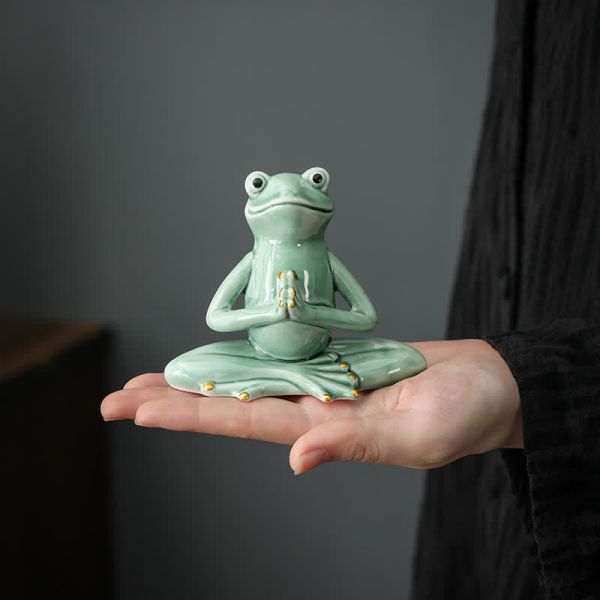 Buddha Stones Meditating Ceramic Zen Frog Statue DecorationAs low as $39.59 Regular Price $52.79