
Fox Symbolism: Nine Tails, Folklore, and Motifs
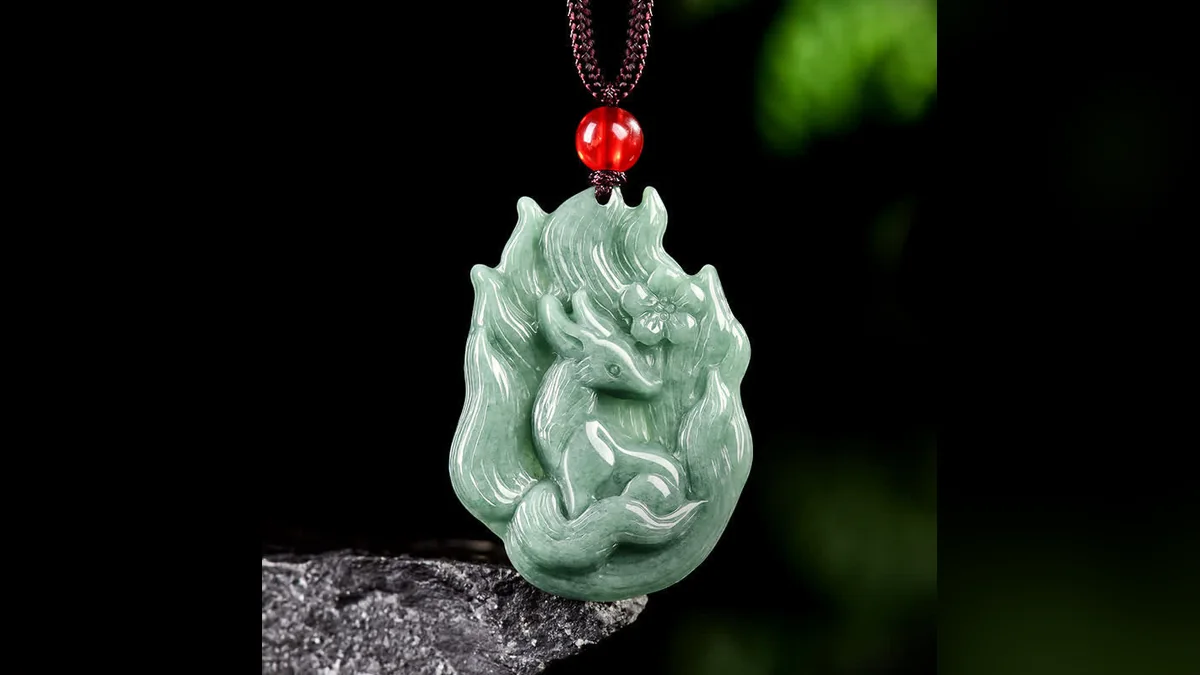
Nine sweeping tails spread behind a pointed fox face. Fox symbolism traditionally centers on cleverness, transformation, and the uncertain boundary between human and animal worlds. East Asian legends give the nine-tailed fox a particularly varied character: it may be helpful, deceptive, beautiful, or dangerous. Some traditions also associate fox motifs with wishes for luck, wealth, or protection. Those are cultural beliefs; a fox ornament cannot guarantee those outcomes.
At Buddha Stones, we read this motif through its setting. A shrine figure, a character in a folktale, and a pendant can share an outline while carrying different associations.
Fox symbolism across neighboring traditions
Chinese fox spirits and the nine tails
Chinese folklore includes fox spirits that can take human form. These figures appear in stories about encounters, relationships, deception, and repayment of kindness. Their behavior varies: one tale may make a fox a generous companion, while another presents it as a threat. Reducing the animal to a single meaning loses that range.
The nine-tailed fox belongs to this broader world of legendary creatures. Its many tails mark it as an extraordinary being rather than an ordinary woodland animal. Later storytelling and modern adaptations have developed the image in different directions, so a graceful fox on an accessory does not identify one particular legend.
Beauty and intelligence are common associations, but neither makes the figure automatically benevolent. Transformation is central to many fox tales: appearances can conceal identity, and the creature's actions reveal more than its face.
Japanese and Korean contexts
Japanese fox traditions include shapeshifting tales as well as the foxes associated with Inari. At Inari shrines, fox figures serve as messengers of the deity. The fox and Inari are not interchangeable. A shrine fox therefore needs to be understood through that religious setting, rather than treated as a generic decorative animal.
Korean tales also include the nine-tailed fox, commonly called the gumiho. Many familiar stories present a more threatening figure, although portrayals vary and modern retellings may change its character. Shared tails do not make Chinese, Japanese, and Korean narratives identical.
The fox is not one of the twelve Chinese zodiac animals. Nor is the nine-tailed fox a universal Buddhist emblem. We keep these distinctions visible because a shop carrying Buddhist objects may also carry designs drawn from broader folklore.
From story scenes to cloth and festival masks
In paintings and prints, a fox may appear as an animal, a humanlike figure, or a character whose identity is disclosed by a tail. Surrounding figures and the story being depicted matter. A lone fox beneath trees offers fewer clues than a scene showing an encounter between a fox and a person.
Textiles can simplify the creature into an outline or repeat it as a pattern. Count the visible tails where the design allows it, then consider the rest of the composition. A repeated animal pattern may be mainly decorative; it need not reproduce a religious image or a specific tale.
Jewelry gives the motif a smaller field. The face, ears, and curled tails can carry the design without an accompanying scene. That makes a pendant's meaning more open to personal interpretation. A gift might express admiration for cleverness or an interest in folklore, provided the giver does not present symbolic wishes as promised results.
Fox masks also appear in some Japanese festival and performance settings. Their presence does not mean that every festival involving a fox shares the same origin or purpose. A mask, procession figure, or costume should be read in relation to the particular event.
Modern fantasy art often borrows the nine tails while creating its own characters. Recognizing the older motif can enrich your reading, but it does not turn a contemporary design into an ancient ceremonial object.
Reading flowers, clouds, and moonlit settings
A neighboring motif can add context without creating a fixed formula. Start with what is visible, then separate established associations from your own interpretation. These distinctions are useful when comparing a decorative composition with a scene drawn from a known story.
- Fox and moon: A moon can establish a nighttime setting and suit a story about a mysterious encounter. Its presence alone does not identify a particular fox legend.
- Fox and flowers: Blossoms may provide a seasonal setting or simply fill the composition. Identify the flower before assigning it a separate traditional meaning.
- Fox and clouds: Clouds can place a creature in an imagined or celestial setting. They do not, by themselves, establish which religious tradition a design belongs to.
- Fox and lotus: A lotus has its own Buddhist associations, including purity. Our discussion of the lotus flower's meaning in Buddhism explains that context; combining it with a fox does not establish a shared Buddhist teaching.
Color deserves the same care. A pink, white, or blue fox in a contemporary object may reflect a design choice. Without a stated cultural context, color alone is insufficient evidence for a claim about romance, status, or ritual use.
Fox motifs in our jewelry and decorative objects
Our fox designs include a necklace, a phone hanging decoration, a folding fan option, and resin decor. Words such as Luck and Protection in product names express traditional wishes. They do not promise results.
Jade pendant necklace
The Buddha Stones Jade Nine-Tail Fox Pendant Necklace uses jade and rope. Its necklace length is Approx. 20 in / 50 cm, and its pendant size is Approx. 1.08 × 1.48 × 0.20 in / 27.5 × 37.5 × 5 mm. The package includes 1 × Necklace. The natural materials may show slight variations in color, details, and overall appearance.
Chalcedony phone hanging decoration
The Natural Chalcedony Fox Harmony Phone Hanging Decoration has Green Fox, Pink Fox, Purple Fox, and White Fox options. Its length is 9.5cm, and its size is 23*18mm. The specified materials are Chalcedony, Ivory Fruit, Pink Cat Eye, Blue Cat Eye, White Crystal, and Green Cat Eye.
Folding fan with a fox option
The Buddha Stones Vintage Folding Fan offers these options: Bamboo and Crane, Nine-Tailed Fox, Osmanthus Fragrans and Palace, Phoenix, and Tiger and Mountain. Its materials are cloth fabric and plastic. Folded Length is 26cm; Unfolding Size is 47cm; Folded Size is 26*3*2cm.
Resin nine-tailed fox decoration
The Buddha Stones Nine Tailed Fox Fairy Resin Home Decoration is made of resin and has a stated size of 30*22*14cm. Its options are Blue Male Nine-Tailed Fox, Pink Female Nine-Tailed Fox, White Female Nine-Tailed Fox, and White Male Nine-Tailed Fox.
Keep the creature's context in view
The fox's appeal includes its ambiguity. Cleverness can serve kindness or deception, and a beautiful figure may conceal another identity. When you encounter the motif, look for its setting, companions, and connection to a story. Those details leave room to appreciate the design while respecting the traditions behind it.
Shop the story
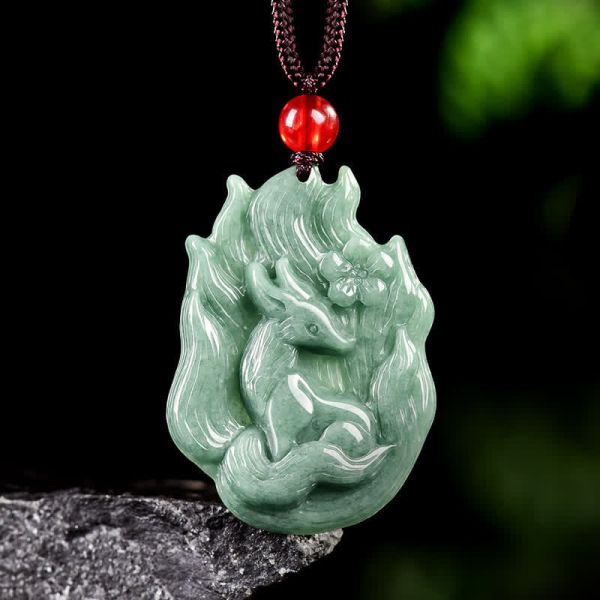 Buddha Stones Jade Nine-Tail Fox Luck Relief Carved Pendant NecklaceSpecial Price $48.59 Regular Price $65.66
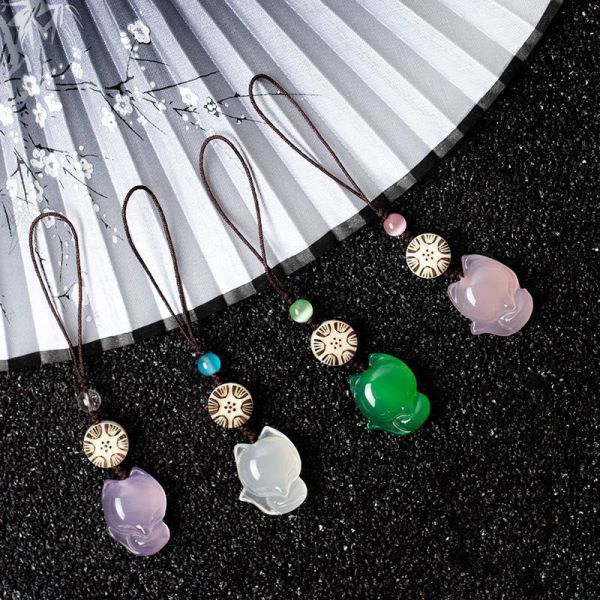 Natural Chalcedony Fox Harmony Phone Hanging DecorationAs low as $25.59 Regular Price $35.54
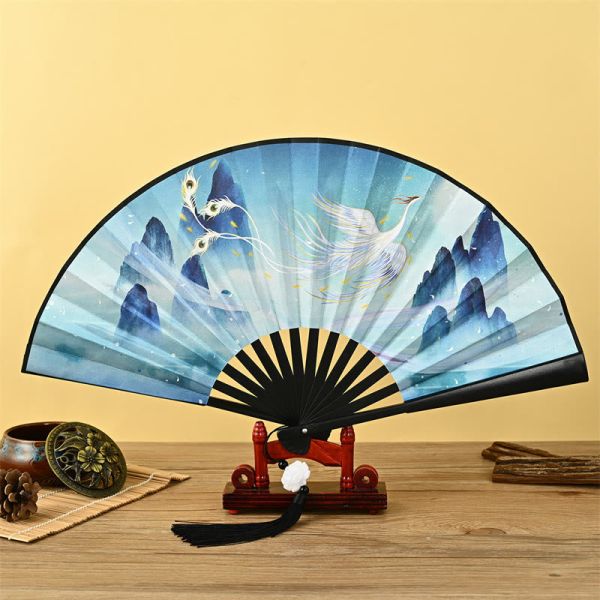 Buddha Stones Vintage Phoenix Nine Tailed Fox Flower Bamboo Tiger Handheld Folding Fan Lotus Tassel FanAs low as $15.59 Regular Price $20.79
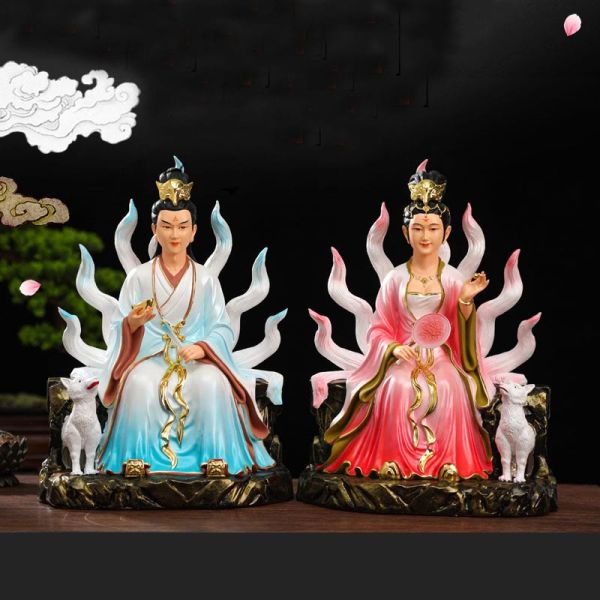 Buddha Stones Nine Tailed Fox Fairy Luck Protection Resin Home DecorationAs low as $239.59 Regular Price $337.45