
Elephant Symbolism in Sacred Art and Everyday Motifs
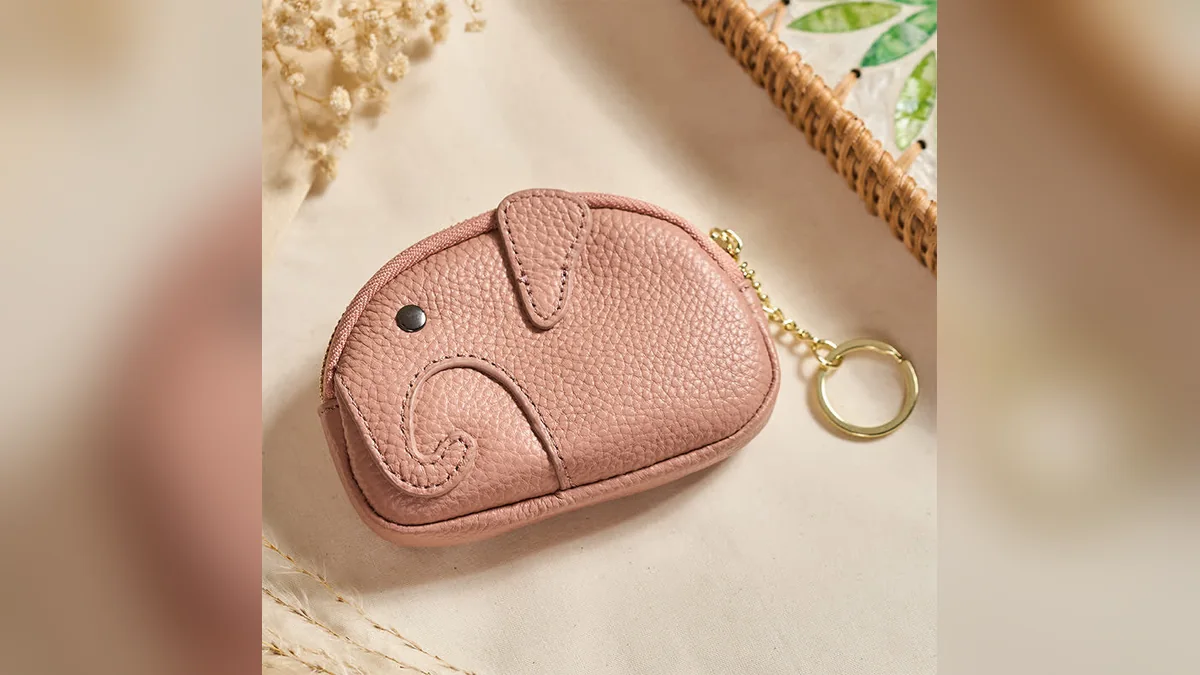
An elephant motif is recognizable by its long trunk, broad ears, and heavy, rounded body. Elephant symbolism traditionally expresses strength, wisdom, dignity, and good fortune, with different meanings in Buddhist, Hindu, and decorative settings. Associations with luck, wealth, or protection belong to cultural belief; an image cannot guarantee those outcomes. The surrounding details matter: a white elephant in a Buddhist birth story carries a different meaning from a repeating elephant border on cloth. At Buddha Stones, we consider the setting a useful starting point for understanding the motif.
Elephant symbolism in Buddhist legend and sacred imagery
One familiar Buddhist account begins before the Buddha’s birth. Queen Maya dreams of a white elephant entering her side, a scene traditionally understood as an auspicious sign of the coming birth. Artists represent this dream in paintings and reliefs, sometimes showing the queen reclining beside the approaching elephant. This is a sacred birth narrative, rather than a general instruction about how to display elephant objects.
The white elephant also has associations with royal dignity in parts of South and Southeast Asia. Its unusual appearance helped distinguish it from an ordinary animal in stories and ceremonial imagery. The royal and religious associations can overlap, but they should not be treated as identical in every culture. A white elephant can refer to a particular narrative, a ruler’s status, or an auspicious ideal, depending on its setting.
Hindu imagery provides another important distinction. Ganesha is recognizable by his elephant head, but a picture of an elephant alone is not automatically an image of Ganesha. Attributes, companions, posture, and the larger composition identify a deity. Recognizing that difference lets you appreciate an animal motif without assigning it a religious identity that the design does not establish.
How the motif changes across art, cloth, jewelry, and festivals
Art and architectural decoration
Elephants appear in temple decoration, narrative paintings, sculpture, and ceremonial objects. A figure in a story scene may identify an event, while elephants supporting an architectural form can suggest strength or grandeur. Look beyond the animal’s outline to what it is doing. A rider, an offering, or neighboring figures may explain more than the position of the trunk alone.
Materials and style do not establish meaning by themselves. A simplified silhouette may retain the recognizable animal while leaving out the details needed to identify a sacred story. It is reasonable to describe such a design simply as an elephant motif.
Textiles and personal accessories
Repeated elephants work readily as borders and rows on fabric because the trunk, back, and legs form a distinct outline. Decorative coverings on the animals may recall ceremonial dress. Repetition can also serve a straightforward design purpose, creating rhythm across a shawl, wall hanging, or bag without telling a particular religious story.
Jewelry compresses the same image into a pendant, charm, or small connecting element. Some wearers choose it as a personal expression of admired qualities such as steadiness or wisdom. That personal interpretation can coexist with traditional meanings. A small charm rarely contains enough detail to support a precise claim about its cultural origin.
Festival and procession imagery
Elephants feature in some South and Southeast Asian festival traditions and ceremonial processions. Ornamental coverings, canopies, and accompanying figures place the animal within a public religious or royal setting. Customs vary by location and occasion. An elephant in festival imagery should therefore be read through the particular celebration, rather than through one universal definition of good fortune.
What accompanying symbols add to the picture
An elephant rarely needs a companion motif to be recognizable, but pairings can narrow its meaning. Before treating two nearby images as a fixed symbolic formula, check whether they belong to a known scene or simply share a decorative surface.
- Lotus flowers: In Buddhist art, the lotus commonly represents purity and awakening. Beside an elephant, it may help establish a sacred setting. Our explanation of the lotus flower’s Buddhist meaning gives that companion motif its own context.
- A rider or divine figure: The identity of the figure can be more important than the animal alone. Clothing, gestures, and other attributes help identify the figure and the scene.
- Flowers and patterned coverings: These may suggest celebration or formal adornment, but decorative detail alone cannot identify a specific festival or tradition.
- A second elephant: A matched pair can create visual balance. Claims that every pair means marriage or a particular family wish go beyond what the arrangement itself establishes.
No single meaning follows the elephant across these settings. A birth narrative, a festival scene, and a patterned accessory ask for different kinds of attention. Words such as “Luck” in our product names express traditional wishes, without promising that a purchase will change events.
Four elephant purses and their stated specifications
Elephant Wisdom Mini Zipper Purse
Our PU Leather Elephant Wisdom Mini Zipper Purse measures Approx. 12.5 cm × 2 cm × 8.5 cm / 4.92 in × 0.79 in × 3.35 in. It is made of PU leather and has a zipper closure, a detachable strap/handle, and an open interior. Color options include Black, DarkGreen, DarkOrange, DarkRed, Gold, LightPink, LightSteelBlue, and WhiteSmoke. The package includes 1 × Bag.
Lucky Elephant Wristlet Wallet
The PU Leather Lucky Elephant Wristlet Wallet has a zipper closure and a non-detachable strap/handle. Its material is PU leather, and its interior is open. Dimensions are Approx. 10 cm × 3 cm × 8 cm / 3.94 in × 1.18 in × 3.15 in. Available color options are BurlyWood, Chocolate, Linen, and SteelBlue. The package contains 1 × Bag.
Blue White Elephant Luck Bohemian Zip Purse
Polyester is the specified material for the Blue White Elephant Luck Bohemian Zip Purse. Its dimensions are Approx. 11.3 cm × 9.3 cm / 4.45 in × 3.66 in. This bag has a zipper closure and an open interior, with no strap or handle. The package includes 1 × Bag.
Elephant Trifold Compact Purse
The PU Leather Elephant Trifold Compact Purse specifies PU leather and cotton polyester as its materials. It measures Approx. 13.5 cm × 3 cm × 9.5 cm / 5.31 in × 1.18 in × 3.74 in. Its closure is a snap button, its strap/handle is non-adjustable, and its interior has multiple compartments. The package contains 1 × Bag.
Let the setting guide the meaning
Elephant symbolism becomes clearer when you consider the story, accompanying figures, and object together. A sacred image deserves attention to its tradition; a decorative elephant can carry a simpler personal association. We value that distinction because it leaves room for both cultural understanding and an everyday appreciation of the animal’s familiar form.
Shop the story
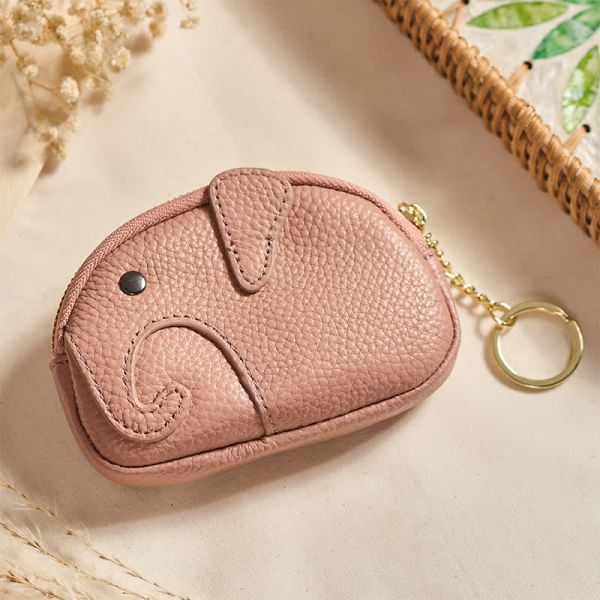 Buddha Stones PU Leather Elephant Wisdom Mini Zipper PurseAs low as $22.59 Regular Price $31.38
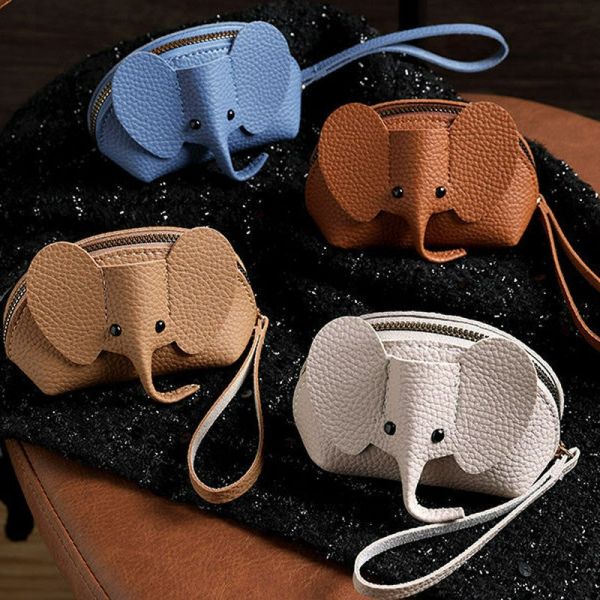 Buddha Stones PU Leather Lucky Elephant Wristlet WalletAs low as $13.59 Regular Price $18.62
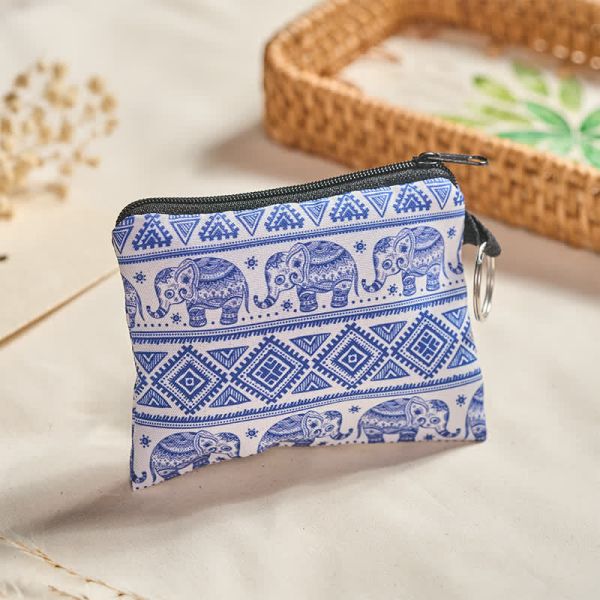 Buddha Stones Blue White Elephant Luck Bohemian Zip PurseSpecial Price $13.59 Regular Price $18.12
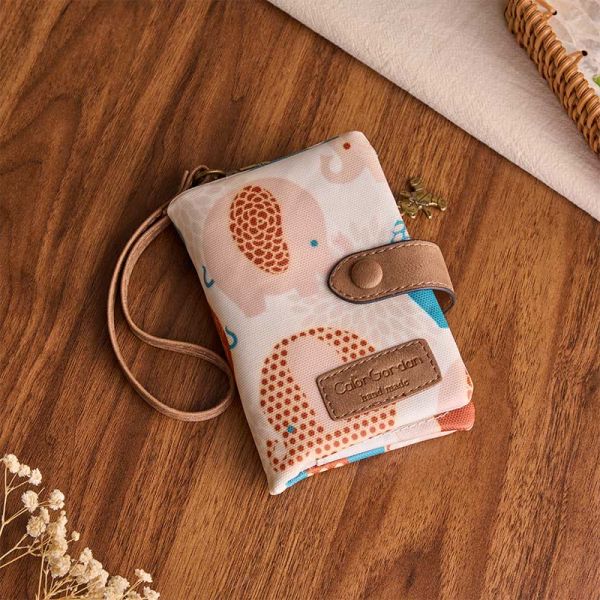 Buddha Stones PU Leather Elephant Trifold Compact PurseSpecial Price $22.59 Regular Price $30.53