Dorje Vajra Meaning: From Ritual Hands to Jewelry
A Tibetan Buddhist ritual leader holds a dorje in his right hand and a bell in his left during recitation. The two objects belong to the same ceremony, carrying related meanings. The traditional dorje vajra meaning joins the diamond's indestructibility with the thunderbolt's force; in Buddhism, it symbolizes steadfast wisdom and compassionate action. Associations with luck, wealth, or protection belong to religious and cultural belief. An object bearing the symbol cannot guarantee those outcomes.
That ceremonial setting gives the small form its context. Before it became a motif on a ring or a bead, the dorje had a place in religious practice. Its outline can travel into everyday jewelry, but its history deserves more than a passing reference to good fortune. At Buddha Stones, we approach it through the relationship between an object, its use, and the intention expressed by its design.
Dorje vajra meaning in ceremonial metalwork
Dorje is the Tibetan name; vajra is Sanskrit. These words refer to the same ritual implement, rather than two separate objects that must be combined. Knowing both names also makes it easier to recognize the symbol across museum descriptions, religious texts, and jewelry names.
In Tibetan Buddhist ritual, the dorje is commonly paired with a bell. The dorje represents method, often explained through compassionate action, while the bell represents wisdom. Their use together expresses the importance of both. A photograph of a dorje by itself can obscure that relationship, especially when its sculptural shape receives more attention than its ceremonial role.
Metalworking gives this relationship a visible form. Traditional dorjes often have a central grip and balanced ends, with prongs arranged around a central point. Casting and finishing turn that repeated structure into an object that can be held. The number and arrangement of prongs vary, and their interpretations depend on the particular form and teaching tradition. Counting points alone cannot tell you everything about an unfamiliar example.
This is where looking slowly becomes useful. Follow the outline from the center toward one end, then compare it with the other. Notice how the parts return toward a shared point. You can appreciate that organization without assigning a separate promise to every detail. For questions about a dorje's role in a particular ceremony, a teacher within that tradition is a better starting place than a decorative description.
When a ceremonial outline becomes jewelry
On a ring, the dorje appears within the smaller space of a wearable design. A wrist mala places it alongside beads, while a longer mala connects it with a format traditionally used to count recitations. These settings change how the symbol is encountered: in a ceremony it is handled according to a practice; in jewelry it may be seen during ordinary activities.
A person might choose the motif to express respect for Buddhist teachings, a connection with family tradition, or an appreciation of its balanced shape. Those are reasons for choosing a design, rather than claims about what wearing it will do. Religious jewelry does not need a promised result to carry personal significance.
It also helps to distinguish neighboring symbols. A dorje motif and the mantra Om Mani Padme Hum can appear among options on the same product page, yet they are different designs with different religious contexts. Our article on Om Mani Padme Hum discusses the mantra separately. Choose the option that corresponds to the symbol you intend to wear.
Respect can be practical and modest. Learn the name, understand its ceremonial background, and avoid presenting jewelry as proof of religious attainment. If you give a dorje design as a gift, explain what drew you to it. A short, accurate explanation leaves room for the recipient's own relationship with the symbol.
Four dorje designs in our selection
The following products offer different ways to encounter the motif. The distinction between a ritual implement and a jewelry motif matters when comparing these options. Where a name uses Luck or Wealth, those words express traditional wishes; they are not assurances of prosperity or good fortune.
A copper meditation dorje
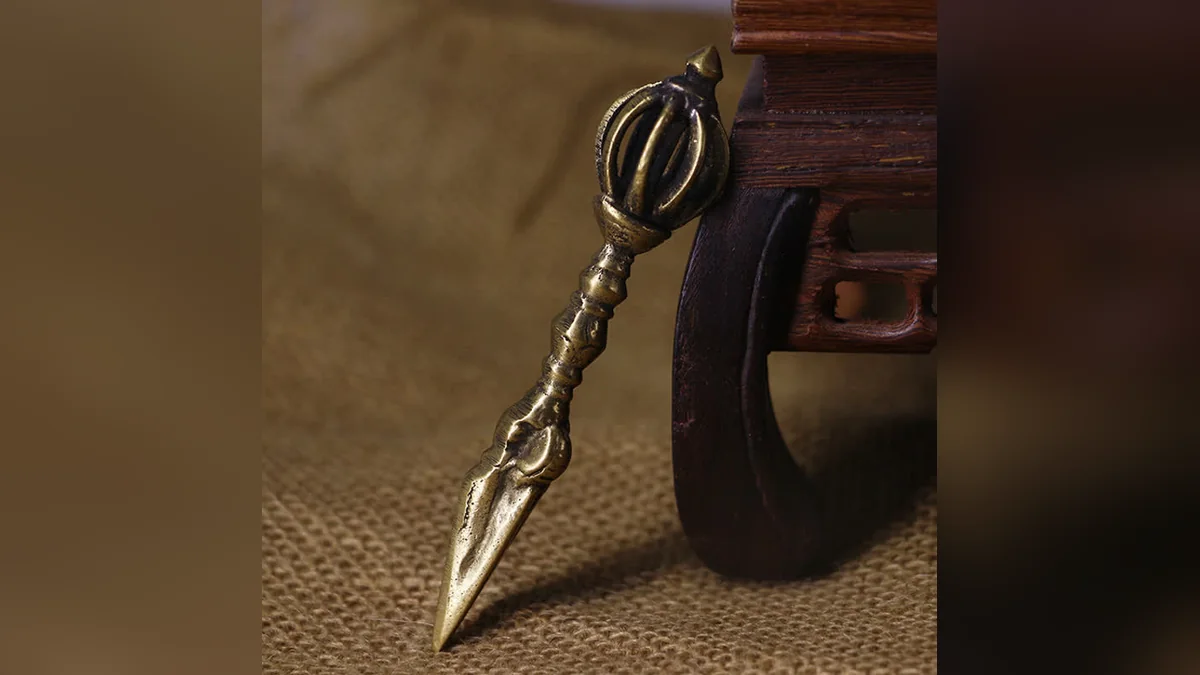
Our Tibet Nine Strands Vajra Dorje decoration is a copper meditation dorje measuring 9*1.8cm and weighing 20g. The package contains one meditation dorje. Its product note acknowledges imperfections in the handmade item and says they do not affect its use.
An adjustable engraved ring
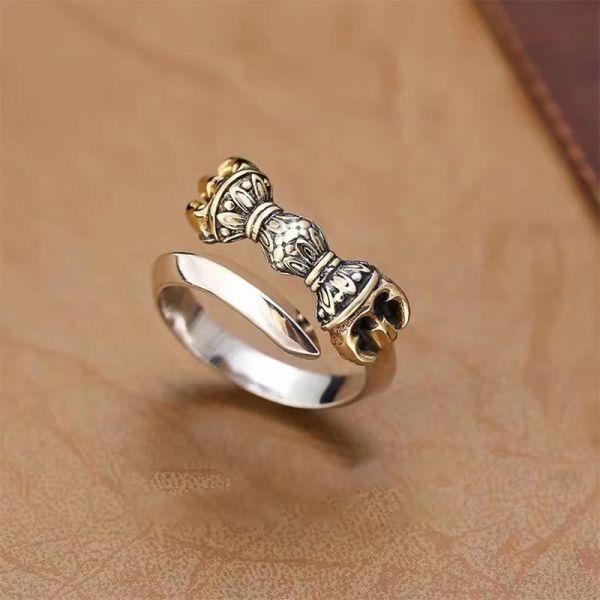
The Tibetan Dorje Vajra engraved adjustable ring is a unisex ring with an adjustable size. Its material specification reads “Copper Plated Silver.” The engraved dorje design places the symbol on a ring rather than among beads. The specifications give an adjustable size but no numerical size range. The Luck and Wealth wording in its full name belongs to the traditional wishes described above.
A liuli glass wrist mala with two motif options
Our Tibetan colorful liuli glass 18-bead wrist mala comes in Liuli Glass Bead Dorje Vajra and Liuli Glass Bead Om Mani Padme Hum options. It is unisex, uses premium elastic string, and gives a wrist circumference of 14-16cm. The specified materials are colored glaze/liuli glass and incense ash liuli glass. Select the Dorje Vajra option if that is the motif you want; the mantra option should not be mistaken for the same design.
A 108-bead bodhi seed and jade mala
The Tibet 108-bead purple bodhi seed and Hetian cyan jade dorje mala is categorized as a bracelet and mala. It has 108 beads, with 8mm and 9mm bead size options. Materials include purple bodhi seed, Hetian cyan jade, Alashan agate, and brass/copper. Rope options are Elastic Rope and Non-Elastic Cotton Rope; the band specification gives premium elastic string/premium string. Review the selected bead size and rope option together rather than assuming one construction applies to every option.
FAQ: Understanding the dorje beyond its outline
Are dorje and vajra different symbols?
No. Dorje is Tibetan and vajra is Sanskrit. They name the same ritual implement, although its physical forms and the details of interpretation can vary.
Does a dorje ring promise protection or wealth?
No. Such associations express beliefs or traditional wishes. The dorje vajra meaning does not establish that a ring can deliver protection, wealth, or luck.
Is wearing the motif the same as ritual practice?
No. Wearing jewelry and following a religious practice are different activities. The ceremonial pairing of dorje and bell belongs to a teaching context. Understanding that context gives the familiar outline a more specific meaning.
Shop the story
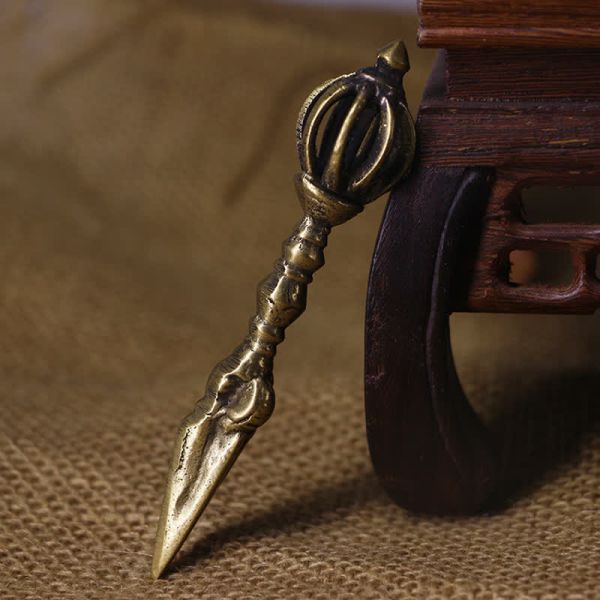 Buddha Stones Tibet Nine Strands Vajra Dorje Spiritual Power DecorationSpecial Price $25.59 Regular Price $36.04
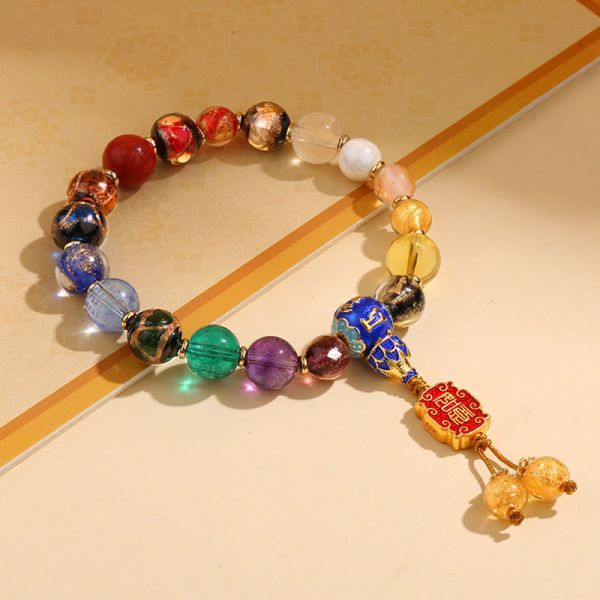 Buddha Stones Tibetan Colorful Incense Ash Liuli Glass Bead Om Mani Padme Hum Dorje Vajra 18 Beads Wrist MalaAs low as $52.59 Regular Price $71.07
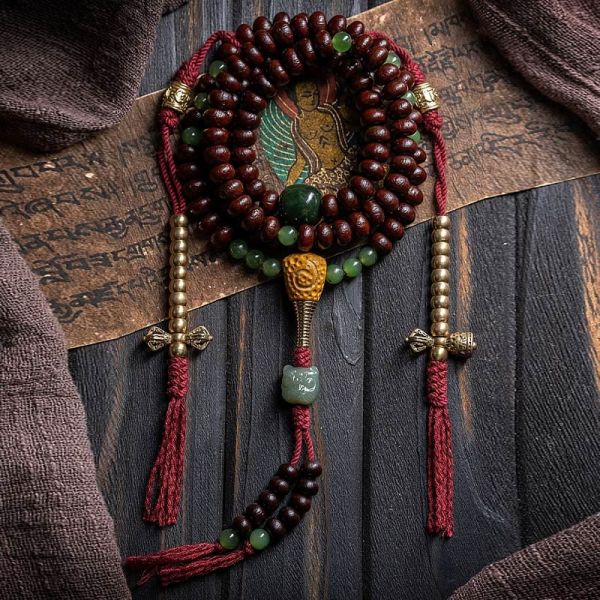 Buddha Stones Natural Tibet 108 Mala Beads Purple Bodhi Seed Hetian Cyan Jade Copper Dorje Peace BraceletAs low as $289.59 Regular Price $402.21