
Deer Symbolism in Buddhist Stories and Chinese Art
The Buddha addressed five former companions at Deer Park in Sarnath. Buddhist tradition remembers this teaching as the first turning of the wheel of Dharma, a moment later represented by a wheel flanked by deer. Deer symbolism commonly expresses gentleness and compassion in Buddhist settings; in Chinese art, it also conveys wishes for longevity and prosperity. These meanings belong to religious and cultural traditions. A deer motif cannot guarantee luck, wealth, or protection.
The animals beside the wheel point back to a place and a teaching. They give the setting a lasting visual form. From that starting point, the deer takes on different meanings as it appears in Chinese decorative arts, personal ornaments, and objects used around the home. Reading those settings helps explain why the same animal can accompany both a Buddhist emblem and a birthday wish.
Deer symbolism in Chinese craft traditions
In Chinese, the word for deer, lu, sounds like the word associated with an official’s salary or emolument. This connection made the animal a visual expression of wishes for prosperity and advancement. The association comes through language: an image can carry a second meaning because its name echoes another word.
That distinction matters when interpreting an old design. A deer does not always stand for money alone. Its companions can change the emphasis. A deer beside the longevity figure Shoulao belongs to a different setting from the paired deer beside a Buddhist Dharma wheel. One composition expresses a wish for long life; the other recalls the Buddha’s first teaching.
Such imagery appears across Chinese painting, embroidery, and ceramics. Longevity subjects have a particular place in birthday gifts and celebratory decoration. The deer belongs to a broad language of auspicious wishes that extends beyond any single annual festival.
Paired motifs invite a closer look. Cranes also appear in Chinese longevity imagery, so a deer and crane composition can gather related wishes into one scene. Our discussion of crane symbolism offers context for that companion motif. Neither animal supplies a fixed translation for an entire design: surrounding figures, plants, and inscriptions still matter.
This is part of the appeal of traditional decorative arts. An animal can be recognizable before its full meaning is understood. Learning the wordplay adds another layer without taking away the pleasure of the image itself.
Antlers and the modern jewelry wardrobe
A complete deer scene tells a different kind of story from an antler-shaped ornament. The scene can include a landscape or religious emblem. An antler outline reduces the subject to a recognizable feature, leaving more room for personal interpretation.
In modern jewelry and hair accessories, that outline may be chosen for its branching shape, its reference to the animal, or its connection with a traditional wish. We keep those possibilities distinct. Choosing a deer motif does not require treating it as a charm, and an antler shape by itself does not establish a Buddhist meaning.
For a gift, a brief explanation can be more useful than a sweeping claim. A note might describe the Chinese wordplay around lu, or explain that deer flank the Dharma wheel in Buddhist imagery. The recipient can then understand which association prompted the choice.
Words such as “Protection” sometimes appear in product names. We use that language as an expression of a traditional wish. It does not describe a promised result or establish that the object has a protective function.
Deer motifs among our accessories and teaware
The move from a symbolic image to a usable object changes how much of the story is visible. An antler can suggest a deer through its outline, while an option named Colorful Deer identifies the subject directly. The following selections give the motif several different settings.
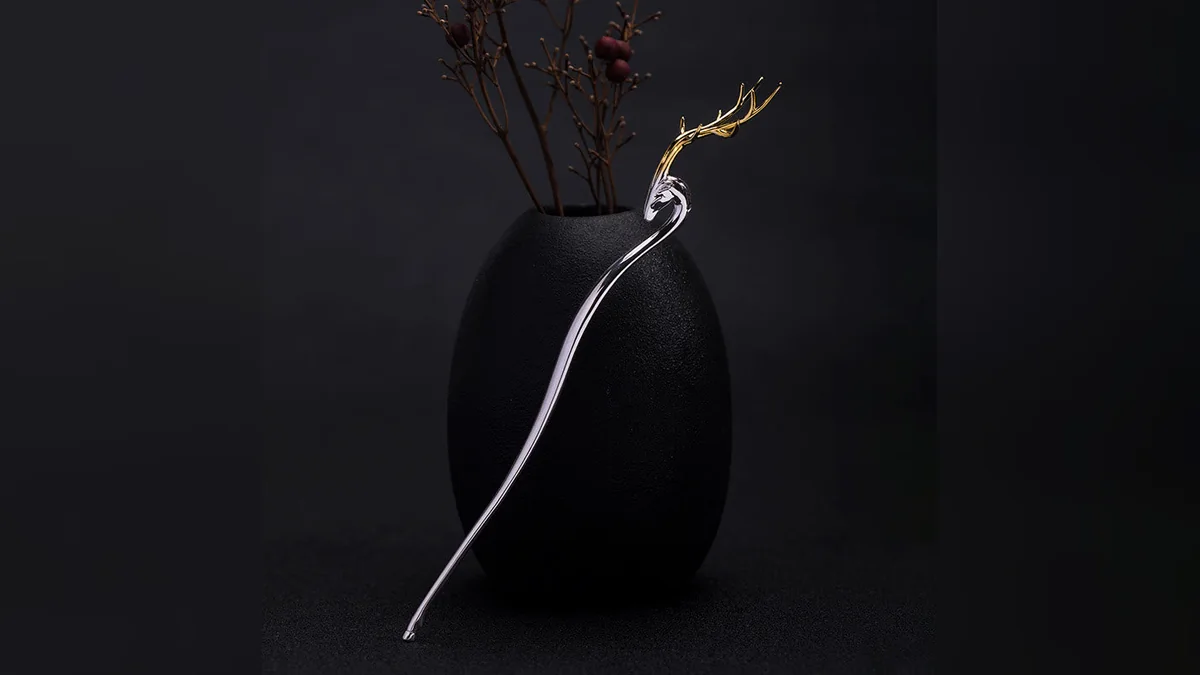
A sterling silver antler hairpin
Our 925 Sterling Silver Deer Antler Hairpin is made from 925 Sterling Silver. Its stated length is about 16.2cm. The antler subject connects this hair accessory to the animal through a single feature rather than a complete landscape.
“Protection” in its full product name expresses a traditional wish, as described above. For someone choosing it as a gift, the deer reference offers a clear subject for an accompanying note without assigning the hairpin a guaranteed effect.
A folding fan with deer options
The Bamboo Fox Deer Forest Tassel Folding Fan has a bamboo frame and polyester surface. Its open size is Approx. 38 cm / 15.0 in; its closed size is Approx. 21 cm / 8.3 in. Blue Deer, Green Deer, and Pink Deer options are available, alongside fox options.
The package contains one folding fan, with a complimentary tassel whose color may vary. Selecting a deer option keeps the animal central to the choice; the fox options are separate subjects and should not be read as carrying the same meaning.
A ceramic cup with a Colorful Deer option
Our Colorful Deer Ceramic Teacup product offers Colorful Deer among its options. The material is ceramic, and the stated cup capacity is 100-150 milliliters. Other options include Blue Bird, Mountains And Rivers, and Pipa.
The cup comes without the other accessories used in the product photographs. The deer subject gives a familiar table object a connection to decorative imagery; it does not make the cup a required part of a Buddhist practice or a particular tea ceremony.
A bag with a crane and deer option
The Crane Deer Wood Handle Bag offers Khaki Crane Deer options as well as a DarkMagenta Seawater Wave Metal Chain option. Its stated materials are polyester, metal, and a wood handle, and its size is 19*18*11cm. The closure is a zipper.
The crane and deer pairing connects the option’s subjects with Chinese auspicious imagery. Choose the named option carefully: the seawater wave option is a different design, and the product choices include versions with a change purse or metal chain.
FAQ: reading the deer motif
What does a deer mean in Buddhism?
Deer commonly suggest gentleness and compassion. A pair beside a Dharma wheel recalls the Buddha’s first teaching at Deer Park in Sarnath. The complete arrangement gives a more specific religious reference than a deer alone.
Why does a deer represent prosperity in Chinese art?
The Chinese word for deer, lu, echoes a word for an official’s salary or emolument. Artists used that sound connection to express wishes for prosperity and advancement. This expresses a symbolic wish.
Does an antler accessory always have a religious meaning?
No. An antler can be chosen simply for its shape or animal reference. A Buddhist interpretation needs context, such as a Dharma wheel. Let the surrounding design and the giver’s explanation guide the reading.
Shop the story
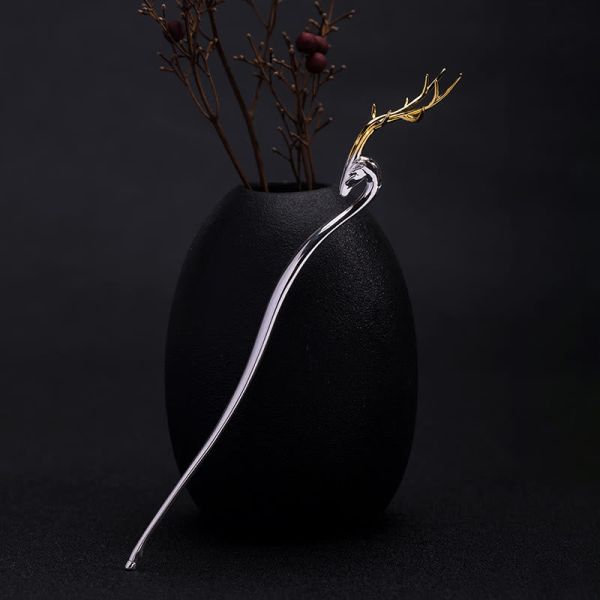 Buddha Stones 925 Sterling Silver Deer Antler Protection HairpinSpecial Price $373.59 Regular Price $511.77
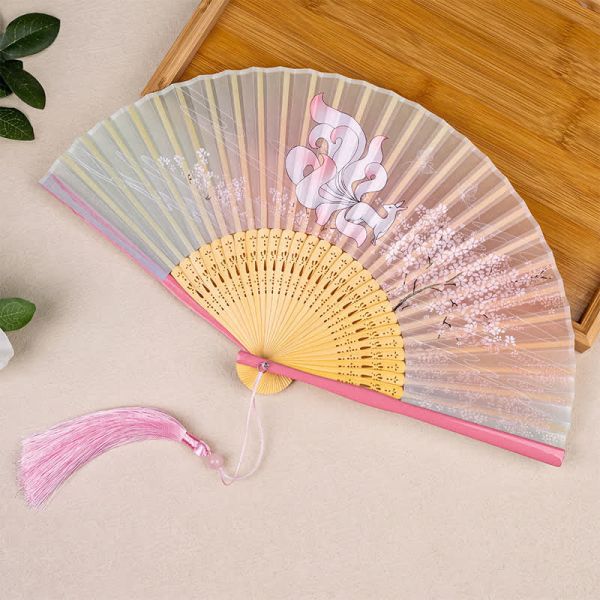 Buddha Stones Bamboo Fox Deer Forest Tassel Folding FanAs low as $24.59 Regular Price $32.79
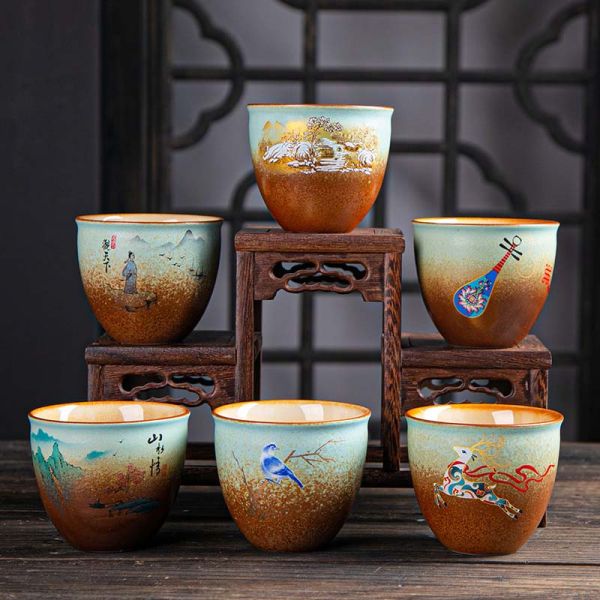 Buddha Stones Colorful Deer Pipa Snow Plum Blossoms Mountains Rivers Bird Ceramic Teacup Kung Fu Tea Cup BowlAs low as $25.59 Regular Price $35.54
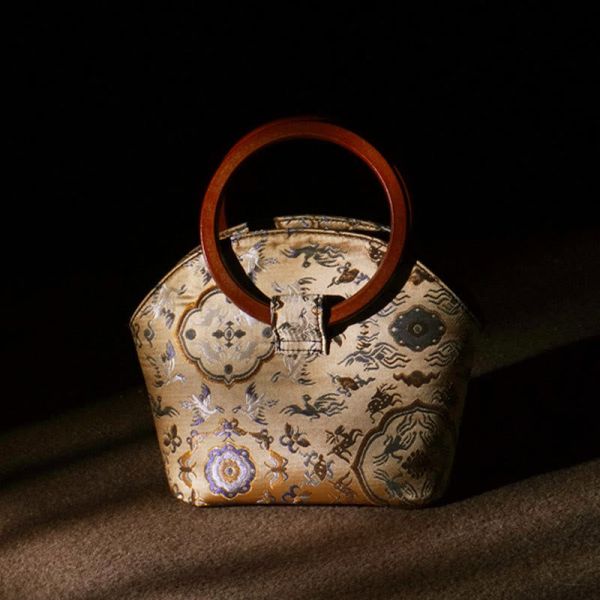 Buddha Stones Crane Deer Seawater Wave Wood Handle Metal Chain Change Purse Crossbody Bag HangbagsAs low as $114.59 Regular Price $161.39