Cloisonne Jewelry Guide: Choose, Wear, and Care
Metal outlines provide the first clue when you examine cloisonne jewelry. Traditional cloisonne uses thin metal wires or strips to form cells that hold enamel, a glass-based material fused by heat. This cloisonne jewelry guide explains how to recognize that construction, read a description without assuming a technique, check proportions and fit, and care for the finished piece. Enamel in a product name alone does not confirm cloisonne.
Step 1: Use this cloisonne jewelry guide to examine the outlines
Follow the boundaries between colors. In cloisonne, metal partitions divide the enamel into compartments, often outlining petals, wings, lettering, or geometric shapes. Look for a description that identifies this construction, supported by close photographs of the surface. A metal-colored line in a photograph is a clue, but it cannot establish how a piece was made.
Keep the distinction between enamel and technique clear. Enamel names a material or decorative finish; cloisonne names a particular method of arranging it. Other methods place enamel in recessed areas or apply it without wire compartments. Similar colors and patterns can therefore appear on pieces made in different ways.
When construction details are missing, describe the item as enamel jewelry. Leave its specific technique unconfirmed instead of treating an intricate pattern as proof.
Step 2: Separate the design name from the specifications
Read the title for the motif, then read the specifications for the material and dimensions. A title may mention a lotus, butterfly, or Buddhist text while leaving the construction method unstated. Those design references do not identify the metal, explain the finish, or establish fit.
Make a short checklist before comparing options:
- Record the metal and any wood, rope, or string components that are expressly identified.
- Separate decorative width from measurements that determine fit.
- Check whether adjustability is stated for that particular item.
- Read variation and care notes alongside the measurements.
Keep symbolic language in its proper place. Words such as Luck in a name express traditional wishes, and there is no guarantee of good fortune. Love can name a decorative theme without promising a relationship outcome. Choose a motif for its appearance or cultural significance.
Step 3: Check fit before judging the pattern's scale
Ring width and ring size answer different questions. Width describes how much of the finger a band covers; ring size concerns the opening around the finger. An adjustable description does not establish an unlimited adjustment range. Avoid repeatedly opening and closing a band, and never force it to fit. Our ring measurement instructions explain how to establish a size for comparison.
For a cord bracelet, compare your wrist measurement with the product's specified circumference. Check that the adjustment information supports your intended fit rather than assuming any cord will accommodate any wrist.
For a necklace, consider the pendant dimensions separately from the necklace length. Mark the pendant's stated height and width on paper to assess its scale. Use a tape measure to estimate where the stated necklace length would fall with your intended neckline. Treat that as a planning aid, since the pendant's position also depends on how the necklace sits.
Step 4: Give the enamel room in your outfit
Choose one color in the enamel as a reference for clothing or another accessory. A plain sleeve can leave a patterned ring visible; a simple neckline can give a pendant a clear background. You do not need to match every color in a multicolor design.
Check the surrounding hardware as well as the colors. Leave space between an enamel bracelet and a watch or another bracelet so their surfaces do not repeatedly strike one another. Position a pendant where it will not rub against a zipper pull or heavy necklace. This practical spacing matters more than following a rule about mixing metal colors.
Step 5: Plan care around the whole construction
Inspect jewelry over a folded towel so an accidental drop has a softer landing. Check the enamel for chips, the edges for damage, and cords for visible wear. If an area is loose or damaged, stop wearing the item until its condition can be assessed. Do not try to press loose enamel back into place.
Start routine care with a gentle wipe using a clean, dry, soft cloth. Avoid scrubbing the colored surface or applying metal polish across it. Do not assume that a method suitable for bare metal is suitable for enamel, wood, or cord.
Keep mixed-material jewelry out of soaking water, and avoid ultrasonic or steam cleaning unless the maker specifically permits it. Put pieces in separate compartments or pouches to limit knocks and rubbing. For the wood necklace below, follow its explicit instruction to avoid water exposure.
Mistakes to avoid when comparing enamel jewelry
- Equating blue enamel with cloisonne. Color does not identify the construction technique.
- Reading band width as ring size. A width measurement cannot tell you the circumference of the opening.
- Assuming every ring adjusts. Confirm adjustability for the specific design you are considering.
- Ignoring other materials. Care decisions must account for wood and cord as well as metal and enamel.
- Expecting an exact color match. Read any stated variation notes before choosing a piece to coordinate with something you own.
- Using abrasive polishing methods. Keep rough tools and rubbing compounds away from enamel surfaces.
Four Buddha Stones enamel jewelry options to compare
The following products have enamel in their names or material descriptions. The supplied specifications do not establish cloisonne construction, so we describe them here as enamel options.
Copper lotus, Heart Sutra, and koi ring
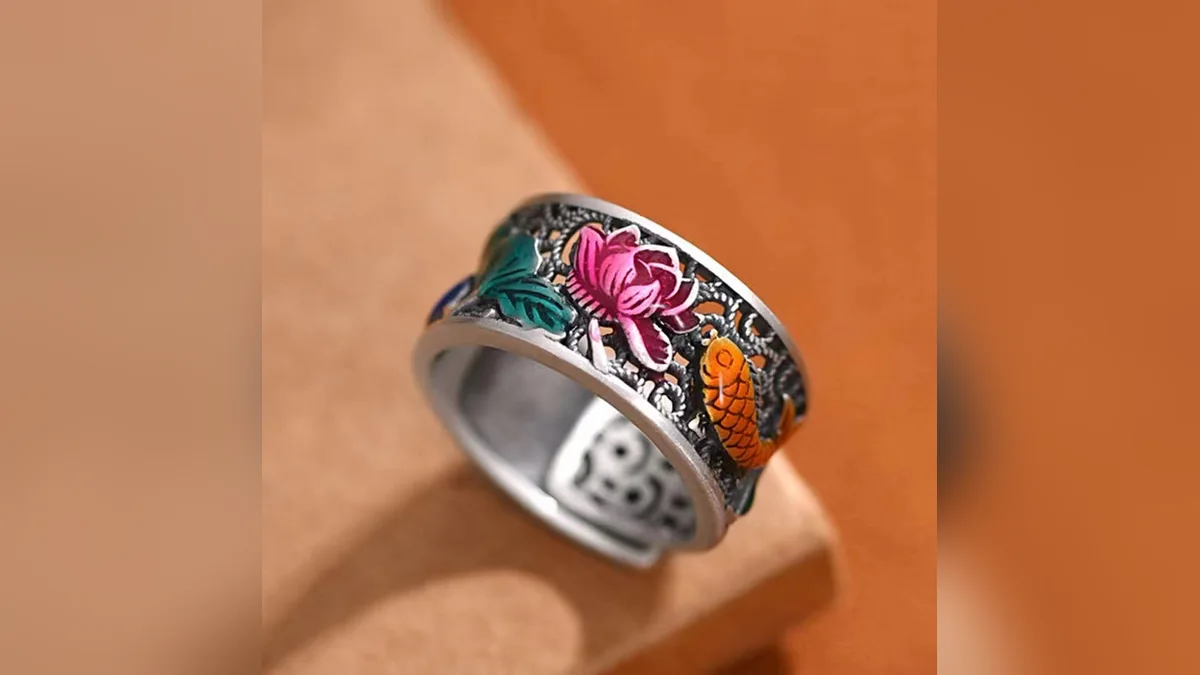
The Buddha Stones Copper Blue Enamel Lotus Heart Sutra Koi Fish Luck Ring is a unisex copper ring. Its ring size is Adjustable, its width is About 1cm, and its weight is About 1g. Use the width to assess band coverage while keeping the adjustable sizing description separate. Luck in its name refers to a traditional wish rather than a promised result.
Hollow blue butterfly ring
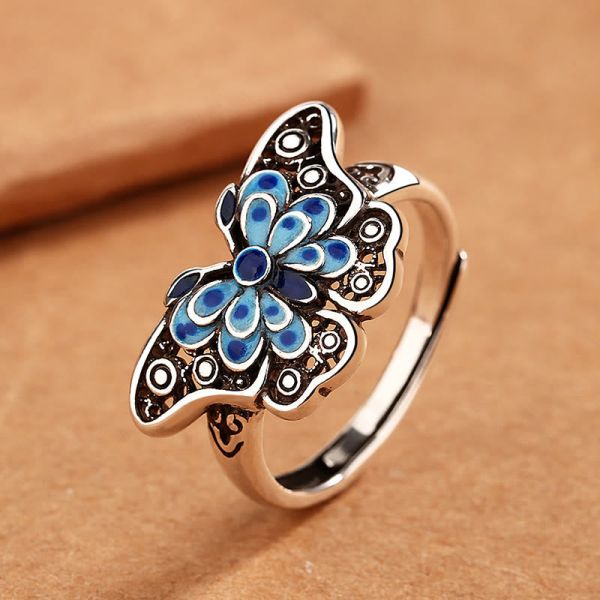
The Buddha Stones Hollow Enamel Blue Butterfly Pattern Love Ring is a unisex copper ring with a weight of About 3.8g. Its supplied measurement reads Width About 13mm. That is a width measurement, not enough information to determine the opening size. Its specifications do not state adjustability, so do not transfer that feature from the lotus ring to this design.
Lotus enamel inlaid rope necklace
The Buddha Stones Sappanwood Lotus Purity Enamel Inlaid Braided Rope Necklace combines Sappanwood, Teak, Rope, and Enamel. Necklace length is Approx. 22 in / 56 cm; pendant size is Approx. 1.97 × 1.97 × 0.39 in / 50 × 50 × 10 mm. The package contains 1 × Necklace. Its natural wood can vary in color, details, grain, and overall appearance, and may develop a natural patina with wear. Avoid water exposure.
Multicolor cord mantra bracelet
The Buddha Stones Tibetan Multicolor Rope Enamel Om Mani Padme Hum Charm Bracelet has an Adjustable Cord band and a wrist circumference of 6.7–7.1 in (17–18 cm). Its materials are String, Copper Alloy, and Enamel; the package contains 1 × Bracelet. Handcrafted cord variations can include differences in color tone, shade, and pattern distribution between batches.
Let confirmed construction, usable measurements, and material-specific care guide your choice. A clear description gives you a sound basis for selecting enamel jewelry, even when the exact enamel technique remains unconfirmed.
Shop the story
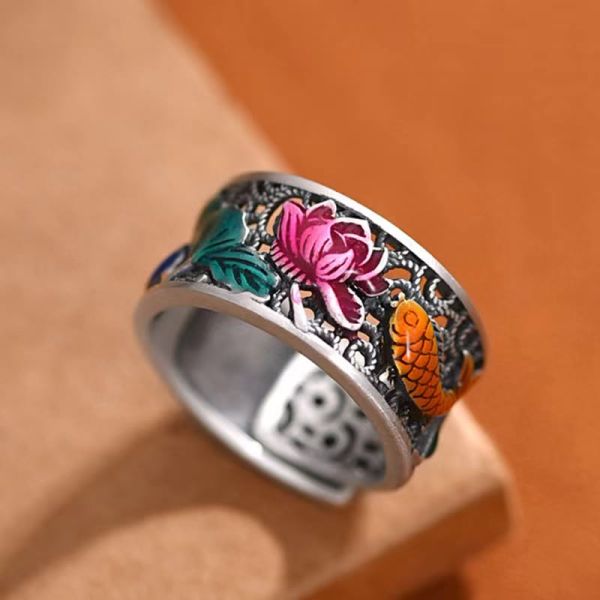 Buddha Stones Copper Blue Enamel Lotus Heart Sutra Koi Fish Luck RingSpecial Price $25.59 Regular Price $36.04
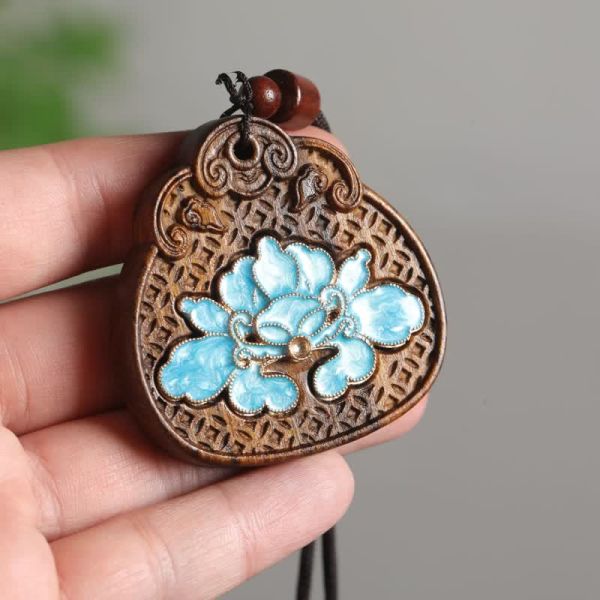 Buddha Stones Sappanwood Lotus Purity Enamel Inlaid Braided Rope NecklaceSpecial Price $25.59 Regular Price $34.58
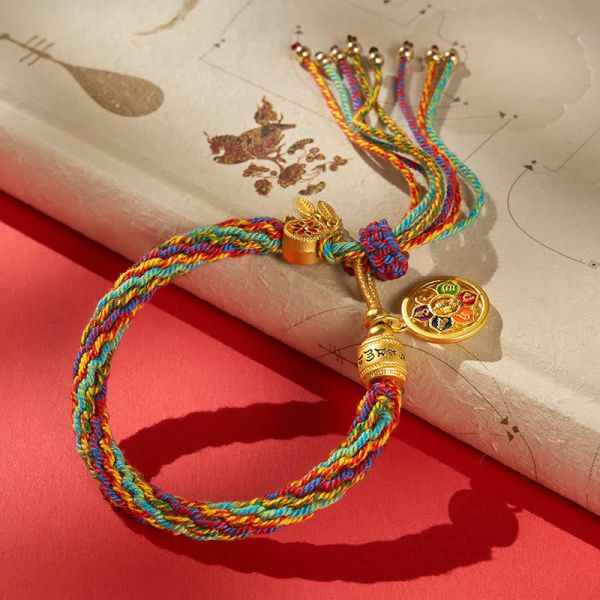 Buddha Stones Tibetan Multicolor Rope Enamel Om Mani Padme Hum Charm BraceletSpecial Price $25.59 Regular Price $34.58