
Citrine Meaning: An Honest Guide to Stone and Symbol
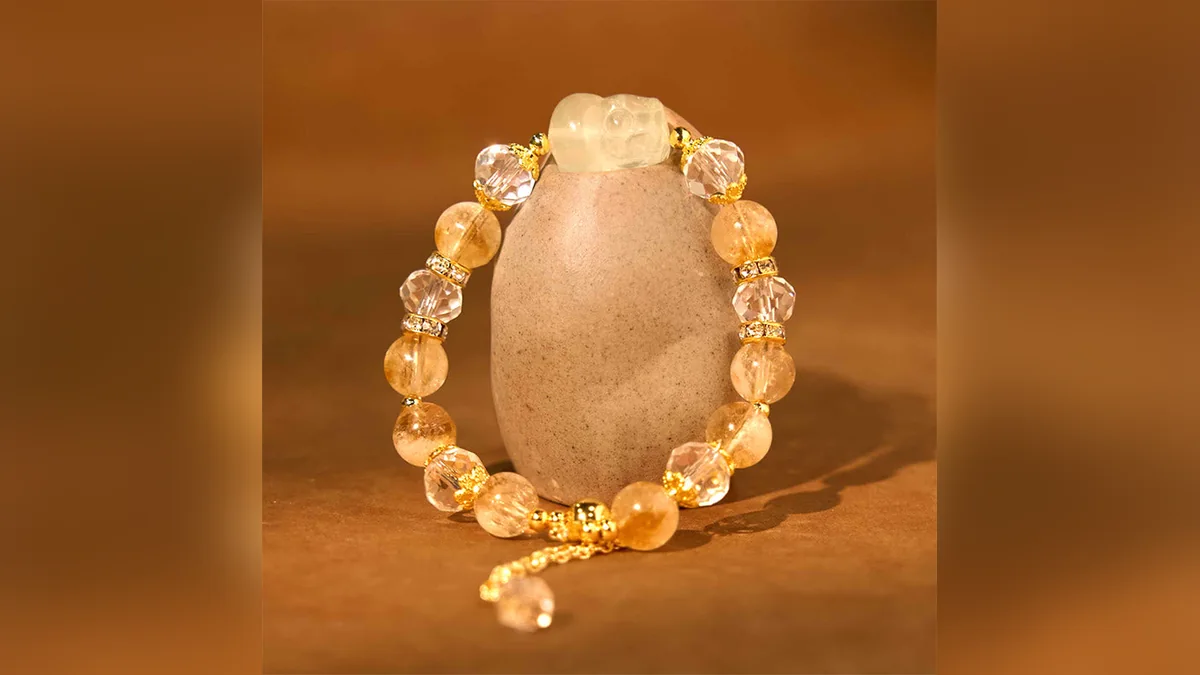
Honey-to-amber color gives citrine its familiar warmth. Citrine is yellow to orange-brown quartz, and citrine meaning in modern crystal culture and some feng shui practice centers on its nickname, the “merchant’s stone.” Abundance, optimism, and success are associations people give it, not results a gemstone can deliver. No stone can guarantee money or outcomes.
The stone: citrine meaning starts with quartz
Citrine belongs to the quartz family, alongside amethyst. Its yellow to orange-brown color distinguishes it from purple amethyst, but the two share the same mineral family. Quartz has a hardness of about 7 on the Mohs scale. That makes citrine suitable for jewelry, although hardness measures resistance to scratching, not resistance to every knock. A bead or ring stone still deserves care around hard surfaces.
Naturally colored citrine is fairly uncommon. Much of the citrine on the wider market is heat-treated amethyst, which tends toward a deeper orange color. This is useful background when comparing listings: a familiar trade name and a yellow appearance do not tell the whole treatment story. Our amethyst bracelet guide discusses the purple member of the quartz family.
Color alone cannot settle the question of treatment. A deeper orange appearance is a tendency, not proof, and the general market picture does not establish the treatment status of any particular product. If treatment matters to your purchase, look for an explicit disclosure rather than drawing conclusions from a photograph or the word “natural” in a name.
Think about color as a visual preference, too. Pale yellow and deeper amber can suit different tastes without needing a ranking of symbolic strength. Long exposure to strong sunlight can fade citrine’s color, so a sunny windowsill is not an ideal permanent display spot. For jewelry, fit and the listed construction deserve as much attention as the shade.
The story
The association with abundance begins with a straightforward resemblance: yellow stones recall gold, while their warm color also suggests sunlight. In modern crystal culture, those comparisons support symbolic links with prosperity, optimism, and success. Calling citrine a merchant’s stone expresses that set of beliefs. It does not describe a mineral property or a financial advantage.
In some feng shui practice, yellow stones appear in shops and offices as symbols of abundance. A display may express a wish for a business to flourish, much as other decorative objects express hospitality or celebration. The object gives that wish a visible form. Its presence does not establish that sales, income, or other circumstances will change.
Placement customs vary, so there is no need to present one desk corner or compass direction as a universal rule. For a general display, consider the room itself: a stable surface, enough space around the ornament, and protection from prolonged strong sunlight. Those practical choices help you accommodate the object without turning a symbolic custom into a promised result.
It also helps to distinguish a personal association from a shared tradition. You might choose yellow because you like the color, or select a wealth motif because its meaning suits a business gift. Neither choice requires treating the symbolism as fact. We describe these associations as beliefs so you can decide how much significance to give them.
The pieces
Our choices here include two bracelets, a decorative tree, and an adjustable ring. Start with the form you want, then check the relevant measurements and materials. The bracelets have different listed wrist ranges, while the tree comes in size options. A shared connection with citrine does not make their specifications interchangeable.
Natural Citrine Pixiu bracelet
This bracelet has 8 mm citrine beads and a listed wrist circumference of 17-18 cm. The photos also show clear faceted spacer beads and a carved Pixiu bead, while citrine is the only material the page lists. Our page describes the band type as “premium buckle” and lists the gender as women. These details are worth reading together: the wrist measurement is the practical starting point for considering fit, while the gender field is the listing’s designation.
Pixiu is a feng shui wealth-keeping creature from Chinese tradition. Paired with citrine, the motif combines two symbols associated with prosperity; that pairing remains symbolic and carries no guarantee. Our Pixiu bracelet meaning and wearing guide explains the creature’s traditional significance. Choose this design if the Pixiu motif interests you, and use the stated wrist range rather than assuming it fits like another bracelet.
Natural Citrine Money Tree ornament
The listed materials are natural citrine crystal, resin gemstones, and copper. Small, medium, and large options are available. The page gives approx. 7.48" (19 cm) in height for one size, 10 × 22 cm for the medium, and 12 × 28 cm for the large. The approximately 19 cm height is not explicitly tied to a named size in that specification.
The money tree is a traditional decor motif expressing a wish for prosperity. Here, that symbolism takes the form of a decorative object rather than jewelry. It can suit a home or office display when the available space matches the selected option. Check the dimensions against the intended surface, and keep the distinction between a traditional wish and an expected financial result clear.
Citrine, Red Agate, and Black Obsidian Generosity bracelet
This mixed-stone bracelet lists citrine, red agate, black obsidian, and copper, with 8 mm beads. It fits a 15-16 cm wrist (5.9-6.3 inches), and the band type is listed as “premium elastic string”. That wrist range differs from the Pixiu bracelet’s 17-18 cm listing, even though the bead size is the same.
“Generosity” is part of the product name and can be read as a theme for the piece. It does not establish that wearing the bracelet changes behavior or produces an outcome. For a buying decision, focus on the combination of listed materials, the elastic band, and the smaller stated wrist range.
Citrine Lotus adjustable ring
This ring lists citrine and copper as its materials, and its size is adjustable. The lotus adds a distinct symbolic motif to the citrine design. Buddhist art often uses the lotus as a sign of purity and awakening; here, that association belongs to the symbol rather than a claim about what the ring can do.
Adjustable sizing offers a different buying consideration from the bracelets’ stated wrist ranges. The listing does not provide a numerical ring-size range, so “adjustable” should not be read as a promise of fit for any finger. Choose it for the ring format and lotus motif, with the listed materials in mind.
For care, keep citrine out of prolonged strong sunlight and avoid knocks against hard surfaces. Remove jewelry before washing or using household cleaners. Wipe gently with a soft cloth, avoid soaking mixed-material pieces, and dust the ornament carefully. Store jewelry separately to limit contact and scratches.
Shop the story
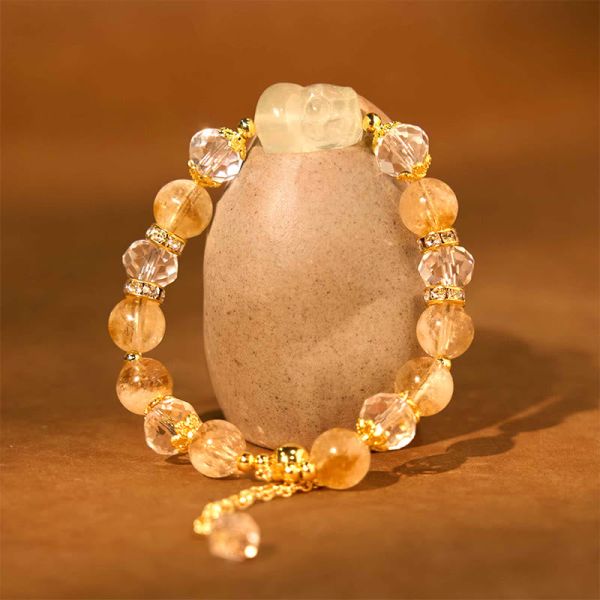 Buddha Stones Natural Citrine Pixiu Prosperity BraceletSpecial Price $25.59 Regular Price $36.04
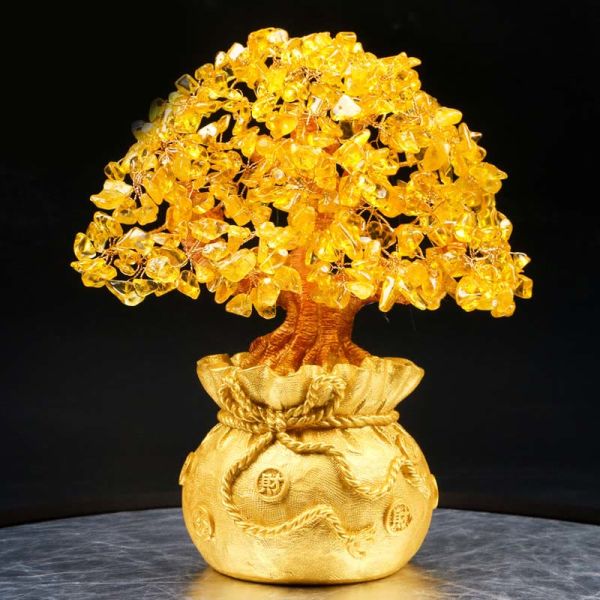 Buddha Stones Natural Citrine Money Tree Gemstone OrnamentAs low as $45.59 Regular Price $62.45
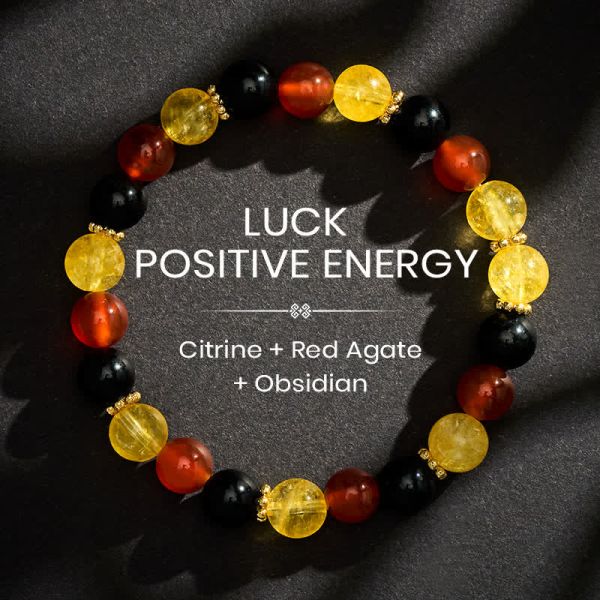 Buddha Stones Citrine Red Agate Black Obsidian Beads Generosity BraceletSpecial Price $25.59 Regular Price $36.04
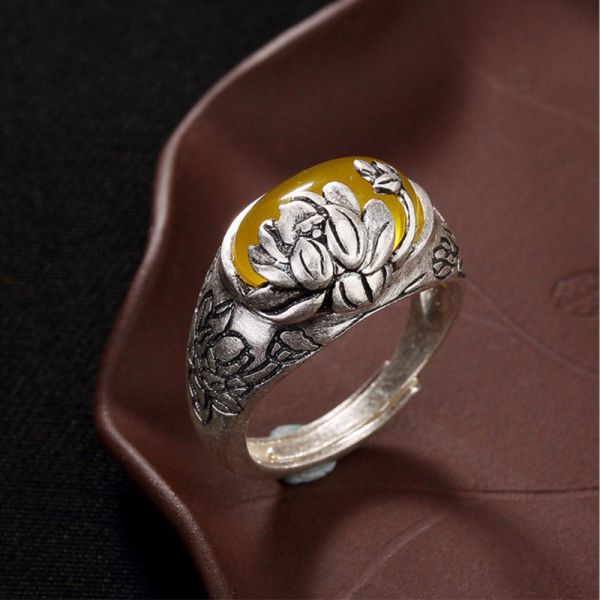 Buddha Stones Citrine Lotus Blessing Protection Adjustable RingSpecial Price $25.59 Regular Price $36.04