
Amethyst Bracelet Meaning: A Buyer's Stone Guide
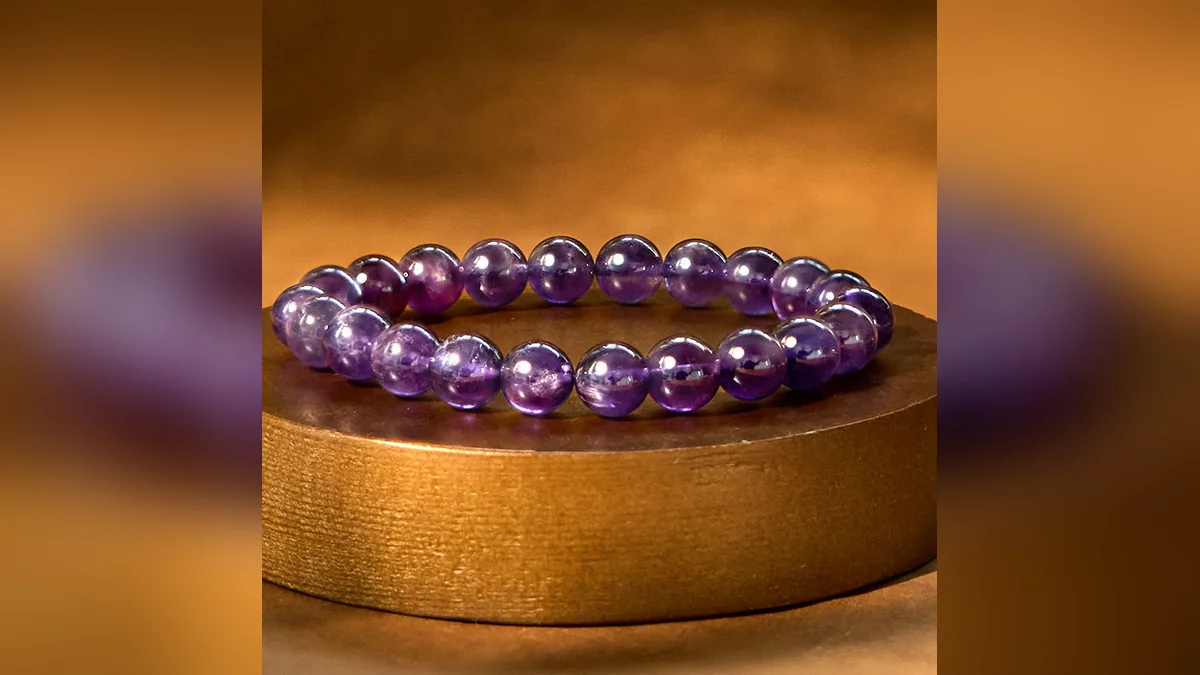
Amethyst is the purple variety of quartz, and its color is one of the most recognizable in the mineral world, ranging from pale lilac to deep violet, sometimes shifting between the two within a single bead. The purple comes from traces of iron inside the quartz structure combined with natural irradiation underground over time. On the Mohs scale, amethyst sits at about 7, hard enough for daily wear in a bracelet. Before buying one, it helps to understand amethyst bracelet meaning the way it developed: first through the stone's own history and legend, then through what wearers associate it with today, and finally through the practical choices that go into picking a piece that actually fits.
Where the name and the legend come from
The word amethyst comes from the ancient Greek amethystos, which roughly translates to “not intoxicated.” According to old legend, the stone was believed to guard its wearer against the effects of wine. There are several versions of the story, and none of them can be confirmed as history rather than folklore, but the name stuck, and amethyst has carried an association with sobriety and clear thinking ever since. It is also the traditional birthstone for February, a role it has held for a long time in Western birthstone lists.
One practical note worth knowing before you wear amethyst regularly: prolonged exposure to strong, direct sunlight can fade its color over time. Keeping a bracelet out of a sunny windowsill when you are not wearing it is a simple way to help the color stay as it is.
Amethyst bracelet meaning in practice
Beyond the old legend about wine, amethyst is a stone that many meditation traditions associate with calm and mental clarity. The reasoning is partly about color: purple has long been linked with royalty, contemplation, and a kind of quiet dignity, which may be part of why amethyst is so often chosen for prayer beads and meditation jewelry today. People who sit in daily meditation often choose amethyst for exactly this reason, wearing it as a visual and tactile reminder to slow down and pay attention.
None of this is a promise about any effect the stone has on a person. It is a belief that has traveled through meditation traditions for a long time, and it is one reason amethyst bracelets are popular with people who already have a meditation or mindfulness practice. If you are drawn to the color and the idea behind it, that is reason enough to wear one; we simply will not promise any particular effect.
Pure amethyst or a mixed bracelet
Once you have decided you like amethyst, the next choice is usually between a bracelet made entirely of amethyst beads and one that mixes amethyst with other stones. Amethyst is often paired with dark, grounded-looking stones like black obsidian and hematite, or with purple agate, which sits close to amethyst on the color wheel. Part of this is simply visual: a dark obsidian or hematite bead makes the purple read more vividly by contrast, while purple agate blends in and extends the tone across the whole strand.
Each stone in a mixed bracelet carries its own set of traditional associations, separate from amethyst's own, and sellers will often describe a combined meaning for the whole piece. Treat that combined meaning as a loose, traditional reading rather than a fixed rule — the pairing is also, quite practically, about how the colors and textures look sitting next to each other on the wrist. If you prefer one stone's story kept simple, a single-stone bracelet is the more straightforward option.
Four amethyst bracelets, and what each one actually is
Here is what each piece is made of and how it is sized, based on the product specifications, so you can compare them directly rather than guessing from a photo.
- The Natural Amethyst Inner Peace Bracelet is strung on elastic cord with 8mm natural amethyst beads, sized for a 14–16 cm wrist. It is the simplest option if you want amethyst on its own.
- The Amethyst Crystal Sunflower double wrap bracelet wraps the wrist twice on a chain band, combining amethyst with crystal and alloy, with a sunflower detail. It is sized for a 14–16 cm wrist and reads differently on the arm than a single-strand piece because of the double wrap and the chain.
- The Amethyst Black Obsidian Hematite bracelet uses 8mm beads of amethyst, black obsidian, and hematite, with a copper accent, on elastic cord sized for a 15–16 cm wrist. The dark stones sit next to the amethyst in clear contrast.
- The Natural Amethyst Purple Agate Hematite bracelet pairs 8mm amethyst and purple agate beads with hematite, also on elastic cord sized for a 15–16 cm wrist, keeping the whole piece within the same purple family.
All four of these run small, sitting in the 14–16 cm wrist range. If your wrist measures closer to average or larger, it is worth measuring first rather than guessing; our size guide shows a simple tape-or-paper method. You can also browse the full range of amethyst pieces or the wider bracelet collection if you want to compare beyond these four.
Before you buy: a short checklist
- Measure your wrist with a soft tape or a strip of paper and a ruler, and check it against the bracelet's stated size before ordering, since these pieces run on the smaller side.
- Allow for natural differences in shade and pattern from bead to bead; amethyst is a natural stone, not a dyed or uniform material, so no two bracelets look quite identical.
- Keep the bracelet away from long, direct sunlight when you are not wearing it, since strong sun exposure over time can fade the purple.
- Take the bracelet off before washing your hands, showering, or sleeping, which protects both the stones and the elastic cord or chain.
- If your bracelet is on elastic cord, avoid pulling or twisting it when putting it on; stretch it gently over the hand instead to help the cord last.
- Decide between a single-stone and a mixed-stone piece before you shop, since that choice narrows the options faster than color alone.
Amethyst's purple is the first thing that draws most people to it, and the meaning attached to the stone grew up around that color over a long stretch of time, through legend, birthstone tradition, and its place in meditation practice. Whether you choose it on its own or paired with darker stones, the facts about the bracelet itself — the beads, the cord, the size — are worth checking as closely as the story behind the color.
Shop the story
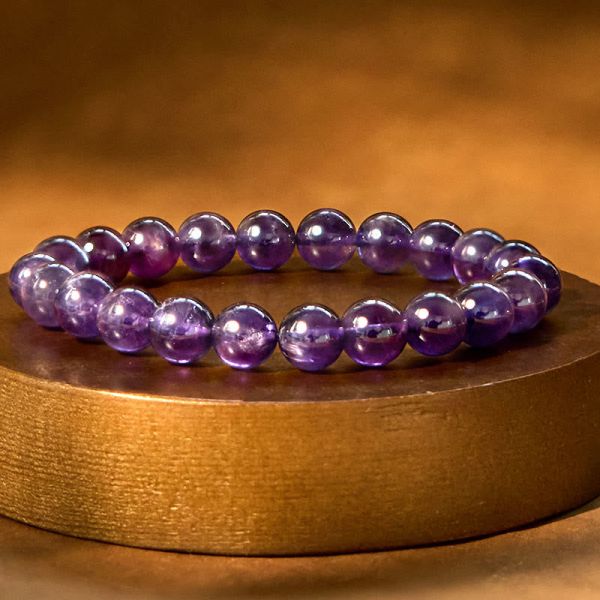 Buddha Stones Natural Amethyst Inner Peace Meditation BraceletSpecial Price $25.59 Regular Price $34.12
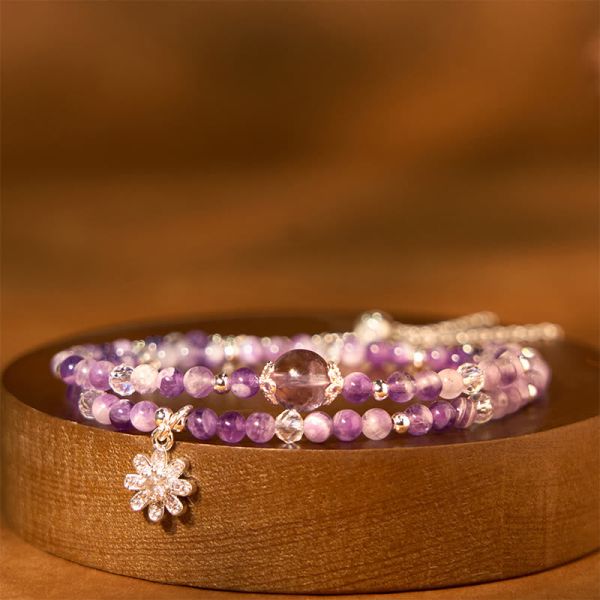 Buddha Stones Amethyst Crystal Sunflower Spiritual Awareness Double Wrap BraceletSpecial Price $25.59 Regular Price $35.54
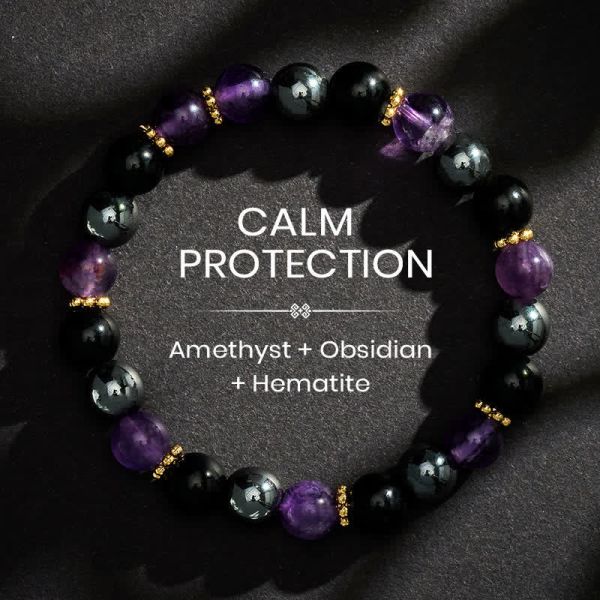 Buddha Stones Amethyst Black Obsidian Hematite Beads Meditation BraceletSpecial Price $25.59 Regular Price $34.12
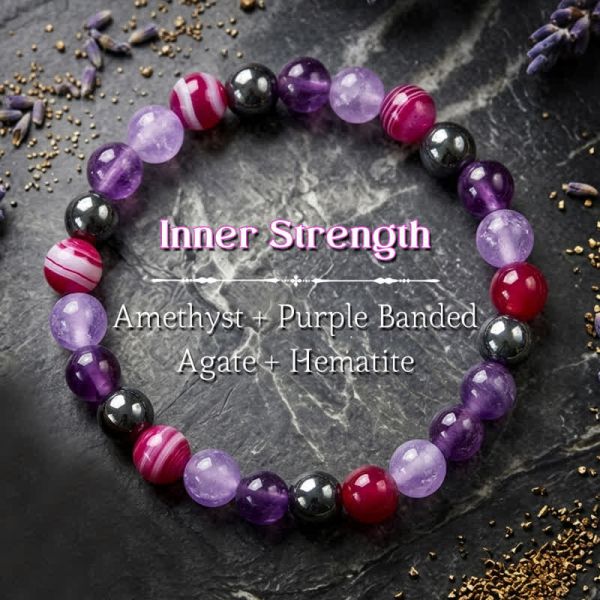 Buddha Stones Natural Amethyst Purple Agate Hematite Meditation BraceletSpecial Price $25.59 Regular Price $34.12