
Ceramic Teacup Guide: Set Up a Practical Tea Table
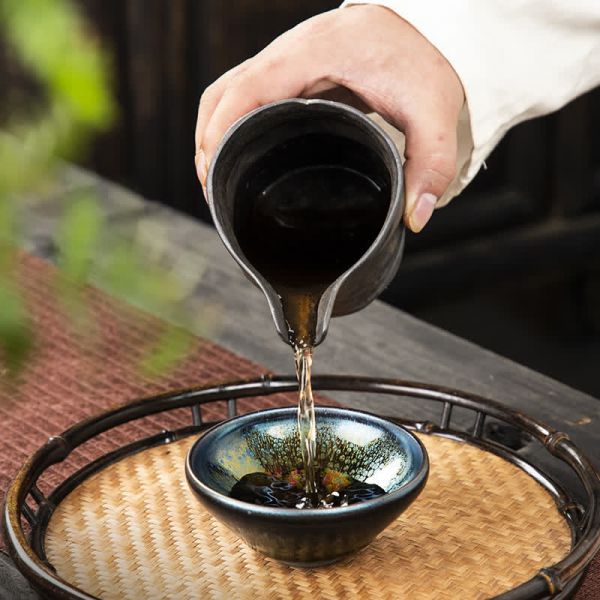
Tea flows from a small pitcher into a ceramic cup, stopping below the rim so the cup can be lifted without spilling. A folded cloth sits beside the tray, ready for drips. This ceramic teacup guide starts with that practical arrangement: choose a serving size, give the cup a stable place, and leave room to pour. In many Chinese tea settings, drinking cups sit before guests while the brewing vessel and serving pitcher remain within the host’s reach. We use that arrangement as a starting point, adaptable to your table.
Step 1: Use this ceramic teacup guide to choose capacity
Decide how you plan to serve tea before choosing a cup. Small servings suit repeated pours from a teapot or serving pitcher. A larger serving can suit a single cup beside breakfast or a book. Neither arrangement requires a formal ceremony.
Capacity is the cup’s stated volume, not a target fill line. Leave space beneath the rim for carrying and drinking. When sharing tea, the total you intend to pour should fit comfortably across the cups on the table. If it will not, plan a second round instead of filling the first cups to the edge.
Consider the cup’s width and height alongside its capacity. Check that its base will sit fully on your chosen saucer or tray. For several guests, similar serving capacities make portions easier to divide, even when the cups differ in color or shape.
Step 2: Give the cup a clear place at the table
Choose a level surface with enough room for the cup, brewing vessel, and a cloth. A tea tray can collect drips, while a saucer gives the cup a defined resting place. Keep the cup away from table edges, trailing cords, and objects that could knock it over.
For shared service, place drinking cups toward the guests and keep the pouring area closer to the host. Arrange the vessels so you can move between them without reaching over a filled cup. This follows a familiar pattern in Chinese tea service, though household habits and regional customs vary.
If your tea table also holds decorative objects, leave the pouring area open. Move incense and loose decorative materials away from exposed tea and drinking rims. Placement here serves access, cleanliness, and hospitality; no compass direction is needed for an everyday tea cup.
Step 3: Prepare the cup before the first pour
Before use, check the rim, interior, and base for chips or cracks. Set aside a damaged drinking cup. Wash a new cup before its first use, then rinse away detergent thoroughly.
Let a cup taken from a cold room come closer to room temperature before adding hot liquid. Avoid abrupt temperature changes, such as pouring boiling water into a chilled cup or placing a hot cup on a cold, wet surface. Ceramic types and finishes vary, so follow any care instructions supplied for your particular cup.
Warming cups is customary in some tea service. If the cup’s care directions permit it, use warm water and empty it before serving. Keep a suitable waste-water vessel nearby so this step does not send drips across the table.
Step 4: Pour, pass, and refill with room to spare
Place the cup down before pouring. Hold the pouring vessel close enough to direct the stream accurately, and stop below the rim. Wipe spills from the cup’s base before returning it to the table.
For shared tea, a serving pitcher lets you combine a brewed infusion before dividing it among cups. If you brew with a lidded bowl, our instructions for brewing and pouring with a gaiwan cover that separate part of the process. The drinking cup receives the finished pour.
Before passing a filled cup, make sure its exterior is comfortable to hold. A saucer can help with handling, but it does not make hot ceramic cool. Let guests finish or decline a refill before adding more tea.
Step 5: Wash, dry, and put the cup away
Allow the cup to cool before washing it in warm water with mild dish soap and a nonabrasive sponge. Rinse thoroughly, including around the foot where liquid can collect. Avoid scraping marks with metal utensils.
Dry the cup fully before putting it in a closed cabinet. Store it on a stable shelf with space between rims. Stack only cups designed for stacking; a shape that seems to fit can still press against another cup’s rim. Keep any supplied care instructions with your household tea equipment for future reference.
Common mistakes that complicate tea service
- Choosing by appearance alone: Compare capacity and dimensions with the space available on your table.
- Filling to the rim: Leave room for lifting the cup and moving it to a saucer.
- Crowding the pouring area: Keep a clear path between the brewing vessel, pitcher, and cups.
- Assuming a color identifies a size: Read the selected option rather than inferring capacity from a photograph.
- Using one care rule for every ceramic: Check the cup’s own instructions before using appliances or strong cleaning products.
Buddha Stones ceramic teacups for your setup
Our cup pages offer different capacities and option formats. Compare the specific selection with your serving plan, especially when one page contains several sizes.
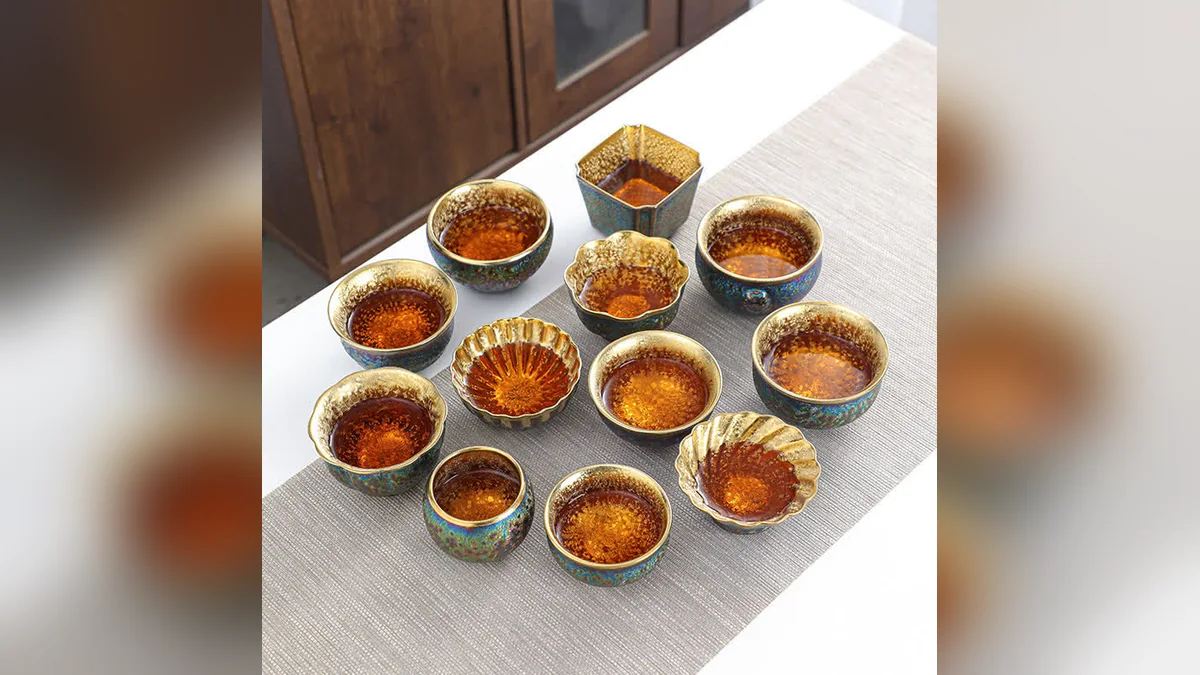
The Buddha Stones Colorful Ceramic Teacup is ceramic, with stated capacities of 100-200 milliliters and a stated weight of 100g. Size options include 7.8cm*4.5cm*120ml and 9.5cm*5.5cm*200ml. That capacity range gives you several serving sizes to consider within this product page.
The ceramic Buddha Stones Maple Leaf Colorful Ceramic Teacup has a stated capacity range of 90-120 milliliters and a stated weight of 50g. Dimensions include 8cm*4.5cm*90ml and 8.5cm*4.5cm*120ml. Green, Red, White, and Yellow also appear among its options; check the selected size separately.
The Buddha Stones Multicolor Ceramic Teacup Ocean Wave is ceramic. Its specifications give capacities of 130 milliliters and 150 milliliters, with dimensions of 8.8*5.8cm and 7.3*5.8cm, stated as width and height. Color options are Blue, Dark Blue, Light Blue, and Red. The supplied specifications do not pair a particular color with a capacity.
The ceramic Buddha Stones Vintage Ceramic Teacup has a stated capacity range of 100-150 milliliters. Options include 8.5cm*5.0cm*100ml, 9cm*6.2cm*120ml, and 9.4cm*6.0cm*150ml. Use the full option dimensions when comparing its footprint and height with your tray.
FAQ
Do ceramic teacups need a special placement direction?
No fixed compass direction is required for ordinary tea service. Place the cup where it is stable and easy to reach. A guest-facing arrangement reflects hospitality in many tea settings, with the pouring vessels positioned within the host’s reach.
Can these cups go in a microwave or dishwasher?
The product facts provided here do not establish microwave or dishwasher suitability. Check the care directions for the specific cup before using either appliance. Hand washing with mild dish soap and a nonabrasive sponge is a practical starting point.
Should I choose matching cups for guests?
Matching cups are optional. Similar capacities make shared pours easier to portion, while different colors can help guests distinguish their cups. Keep enough space around the selected cups to lift and replace them without touching neighboring rims.
Shop the story
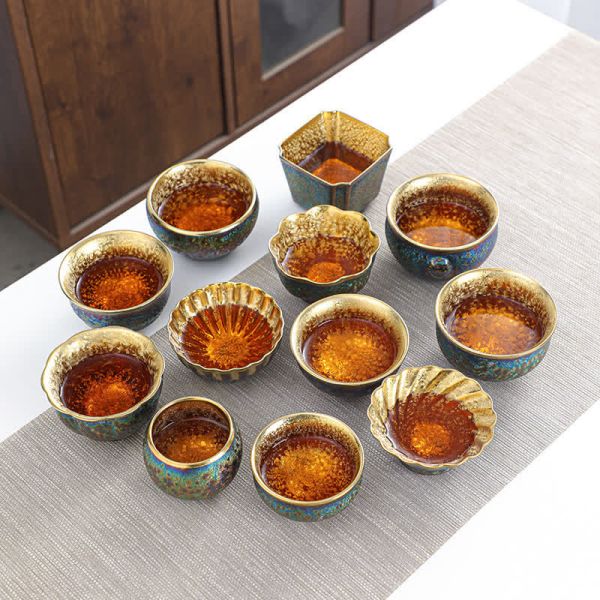 Buddha Stones Colorful Ceramic Teacup Tea CupsAs low as $27.59 Regular Price $37.79
 Buddha Stones Multicolor Ceramic Teacup Ocean Wave Tea CupsAs low as $21.59 Regular Price $29.58
 Buddha Stones Vintage Ceramic Teacup Tea CupsAs low as $28.59 Regular Price $38.12
