Brooch Materials Guide: Choose for Fabric and Fit
A brooch can look proportionate in a product photo yet extend beyond the fabric area where you intend to pin it. Material names also tell only part of the story: a silk flower may include copper and pearl, while a brass design may include rope. This brooch materials guide explains how to compare those combinations, read dimensions, judge fabric support, and choose suitable care.
Start with these questions
- Which fabric will carry it? Identify the actual garment, including its thickness and weave. A structured jacket and a loose knit offer different support, even when their colors are similar.
- How much room is available? Measure the intended area. Consider nearby seams, buttons, folds, and bag straps that could catch a projecting detail.
- Which materials suit your routine? Decide how much handling and storage care you can give silk, rope, pearl, and exposed metal components.
- What information is missing? Dimensions do not establish weight, and a material description does not explain the fastening mechanism. Keep those uncertainties in your decision.
- Is packaging part of the choice? For a gift, check the contents of the selected packaging option instead of assuming a photographed presentation is included.
A brooch materials guide to mixed construction
Brass and copper: read beyond the metal name
Brass is an alloy of copper and zinc; copper is a metal in its own right. Both can develop changes in surface color over time. Moisture, handling, and storage conditions can influence that appearance, so consider care alongside the color you prefer.
A material entry cannot tell you the weight of a finished brooch. Thickness, dimensions, and construction matter too. Likewise, the word “metal” does not identify an alloy. When a description includes copper and metal, avoid assigning a specific composition to the unspecified part.
Silk and rope: allow room for textile details
Silk contributes a textile surface that needs protection from crushing and rubbing. Rope adds another material to consider when cleaning or storing a mixed construction. A method suitable for an exposed metal area may be unsuitable for adjacent fibers.
For a textile design, think about the space around it as well as its outline. Close contact with a shoulder strap or the edge of an overcoat can repeatedly rub decorative details. Choose a position where those details can remain clear of routine contact.
Pearl: a separate care consideration
The word “pearl” alone does not establish type, origin, or grade. Read it as a material description rather than evidence of a particular quality classification. Pearl surfaces can be damaged by abrasive cleaners, so mixed-material cleaning should account for them.
Read dimensions before deciding on fit
Length and overall size answer different questions. A single length measurement helps you estimate reach in one direction; it does not supply width, depth, or weight. When several measurements appear, retain the full set instead of reducing them to the first number.
Compare the stated dimensions with a ruler held against the garment laid flat. Where width is supplied, a paper outline can help you judge the area occupied. Treat that outline as a visual aid: it cannot reproduce the brooch’s weight, projection, or fastening behavior.
After purchase, check the fastening and the fabric before committing to a position. Stop if the pin resists passing through the weave. Once attached, look for sagging, puckering, or an edge that tips forward. A different placement or a more supportive garment may be necessary.
Keep purchasing decisions focused on support and clearance. For placement ideas after those checks, our brooch styling article covers ways to wear one.
Care for the combination of materials
Begin with dry, gentle handling. Hold a decorative brooch by its base or main structure when possible, and avoid pressing flower details between your fingers. Remove it before washing the garment, and keep sprays and other liquids away from the decoration.
Do not immerse a mixed-material brooch simply because one component is metal. Silk, rope, pearl, and unknown joining materials make a universal soaking method unsuitable. Avoid household metal polish on a whole brooch; a cleaner intended for one surface can reach neighboring materials.
For an accessible metal area, use a clean, dry cloth with minimal pressure. Do not scrub textile surfaces or try to reshape a flower by pulling it. If dirt remains in a delicate area, seek material-specific care advice before applying a liquid cleaner.
Store the brooch dry, with enough space to prevent compression. Keep the pin closed and protect decorative elements from contact with other jewelry. Check the fastening before the next use.
Compare four Buddha Stones brooch options
Horse motif with packaging choices
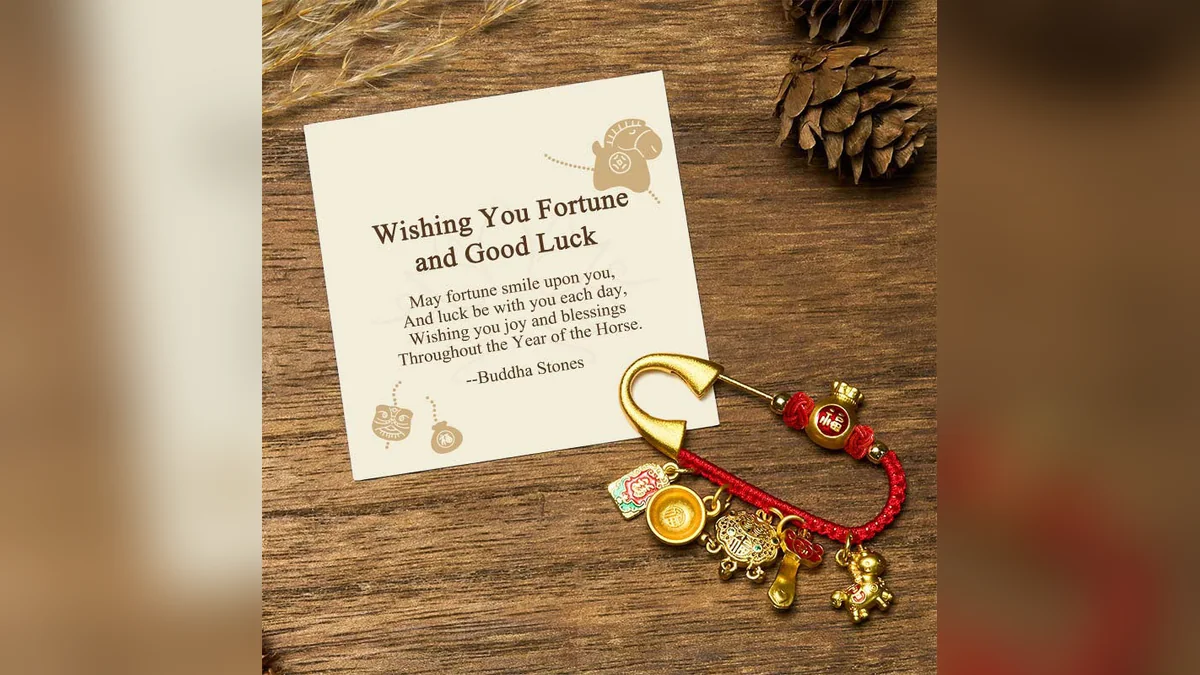
Our Year of the Horse Brooch with Gift Message Card combines brass and rope. Its stated brooch length is About 2.36*0.79 in(6*2 cm). Available options include Horse Fortune, Horse Peace Fu Character, Standard Gift Box, and Deluxe Gift Bag. The Standard Gift Box package contains one brooch, one message card, and one standard gift box; the Deluxe Gift Bag package contains one brooch, one message card, and one deluxe gift bag.
Peony window and tassel design
The Chinese-style Window Purple Peony Flower Tassel Copper Brooch has copper and metal in its material specification. Its stated size is About 5.24*3.62*3.31 in (13.3*9.2*8.4 cm). Use the complete measurement set when considering available space. The package contains one brooch.
Pink iris in silk, copper, and pearl
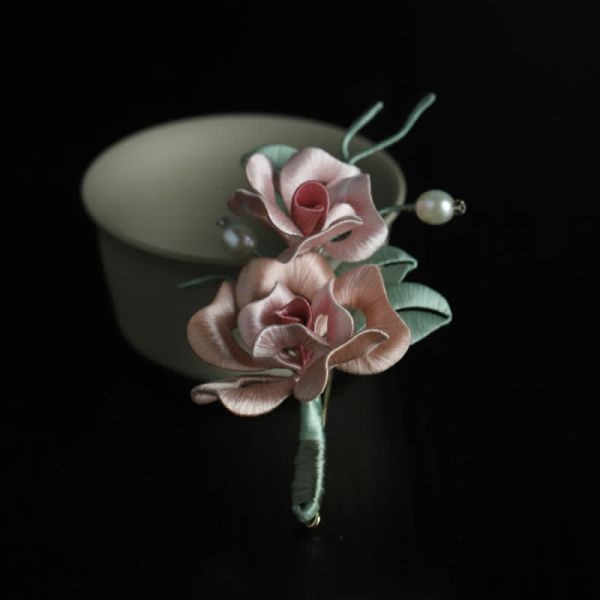
For a floral option, our Handcrafted Silk Art Pink Iris Flower Protection Brooch has a stated length of About 2.76 in (7 cm). Its materials are silk, copper, and pearl. Include room for careful handling in your decision, especially where clothing or accessories could press against the decoration.
Twin rose with a stated length range
The Handcrafted Silk Art Twin Rose Flower Blessing Harmony Brooch combines silk, copper, and pearl, with a stated length of About 2.76-3.54 in(7-9 cm). Compare both ends of that range with the intended garment area.
Words such as luck, blessing, and protection in product names express traditional wishes. They do not guarantee an outcome.
FAQ
Does a metal brooch always weigh more than a silk brooch?
No. A silk design can also contain metal, and the material names alone do not establish finished weight. Consider the full construction and available specifications. If weight remains unknown, do not assume either design will suit a delicate fabric.
Can I clean the whole brooch with metal polish?
A mixed-material brooch needs care that accounts for its textile and pearl components as well as metal. Avoid applying polish across the whole piece. Start with gentle dry care, and obtain suitable instructions before using a cleaning product.
How should I choose when only length is provided?
Use that length to estimate reach, while leaving width, depth, and weight unresolved. Compare it with the garment space and check for likely contact with straps or folds. Choose only when the available information supports the fit you need.
Shop the story
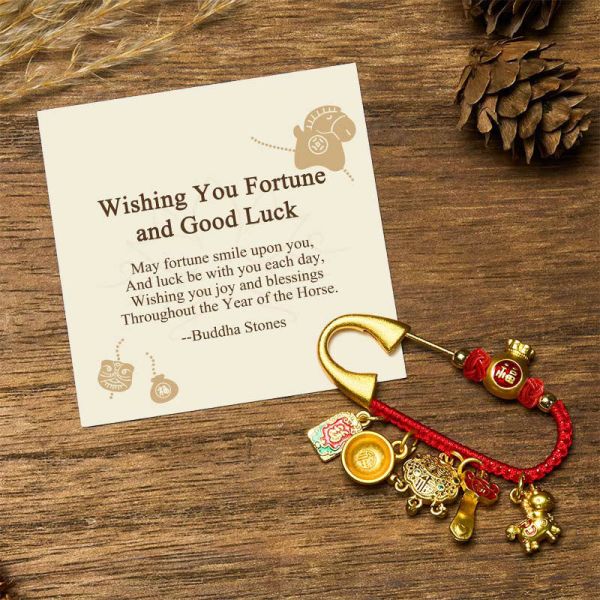 Buddha Stones "Wishing You Fortune and Good Luck" Year of the Horse Brooch Includes Gift Message CardAs low as $25.59 Regular Price $35.54
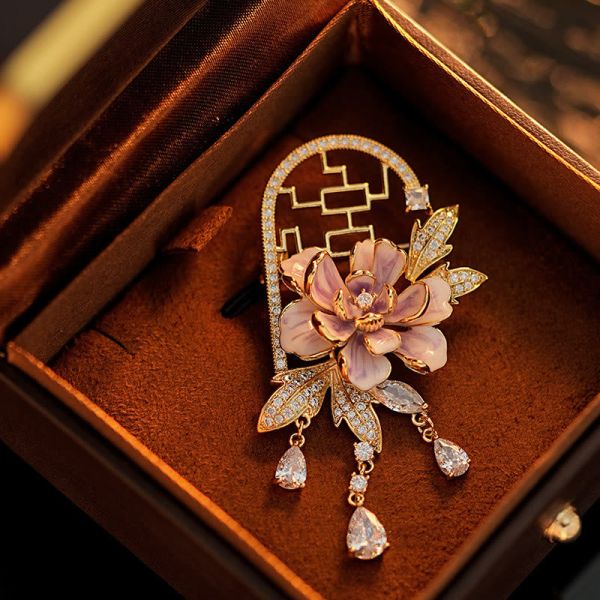 Buddha Stones Chinese-style Window Purple Peony Flower Tassel Copper BroochSpecial Price $54.59 Regular Price $75.82
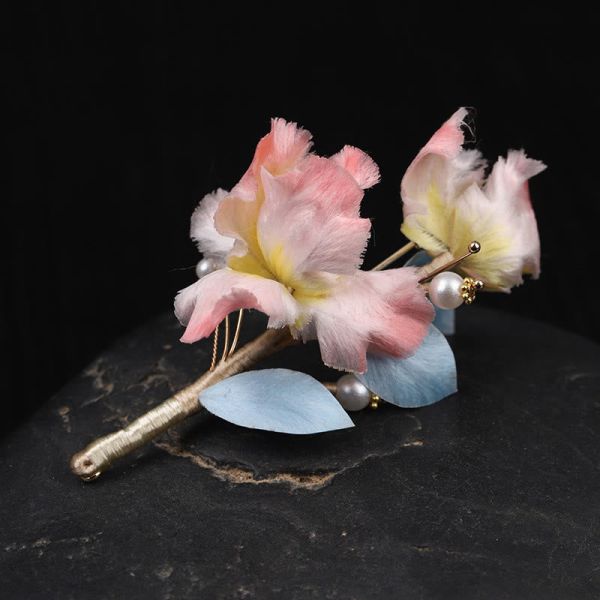 Buddha Stones Handcrafted Silk Art Pink Iris Flower Protection BroochSpecial Price $32.59 Regular Price $44.64