Bodhisattva Meaning in Art, Symbols, and Jewelry
A lotus stem often rises beside a crowned bodhisattva figure. The traditional bodhisattva meaning is a being committed to awakening for the benefit of all beings, an ideal central to Mahayana Buddhism. These figures represent compassion, wisdom, and the willingness to help others. Devotional associations with luck, wealth, or protection belong to religious belief; jewelry and images offer no guarantee of those outcomes. At Buddha Stones, we approach the motif through its Buddhist context, beginning with the commitment behind the crown, flowers, and gestures.
Bodhisattva meaning: the vow behind the image
The word comes from Sanskrit: bodhi refers to awakening, and sattva to a being. Buddhist traditions use the term in different ways. It can describe the Buddha during the lives preceding his awakening, someone following the bodhisattva path, or a revered figure associated with particular Buddhist qualities.
Within Mahayana Buddhism, the bodhisattva ideal joins the pursuit of wisdom with responsibility toward others. Generosity, ethical conduct, and patience belong to that path. A figure on a pendant therefore refers to a religious ideal with teachings and practices behind it. The [Smithsonian’s discussion of Tara](https://asia.si.edu/whats-on/exhibitions/wisdom-of-the-goddess/) describes the bodhisattva aspiration and its connection with these perfections.
Named figures give that broad ideal recognizable forms. Avalokiteshvara is associated with compassion and is known as Guanyin in Chinese Buddhist traditions. Manjushri represents wisdom. Tara has an especially important place in Tibetan Buddhist devotion and is closely associated with compassionate action. Tara and Guanyin have connected traditions, but their names should not be treated as interchangeable labels for any female Buddhist figure.
Where the figure appears, the context matters
Temple sculpture and painted images
Bodhisattvas often appear wearing crowns, necklaces, and flowing garments. These details can distinguish them from familiar images of the Buddha in monastic robes, although Buddhist art contains many variations. An open palm, a flower, or an object held near the shoulder can help identify the figure.
Read the whole composition before deciding what a single detail means. A central figure, smaller attendants, and surrounding Buddhas may establish relationships that a cropped photograph leaves out. Color can also matter in painted images, but a metal figure without painted color cannot always be identified by its finish alone. A museum label or temple description is a useful companion to looking closely.
Textiles and devotional banners
Bodhisattva imagery also appears in embroidered hangings, woven pictures, and paintings mounted with textile borders. Here the figure belongs to an arrangement that may include flowers, clouds, inscriptions, and other sacred figures. Those surrounding details can carry religious meaning rather than serving only as decoration.
A textile image may be displayed for devotion or preserved as an artwork. Its setting affects how it is approached. In a temple, follow the community’s rules about photography and handling; fabric bearing a sacred image deserves the same consideration as a statue.
Jewelry and personal objects
A ring or pendant gives the motif a much smaller surface. The identifying details may be reduced to a face, crown, posture, or accompanying flower. A product name can identify the intended figure, while a photograph shows which features are actually visible. Size and material alone cannot establish religious identity.
Some people choose such jewelry as an expression of Buddhist devotion; others value its cultural meaning. Learning the figure’s name and associations gives that choice a specific foundation. Wearing an image does not establish a person’s level of Buddhist practice or religious authority.
Festivals and temple observances
During observances honoring a bodhisattva, the image may become a focus for chanting, offerings, and communal worship. Guanyin commemorations are one example. Customs differ between temples and regions, so there is no single festival arrangement that explains every depiction. Flowers, lamps, and banners belong to the local ceremony as well as to the wider tradition.
Lotus flowers and companion figures add meaning
A lotus beside a bodhisattva connects the figure with Buddhist ideas of purity and awakening. The flower can appear beneath the feet, form a seat, or rise on a stem beside the shoulder. Its presence offers context, but it does not identify one bodhisattva by itself. Our discussion of the lotus flower in Buddhism explains that shared symbolism.
Companion figures provide another clue. Avalokiteshvara may appear alongside Tara, linking their compassionate associations within a larger devotional composition. Manjushri’s sword and book refer to wisdom and Buddhist teaching. These are distinct visual vocabularies, so a flower, sword, or book should be read together with the figure and setting.
Jewelry names need similar care. We treat words such as Protection, Hope, Calm, and Manifestation as wishes or symbolic themes, never as guaranteed results. That distinction allows the name to retain its devotional context without turning a religious association into a claim about what wearing an object will accomplish.
Tara rings and bead strands at Buddha Stones
Our Tara selection includes the following rings, mala, and bracelet. Their product specifications describe different materials and measurements.
A gold-plated silver option
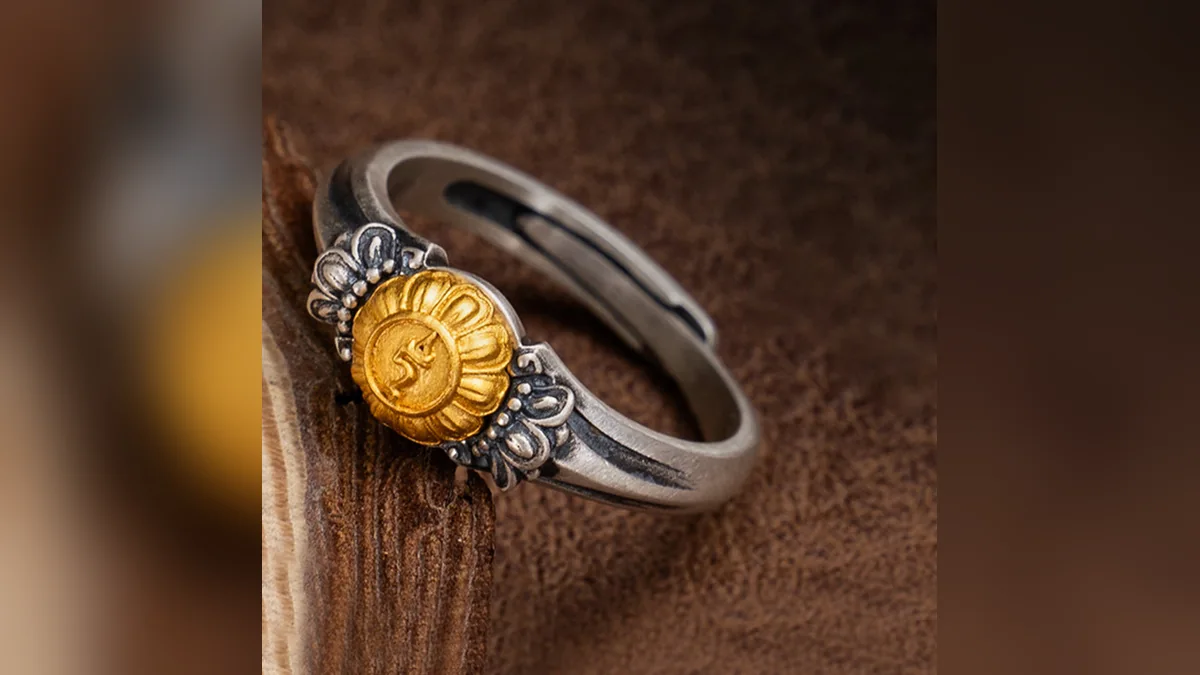
The 925 Sterling Silver Plated Gold Tara Protection Adjustable Ring has a ring inner perimeter of 68mm(Adjustable). Its specified materials are 925 Sterling Silver and 925 Sterling Silver Plated Gold. The item type is Ring, and its SKU is BS9682341C39.
A white bodhi seed mala
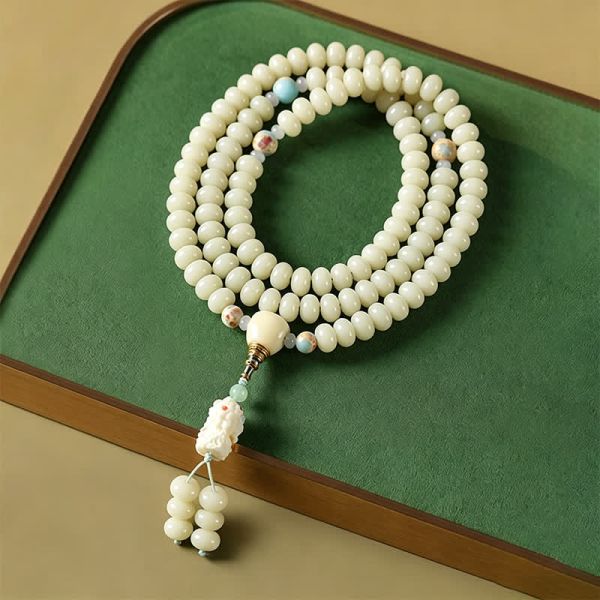
The White Bodhi Seed Tara Hope Hand-Woven Ethnic 108 Bead Mala uses White Bodhi Seed and Premium Elastic String. Bead size is 7.5 x 11mm. Wrist circumference is Approx. 5.5–6.3 in (14–16 cm). It typically wraps 2–4 times around the wrist, depending on bead size and wrist circumference. The package includes 1 × Mala. Natural Bodhi Seed may show slight variations in color, details, and overall appearance. Avoid water contact. Its SKU is BS199374152E3.
A green agate bracelet with 108 beads
The 108 Mala Beads Natural Green Agate Green Tara Manifestation Charm Bracelet contains 108 beads and uses premium elastic string. Materials are Green Agate and a Liuli Glass Pendant. Bead size options are 6mm, 8mm, and 10mm. Its item type is Bracelet, and its SKU is BSP-BS24428BF61D.
A sterling silver ring option
The 925 Sterling Silver Tara Calm Adjustable Ring is made of 925 Sterling Silver. Its ring inner perimeter is 70mm(Adjustable). The item type is Ring, and its SKU is BS96840475C0.
Keep the commitment in view
The crown and lotus make a bodhisattva image recognizable, but its central reference is a commitment to others. A temple painting presents that ideal through a full composition; a piece of jewelry carries a smaller reference to it. Knowing the named figure, its companions, and its setting gives the motif a meaning beyond its outline.
Shop the story
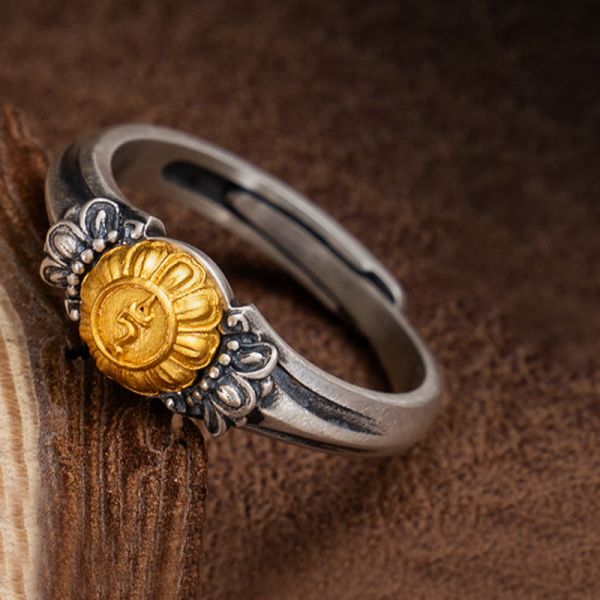 Buddha Stones 925 Sterling Silver Plated Gold Bodhisattva Tara Protection Adjustable RingSpecial Price $252.59 Regular Price $336.79
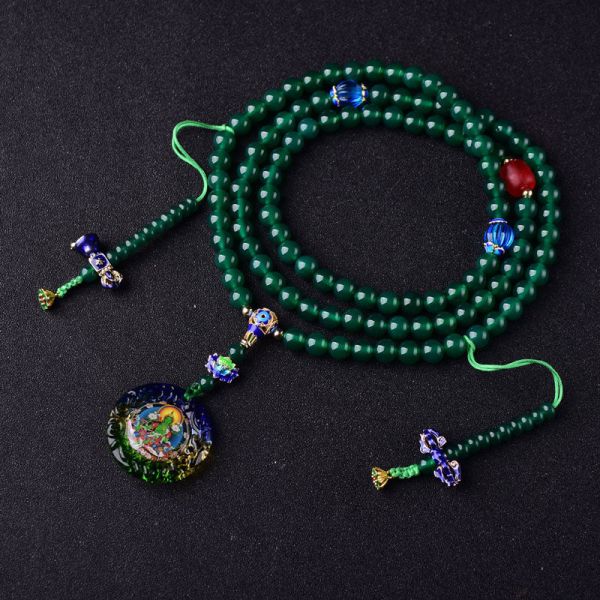 Buddha Stones 108 Mala Beads Natural Green Agate Bodhisattva Green Tara Manifestation Charm BraceletAs low as $68.59 Regular Price $91.45
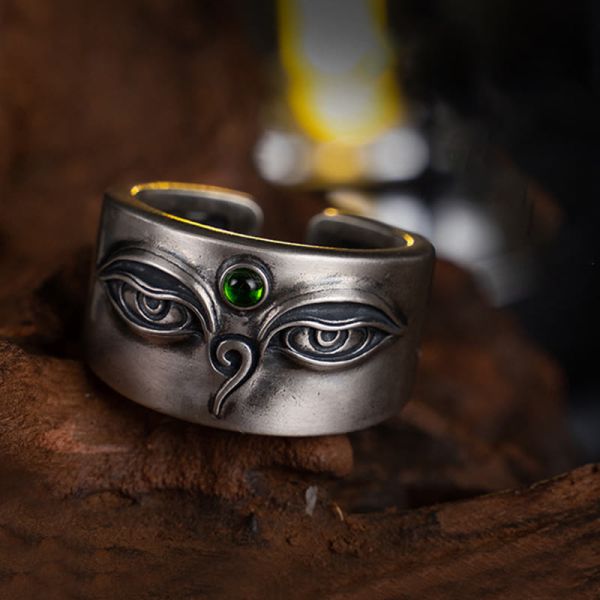 Buddha Stones 925 Sterling Silver Bodhisattva Tara Calm Adjustable RingSpecial Price $1,578.59 Regular Price $2,104.79