
Black Obsidian Care: Cleaning, Wearing, and Storage
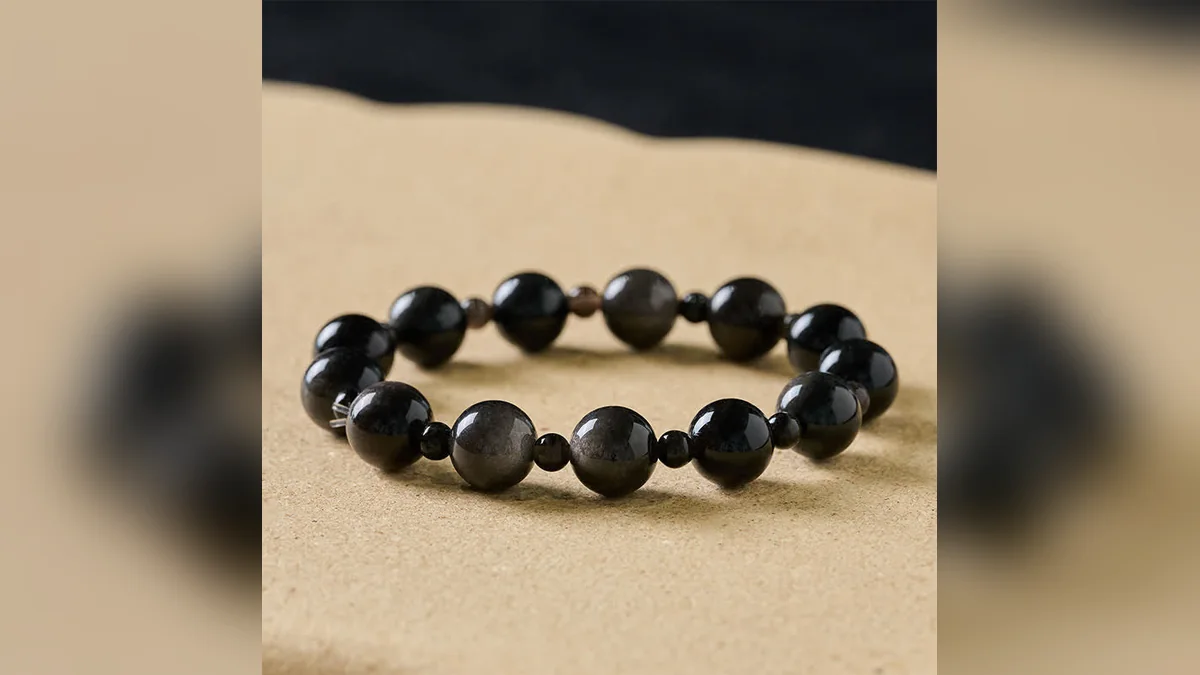
Fingerprints and lotion residue can leave dark beads looking dull. Black obsidian care means removing surface residue gently, keeping string and metal components out of soaking water, and checking for damage before wearing a piece again. This manual explains what to gather, how to clean and dry a bracelet, which methods to avoid, and when to arrange a repair or stop wearing it.
At Buddha Stones, we recommend considering the whole bracelet when choosing a cleaning method. A piece may combine obsidian with other stones, metal, and elastic string, so a method suitable for a loose bead may be unsuitable for the assembled jewelry.
Tools and Materials for a Gentle Wipe
Prepare a clean, uncluttered surface before taking off your bracelet. Lay down a folded towel so beads cannot roll far or strike a hard countertop if the string breaks.
- Two soft, lint-free cloths: use one for wiping and keep the other dry.
- Lukewarm water: dampen a cloth rather than placing the bracelet in a bowl.
- Mild liquid soap, if needed: use a small amount diluted in water for stubborn surface residue. Skip abrasive or heavily scented formulas.
- A clean towel and separate storage space: allow the piece to dry before putting it away.
Check that the wiping cloth has no grit caught in it. Do not reuse a polishing cloth treated with chemicals intended for another type of jewelry. For broader cleaning considerations, our gemstone jewelry cleaning guide covers care beyond obsidian.
Black Obsidian Care: A Step-by-Step Routine
- Remove the bracelet carefully. Ease it over your hand with support from both hands. Avoid pulling one bead away from the strand or tugging a decorative element. Remove jewelry before washing, swimming, applying lotions, or working with household cleaners.
- Inspect before adding moisture. Turn the bracelet slowly over the towel. Look for chipped edges, visible cracks, gaps that have appeared between beads, and exposed or fraying string. If something looks damaged, set the piece aside for inspection instead of continuing to handle it.
- Start with a dry wipe. Support a bead between your fingers and wipe its exposed surface with the clean cloth. Work around the strand without stretching it. Light fingerprints may come away at this stage, making further cleaning unnecessary.
- Use a barely damp cloth where needed. Wet the cloth with lukewarm water, then squeeze it out thoroughly. Wipe accessible bead surfaces gently. Keep moisture away from knots, bead holes, and metal joins as much as practical. Do not pull beads apart to reach hidden string.
- Address remaining residue cautiously. If plain water leaves a greasy film, try a little diluted mild soap on the cloth. Start on a small area and stop if the surface appearance changes. Remove soap immediately with a separate cloth dampened with plain water; do not leave a film to dry.
- Dry and put away. Blot with the dry cloth, then rest the bracelet on a clean towel at room temperature. Turn it gently so hidden damp areas can dry. Once dry, place it in its own compartment or pouch, away from objects that could rub against the beads.
Repeat the light wipe when visible residue appears rather than giving the bracelet a wet cleaning on a fixed schedule. Before putting it back on, check that the string still holds the beads together without obvious slack. A bracelet that no longer returns to its usual shape needs attention before further wear.
What Not to Do During Cleaning or Wear
Do not soak the assembled bracelet. Long baths make it harder to keep moisture out of bead holes, elastic, and metal connections. Avoid saltwater, vinegar, bleach, alcohol, and household cleaning sprays. Do not use toothpaste, baking soda paste, scouring pads, or abrasive powders to chase away a mark.
Keep ultrasonic cleaners, steam cleaners, boiling water, and direct heat out of the routine. A hair dryer is unnecessary for drying a strand. Do not leave it on a heater or a sunny windowsill to speed the process. Room-temperature drying gives you more control without heating its different components.
During wear, avoid knocking beads against counters or letting the bracelet catch on handles. Remove it before sports, lifting heavy objects, and tasks where jewelry may snag. When taking off a double-wrap style, release the loops gently instead of stretching both outward at once.
Skip home polishing, sanding, or attempts to scrape away a persistent spot. If gentle wiping does not remove it, pause and have a jewelry repair professional assess the surface.
When to Replace Parts or Retire a Piece
Replace worn string before it fails. Fraying, a loose knot, persistent gaps, or elastic that stays stretched are reasons to stop wearing the bracelet and ask about restringing. Keep a damaged strand in a small container so loose beads remain together. Avoid using glue as a substitute for a proper repair.
A chipped or cracked bead also calls for a pause. Do not rub a finger along a suspected sharp edge to test it. A repair professional can assess whether the affected bead should be removed or replaced and whether neighboring components remain suitable for reuse.
Minor appearance differences are not the same as damage. Our product descriptions allow for variations in color, details, and overall appearance. Compare a questionable area with an earlier photo if available, without assuming every uneven detail is a new fault. Retire a piece from wear when damaged components cannot be repaired or replaced reliably; it can be kept as a personal object in a closed container.
Our Obsidian Bracelets: Materials to Check Before Cleaning
These product details help you identify the components involved in care. “Protection” in a product name expresses a traditional wish, not a guaranteed result.
Single and Double Layer Round Bead Bracelet
Our Black Obsidian Single Double Layer Round Bead Bracelet combines Obsidian and Copper Alloy on Premium Elastic String. Options include 10mm Black Obsidian, 8mm Black Obsidian, Double Wrap, and Single Wrap. The specifications give bead sizes of 8mm /10mm and wrist circumferences of 5.9–6.3 in (15–16 cm) / 6.3–6.7 in (16–17 cm). Check your selected option rather than assuming a particular size and wrap combination.
Tiger Eye and Blue Tiger's Eye Bracelet
The Tiger Eye, Blue Tiger's Eye, and Black Obsidian Beads Courage Bracelet contains Tiger Eye, Blue Tiger's Eye, Black Obsidian, and Copper. Its Premium Elastic String carries 8mm beads, with wrist circumference given as 6.3–6.7 in (16–17 cm). Include the metal components in your inspection before wiping.
Golden Sheen Obsidian Peace Buckle and Koi Fish Bracelet
The Golden Sheen Obsidian Peace Buckle and Black Obsidian Koi Fish Bracelet uses Golden Sheen Obsidian, Black Obsidian, and Copper Alloy, with Premium Elastic String. Bead size is Approx. 8mm; wrist circumference is 5.9–6.3 in (15–16 cm). Support decorative elements during wiping rather than using them as handles.
Amethyst, Black Obsidian, and Hematite Bracelet
Our Amethyst, Black Obsidian, and Hematite Beads Meditation Bracelet combines those three materials with Copper and Premium Elastic String. It has 8mm beads and a wrist circumference of 5.9–6.3 in (15–16 cm). Keep the same gentle approach across the mixed-material strand.
Finish With a Dry Bracelet and a Quick Check
Keep black obsidian care simple: inspect, wipe only as needed, dry fully, and put the piece away without pressure or rubbing. Before the next wear, check the beads and string again. A brief inspection helps you decide when ordinary cleaning is enough and when a repair should come first.
Shop the story
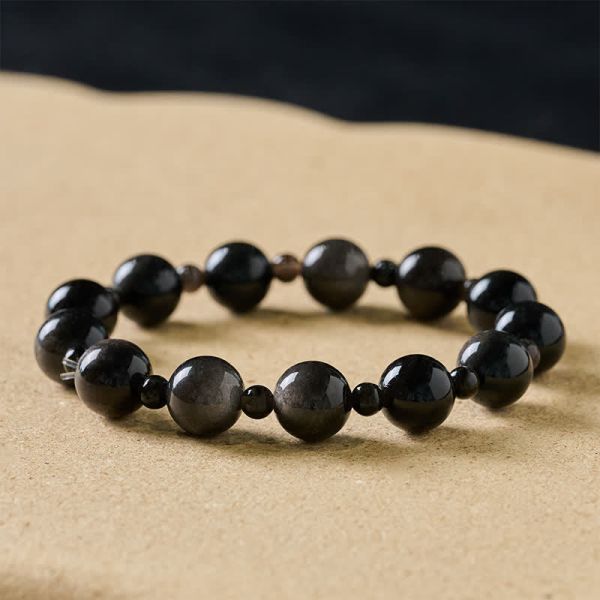 Buddha Stones Black Obsidian Single Double Layer Round Bead Protection BraceletAs low as $25.59 Regular Price $35.54
 Buddha Stones Tiger Eye Blue Tiger's Eye Black Obsidian Beads Courage BraceletSpecial Price $25.59 Regular Price $34.12
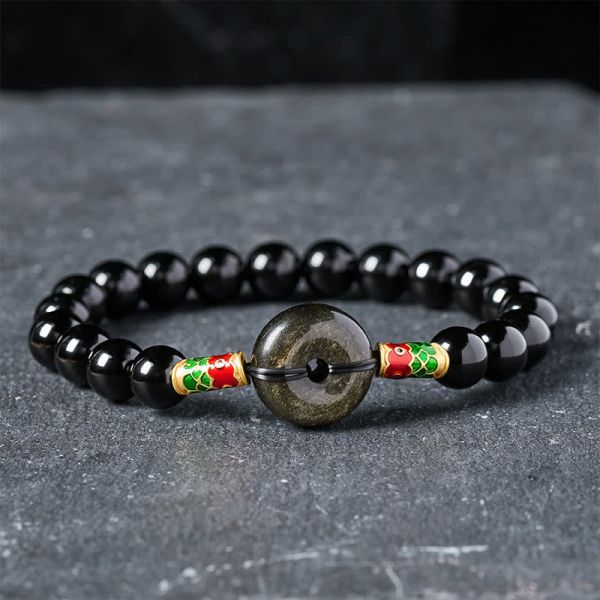 Buddha Stones Golden Sheen Obsidian Peace Buckle Black Obsidian Koi Fish Protection Round Bead BraceletSpecial Price $25.59 Regular Price $34.58
 Buddha Stones Amethyst Black Obsidian Hematite Beads Meditation BraceletSpecial Price $25.59 Regular Price $34.12