
Bangle vs Beaded Bracelet: Care, Wear, and Repair
Bracelets collect residue where they touch your wrist and rub against sleeves. For bangle vs beaded bracelet care, construction is the useful starting point: a bangle holds a rigid shape, while a beaded bracelet has individual beads held on a strand. That difference determines how you put it on, clean around its parts, and check for damage. This manual explains a practical routine for both, including when to stop wearing a piece and consider repair.
Bangle vs beaded bracelet: tools and materials
Prepare a clear work surface before removing your jewelry. A folded towel gives you somewhere to place a bangle without knocking it against the table and helps contain beads if a strand breaks during inspection.
- A clean, lint-free cloth: Use it for routine dry wiping. Reserve a separate cloth for jewelry so household cleaning residue does not transfer.
- A shallow tray: Keep a bracelet and any detached parts together while you inspect them.
- Good lighting: Check edges, bead holes, clasps, hinges, and exposed string where present.
- A barely damp cloth, when appropriate: Use water only when the material and finish permit it. Uncertain materials call for dry care until you have suitable instructions.
We recommend checking material information before choosing a cleaning product. A method suitable for one component may be unsuitable for the string, finish, or decorative parts beside it.
A step-by-step routine from removal to storage
-
Remove the bracelet before messy or strenuous tasks. Take it off before washing, swimming, household cleaning, gardening, or lifting objects that could catch it. Apply lotions and perfume before putting jewelry on, and let those products dry first. Choose a regular place to leave your bracelet so it does not end up beside a sink.
-
Take it off without forcing its structure. Slide a closed bangle over your hand gently; stop if it catches rather than pushing harder. Open a hinged bangle using its intended closure. For an elastic beaded bracelet, ease it over your hand with support from both hands, limiting unnecessary stretch. Never pull it off by a hanging ornament or exposed section of string.
-
Inspect before wiping. Hold a bangle over the towel and check for cracks, sharp edges, distortion, or a closure that no longer seats properly. Turn a beaded strand slowly without stretching it. Look for chipped beads, frayed string, loose knots, or gaps that were not previously present. Damage needs attention before further wear or cleaning.
-
Wipe accessible surfaces gently. Support a bangle while passing the dry cloth around its inside and outside. For beads, support a short section in your palm and wipe the exposed surfaces without tugging the strand. Fold the cloth to reach between beads where space allows. Do not push fabric into a tight gap or force beads apart.
-
Address remaining residue cautiously. If the material permits water, use a barely damp corner of the cloth on the affected surface, then dry it. Keep moisture away from knots, bead holes, and attachments where possible. If residue persists, stop and seek material-specific cleaning guidance. Repeated scrubbing is not a substitute for knowing what the piece can tolerate.
-
Put it away fully dry and without tension. Give a bangle its own padded compartment. Lay a beaded bracelet in loose loops without stretching its strand or trapping an ornament under it. Keep jewelry from rubbing against neighboring pieces, and avoid hanging elastic strands under their own weight. Check the storage space for dampness or direct heat.
Before the next wear, check fit as well as condition. A bracelet that requires force to put on needs a different fit assessment. Our wrist measurement guide explains circumference; remember that a closed bangle must also pass over your hand.
What not to do during wear or cleaning
Avoid treating a rigid bangle like a flexible strand. Do not bend it to change its fit unless its design expressly allows adjustment. Likewise, do not repeatedly stretch a beaded bracelet to test whether its string is still sound. Inspect the strand at rest.
- Do not soak an assembled bracelet. Mixed materials and hidden connections make a universal soaking method unsuitable.
- Skip abrasive household methods. Toothpaste, scouring powders, and stiff brushes can damage surfaces or finishes.
- Do not use ultrasonic or steam equipment without explicit care guidance. Appearance alone does not establish compatibility.
- Avoid knocks between stacked pieces. Leave enough room that bracelets do not continually strike or scrape one another.
- Remove bracelets before bed. Bedding can catch fittings, and a strand may be pulled without your noticing.
Do not assume that a bead material determines the whole cleaning routine. String, rope, metal fittings, and surface treatments also matter. When their requirements differ, choose a method suitable for the complete assembly.
When to replace a component or retire a piece
Stop wearing a beaded bracelet if its string frays, its knot slips, or its stretch no longer returns as expected. Restringing may allow sound beads to remain in use. Keep detached beads together in a closed container, and have the assembly assessed before wearing it again.
A cracked bangle, sharp chip, distorted hinge, or unreliable clasp also calls for a pause. Do not conceal damage with glue and resume wear. A jewelry repair professional can assess whether a repair is appropriate for the material and construction.
Surface wear alone does not always require retirement. Separate a cosmetic mark from a fault that affects the structure. If repair is impractical, keeping a meaningful piece in a display box is another option. No fixed replacement schedule can account for every bracelet; condition should guide the decision.
Our beaded options: specifications that inform care
The four options below are categorized as Bracelet, Mala and Unisex. Their specifications give 108 beads, an 8mm bead size, premium elastic string, and a wrist circumference of 14-16cm. Use those details when assessing fit and handling the strand.
Hematite Tassel bracelet
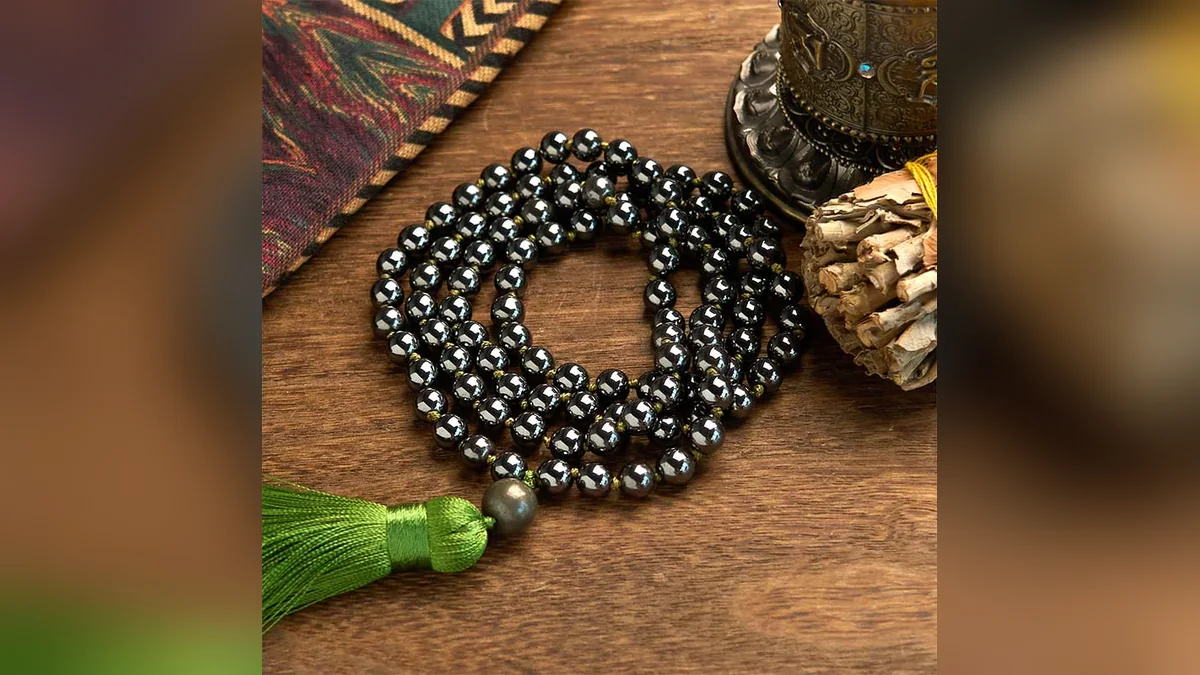
Our Hematite Tassel bracelet specifies Hematite and rope. Include the rope in your inspection, checking accessible areas without pulling at them. Support the bracelet during wiping so cleaning does not become a tug on its connections.
Indian Agate Lotus bracelet
The Indian Agate Lotus bracelet specifies Indian Agate and Alloy. Choose care that accounts for both materials. The word Alloy does not identify a particular metal composition or establish which polishing products are suitable.
Rose Quartz Lotus Peace bracelet
Our Rose Quartz Lotus Peace bracelet has a material specification of Indian Agate and Alloy despite its product name. Confirm the material before choosing a stone-specific cleaning method; the name alone does not resolve that discrepancy.
Tiger Eye Multi-turn bracelet
The Tiger Eye Multi-turn Protection bracelet specifies Tiger Eye and Stainless steel. Support its loops when handling it, and inspect accessible string without stretching it. Here, “Protection” expresses a traditional wish and carries no guarantee.
Make the condition check part of putting it away
A useful routine ends with the bracelet dry, supported, and ready for inspection before its next wear. Keep a cloth near its storage place, notice changes in the structure, and pause when something catches or loosens. Gentle handling and timely repair decisions matter more than an elaborate cleaning kit.
Shop the story
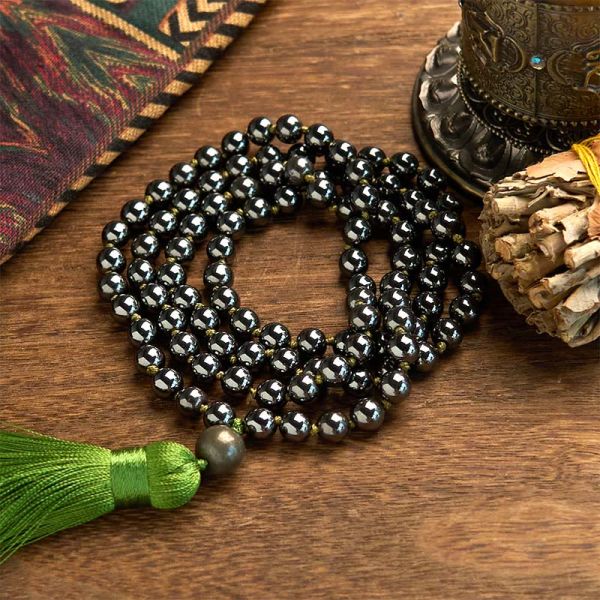 Buddha Stones 108 Mala Beads Natural Stone Hematite Tassel Powerful BraceletSpecial Price $32.59 Regular Price $43.45
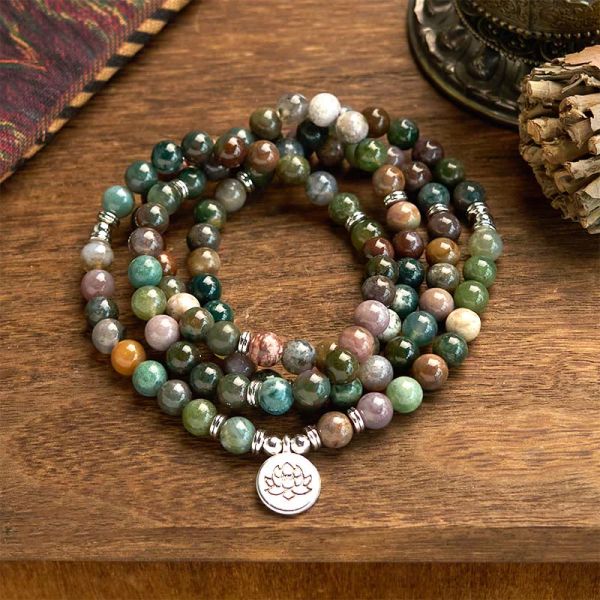 Buddha Stones 108 Mala Beads Natural Stone Indian Agate Lotus Calm BraceletSpecial Price $29.59 Regular Price $39.45
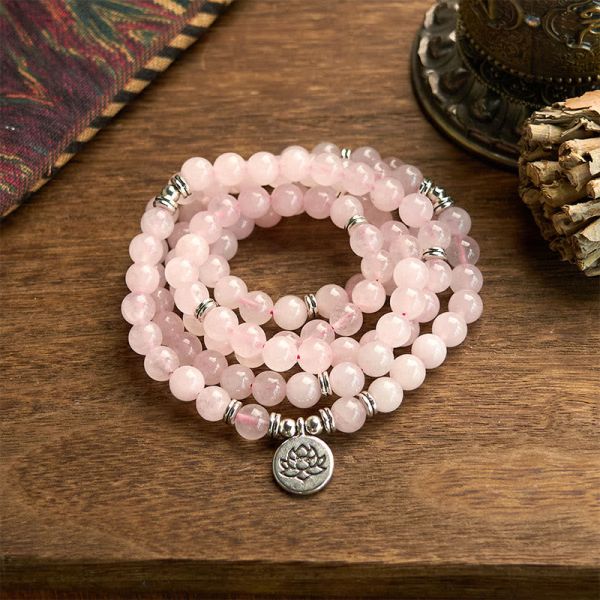 Buddha Stones 108 Mala Beads Natural Stone Rose Quartz Lotus Peace BraceletSpecial Price $26.59 Regular Price $35.93
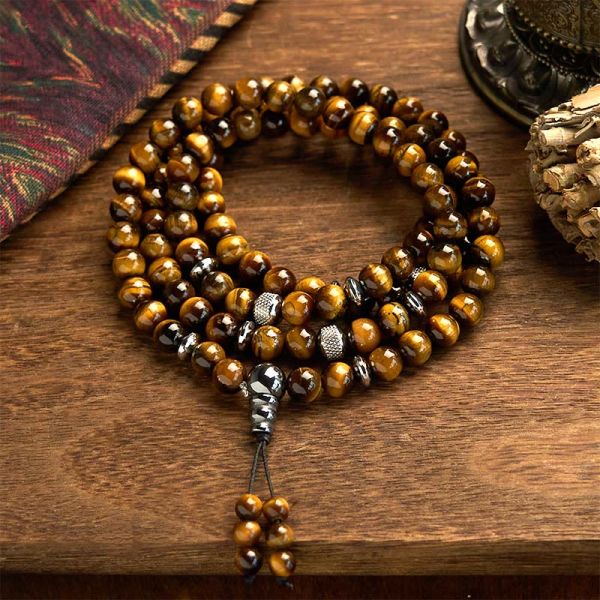 Buddha Stones 108 Mala Beads Natural Stone Tiger Eye Multi-turn Protection BraceletSpecial Price $39.59 Regular Price $54.23