
Aquamarine Care: A Practical Cleaning and Use Manual
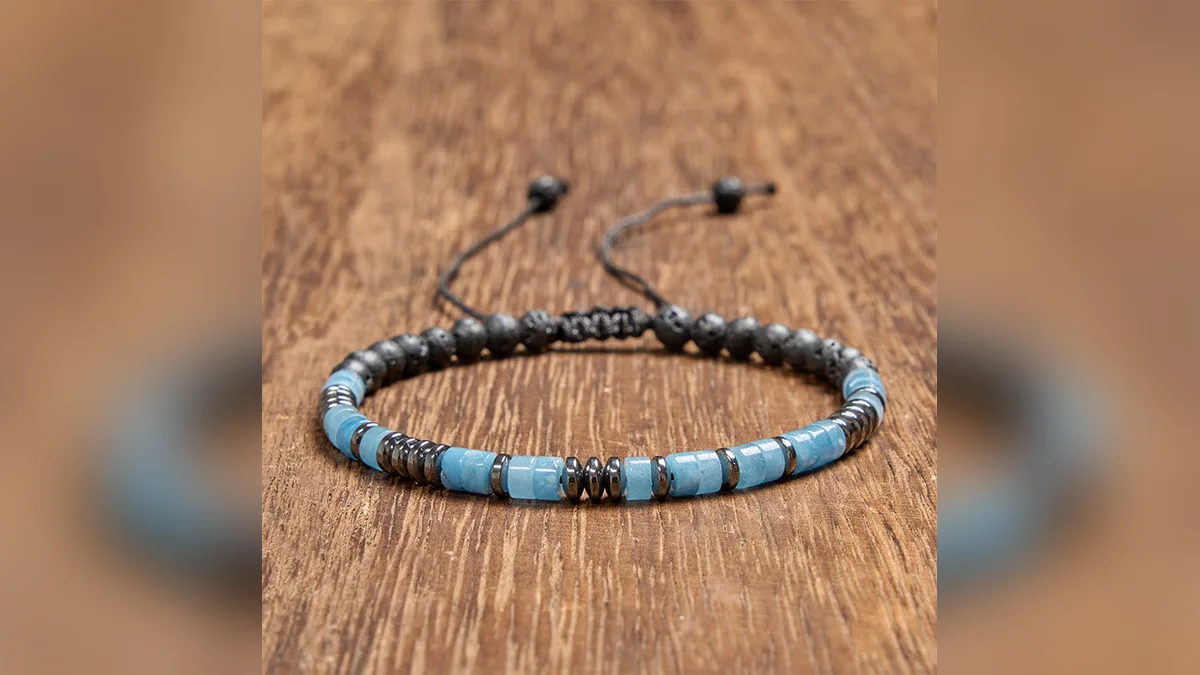
A bracelet can collect a dull film where its beads touch your wrist. Aquamarine care means removing that surface residue gently, checking the parts that hold the piece together, and choosing storage that prevents knocks and tangles. This manual explains what to gather, how to clean different constructions, and when to stop wearing a damaged piece. At Buddha Stones, we recommend choosing your method around the full material combination, including any pearl, cord, or metal components.
Prepare a small cleaning kit and a padded workspace
Work on a clear surface covered with a folded towel. Keep the piece away from an open sink drain, and use a small bowl if you need water. Good light makes it easier to distinguish surface dirt from a chip or a loose connection.
- Two clean, soft, lint-free cloths: one for wiping and one for drying.
- Room-temperature or lukewarm water.
- A little mild liquid soap, reserved for suitable stone surfaces without pearls.
- A separate pouch or a divided jewelry box with a soft lining.
Keep polishing compounds, abrasive sponges, and stiff brushes out of the kit. A plain wiping cloth gives you more control around bead holes, knots, and small fittings. If a mark does not lift with gentle wiping, leave it for assessment instead of increasing pressure.
A gentle aquamarine care routine
Use a brief dry wipe after wear. Add the damp-cleaning steps when there is visible residue; repeated washing is unnecessary when a surface is already clean. For mixed materials, follow the gentlest method needed by any component.
- Inspect before adding water. Lay the piece on the towel and look for fresh chips, widened gaps, loose fittings, or fraying string. Check a bangle around its entire inner and outer edge. If you find damage, set it aside before cleaning further.
- Lift loose dust. Pass a dry cloth lightly over accessible surfaces. Turn a strand carefully so you can reach the sides of its beads. Avoid dragging grit across the stone or pulling the string to expose a hidden area.
- Wipe the surface that needs attention. Dampen a cloth with plain water and wring it out well. For an aquamarine surface without pearls, a little mild soap diluted in water can help remove a film. On pearl-containing jewelry, use a separate cloth barely dampened with plain water. Keep moisture away from knots and fittings as much as practical.
- Remove soap residue. Use another part of the cloth dampened with plain water to wipe any soaped area. Do not submerge a strung bracelet or hanging decoration to rinse it. Repeat with a clean section of cloth if the surface still feels slippery.
- Dry without heat. Blot gently, then leave the piece flat on a clean towel until the surfaces and string are dry. Do not stretch elastic or pull an adjustable cord while it is damp. Avoid a hair dryer, radiator, or sunny windowsill.
- Put it away without pressure. Give the piece its own pouch or compartment. Keep clasps and keys from pressing against stone surfaces, and avoid piling heavy objects onto a bangle. Close the storage space only after moisture has dried.
Our gemstone jewelry cleaning guide offers broader guidance for a mixed jewelry box. Keep the material list for the particular piece in view when choosing any cleaning method.
Habits and shortcuts to avoid
Remove jewelry before showering, swimming, washing dishes, or working with household cleaners. Put it on after lotions and perfume have dried. Do not apply perfume or essential oil directly to beads, string, or fittings as part of this routine.
Skip ultrasonic machines and steam cleaners for home care of these mixed constructions. Avoid bleach, strong detergents, toothpaste, and abrasive powders. A stone surface, an elastic strand, a pearl, and a metal fitting need different handling; one cleaning shortcut may not suit the assembled piece.
Handle an elastic bracelet by rolling it gently over your hand instead of pulling it wide from one point. Use an adjustable cord’s intended adjustment rather than tugging against its knots. For a rigid bangle, check fit before trying to slide it on, and never force it across your knuckles.
For a key chain decoration, keep the decorative section clear of zipper teeth and door edges. Do not use its string as a handle for a bag or a heavy bundle of keys. Repeated pulling and impacts deserve attention even when the stone surfaces still look clean.
Recognize when repair or retirement comes first
Stop wearing or carrying a piece if a stone develops a sharp chip, a bangle shows a new crack, or a fitting no longer closes securely. Cleaning cannot restore a broken connection. Wrap the item separately and have a jeweler assess it before putting it back into use.
Frayed cord, exposed strands, or elastic that stays stretched are reasons to consider restringing. Keep any detached components together in a closed container. Avoid household glue repairs, especially where a joint must carry tension.
A slight color difference or an irregular detail alone does not establish damage. Compare the area with an earlier clear photograph if you have one, and pay attention to changes. If repair is impractical, retire the piece from wear or use and keep it contained as a personal keepsake.
Apply the routine to our aquamarine pieces
Adjustable cord with lava rock
Our Aquamarine Lava Rock Clarity Bracelet combines aquamarine, lava rock, and string on an adjustable cord. Its wrist circumference is 6.3-7.1 in (16-18 cm). Keep cleaning localized and check the cord before adjusting it. Natural aquamarine may show slight differences in color, details, and overall appearance.
A flower decoration with mixed components
The Natural Strawberry Quartz Amethyst Citrine Aquamarine Flower Key Chain uses premium elastic string and includes amethyst, citrine, strawberry quartz, aquamarine, copper, and alloy. Its length is about 1.57-1.97 in / 4-5cm. The clasp shape is random. Wipe accessible surfaces gently and inspect the clasp and string before attaching it again.
A pearl combination on elastic string
The Aquamarine Pearl Fortune Money Bag Charm Bracelet combines aquamarine and pearl with premium elastic string; its wrist circumference is 14-19cm. Choose the barely damp plain-water wipe described above. The fortune and money bag wording expresses a traditional wish for prosperity; it promises no financial result.
A rigid aquamarine bangle
Our Natural Aquamarine Serenity Bangle Bracelet is aquamarine. Width options are 6mm, 8mm. Inner diameter options are 54-55mm, 56-57mm, 58-59mm, 60-61mm, 62-63mm, 64-65mm. Its care notes allow soap to help the hand slide through when putting it on. Keep a padded surface underneath, remove any soap afterward, and stop if the bangle does not pass easily.
Finish with a brief check before the next use
Return to the same simple sequence: inspect, wipe only as needed, dry thoroughly, and put away carefully. Before wearing a bracelet or attaching a decoration again, check its edges and connections. Gentle cleaning addresses surface residue; timely repair addresses wear that a cloth cannot fix.
Shop the story
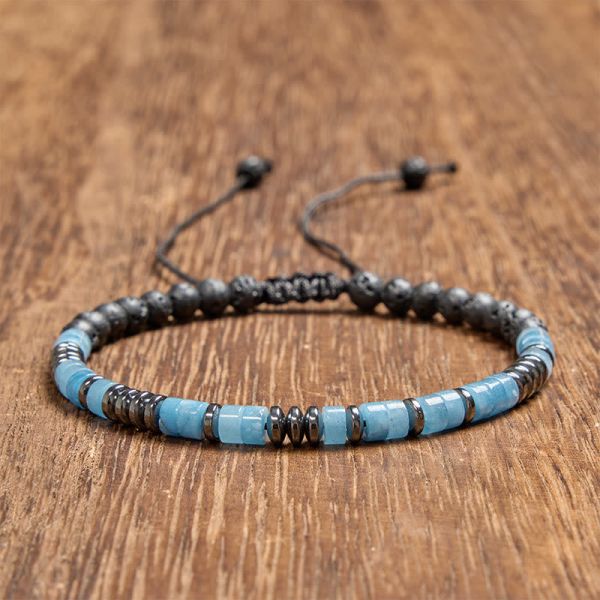 Buddha Stones Aquamarine Lava Rock Clarity Silver Tone Accent BraceletSpecial Price $25.59 Regular Price $35.54
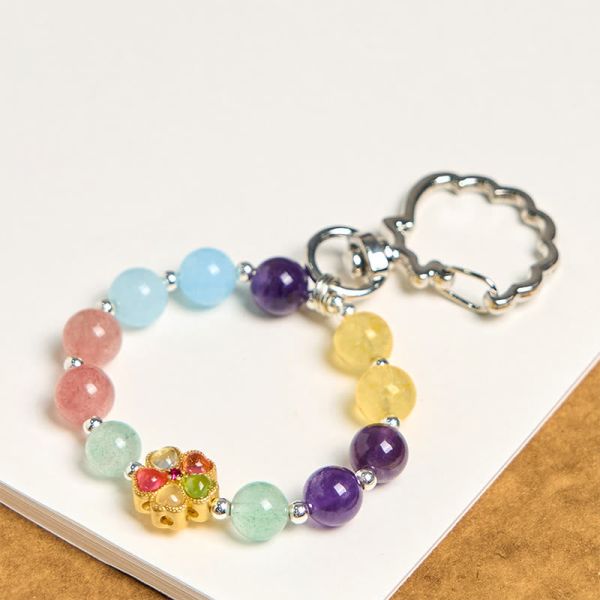 Buddha Stones Natural Strawberry Quartz Amethyst Citrine Aquamarine Flower Key Chain Hanging DecorationSpecial Price $25.59 Regular Price $35.54
 Buddha Stones Aquamarine Pearl Fortune Money Bag Charm BraceletSpecial Price $25.59 Regular Price $36.04
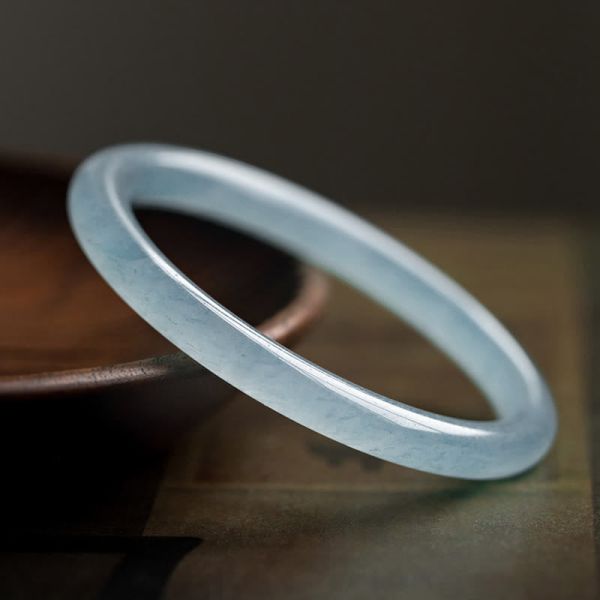 Buddha Stones Natural Aquamarine Serenity Bangle BraceletAs low as $75.59 Regular Price $106.46