
Amber Meaning: What to Know Before Buying Jewelry
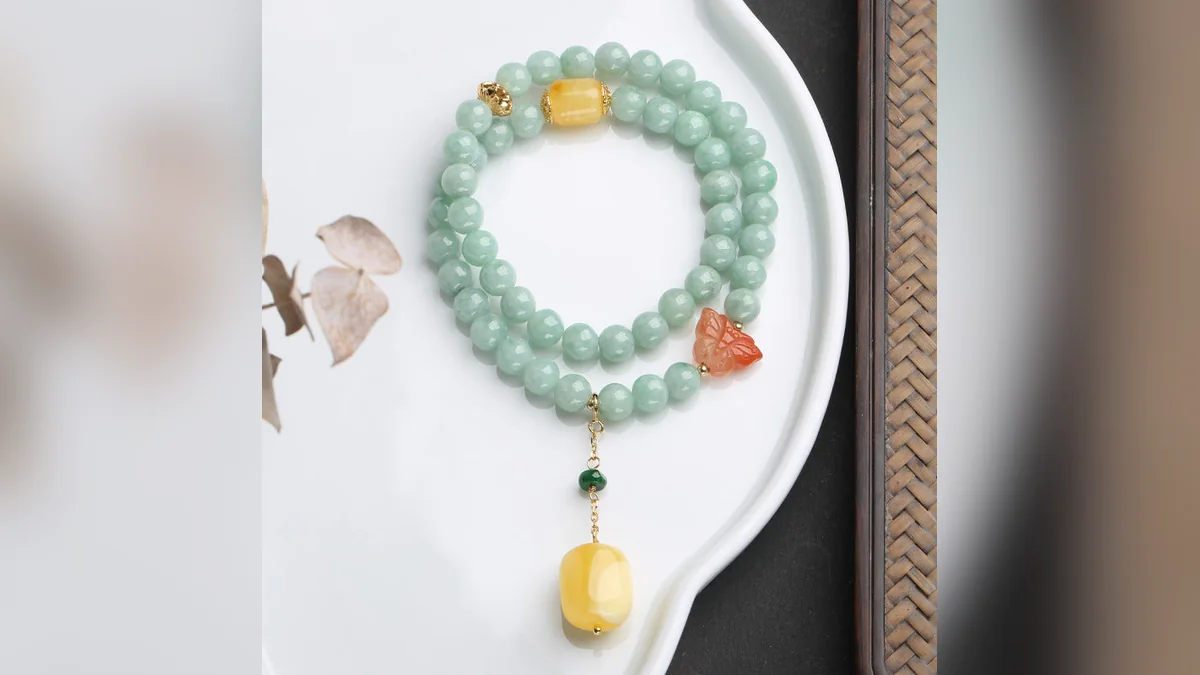
Amber is fossilized tree resin rather than a mineral. It is hardened resin from ancient trees, valued for its warm honey-to-golden color. Amber meaning centers on warmth, sunlight, and preservation; in Buddhist tradition, amber also appears among the precious substances named in certain Seven Treasures lists. These are cultural associations, not promises about what wearing it will do.
For a buyer, that distinction is useful. You can appreciate the symbolism while checking the material, bracelet size, and care requirements on their own terms. Read the material line as carefully as the product name, especially when comparing amber with copal or an imitation.
What amber actually is
Amber begins as resin released by trees. Over time, that resin hardens and becomes fossilized, often across millions of years. Baltic amber is a well-known source, but the word “amber” by itself does not establish where a piece came from. A source claim needs its own supporting information.
Some amber contains trapped insects or bits of plants. Such inclusions help explain its association with preservation: something small from an earlier world remains enclosed in resin. They are not present in every piece, and their absence does not settle a question of authenticity. A photograph of an inclusion is also not enough to identify the surrounding material.
Amber is very light, and some amber floats in salty water. Neither lightness nor floating should serve as your buying verdict. Jewelry may combine several materials, so the behavior of an assembled bracelet cannot reliably identify an individual bead.
It is also soft, measuring about 2 to 2.5 on the Mohs scale. That matters more for daily ownership than an elaborate symbolic description: amber needs care around rough surfaces and harder stones. Choose it with its material character in mind, including the possibility of scratches.
Meanings people attach to it
Warmth and sunlight are familiar associations with amber's golden appearance. In traditional symbolism, these describe the qualities its color suggests. They can make amber a meaningful choice for someone who likes sunlit colors or wants jewelry with a reference to the natural world.
Preservation has a more direct connection to the material itself. Resin can enclose plant fragments and insects, making amber an apt symbol for keeping something from the past. You might choose that association to mark a memory, while recognizing that the personal meaning comes from you.
Amber appears in some lists of the Seven Treasures in Buddhist texts. Lists differ, so we avoid presenting it as an identical set of materials across Buddhist traditions. Its inclusion offers a religious and cultural context for its value; it does not establish a promised result from owning or wearing it.
When choosing a gift, a short explanation of warmth, sunlight, or preservation often says more than a stack of supposed properties. Let the recipient decide which association matters to them.
Amber, copal and faux amber
Similar colors can conceal different materials. Before comparing designs, check how the seller identifies the resin and whether the description distinguishes amber from copal or imitation material.
| Material | What it is | What to know when buying |
|---|---|---|
| Amber | Fossilized tree resin. | Check the material description. Color alone does not confirm identity, age, or source. |
| Copal | Younger, less hardened resin, often sold as “young amber.” | Look for a clear identification as copal rather than assuming that the word “amber” makes the materials equivalent. |
| Faux amber | Plastic or synthetic resin made to look like amber. | Our own catalog lists some malas as faux amber. Check the material line on any product page. |
A transparent description lets you choose an imitation for its appearance without confusing it with fossilized resin. The important buying question is whether the stated material matches what you want.
Avoid hot needles, burning, or solvent tests, which can damage a bead. If identification matters to your purchase, a jeweler can check the material. Do not treat a household test as a substitute for that assessment.
Caring for amber
Keep amber away from heat, alcohol, perfume, and hairspray. Put jewelry on after applying fragrance or hair products, and choose a storage spot away from radiators and direct heat. Care instructions for a neighboring stone or metal may not suit amber.
For routine cleaning, wipe amber gently with a soft damp cloth. Avoid abrasive scrubbing. When putting it away, give it a separate pouch or compartment so harder stones cannot rub against and scratch it. A crowded jewelry box can put unlike materials in repeated contact.
For a bracelet that combines amber with other materials, consider the whole piece before cleaning. A method intended for silver alone may be unsuitable for the beads beside it. Simple wiping keeps routine care manageable without exposing the bracelet to unnecessary chemicals.
Amber meaning in jewelry: four options
Our product names sometimes include words such as Luck or Abundance. Those words express traditional wishes; they do not guarantee an outcome. For a practical comparison, start with the listed materials, bead size, and available fit information.
Jade, amber, and a butterfly detail
The 925 Sterling Silver Natural Jade Amber Butterfly bracelet lists jade, amber, red agate, and 925 sterling silver plated gold. It has an elastic band, 7 mm beads, a weight of 34 g, and a wrist range of 14-16.5 cm. That gives you specific measurements to compare with the other bead sizes below.
Hetian jade with red agate
The Natural Hetian Jade Amber Lotus Red Agate bracelet combines listed materials of Hetian jade, amber, and red agate. Its elastic band is listed for 14-17.5 cm wrists, with 6 mm beads. Compare the wrist range as well as the bead size; an elastic band still has a specified fit range.
A 108-bead mala option
The 925 Sterling Silver 108 Mala Beads Citrine Red Agate Amber charm bracelet has 108 beads, an elastic band, and 6 mm or 8 mm bead options. Its listed materials are citrine, red agate, amber, 925 sterling silver, lazurite, green jasper, and amazonite.
The named material options are Citrine&925 Sterling Silver and Citrine&Red Agate. Confirm the option you pick instead of expecting each listed material to appear in every version. For wearing arrangements, our guide to wearing mala beads covers the practical choices.
Amber with white jade and pearl
The Natural Hetian Topaz Amber Lotus White Jade Pearl bracelet lists natural Hetian topaz, amber, pearl, white jade, and turquoise. It has an elastic band, 6 mm beads and fits wrists from 14 to 17.5 cm. Use that material list when comparing it with the Hetian jade and red agate design.
Amber's symbolism can guide the meaning you give a bracelet. The material description, fit, and care requirements help you decide which design belongs in your jewelry box.
Shop the story
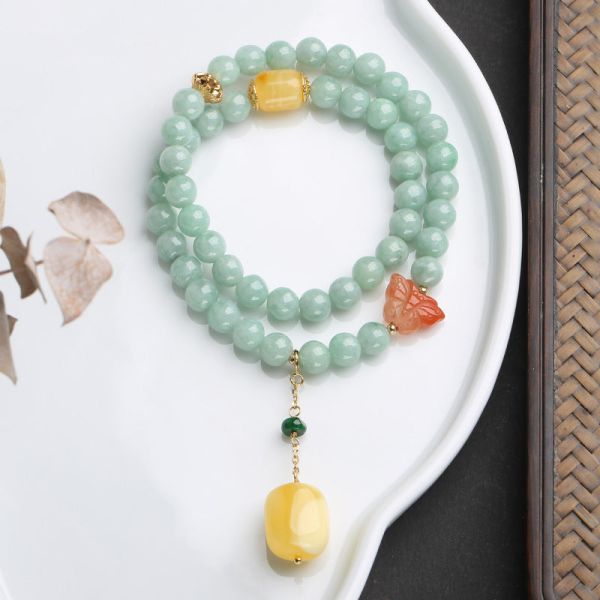 Buddha Stones 925 Sterling Silver Natural Jade Amber Butterfly Luck Abundance BraceletSpecial Price $241.59 Regular Price $322.12
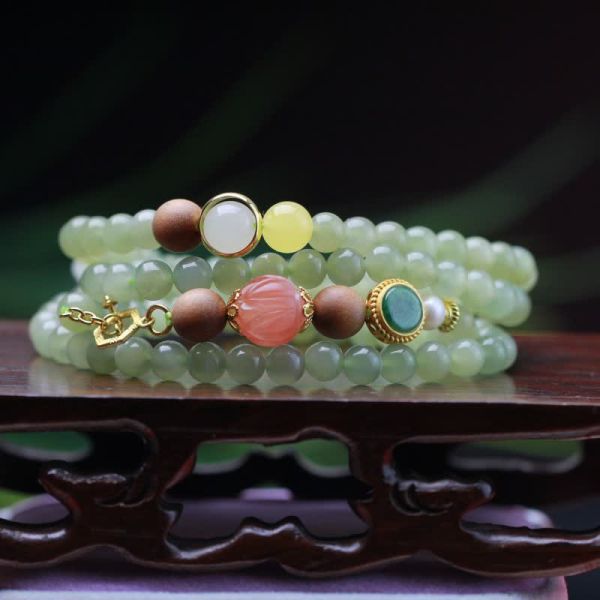 Buddha Stones Natural Hetian Jade Amber Lotus Red Agate Luck Abundance BraceletSpecial Price $195.59 Regular Price $271.65
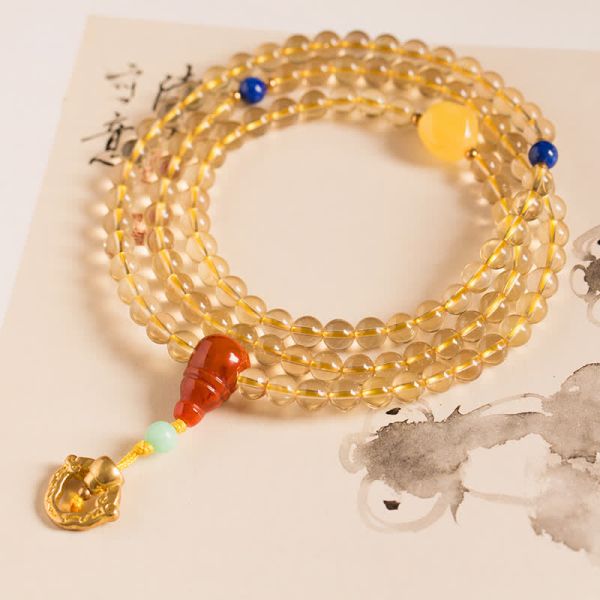 925 Sterling Silver 108 Mala Beads Natural Citrine Red Agate Amber Pleasure Charm BraceletAs low as $202.59 Regular Price $273.77
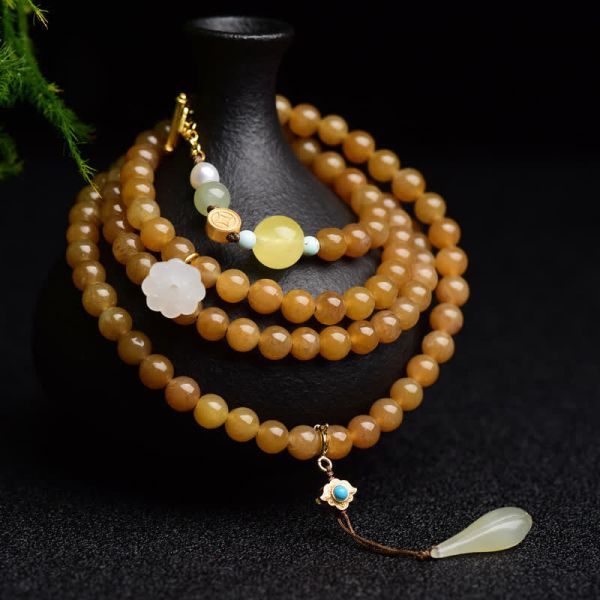 Buddha Stones Natural Hetian Topaz Amber Lotus White Jade Pearl Success BraceletSpecial Price $255.59 Regular Price $359.99