Mini Zen Garden Care: A Dry Setup and Upkeep Guide

A rake crosses the sand, leaving parallel lines beside a small rock. A clear strip along the tray’s rim gives the next stroke room to turn. Mini zen garden care means keeping that sand dry, removing debris, and cleaning the tray gently without soaking it. In Japanese dry landscape gardens, raked gravel or sand can suggest water around stones. For a tabletop arrangement inspired by that tradition, choose a stable surface with a clear view of the composition and enough room to use the rake.
Step 1: Reserve a level surface with working room
Choose your location before opening the sand. A desk corner or shelf can work if the tray sits fully supported and your hand can reach across it without catching nearby objects. Leave space beside it for the rake when you set it down.
Avoid open windows, fans, splashing sinks, and places where sleeves regularly sweep the surface. Keep drinks on another surface. If children or pets can reach the area, put the tray and its loose components somewhere less accessible. No compass direction is required for this practical setup.
Step 2: Prepare the tray and add sand gradually
Work over a larger tray or a sheet of paper so you can collect stray grains. These are setup aids you supply yourself. Make sure the garden tray is clean and completely dry before adding anything.
Pour in a little sand, spread it gently, then test a short rake stroke. Add more only if the teeth scrape the base instead of drawing a pattern. Keep the surface below the rim so a normal stroke does not push sand over the edge. You do not need to empty the entire sand package into the tray at once.
Step 3: Place the scenery before drawing lines
Arrange rocks and decorative components while the sand is still plain. Start with the larger elements, leaving an open area where the rake can travel. Check that pieces stand securely before working around them.
Leave enough space between decorations to lift them out without scraping neighboring pieces. An arrangement can have an open side; there is no need to fill every gap. Treat included landscape elements as decorations unless their care instructions say otherwise. Adding water, soil, or a living plant changes the conditions inside the tray and complicates dry maintenance.
Step 4: Test the rake with a short, shallow pass
Hold the rake lightly and pull it across a small clear section. Use enough pressure to mark the surface without digging into the base. Start with straight lines before trying curves around a rock.
At the end of a pass, lift the rake before moving it back to the starting point. Dragging it backward can erase the pattern you just made. If a ridge builds up, level that patch gently and try again. Keep the tool away from the rim as you turn. You can leave an unfinished pattern in place and redraw it another time.
Step 5: Make mini zen garden care a dry routine
Before raking, check for crumbs, lint, and other debris. Lift out visible pieces with a clean, dry tool rather than mixing them into the sand. Wipe the outside of the tray with a dry cloth, keeping the cloth clear of the patterned surface.
For a more thorough reset, transfer the sand to a clean, dry container and remove the decorations. Use a soft, dry brush to clear loose grains from the empty tray. The fiberboard garden options described below should stay away from soaking and standing water. Return the contents only when the tray and components are dry.
Step 6: Secure the contents before moving or storing
Lift the tray from underneath with both hands, keeping it level. For a move across the room, clear the destination first. For longer transport, remove the loose decorations and pack them separately from the sand.
Store dry sand in a closed container and keep the rake where its teeth will not catch on other objects. If the garden will sit unused, a clean cover can help keep household debris out; support it so it does not press into the arrangement. Before setting everything out again, check the tray for damage and confirm that the surface is dry.
Common mistakes that create extra cleanup
- Overfilling the tray: leave room below the rim for sand displaced by the rake.
- Spraying cleaner over the display: remove the contents before addressing dirt on the tray, and follow its care instructions.
- Adding water for a river effect: use raked lines to suggest water while keeping the arrangement dry.
- Raking around crowded scenery: move a decoration if the tool cannot pass without knocking it.
- Using the garden as jewelry storage: give necklaces and bracelets their own place beside the display.
Our garden options and jewelry to keep beside them
Our Koi Fish Small Bridge Grass Landscape Zen Garden Decoration measures 21.5*17.5*1.2cm and uses Medium Density Fiberboard. The package contains one decoration, one grass element, one rake, sand, and rock. Use the dimensions when choosing its supported surface.
The Tree Small Bridge Landscape Zen Garden Decoration has a diameter of 21cm and uses Medium Density Fiberboard. It includes one tree, one small bridge, one wayside pavilion, one rake, one tool, sand, and rocks. Arrange the separate scenery before marking the sand.
If you pair the display with jewelry, keep a separate dish nearby. Our Black Obsidian Hematite Blue Sandstone Strength Bracelet combines Black Obsidian, Hematite, Blue Sandstone, and Copper plated with 18k gold. Its band uses premium elastic string, and its wrist circumference specification is 15-16cm.
The Sandalwood Cat Black Obsidian Om Mani Padme Hum Rope Necklace uses Sandalwood, Black Obsidian, and Rope. Avoid water exposure. Its sandalwood can vary in grain and color and develop a richer patina over time. “Protection” in its full name expresses a traditional wish; the name does not guarantee an outcome.
FAQ
How often should I replace the sand?
There is no fixed schedule for mini zen garden care. Inspect the sand when you use the tray. If it stays dry and free of debris, routine replacement is unnecessary. Replace it if spills or contamination make it unsuitable for continued use.
Can I wash the tray under a faucet?
Do not rinse the fiberboard options described here. Empty the tray and begin with dry cleaning. Keep liquids away from the display, and follow any product-specific care instructions before using a cleaning product.
Must the lines follow a traditional pattern?
No single pattern is required for a tabletop decoration. Parallel lines and curves around rocks are practical starting points. Leave enough open sand to work comfortably, and redraw only the sections you want to change.
Shop the story
 Buddha Stones Natural Black Obsidian Hematite Blue Sandstone Strength BraceletSpecial Price $27.59 Regular Price $38.86
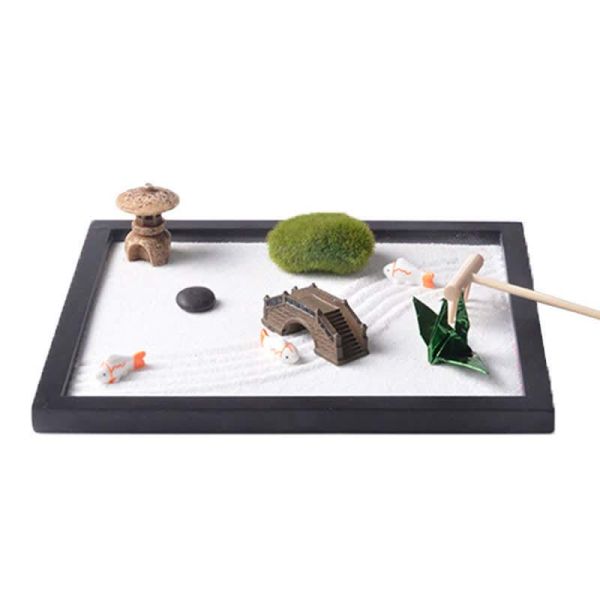 Buddha Stones Koi Fish Small Bridge Grass Landscape Peace Meditation Zen Garden DecorationSpecial Price $54.59 Regular Price $75.82
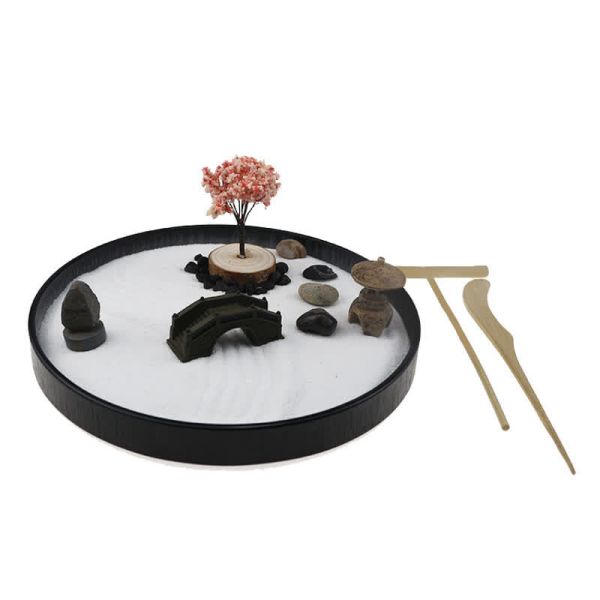 Buddha Stones Tree Small Bridge Landscape Meditation Calm Zen Garden DecorationSpecial Price $79.59 Regular Price $112.10