
Wrist Mala vs Full Mala: A Practical Care Manual
Beads collect surface marks where they touch skin and sleeves. The practical distinction in wrist mala vs full mala care starts with construction: a wrist mala is a shorter loop, while a full mala commonly has 108 counting beads and may also wrap around a wrist. Here, we explain how to inspect, handle, wipe, and store either format, and how to recognize a strand that needs repair. Wearing position alone does not identify the format; check the bead count and string type before deciding how to handle it.
Tools and materials: wrist mala vs full mala
Prepare a clean, dry surface before removing your beads. A folded cloth makes a useful work area because it cushions the strand and helps prevent beads from rolling away if the cord breaks. Keep the entire loop supported rather than hanging it over the edge of a table.
- A soft, lint-free cloth for routine wiping.
- A second clean cloth that you can barely dampen if the material's care instructions permit it.
- A shallow tray to contain the strand during inspection.
- A separate pouch or compartment large enough to hold the beads without compression.
- A simple note of the string type, bead count, and any changes you notice.
You do not need polishing compounds or a soaking bath for ordinary surface care. Material, string, knots, and any tassel can have different care needs within the same piece. When instructions are incomplete, start with a dry wipe and leave stubborn marks for someone familiar with jewelry repair to assess.
A step-by-step routine from removal to storage
- Remove the strand without pulling on one bead. Support the loop with both hands. For a wrapped full mala, release the wraps individually instead of dragging the entire bundle over your hand. Allow only the movement needed for removal. If the string does not stretch, do not force it; follow the construction's intended opening or removal method.
- Lay it down and inspect the string. Look between beads for fraying, exposed loose fibers, a shifting knot, or a gap that has grown. On elastic, notice whether the loop remains slack after removal. Examine the areas beside knots and larger components, where a change may be easier to miss.
- Check bead surfaces and openings. Rotate beads gently while the strand rests on the cloth. Look for chips, sharp edges, and cracks near the holes. Avoid sliding your fingers across a suspicious edge. Stop handling a damaged section until it can be assessed; repeated movement may cause further wear to the string.
- Wipe without flooding the strand. Pass the dry cloth over accessible surfaces, supporting the beads as you work. If the relevant care instructions permit moisture, use a barely damp cloth on the affected bead, then dry it promptly. Keep moisture away from knots and tassel attachments. Do not let water collect inside bead holes.
- Handle counting beads with slack available. If you use the mala for counting recitations, move beads individually rather than tugging the whole loop through your fingers. Keep the unused length supported in your hand or lap. Follow your tradition's counting convention, including how you handle any marker or guru bead; arrangements and practices vary.
- Inspect any tassel separately. Lay its strands straight with your fingers and release loose tangles gently. Do not use the tassel as a handle or pull it through a tight knot. Keep the attachment supported while arranging it, and avoid treating it with products intended for bead surfaces.
- Put it away completely dry. Arrange a longer strand in loose curves, leaving any tassel uncrushed. Give a short loop room to rest without stretching it around a storage fixture. Keep the pouch or compartment away from direct sunlight, heaters, and damp areas.
The difference in routine is mainly handling space. A short wrist loop needs attention where it stretches during removal. A longer mala needs support along its length so it does not snag or drop. Neither format should be left dangling while you inspect a questionable knot.
What not to do during wear or cleaning
- Do not soak a complete mala. Beads and string may respond differently to water, and trapped moisture makes drying harder.
- Do not apply perfume, lotion, or household cleaners directly to it. Remove the strand before applying these products and let your skin dry before putting it back on.
- Do not scrub with an abrasive pad. A stubborn mark is a reason to check material-specific instructions, not to increase pressure.
- Do not stretch elastic to test its strength. Inspect its condition visually rather than repeatedly pulling it to its limit.
- Do not keep wearing beads that catch on clothing. Find the snag before a caught thread turns into a pulled knot or broken string.
Remove the strand before washing, swimming, sleeping, or tasks where it could catch on tools. Avoid steam and ultrasonic cleaning unless a qualified professional has confirmed that the complete assembly is suitable.
When to replace the string or retire the piece
Stop using a strand when the cord frays, a knot opens, elastic stays stretched, or a bead develops a sharp chip. Secure it in a tray or closed pouch so loose beads remain together. A string problem does not automatically require discarding intact beads; a jewelry repair professional can assess restringing and check the bead holes.
There is no single replacement calendar that suits both formats. Handling, storage, and construction matter more than a fixed date. Retire the piece from wear or counting if damage cannot be repaired securely. If it has religious significance for you, ask your teacher or community about an appropriate way to keep or dispose of it.
Products: four 108-bead options to check by construction
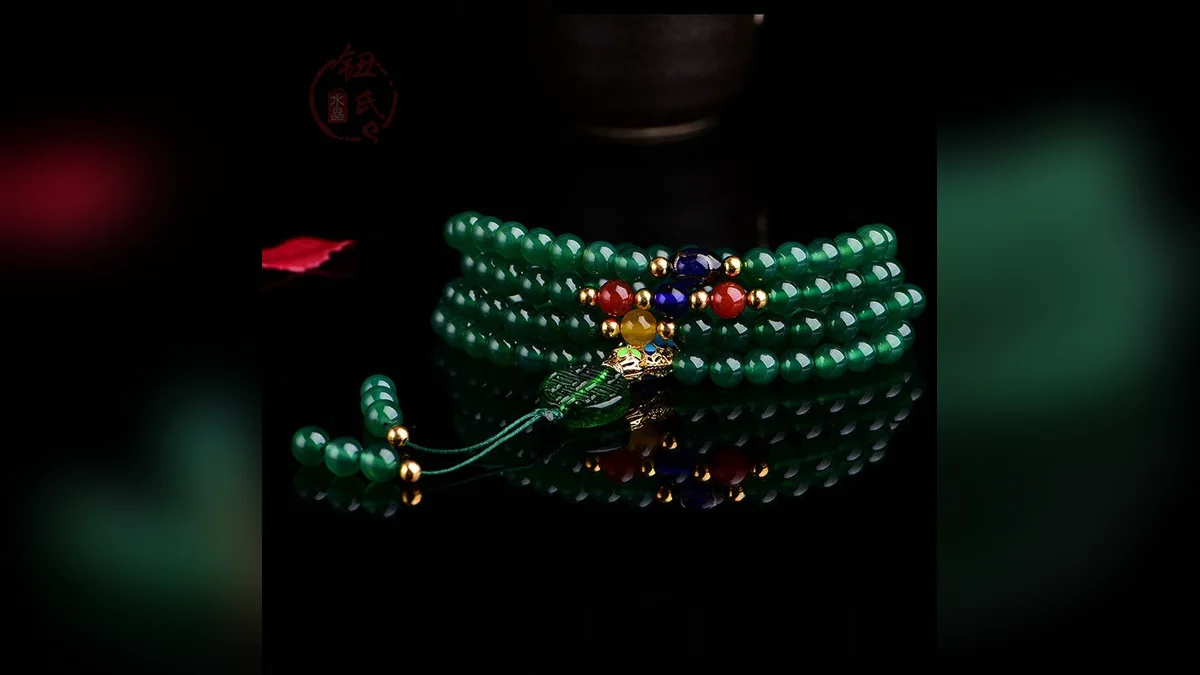
Our Buddha Stones 108 Mala Beads Natural Green Agate Bracelet has 108 green agate beads, with 6mm, 8mm, and 10mm bead-size options. The specifications name premium elastic string, while the options include Elastic String and No Elastic String. Confirm your selection before assuming the loop stretches.
The Buddha Stones Green Aventurine, Blue Spot Jasper and Indian Agate Green Tassel Mala has 108 beads measuring 8mm. Its bracelet band uses premium elastic string, and its wrist circumference specification is 14-16cm. Include the green tassel attachment in your inspection.
For the Buddha Stones 108 Mala Beads Natural Quartzite Bracelet, the specified materials are Quartzite and Tiger Eye. It has 108 beads, an 8mm bead size, premium elastic string, and a wrist circumference specification of 14-16cm. Use these details when checking construction and fit.
Our Buddha Stones 108 Mala Beads Natural Shetai Jade Bracelet specifies Shetai jade and Tiger Eye, with 108 beads measuring 8mm. Premium elastic string and a wrist circumference of 14-16cm appear in its specifications. Keep the longer loop supported during inspection and removal.
Words such as Luck, Wealth, and Prosperity in product names express traditional wishes. They do not guarantee luck, financial gain, or another result.
Close the routine with one final check
Before putting your mala away, check that the string is intact, the surfaces are dry, and nothing is caught around a knot or attachment. Keep a damaged strand out of use until repaired. Consistent handling gives you opportunities to notice wear before a bead or string fails.
Shop the story
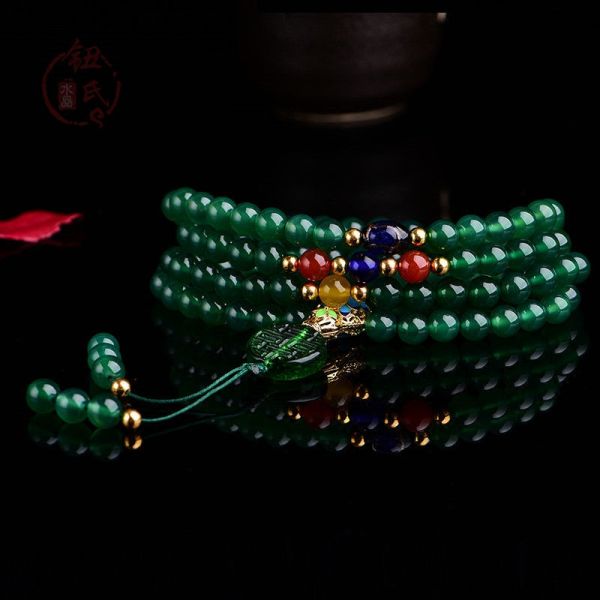 Buddha Stones 108 Mala Beads Natural Green Agate Power Support BraceletAs low as $68.59 Regular Price $91.45
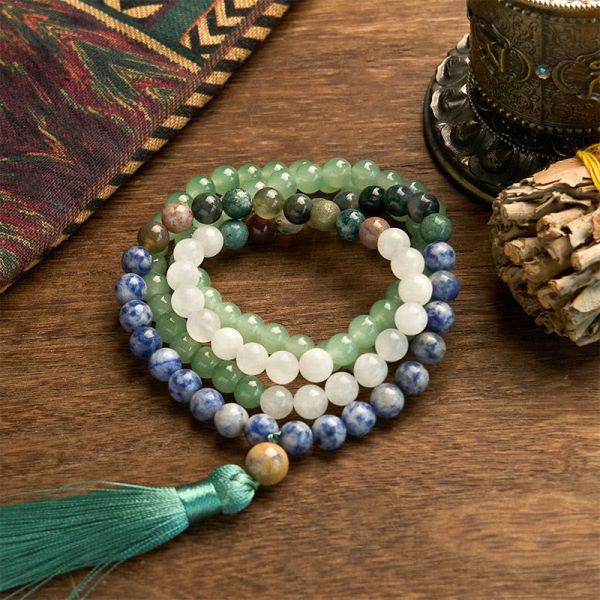 Buddha Stones 108 Mala Beads Natural Green Aventurine Blue Spot Jasper Indian Agate Green Tassel Luck BraceletSpecial Price $26.59 Regular Price $36.42
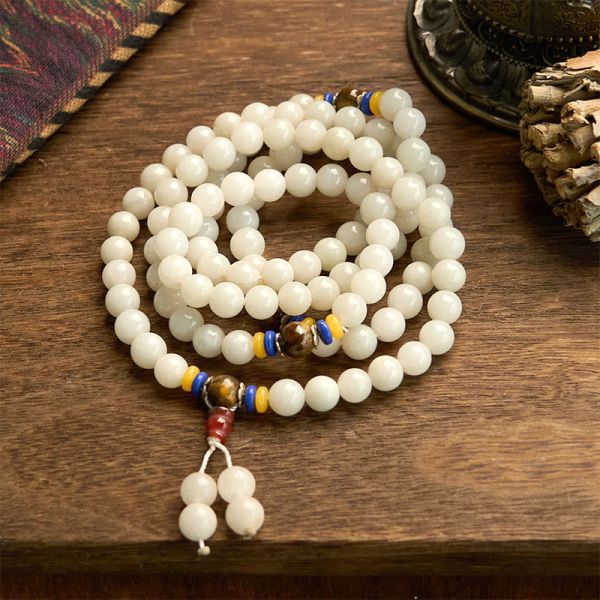 Buddha Stones 108 Mala Beads Natural Quartzite Wealth Luck BraceletSpecial Price $26.59 Regular Price $35.45
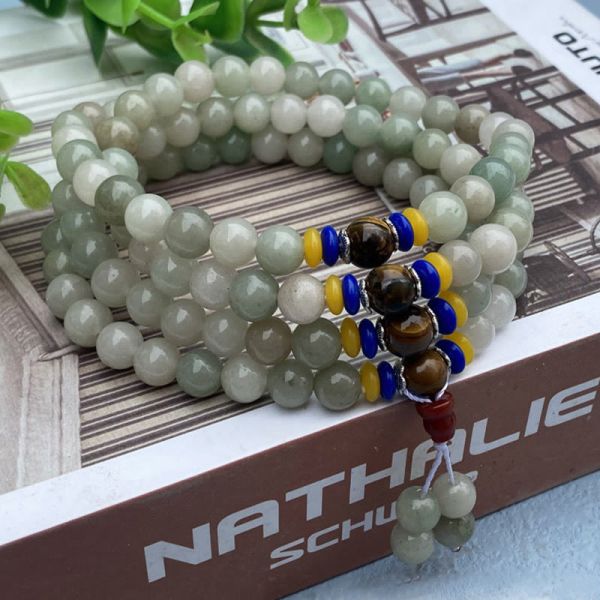 Buddha Stones 108 Mala Beads Natural Shetai jade Luck Prosperity BraceletSpecial Price $25.59 Regular Price $34.12