
Women's Scarf Fabrics: How to Choose and Compare
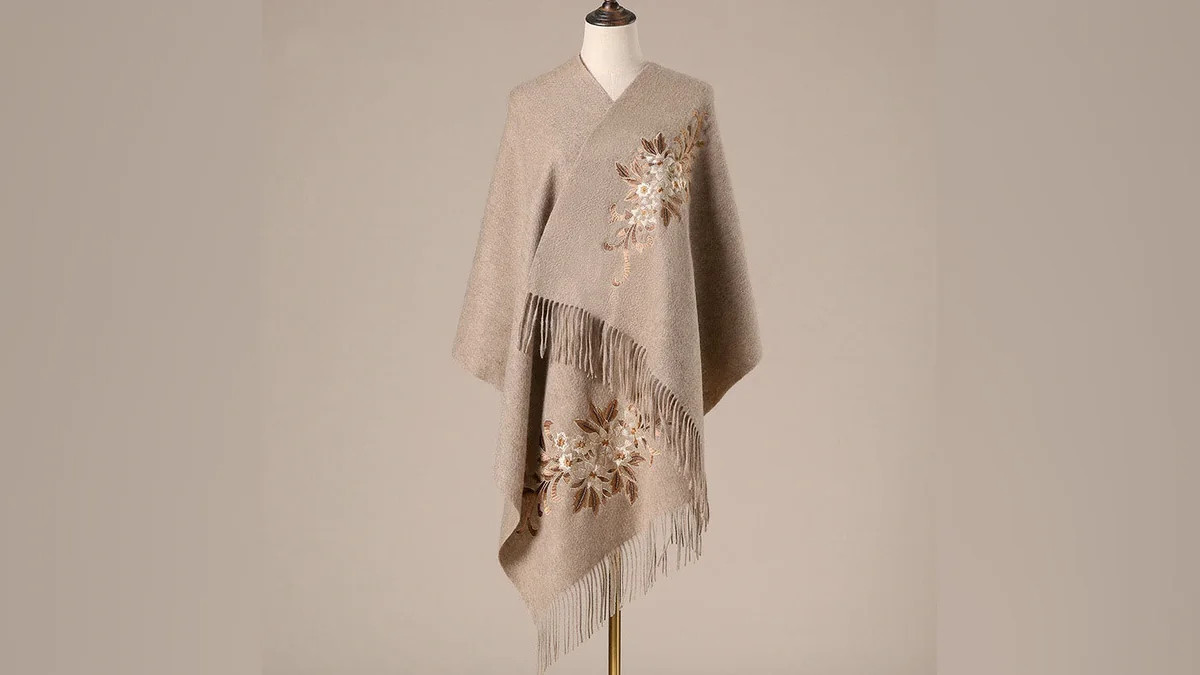
The fiber label gives you the first useful comparison. Choosing womens scarf fabrics means comparing the fibers, construction, dimensions, and care requirements that determine how a scarf fits your wardrobe. This guide shows you how to read those details, narrow your options, and check an embroidered shawl before choosing it. At Buddha Stones, we recommend starting with composition, then considering the decorative details.
Step 1: Separate fiber from construction in womens scarf fabrics
Read the material information before relying on words such as cozy, silky, or winter. Wool, cotton, linen, silk, polyester, and acrylic name fibers. Woven and knitted describe ways of making fabric. Satin describes a weave, so the word alone does not tell you which fiber a scarf contains.
Look for percentages when more than one fiber appears. A description that says 70% wool gives you different information from one that says 100% wool. If the remaining content is unspecified, leave it unknown rather than assuming it is cotton, silk, or a synthetic fiber.
Keep construction as a separate question. Two scarves with the same fiber content can differ in thickness, surface texture, and flexibility. Composition starts the comparison; it does not describe the entire finished fabric.
Step 2: Match the fabric to a specific use
Write down the scarf’s main job before comparing patterns. You might need a layer under a coat, a decorative accent over a shirt, or a broad rectangle for shoulder coverage. These uses call for different amounts of fabric and different kinds of structure.
- Wool: Consider it for cold-weather layering, then check the actual fabric thickness and care instructions.
- Cotton: Consider it for an everyday fabric with a generally matte appearance. Construction still determines its weight and flexibility.
- Linen: Consider it when you want visible texture and accept creasing as part of the fabric’s appearance.
- Silk: Consider it for decorative folds and a potentially lustrous surface, while checking the particular weave and care label.
- Synthetic fibers: Read the named fiber and care instructions. Polyester and acrylic should not be treated as interchangeable materials.
Choose your priority first. A decorative accent and a substantial outer layer do not need to meet the same requirements.
Step 3: Compare dimensions and weight together
Check length and width separately. Length affects how much fabric you have available for folds, while width affects coverage and the bulk created when you gather the scarf. A broad shawl can occupy more space beneath a coat even when its fabric is relatively thin.
Read the stated weight beside the dimensions. Weight alone cannot establish thickness: a larger rectangle may weigh more simply because it contains more fabric. Embroidery, tassels, and other additions can also contribute to the total.
If you already own a scarf with suitable proportions, measure it flat and use those dimensions as a reference. Compare the main rectangle separately from its fringe where possible. When a product description does not explain whether tassels are included in the measurement, keep that detail open rather than guessing.
Step 4: Examine the surface and decorative details
Use close-up photographs to inspect the fabric surface, edges, embroidery, and tassels. Photographs can show pattern placement and visible texture, but they cannot confirm how a fabric feels. Avoid treating a smooth-looking image as proof of softness.
Check where decoration sits in relation to the edges. Embroidery can change the way a section folds, and raised details deserve consideration if you plan to gather the scarf into a narrow shape. An undecorated area may fold differently from an embellished area of the same item.
Consider nearby clothing and accessories, too. Exposed fasteners, rough bag hardware, and projecting jewelry settings can catch loose threads or tassels. Plan how these items will sit together, and avoid pulling fabric across anything that catches it.
Step 5: Read the care instructions before deciding
Choose a care routine you can follow. Check whether the instructions permit washing, specify hand washing, or direct you to professional cleaning. Fiber content provides useful context, but it does not replace instructions for the finished scarf, especially when embroidery or sequins are present.
Before cleaning, read the entire label, including drying directions. Do not assume that a method suitable for a plain fabric is suitable for an embellished version. Avoid experimenting with bleach, high heat, or vigorous rubbing when the instructions do not permit them.
Plan storage as part of the same decision. Put the scarf away clean and completely dry. Fold it without trapping tassels beneath heavy objects, and keep embellishments from catching on neighboring items. Check stored wool periodically for signs of moth activity. These practical requirements belong in your comparison alongside color and pattern.
Mistakes to avoid when comparing scarves
- Choosing by the product title alone. Read the composition for the selected option; a shared title does not establish identical fiber percentages.
- Treating heavier as automatically better. Compare weight with dimensions and your intended use before deciding whether additional fabric suits your wardrobe.
- Assuming a blend’s missing percentage. An incomplete fiber breakdown is a reason to seek clarification, not an invitation to fill in the gap.
- Judging texture entirely from photographs. Lighting and folds affect appearance. Keep visual observations separate from qualities you cannot verify.
- Leaving care until after purchase. A scarf that requires an impractical cleaning routine may be a poor match for frequent use.
Compare the details of four Buddha Stones shawls
Our product specifications below provide composition, size, weight, and available color options where stated. Check the color-specific material information when comparing the 3D Floral design.
Begonia Embroidery Tassel Wool Shawl
The Buddha Stones Begonia Embroidery Tassel Wool Shawl is a shawl made from 100% Wool. Its stated size is 200*60cm, and its weight is About 280g. The product name identifies begonia embroidery and tassels. Its SKU is BS98806EF231.
Weiyang Flower Embroidery Tassel Wool Shawl
The Buddha Stones Weiyang Flower Embroidery Tassel Wool Shawl has LightPink, PeachPuff, and Tan options. This shawl has a stated material of 100% Wool, a size of 200*60cm, and a weight of About 280g. Its SKU is BSP-BS98836EF231.
3D Floral Embroidery Tassel Wool Shawl
The Buddha Stones 3D Floral Embroidery Tassel Wool Shawl comes in Bisque, Black, LightSteelBlue, and RosyBrown. LightSteelBlue and Bisque are 100% Wool; Black and RosyBrown are 70% Wool. The stated size is 200*60cm, and the weight is About 300g. Its SKU is BSP-BS9886317720.
Red Flower Gold Sequins Embroidery Tassel Wool Shawl
The Buddha Stones Red Flower Gold Sequins Embroidery Tassel Wool Shawl has FireBrick and Tan options. Its material is 100% Wool, its size is 200*60cm, and its weight is About 300g. Its SKU is BSP-BS988825F923.
A useful comparison of womens scarf fabrics ends with a clear reason for your choice: the composition, proportions, finish, and care routine suit your intended use. Keep those details together, then choose the color and decoration you want to wear.
Shop the story
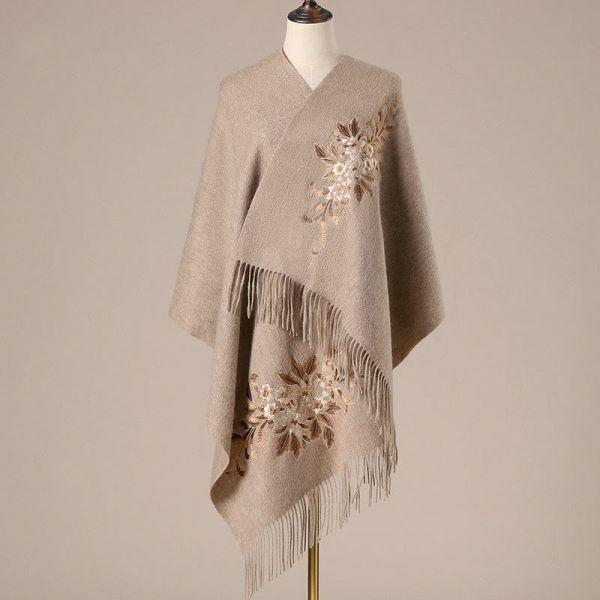 Buddha Stones Wool Shawl Begonia Embroidery Tassel Winter Cozy Travel Scarf WrapSpecial Price $98.59 Regular Price $133.23
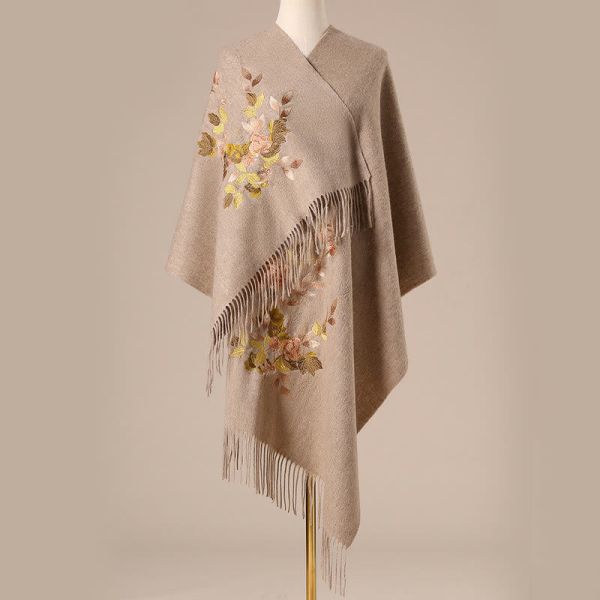 Buddha Stones Wool Shawl Weiyang Flower Embroidery Tassel Winter Cozy Travel Scarf WrapAs low as $98.59 Regular Price $136.93
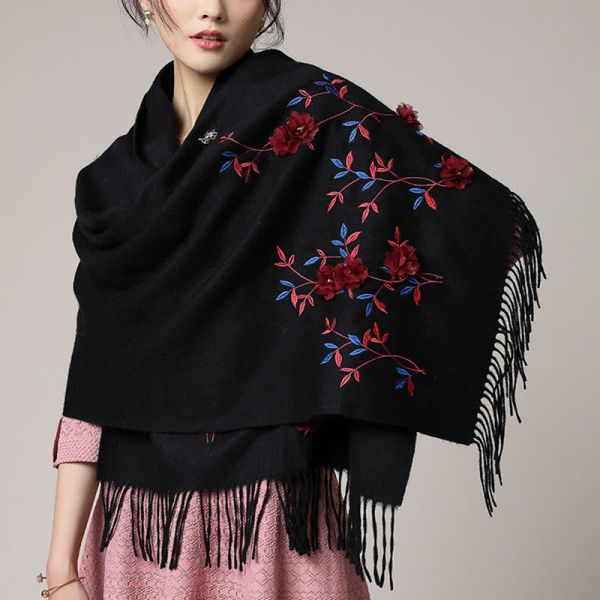 Buddha Stones Wool Shawl 3D Floral Embroidery Tassel Winter Cozy Travel Scarf WrapAs low as $98.59 Regular Price $133.23
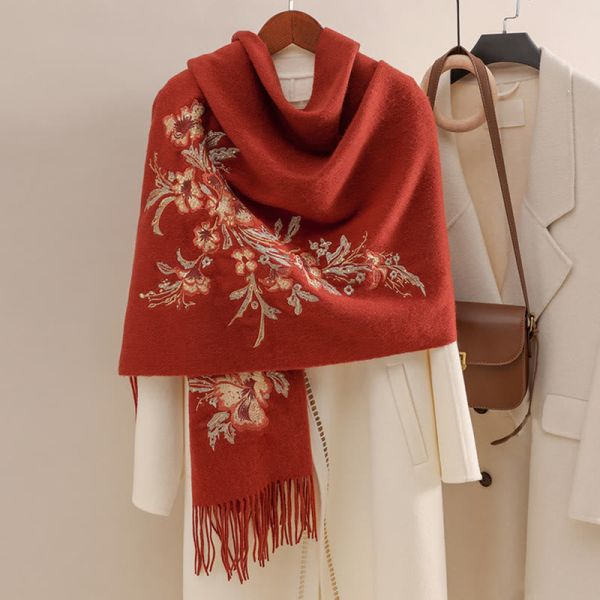 Buddha Stones Wool Shawl Red Flower Gold Sequins Embroidery Tassel Winter Cozy Travel Scarf WrapAs low as $98.59 Regular Price $136.93