What Is Turtle Symbolism? A Guide to Its Settings
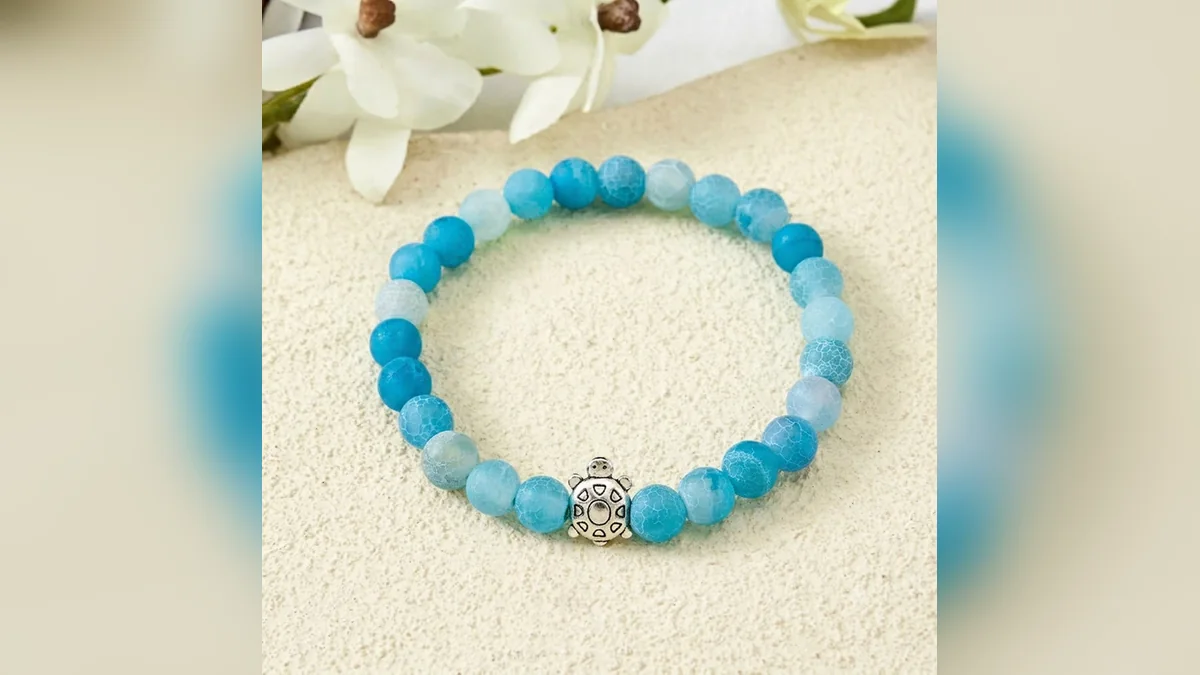
The turtle motif often shows four feet extending beyond a patterned shell. What is turtle symbolism? In Chinese decorative traditions, it commonly expresses longevity, endurance, and steadiness. Some feng shui interpretations also associate it with protection and good fortune. These are traditional beliefs: a turtle image cannot guarantee luck, wealth, or protection.
The setting gives the image a more specific meaning. A turtle beside a crane speaks differently from one paired with a Chinese character or worked into a bracelet. At Buddha Stones, we describe these associations as cultural meanings and wishes. Reading the surrounding details helps you understand the design without treating it as a promise.
What Is Turtle Symbolism Saying in Context?
A useful starting point is the animal’s longstanding reputation for a long life. The shell also offers an easily recognized image of shelter, while the turtle’s deliberate movement lends itself to ideas of persistence. These associations explain the motif’s familiar vocabulary: longevity, endurance, and steadfastness. They do not establish a single origin for every turtle design.
English descriptions sometimes use “turtle” and “tortoise” loosely when discussing traditional decorative motifs. A jewelry title may therefore use turtle where an art description uses tortoise. Read the pictured features and surrounding symbols together rather than expecting the English name alone to identify a particular tradition.
The turtle also belongs to a wider Chinese language of auspicious images. In that setting, an animal can express a wish without depicting a specific religious teaching. A turtle ornament is not automatically a Buddhist ritual object, and its presence does not establish that an item has been used in a ceremony.
How the Setting Changes the Reading
Art and decorative objects
Paintings and decorative objects can place turtles beside water, rocks, plants, or other animals. Look first at what shares the scene. A single turtle may emphasize the animal itself; a group of recognizable longevity symbols makes the wish for long life more explicit. Scale and setting matter, too: a small decorative motif and a figure incorporated into architecture serve different visual purposes.
For a home display, describe the object and its traditional association plainly. Calling a turtle figure a symbol of endurance is different from claiming that its location will produce a result. Our home decor category provides another setting in which to consider how symbolic objects relate to the space around them.
Textiles and repeating patterns
On textiles, a turtle may appear as an animal within a larger design or as part of a repeating arrangement. Repetition can make a motif decorative as well as symbolic. Check whether the pattern actually includes a head, feet, and shell before identifying an unfamiliar geometric shape as a turtle.
A six-sided pattern alone is not enough to establish one universal meaning. Similar shapes can occur in unrelated designs. The surrounding flowers, characters, and animals offer better clues than a single isolated outline.
Jewelry and small-scale details
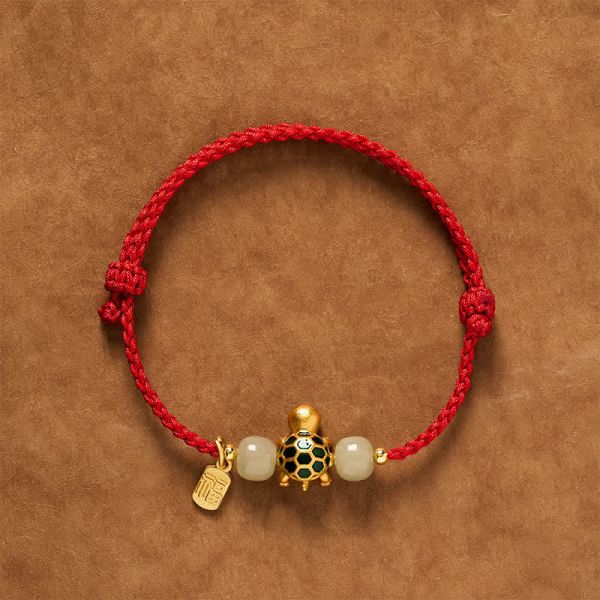
Jewelry condenses the motif into a small area, so one accompanying detail can carry much of the message. A turtle with a Fu character combines an animal emblem with a written wish. A turtle among beads may give the animal a more prominent role because there is less surrounding imagery to interpret.
When comparing bracelet designs, distinguish the motif from the construction details. Symbolism explains what an image traditionally represents; materials, cord type, and dimensions describe the actual item. Neither kind of information substitutes for the other.
Festivals and celebratory wishes
Birthday celebrations are a familiar context for longevity imagery. A turtle motif used in that setting can express a wish for a long life. Festival decorations may combine several auspicious emblems, allowing one design to carry more than one wish.
There is no universal turtle decoration required for every Chinese festival. Customs differ by community and occasion. Identify the celebration before assigning a specific meaning, and avoid treating one local use as a rule for everyone.
Companion Symbols Add Another Layer
Turtle and crane: Both animals have longstanding associations with longevity in Chinese art. Together, they emphasize that shared theme. The pairing expresses an auspicious wish rather than predicting how long someone will live.
Turtle and Fu: Fu is a Chinese character associated with good fortune and blessing. Beside a turtle, it adds a written wish to the animal’s longevity symbolism. The character does not turn the ornament into a guarantee of good fortune.
Turtle and snake: A tortoise entwined with a snake belongs to the traditional Black Tortoise emblem associated with the north. That combination has a more specific identity than a turtle shown alone. Do not assume that every turtle charm represents this emblem.
These pairings show why context matters. Before attaching a meaning to an unfamiliar design, check for a second animal, a readable character, or a clear ceremonial setting. If those clues are absent, a modest description such as “a turtle motif traditionally associated with longevity” is usually more appropriate than a detailed story.
Four Turtle Bracelets: Materials and Measurements
Our selection below includes beaded designs and adjustable cord designs. The word “Luck” in a product name expresses a traditional wish and promises no result.
Blue crackle agate beads
The Buddha Stones Blue Crackle Agate Turtle Bracelet combines Blue Crackle Agate and Copper Alloy. It uses Premium Elastic String and 8 mm beads. Wrist Circumference: Approx. 5.9–6.3 in (15–16 cm). The package contains one bracelet. Natural materials may create slight differences in color, details, and overall appearance.
Green agate and green aventurine beads
The Buddha Stones Natural Green Agate Green Aventurine Turtle Design Bracelet uses Green Agate, Green Aventurine, and Copper Alloy with premium elastic string. Bead Size: 8mm Green Agate, 8mm Green Aventurine. Wrist Circumference: 5.9–6.3 in (15–16 cm). One bracelet is included. Color, details, and overall appearance may vary slightly because of the natural materials.
Hetian jade with an adjustable cord
The Buddha Stones Copper Turtle Hetian Jade Fu Character Bracelet has an Adjustable Cord. Its materials are Red String, Hetian Jade, and Copper Alloy. Green and Red options are available. Wrist Circumference: 5.5–7.1 in (14-18 cm). The package includes one bracelet; natural jade may vary slightly in color, details, and overall appearance.
Jade with an adjustable cord
The Buddha Stones Copper Turtle Jade Fu Character Bracelet combines Red String, Jade, and Copper Alloy on an Adjustable Cord. Wrist Circumference: 6.3–7.1 in (16-18 cm). One bracelet comes in the package. Slight differences in color, details, and overall appearance can occur in the natural jade.
A Small Motif with a Specific Context
The turtle’s familiar outline offers a starting point, but its companions and setting complete the reading. Notice the character beside it, the occasion it marks, or the pattern around it. We value that attention to detail: it lets a traditional wish remain meaningful while keeping the description clear about what an object represents.
Shop the story
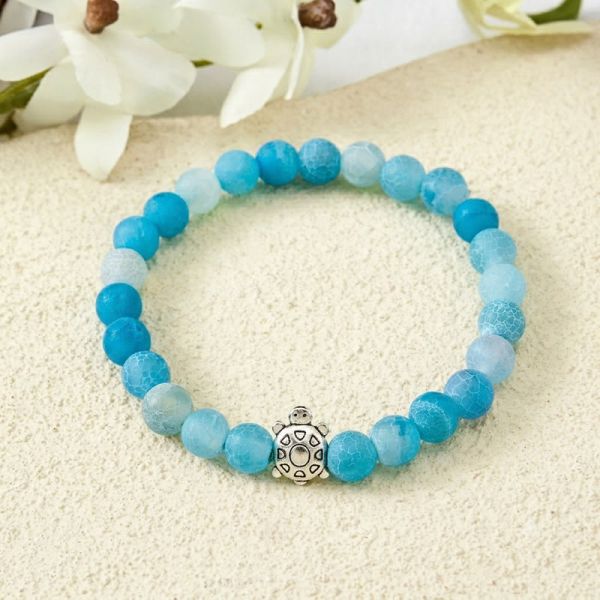 Buddha Stones Blue Crackle Agate Turtle Calm Beaded BraceletSpecial Price $25.59 Regular Price $34.12
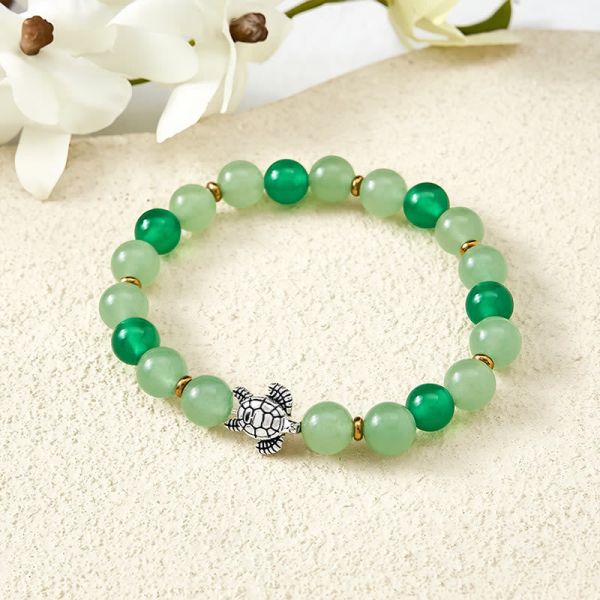 Buddha Stones Natural Green Agate Green Aventurine Turtle Design Success Beaded BraceletSpecial Price $25.59 Regular Price $35.54
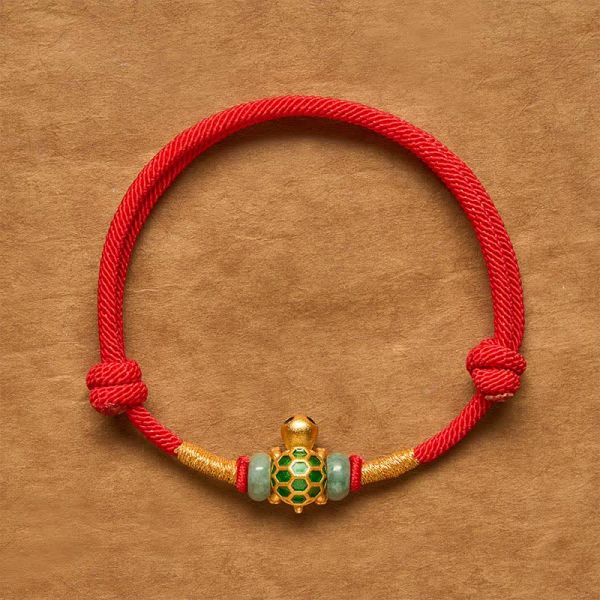 Buddha Stones Copper Turtle Jade Fu Character Luck Red String BraceletSpecial Price $25.59 Regular Price $35.05