
What Is Tiger Imagery? A Visual Guide to the Motif
A broad muzzle, rounded ears, and stripes across an orange flank make a tiger recognizable even in a small textile pattern. What is tiger imagery meant to convey? In Chinese decorative traditions, the animal commonly represents strength, courage, and authority. Some traditions also connect it with protection and good luck; these are cultural beliefs, and neither result is guaranteed. This field guide focuses on the visible clues that distinguish a tiger motif from other animal designs, then separates that imagery from the tiger eye name used for jewelry materials.
How to recognize the motif
Start with the whole animal, then check the smaller marks. A single stripe or a fierce expression rarely settles the identification. Artists simplify bodies to suit fabric, jewelry, or a small decorative surface, so several clues together provide a more useful reading.
- Stripes following the body. Look for dark, irregular bands across the cheeks, shoulders, flanks, and tail. A tiger pattern usually suggests stripes rather than the spots or rosettes associated with a leopard.
- A broad feline face. Rounded ears, a substantial muzzle, and whisker marks can remain recognizable when the body is absent. A frontal face may take up the entire design, especially on a small surface.
- A long, striped tail. In a full animal motif, the tail helps distinguish the tiger from a lion with a tuft at the end. Its curve may also help fill the available space.
- A body built for a cat. Four legs, broad paws, and a low or upright feline stance support the reading. Wings, antlers, or a heavily composite body call for a closer look at another creature.
- Color as supporting evidence. Orange, black, and white are familiar tiger colors, but artists also use a single color or an unexpected palette. Shape and markings matter more than an exact color match.
If only repeated stripes remain, describe what you can see: a striped pattern. Calling it a complete tiger motif requires more evidence. That distinction is especially useful when comparing fabric options whose names include several different animals or geometric designs.
What is tiger imagery traditionally associated with?
Strength and courage are common readings of the tiger in Chinese visual culture. Its powerful build and direct gaze give artists clear ways to express those ideas. In folk traditions, tiger images can also carry wishes for protection. Such symbolism describes a belief, not a promise that an object can keep its owner safe.
Context helps narrow the meaning. A tiger among zodiac animals points toward its place in the Chinese zodiac. A repeating tiger pattern on an accessory may serve mainly as decoration. A bold face on a traditional object can suggest a guardian role, but the surrounding design and the object's description still matter.
We keep those interpretations separate from product performance. Courage can be a theme expressed by a name or image; wearing an item does not establish that it changes someone's feelings or behavior. The same care applies to auspicious language: words about luck, wealth, blessing, or protection express traditional wishes, and none guarantees a result.
Where the visual clues tend to appear
Use the setting as a second layer of identification. The same animal can be reduced to a face, repeated across fabric, or shown as a full figure. These common formats give you different amounts of evidence.
| where you see it | how it usually appears |
|---|---|
| Printed textiles and accessories | A repeated animal, a face among other shapes, or a striped pattern that suggests the coat without showing the animal. |
| Paintings and decorative panels | A full tiger standing, walking, or resting, with the face, paws, and tail available for comparison. |
| Traditional children's hats and shoes | A stylized face with prominent eyes, rounded ears, and simplified markings. |
| Zodiac displays and ornaments | A tiger presented with other zodiac animals, sometimes accompanied by a written animal name. |
A face-only design leaves posture out of the picture, while a full figure gives you the tail and legs to inspect. Repeated fabric patterns can be harder to read because folds interrupt the image. Check a clear view of the pattern before deciding what the motif depicts.
Scale also changes emphasis. Large eyes and ears can make a small face legible, while a larger panel has room for individual stripes. These choices concern how the design reads; they do not establish a particular religious use or a required way to display it.
Our product details: tiger patterns and tiger eye names
In our product names, a tiger reference can identify a pattern option or a jewelry material. Those uses deserve separate attention. A bracelet containing tiger eye does not, by that fact alone, depict a tiger. The details below help you compare the named materials, options, and sizes without assigning an animal shape that the specifications do not establish.
A bag with a named Tiger Flowers option
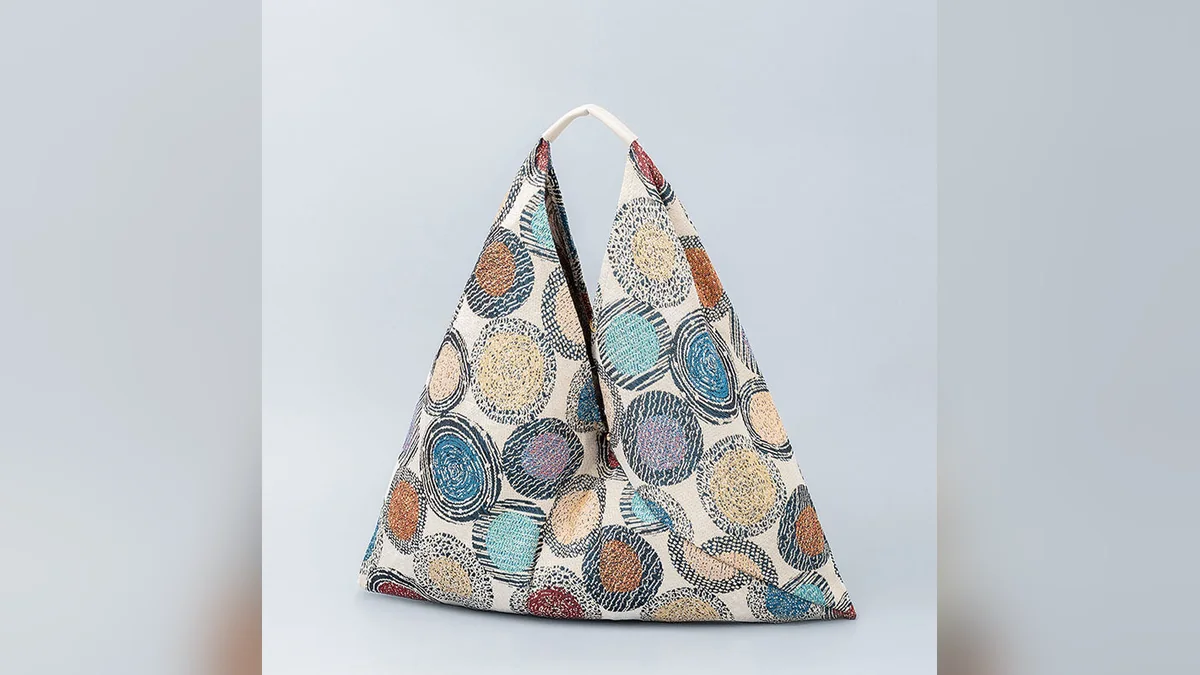
Our Geometry Tiger Flowers Leopard Stripes Triangle Shoulder Bag offers Tiger Flowers alongside Beige Geometry, Beige Stripes, Blue Stripes, Colorful Circles, Leopard Print, and White Black Triangles. The option names distinguish designs within one bag listing; they do not make every option a tiger design.
The specified size is 58*5*58cm. Materials are cotton fabric, polyester, leather, and metal, with one main pocket, a non-adjustable strap, and a buckle closure. Its weight is about 200g. Because the strap does not adjust, consider that feature alongside the dimensions when comparing it with another bag.
A double wrap bracelet with Pi Xiu options
The Tiger Eye Silver Sheen Obsidian Pi Xiu Double Wrap Bracelet specifies tiger eye, silver sheen obsidian, and copper alloy. It has 6mm beads and premium elastic string, with a wrist circumference of 5.9–6.3 in (15–16 cm).
Some options use Blue Tiger Eye or Yellow Tiger Eye in their names, and the Pi Xiu descriptions include silvery, gold, or golden. These option words do not establish a precious-metal composition. Pi Xiu is a separate named creature, so it should not be identified as a tiger simply because tiger eye appears beside it.
An 8mm bracelet combining tiger eye materials
Our Tiger Eye, Blue Tiger's Eye, and Black Obsidian Courage Bracelet combines those three named materials with copper. Its 8mm beads use premium elastic string, and the wrist circumference is 6.3–6.7 in (16–17 cm). Courage is part of the product name, not an assurance of a personal effect.
An 8mm bracelet with citrine and green strawberry quartz
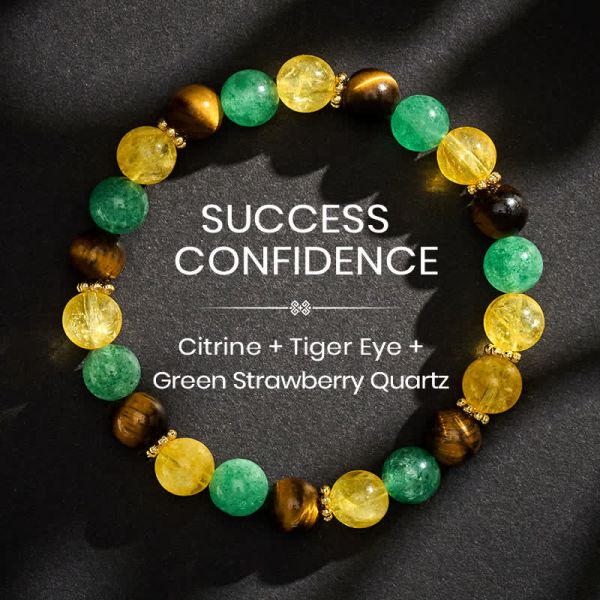
The Citrine, Tiger Eye, and Green Strawberry Quartz Happiness Bracelet contains those named materials and copper. It has 8mm beads, premium elastic string, and a wrist circumference of 5.9–6.3 in (15–16 cm). Happiness belongs to its name and should not be read as a promised feeling.
The three bracelet descriptions allow for slight variations in color, details, and overall appearance because of their natural stone or natural materials.
Keep the image and the name in view
To read a tiger design, begin with its outline, then check the face, stripes, and tail. Use the surrounding objects or pattern to refine the interpretation. When comparing a product, read its option name and specifications separately from that visual reading. This keeps a traditional animal symbol, a decorative stripe, and a material called tiger eye distinct, while leaving room to appreciate how each contributes to a design.
Shop the story
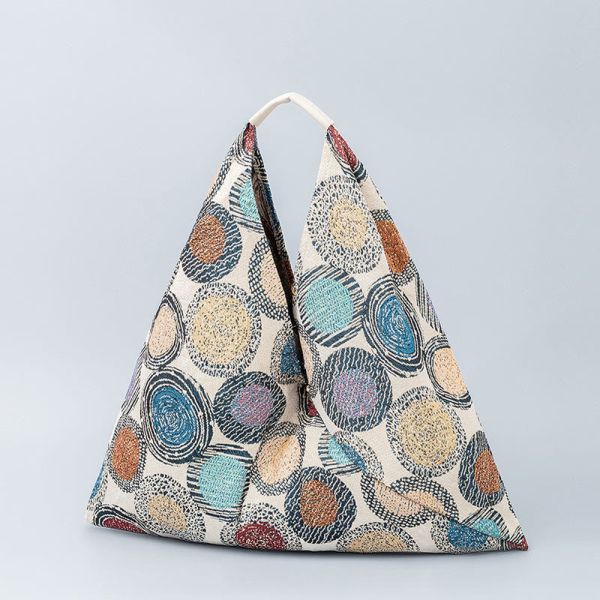 Buddha Stones Geometry Tiger Flowers Leopard Stripes Print Underarm Triangle Shoulder BagAs low as $35.59 Regular Price $50.13
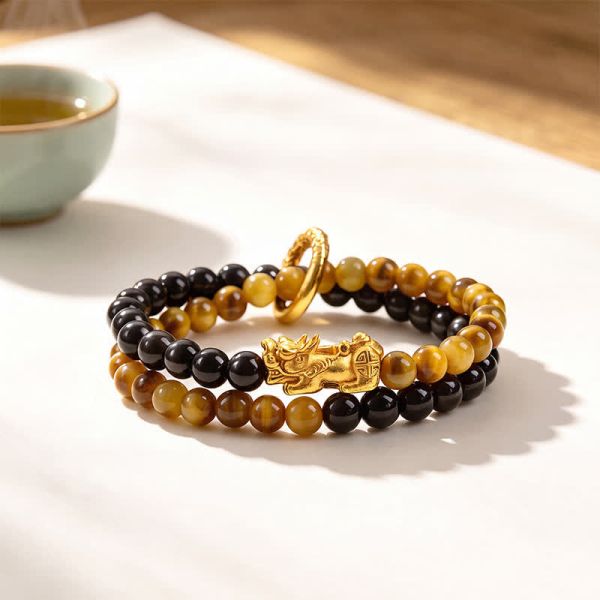 Buddha Stones Tiger Eye Silver Sheen Obsidian Pi Xiu Double Wrap Auspicioisness BraceletAs low as $28.59 Regular Price $38.12
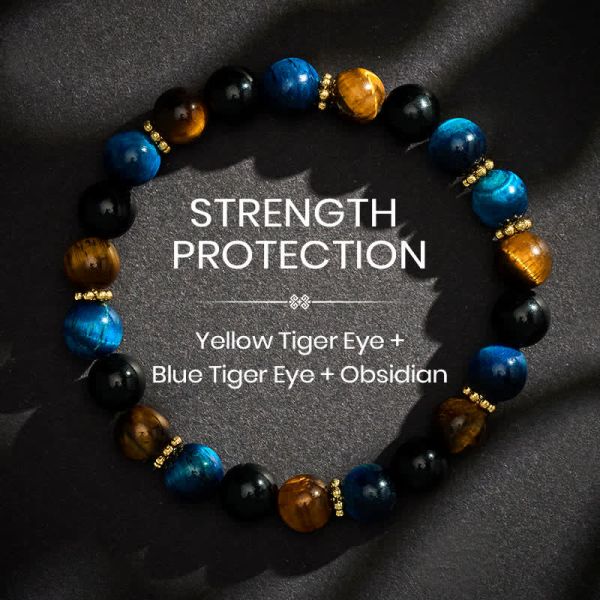 Buddha Stones Tiger Eye Blue Tiger's Eye Black Obsidian Beads Courage BraceletSpecial Price $25.59 Regular Price $34.12
 Buddha Stones Citrine Tiger Eye Green Strawberry Quartz Beads Happiness BraceletSpecial Price $25.59 Regular Price $34.12