What Is Phoenix? A Visual Guide to Bird Motifs
Flames rise beneath one bird; ribbonlike tail feathers sweep behind another. What is phoenix imagery showing you? A mythical bird: in Western tradition, the phoenix represents rebirth and renewal, while the Chinese fenghuang traditionally represents virtue and harmony. The two are often called by the same English name, but their stories differ. Any associations with luck, wealth, or protection are beliefs; owning the motif guarantees none of these. At Buddha Stones, we use this field guide to help you identify the design before reading its meaning.
How to recognize the motif
Begin with the bird’s outline, then check the details around it. A single feather or bright color cannot settle the identification. Artists simplify motifs to fit a bag panel, a small ornament, or a decorative border, so look for several cues together.
- Head and crest: A fenghuang often has an ornamental crest and a small, curved beak. A Western phoenix may have a more eaglelike head. These are visual tendencies rather than fixed rules.
- Tail feathers: Long, curling plumes are a useful clue in Chinese decorative designs. Follow their lines back to the body so you do not mistake nearby leaves or cloud scrolls for feathers.
- Wings and posture: Raised or extended wings create a sweeping silhouette. A phoenix can also appear perched, so flight is not required for identification. Check the head and tail before deciding.
- Flames or ashes: Fire surrounding the bird points toward the familiar Western rebirth story. Red or gold coloring alone does not establish that connection, and a Chinese fenghuang does not need flames.
- Companion motifs: A dragon beside the bird suggests a Chinese decorative pairing. Flowers can help establish the setting, but a peony or lotus by itself does not identify the bird.
Keep a peacock in mind as a possible alternative. A broad fan of feathers with repeated eye markings often suggests a peacock, although stylized designs can blur the distinction. If the image is small or partly hidden, the named design option is another useful reference.
What is phoenix imagery meant to convey?
Read the tradition before assigning a meaning. The Western phoenix is known for the story of a bird renewed after death, commonly depicted through fire and ashes. Its familiar symbolic themes are rebirth, renewal, and continuity. Flames belong to that story; they are not a necessary feature of every bird labeled “phoenix.”
In Chinese decorative art, fenghuang names a different mythical bird. Virtue, harmony, and auspiciousness are established traditional associations. When shown with a dragon, the pairing can express a wish for marital harmony. That context helps explain the arrangement, but it does not tell you anything certain about the owner or the occasion.
References to luck, wealth, or protection describe traditional beliefs and wishes. No bag, burner, or decorative motif can guarantee those results.
This distinction keeps the reading specific. A bird surrounded by flames and a bird facing a dragon may share an English label while referring to different ideas. You can appreciate the composition without treating it as a prediction. We describe these associations as cultural symbolism, with room for differences between designs and traditions.
Where the bird appears: four visual settings
The object’s shape influences how much of the bird you can see. Use this table as a viewing guide, then check the particular design rather than expecting every example to follow the same pattern.
| Where you see it | How it usually appears |
|---|---|
| Embroidered bag panels | A bird fitted into a rectangular or curved panel, with wings and tail feathers arranged around the available space. |
| Dragon-and-phoenix designs | A bird paired with a long-bodied dragon; look for the beak and feathered wings to distinguish the two figures. |
| Floral decorative compositions | A bird among blossoms and foliage, where the tail plumes may echo the curves of stems and leaves. |
| Western rebirth imagery | A bird rising above flames or ashes, often with spread wings that emphasize the upward movement. |
For a photograph, check the full view before studying a close-up. A detail can show a feather clearly while leaving out the companion figure that explains the composition. Color names and decorative titles are useful labels, but they should support what the image actually shows.
Phoenix options among our bags and incense burners
Our product titles can cover several design options. Choose the option named for the phoenix when that is the motif you want; a floral or woven option under the same title should not be assumed to show the bird.
A phoenix option on a cotton linen bag
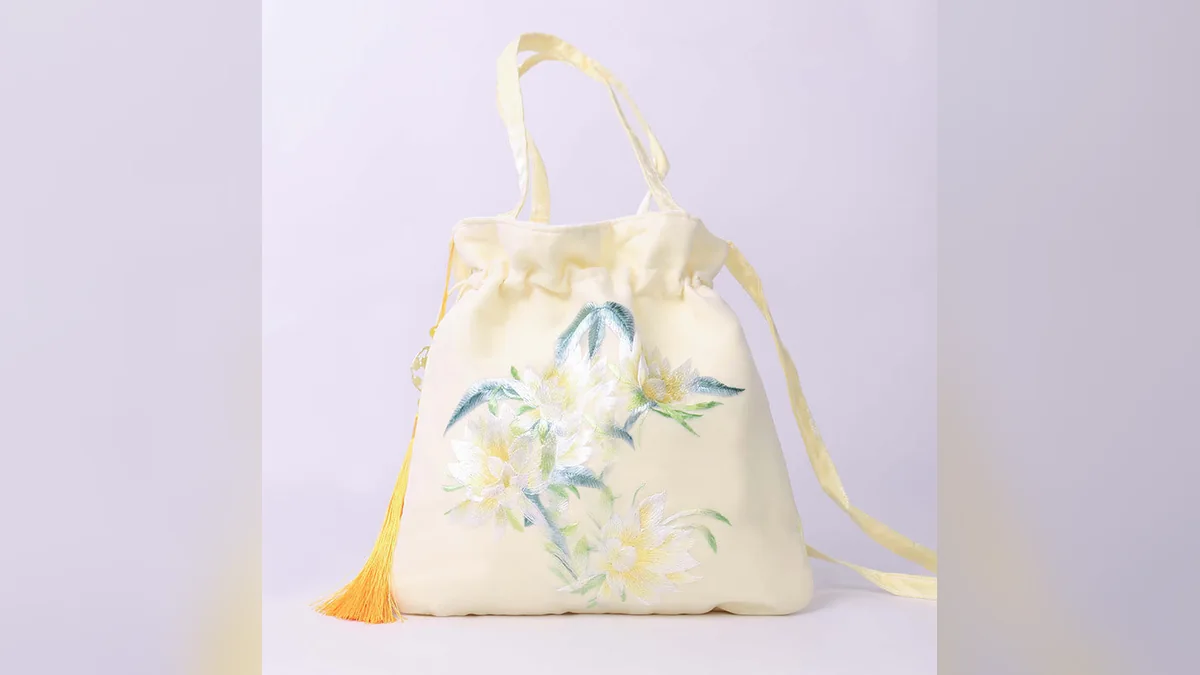
Our Buddha Stones Suzhou embroidery cotton linen bag includes the Yellow Golden Phoenix 21*22cm option alongside Yellow Epiphyllum, Yellow Golden Lotus, and Yellow Golden Peony options. The specified materials are Cotton Linen Fabric and Ceramic Bead Accessories. Its size is 21*22cm, with a 130cm shoulder bag strap, an adjustable strap, one main pocket, and a strap closure. The package contains one bag. For motif identification, the key distinction is the selected design: the phoenix appears as its own option within a group that also includes flowers.
A Double Phoenix shopping handbag option
The Buddha Stones double-sided embroidery shopping handbag offers Double Phoenix among its named options, alongside apple blossom, peony, and Chinese Money Tree designs. Cotton, Canvas Fabric, and Polyester are the specified materials. This bag has one main pocket, a zipper closure, non-adjustable straps, and a stated weight of 180g. One bag is included. When comparing these two bag formats, the closure and strap details give you practical differences to consider alongside the motif. Select Double Phoenix specifically rather than relying on the broader product title.
A round incense burner with a Dragon Phoenix option
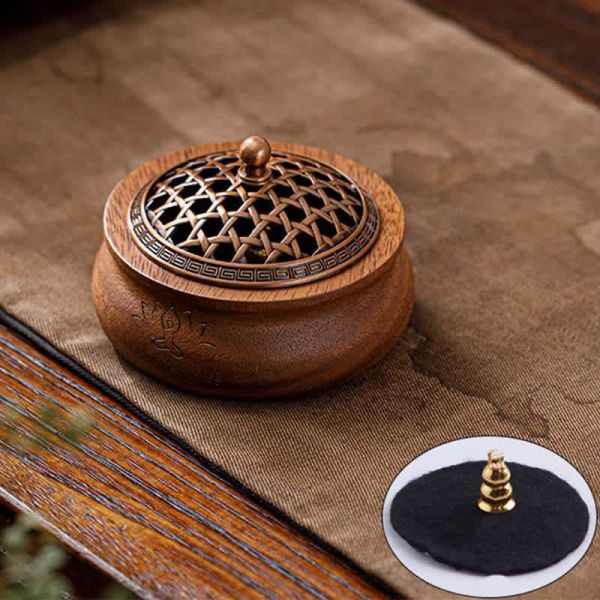
The Buddha Stones round dragon-and-phoenix incense burner has a Dragon Phoenix option; other options include Bowl-shaped, Jar-shaped, Lotus Design, and woven designs. Its materials are Peach Wood and Alloy. Compatibility covers stick, cone, and spiral incense, and the package contains one incense burner without incense. Because this item is handmade, slight variations in color, shape, and size may occur. The word “Luck” in its full name expresses a traditional wish, not a promised result.
A square incense burner with the paired motif
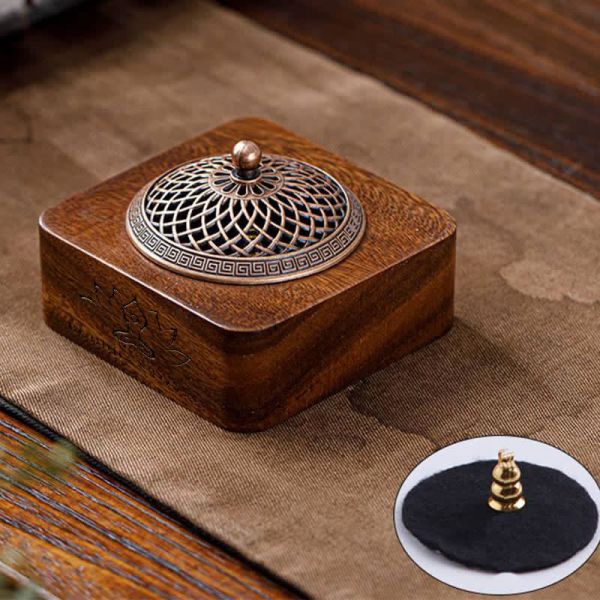
Our Buddha Stones square dragon-and-phoenix incense burner offers Dragon Phoenix, Green Woven Design, Lotus Design, and Woven Design options. Peach Wood and Alloy are its specified materials. It accommodates stick, cone, and spiral incense; one burner is included, and incense is not included. Its handmade nature means slight differences in color, shape, and size are possible. “Protection” in the full product name is a traditional wish, with no assurance that the object provides it. As with the round version, check the selected option for the paired motif.
A useful identification starts with three things: the bird’s silhouette, its surrounding motifs, and the design’s name. Read those together, then connect the image to its tradition. That gives you a clearer description than color alone and leaves the symbolism in its proper place as a cultural meaning.
Shop the story
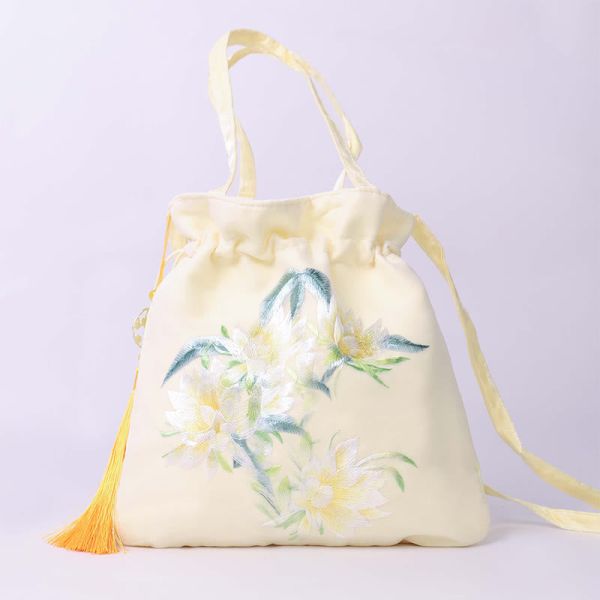 Buddha Stones Lotus Peony Epiphyllum Phoenix Suzhou Embroidery Cotton Linen Tote Crossbody Bag Shoulder Bag HandbagAs low as $22.59 Regular Price $32.27
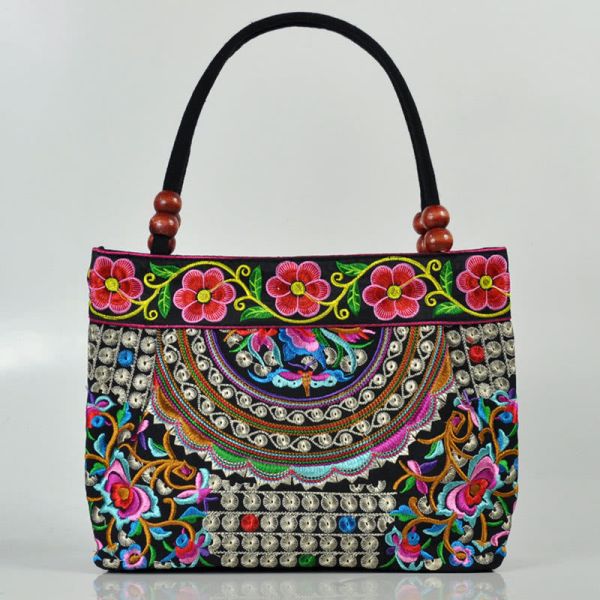 Buddha Stones Money Tree Peony Phoenix Apple Blossom Double-Sided Embroidery Cotton Canvas Shopping Purse HandbagAs low as $19.59 Regular Price $27.21
 Buddha Stones Peach Wood Dragon Phoenix Luck Round Bag Incense BurnerAs low as $38.59 Regular Price $51.45