What Is Jade? A Visual Guide to Color and Meaning
Pale green beads and creamy white pendants can both be jade. So, what is jade? The name covers two different materials, nephrite and jadeite, used in jewelry and decorative objects. In Chinese tradition, jade represents virtue, dignity, and enduring worth. Its associations with luck, wealth, and protection belong to cultural belief; these meanings do not guarantee luck, wealth, or protection. At Buddha Stones, we distinguish the material from the symbols paired with it. This field guide helps you read those details separately.
What is jade? Begin with the material
Nephrite and jadeite share a familiar name, but they are distinct materials. Both appear in objects described as jade, and neither can be reliably identified from green color alone. Jade can also be white, lavender, yellow, brown, or nearly black, depending on the material and the particular specimen.
For a visual comparison, notice three things: the distribution of color, how much light seems to pass through the edges, and the finish of the surface. One piece may look cloudy and opaque; another may appear more translucent. Color can be fairly even or interrupted by patches and streaks.
Those observations describe appearance. They cannot establish authenticity, treatment, or the precise material from a photograph. A smooth finish is also the result of working the surface, so shine alone does not identify jade. Begin with the written material description, then use photographs to understand the form and visible details.
How to recognize the motif
Jade can carry many motifs. Separate the stone itself from its shape and from any neighboring symbols. These five cues give you a useful order for looking:
- Color distribution: Look for pale areas, darker patches, or a fairly consistent tone. Green is familiar, but it is only one part of jade’s color range. A white bead should not be dismissed simply because it lacks green.
- Surface appearance: Observe broad reflections and visible cloudiness. A polished surface may look glossy, while the material beneath it appears milky. Neither feature provides proof of identity.
- Overall shape: Round beads, broad bangles, flat pendants, and small ornaments present the material differently. Shape tells you about the object’s design before it tells you anything about symbolism.
- Recognizable imagery: A turtle, fish, flower, or written character adds a separate visual subject. Identify that subject before assigning a traditional meaning to it.
- Surrounding details: Cord color, metal elements, and neighboring beads contribute to the composition. Do not assume that every visible component is jade or that an entire bracelet shares one material.
Jade’s meaning in Chinese tradition
Chinese cultural traditions have long connected jade with moral qualities, including integrity and upright conduct. Its enduring place in jewelry and decorative arts also makes it a familiar material for gifts expressing respect. These associations concern the meaning people give an object, rather than a result the object produces.
There is no single symbolic reading for every jade design. A plain bead emphasizes material and form. A bead beside a Fu character introduces a written wish for happiness or good fortune. A turtle introduces traditional associations with longevity and endurance. An abacus points toward accounting and, in decorative symbolism, wishes concerning prosperity.
Keep those layers distinct. Jade does not automatically make an object Buddhist, and a cord bracelet does not establish a ceremonial history. Context, imagery, and the description supplied with the object matter.
Luck and Protection in our product names express traditional wishes. Neither word promises a practical result, and symbolic associations with wealth are not financial guarantees.
Where jade appears and what to notice
The same material can look quite different across forms. Use this comparison to orient yourself before examining an individual design.
| where you see it | how it usually appears |
|---|---|
| Beaded jewelry | Small repeated forms, sometimes combined with cord, metal elements, or other beads; inspect the material description component by component. |
| Bangles | A continuous band with a broad surface that makes changes in color and translucency easier to notice. |
| Pendants | A single prominent form, sometimes accompanied by an animal, plant, or written symbol that contributes its own meaning. |
| Decorative objects | Freestanding ornaments or vessels, where silhouette, surface, and recognizable imagery become central to the design. |
A familiar shape is a starting point for interpretation, not evidence of a particular jade type. Read the object’s form and its material description together.
Four jade cord bracelet designs from Buddha Stones
Our selections below show different ways jade appears alongside cord and named motifs. Pay attention to the option names as well as the specifications, especially when a choice includes or omits an accessory.
Turtle and Fu character details
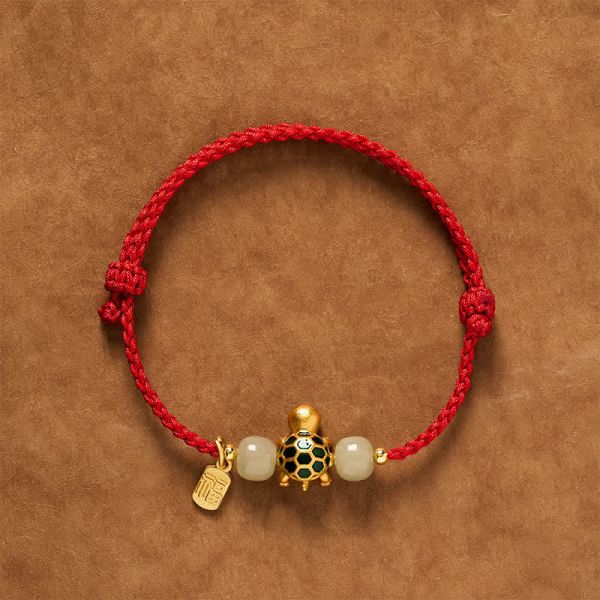
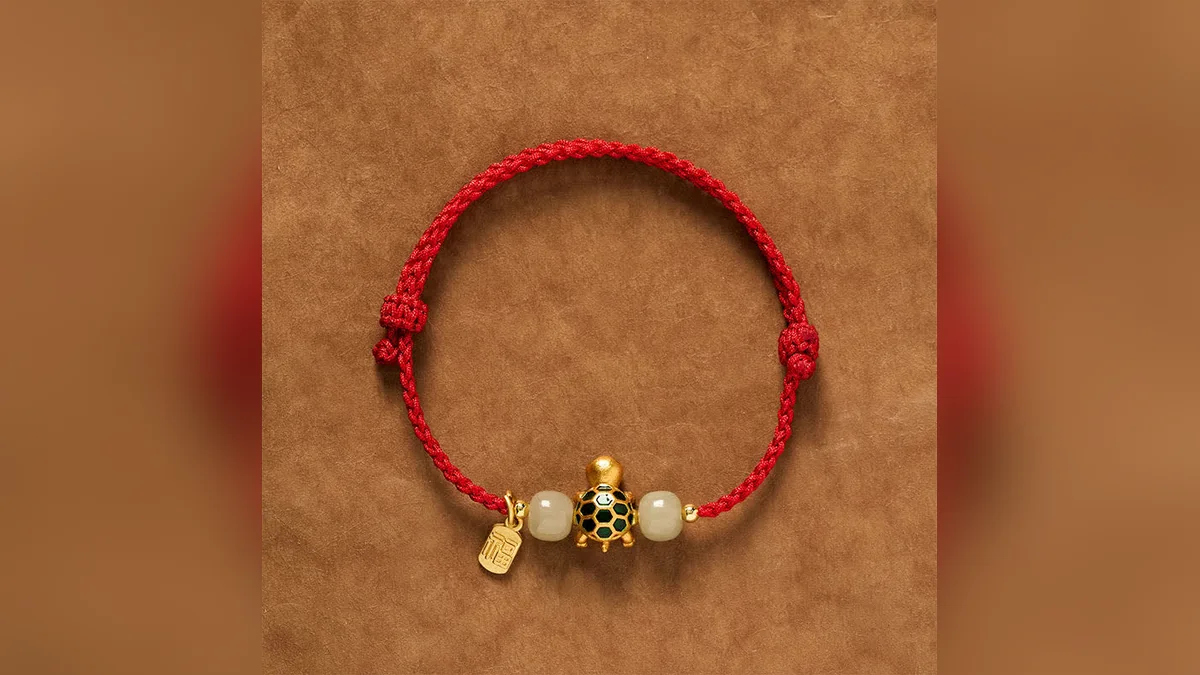
The Copper Turtle Hetian Jade Fu Character Bracelet combines the turtle and Fu character named in its design. Its materials are red string, Hetian jade, and copper alloy. The band uses an adjustable cord, and the wrist circumference specification is 5.5–7.1 in (14-18 cm). Green and Red are the available option names. The product information allows for slight differences in the natural jade’s color, details, and overall appearance. Read the animal and character as symbolic subjects alongside the material.
Pink cord with an accessory choice
The Hand-Woven Jade Beads Pink String Bracelet has two options: Pink With Jade Beads and Pink Without Accessory. That distinction matters if jade beads are the feature you want. The specifications name string and jade, an adjustable cord, and a wrist circumference of 5.9-7.1 in / 15-18cm. Its product notes describe possible variation in natural jade appearance and batch differences in cord color tone, shade, and pattern distribution. Check the selected option instead of relying on the shared product title alone.
Koi fish beside a written symbol
The Hand-Woven Koi Fish Fu Character Jade Beads Rope Bracelet brings fish imagery and the Fu character into one named design. Materials include string, Hetian jade, copper alloy, and a copper plated gold bead. Dark Red and Red options are offered. Its adjustable cord accommodates the specified wrist circumference of 5.9–8.3 in / 15–21 cm. The jade may show slight differences in color, details, and overall appearance. Keep the fish, character, and jade as separate elements when reading the composition.
An abacus reference with jade beads
The Hand-Woven Abacus Jade Beads String Bracelet pairs the abacus reference in its name with jade beads. String and jade are the specified materials, with an adjustable cord and a wrist circumference of 5.9-7.5 in / 15-19cm. Options are Green and Red. The product notes allow for slight jade variations and differences between cord batches in color tone, shade, and pattern distribution. Its abacus association can be understood as a traditional prosperity wish, without treating the design as a promise about money.
Keep material, form, and meaning in view
A useful jade description answers three separate questions: what material is named, what form is visible, and what tradition informs the imagery. Color helps describe the appearance; it cannot answer all three questions. When comparing a bead, pendant, or ornament, let the written specifications establish the stated materials and let the visible design guide your reading of its symbols. That approach leaves room to appreciate jade’s varied appearance while treating traditional meanings with care.
Shop the story
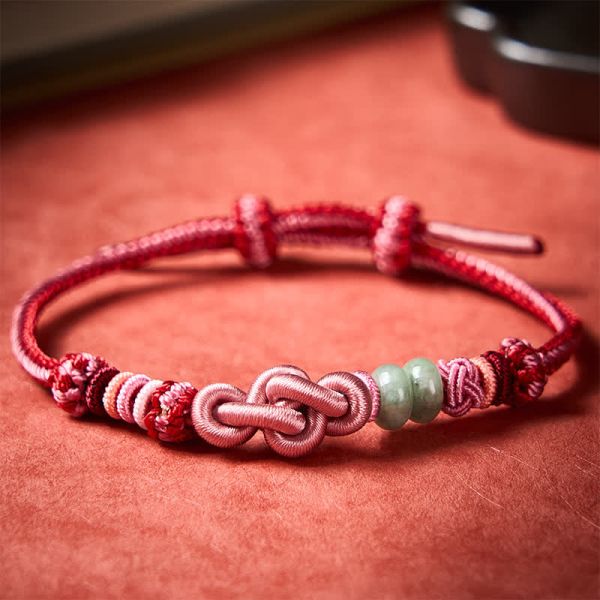 Buddha Stones Hand-Woven Jade Beads Luck Pink String BraceletAs low as $25.59 Regular Price $36.04
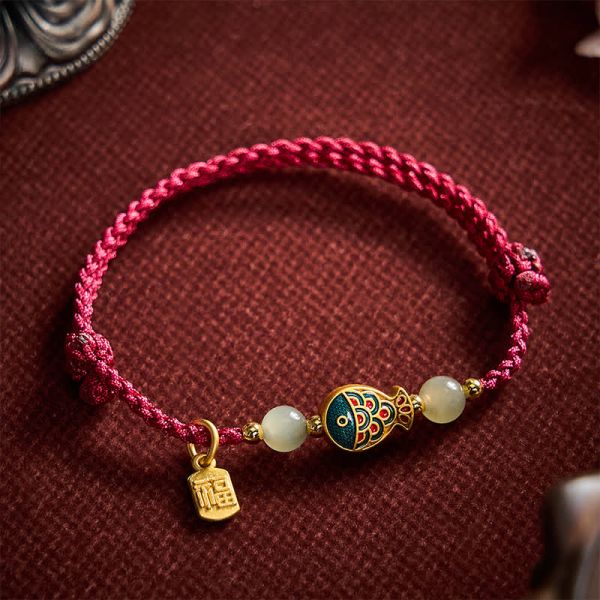 Buddha Stones Hand-Woven Koi Fish Fu Character Jade Beads Protection Rope BraceletAs low as $25.59 Regular Price $34.12
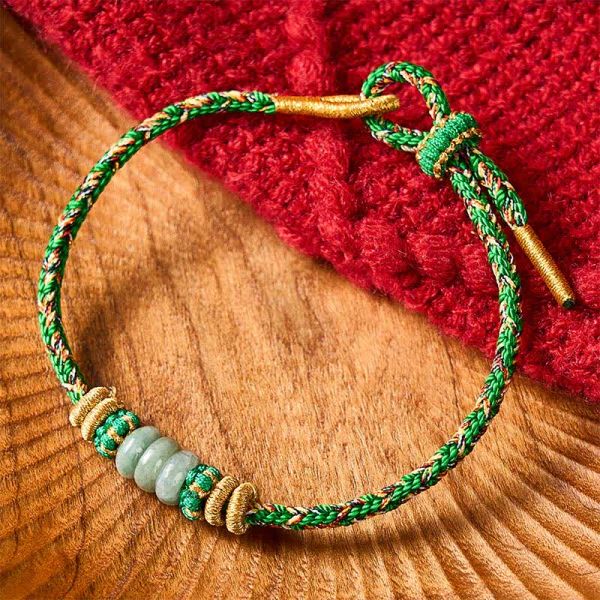 Buddha Stones Hand-Woven Luck Abacus Jade Beads String BraceletAs low as $25.59 Regular Price $34.58