
What Is Elephant Symbolism? From Legend to Jewelry
Queen Maya saw a white elephant in her dream before the Buddha was born. Buddhist tradition places this encounter within the story of his birth, giving the animal a place in sacred storytelling.
For readers asking “what is elephant symbolism?”, the traditional meaning centers on wisdom, strength, dignity, and auspiciousness. Associations with luck, wealth, or protection belong to cultural beliefs; no object bearing an elephant guarantees those outcomes. The dream offers one starting point, but the elephant has also appeared in processions, textiles, ornaments, and ordinary accessories.
At Buddha Stones, we approach these meanings through their particular settings. A white elephant in a Buddhist birth story carries a different significance from a repeated elephant pattern on cloth. Recognizing that difference leaves room for both religious understanding and an appreciation of design.
What Is Elephant Symbolism in Festivals and Craft?
In parts of South and Southeast Asia, elephants have appeared in royal and religious processions. Their size and ceremonial dress made them prominent figures in public gatherings. In these settings, an elephant could signify royal authority, dignity, or the importance of the occasion. The meaning depended on the community and ceremony, rather than on a single rule shared across the region.
The white elephant holds a particular place in several Buddhist cultures. Its connection with Queen Maya's dream helps explain its religious importance, while royal traditions have also associated white elephants with auspicious kingship. These overlapping meanings should not be flattened into a general claim that any elephant image promises prosperity.
Festival decoration also shows how meaning passes through materials. An elephant represented in embroidery, woven cloth, or a painted panel has to be recognizable within the limits of that medium. A broad body, large ears, and a curved trunk can establish the animal with only a few lines. Repetition can turn the same figure into a border or an alternating pattern.
Such patterns do not always tell a complete religious story. Sometimes the elephant is the central subject; elsewhere, it forms part of a larger decorative arrangement. A motif alone cannot establish the maker's intention or identify a specific ceremony.
When looking at an elephant design, begin with what is visible. Notice whether it stands alone, appears in a procession, or repeats beside flowers and geometric shapes. Then consider any explanation supplied with the object. This keeps interpretation connected to evidence while allowing the design to be appreciated on its own terms.
From a Ceremonial Figure to a Jewelry Motif
On jewelry, the elephant moves into a much smaller space. A pendant or charm may preserve the animal's outline while leaving out the surroundings that would explain a larger scene. The wearer may choose it for its traditional association with wisdom or strength, for its connection to a particular story, or simply for its shape.
Those reasons can coexist. Someone does not need to assign a religious meaning to every decorative animal they wear. Equally, a meaningful symbol deserves more than a vague promise printed beside it. We distinguish the cultural association from the object's material and construction, because they answer different questions.
If you are considering an elephant motif among our bracelets, separate three decisions: what the symbol means to you, how the design looks, and whether the stated size and fastening suit your needs. Symbolism cannot answer the practical questions, and a practical description cannot establish a sacred meaning.
The same distinction helps when choosing a gift. A short explanation such as “the elephant traditionally represents wisdom and strength” gives the recipient useful context. There is no need to suggest that wearing it will change their circumstances. If the design belongs to a specific religious tradition, naming that connection is more informative than calling it universally lucky.
Everyday accessories offer another setting for the motif. A purse can carry an elephant design without serving a ceremonial purpose. Its usefulness rests on its dimensions, closure, and interior arrangement; its symbolic associations remain a separate part of its appeal.
Four Elephant Purses: Materials, Closures, and Layouts
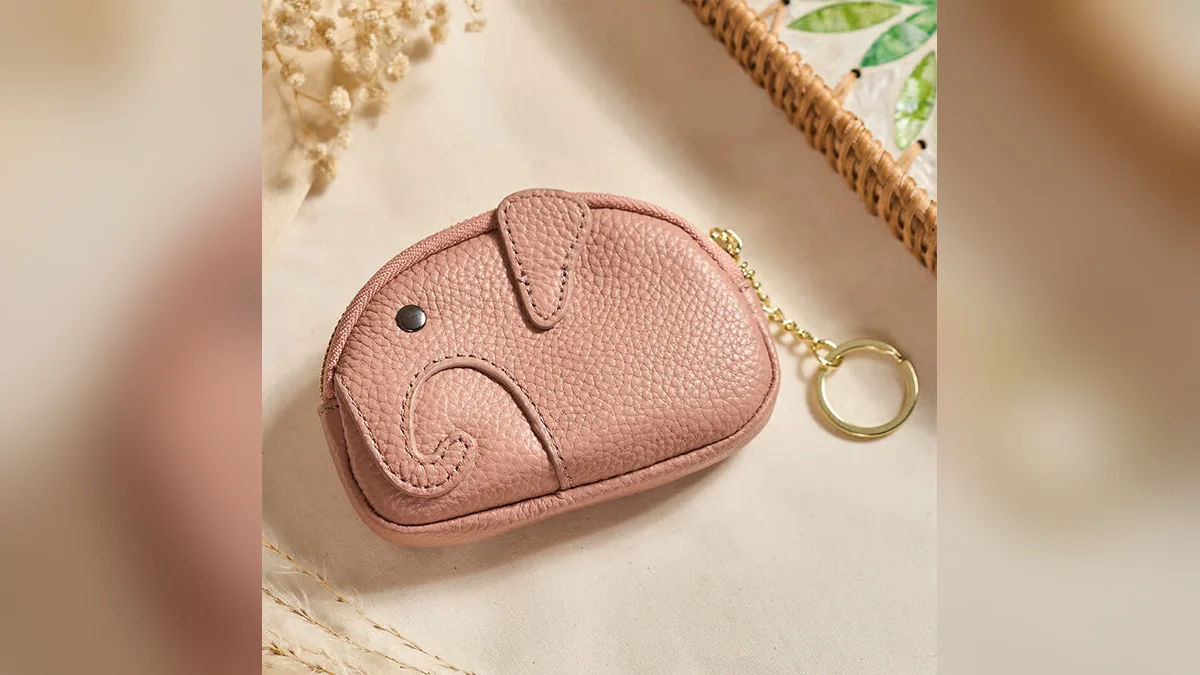
Our elephant purse selection brings the motif into bags with different constructions. Below, we describe the supplied specifications so you can compare their practical details. “Lucky” and “Luck” in product names express traditional wishes, not assurances about what owning a purse will bring.
Elephant Wisdom Mini Zipper Purse
The Buddha Stones PU Leather Elephant Wisdom Mini Zipper Purse is made from PU leather and has a zipper closure, a detachable strap or handle, and an open interior. Its dimensions are Approx. 12.5 cm × 2 cm × 8.5 cm / 4.92 in × 0.79 in × 3.35 in. The detachable attachment is a useful detail to compare with a fixed one when considering how you want to carry a bag.
Lucky Elephant Wristlet Wallet
The Buddha Stones PU Leather Lucky Elephant Wristlet Wallet uses PU leather, a zipper closure, and an open interior. Its strap or handle is non-detachable. The size is Approx. 10 cm × 3 cm × 8 cm / 3.94 in × 1.18 in × 3.15 in. Available color options are BurlyWood, Chocolate, Linen, and SteelBlue. Consider the fixed attachment alongside the dimensions when comparing it with the mini zipper purse.
Blue White Elephant Bohemian Zip Purse
The Buddha Stones Blue White Elephant Luck Bohemian Zip Purse is polyester, with a zipper closure and an open interior. It has no strap or handle. Its dimensions are Approx. 11.3 cm × 9.3 cm / 4.45 in × 3.66 in. These specifications provide a straightforward comparison for someone deciding between a purse with an attachment and one without.
Elephant Trifold Compact Purse
The Buddha Stones PU Leather Elephant Trifold Compact Purse has PU leather and cotton polyester materials, a snap button closure, and multiple compartments. Its strap or handle is non-adjustable. Dimensions are Approx. 13.5 cm × 3 cm × 9.5 cm / 5.31 in × 1.18 in × 3.74 in. The compartment arrangement provides a different interior format from the open interiors described above.
Before choosing, compare the stated measurements with the space available in your usual bag. Decide separately whether you prefer compartments, an open interior, a zipper, or a snap button. These concrete differences are more useful for selection than assumptions drawn from the elephant motif.
FAQ: Reading the Elephant Motif
Why does a white elephant appear in Buddhist art?
One important connection is Queen Maya's dream before the Buddha's birth. A white elephant can refer to that story, although the surrounding scene helps establish the subject.
Does an elephant accessory guarantee good luck?
No. Luck, prosperity, and protection are traditional associations in some settings. An elephant image does not establish or guarantee any future result.
Can an elephant be purely decorative?
Yes. The elephant can be a decorative animal motif as well as a religious or cultural symbol. Context, accompanying details, and the maker's explanation help distinguish those uses.
Queen Maya's dream gives one elephant a place in a sacred narrative. A procession, a textile, and a purse place the animal in other settings. The thoughtful approach is to keep those settings visible: understand the story where one is present, recognize traditional wishes as wishes, and judge an everyday accessory by its stated construction.
Shop the story
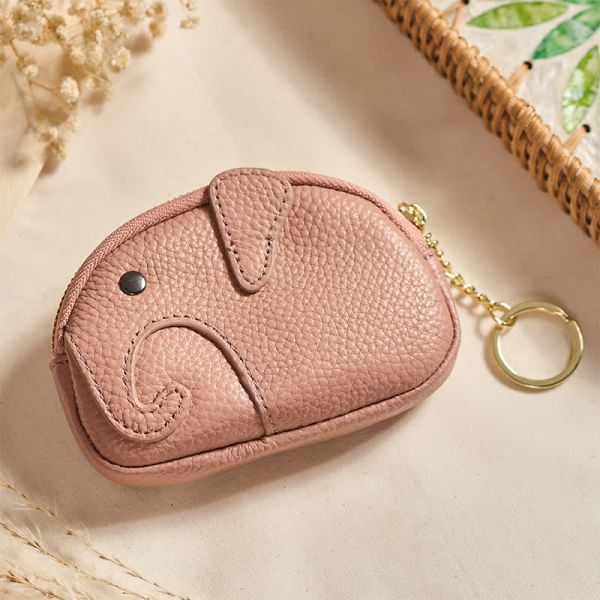 Buddha Stones PU Leather Elephant Wisdom Mini Zipper PurseAs low as $22.59 Regular Price $31.38
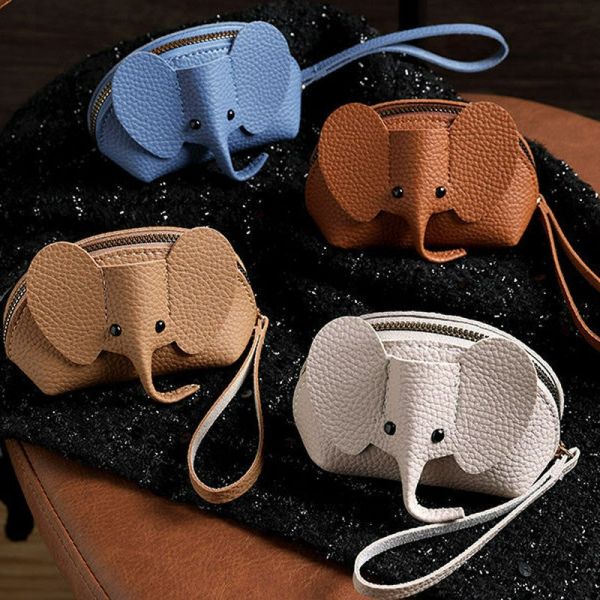 Buddha Stones PU Leather Lucky Elephant Wristlet WalletAs low as $13.59 Regular Price $18.62
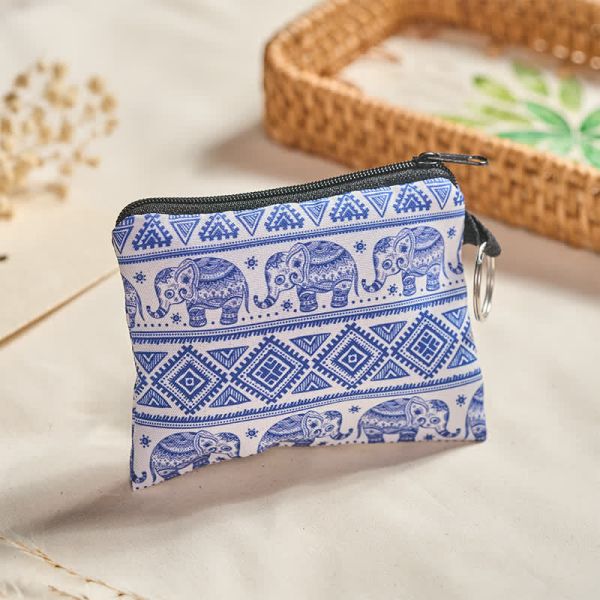 Buddha Stones Blue White Elephant Luck Bohemian Zip PurseSpecial Price $13.59 Regular Price $18.12
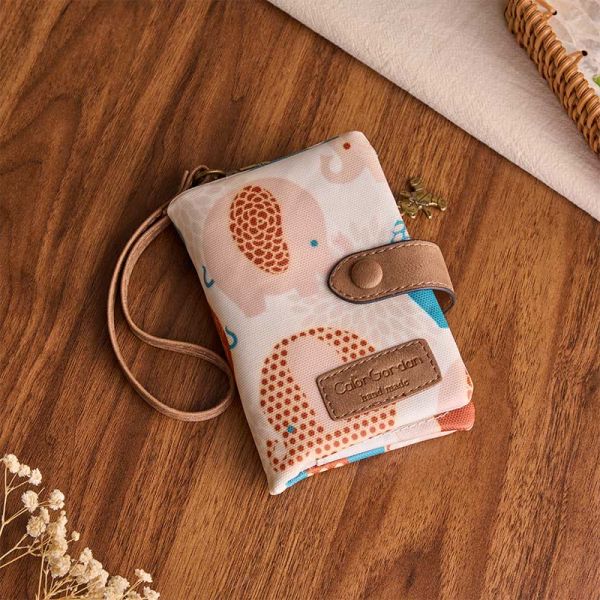 Buddha Stones PU Leather Elephant Trifold Compact PurseSpecial Price $22.59 Regular Price $30.53