
What Is a Thangka? A Walk Around One, Border to Center
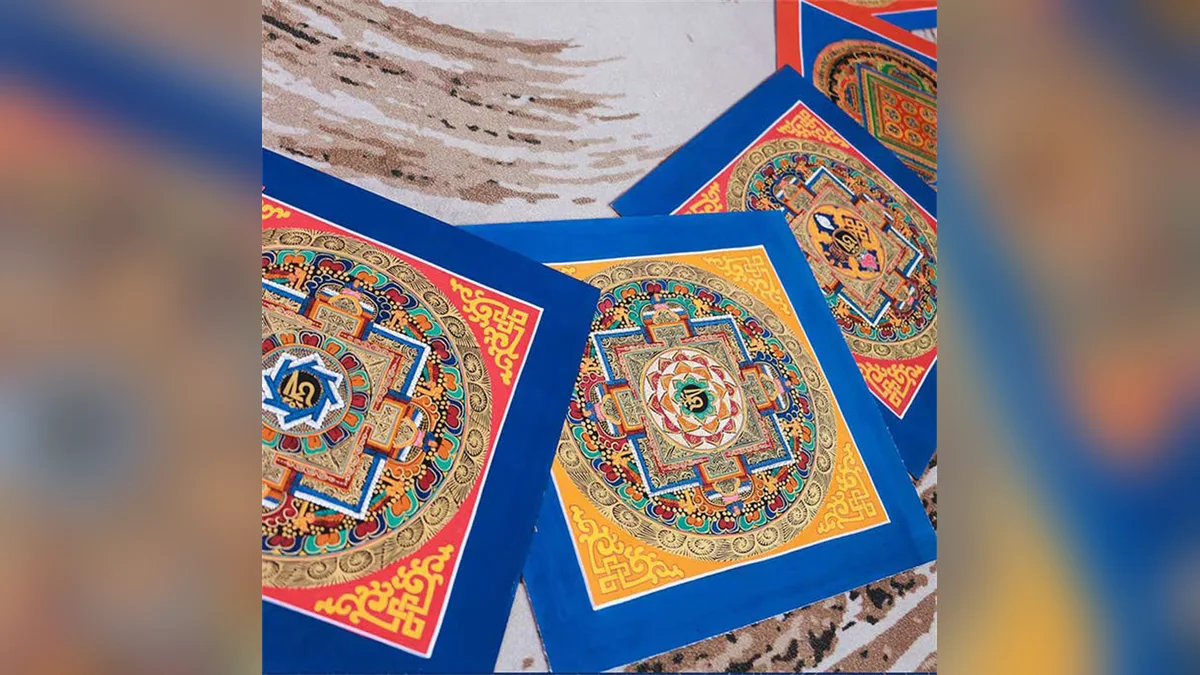
Step up to a thangka the way a museum guide would: slowly, and from the outside in. Before brushwork or symbolism, the plainest question deserves a straight answer—what is a thangka? A thangka is a Tibetan Buddhist painting on cloth, traditionally mounted in a textile border, often silk brocade, and finished with wooden rods at top and bottom so the whole piece can be rolled for storage or travel. That portable, rolled format is part of what makes a thangka a thangka, not simply a picture but something closer to a traveling shrine.
What is a thangka, read from the border inward?
A gallery guide usually starts at the frame and works toward the subject. A thangka rewards the same approach, because it was built the same way: border first, ground next, grid beneath the paint, then the figures at the center and in the corners. Looking at it in that order explains why the mounting is treated with as much care as the image it holds.
The mounting
The painted panel itself is usually smaller than the finished object you see hanging on a wall. Around it runs a textile border, often silk brocade, which frames the image the way a mat and frame would frame a print, except this frame is fabric and can be rolled rather than hung flat against glass. A thin wooden rod runs along the bottom edge to weight the painting so it hangs straight, and a second rod at the top lets it be suspended from a cord.
Traditional thangkas are sometimes finished with a silk cover or veil that drapes over the painted surface when the piece is not being viewed, both as a mark of respect and as simple protection from dust. For monks and travelers who carried thangkas between monasteries, the rolled format mattered as much as the image: a painting that rolls around its own rods survives travel by yak, mule or foot far better than one mounted rigidly on wood.
The ground
Unroll the border and you reach the ground: a piece of cotton cloth, stretched and prepared before any paint touches it. Traditionally, thangka painters worked with mineral pigments and, in some pieces, gold, applied to this prepared surface in layers. We will not pretend to give you a precise recipe here, because workshops and regions vary; the general point is that the painted surface sits on a deliberately readied cloth, not on raw canvas.
The grid
Before a figure takes shape, many thangka painters work from a grid: a system of proportional lines that fixes where a deity’s limbs, face and ornaments will sit. These proportional systems are part of what keeps a given figure recognizable from one thangka to the next, even when the paintings come from different hands or different generations. The grid itself disappears once the painting is finished, but it is the quiet structure behind the symmetry you notice in a completed figure.
The center
At the middle of the composition sits the main subject, usually a deity, a historical teacher, or a mandala. A mandala is best understood as a diagram of an enlightened realm, drawn as though seen from directly above, with a palace or lotus form radiating outward from a central point. Whether the center holds one seated figure or a full mandala, it is the part of the painting meant to hold the eye, which is why thangkas are traditionally used as a focus for visualization.
The edges and corners
Move outward from the center and the composition grows busier. Smaller figures often fill the upper register, usually teachers in a lineage, shown passing a teaching from one to the next. Protectors, sometimes shown with a fierce expression, tend to stand in the lower corners, facing outward as though keeping watch over the scene. Between these figures, thangka painting often works in landscape details—clouds, mountains, water, flowering trees—that give the central figure a believable setting, even when that setting represents a pure realm rather than any actual place.
How a thangka is used
Inside Tibetan Buddhist practice, a thangka is traditionally used as a support for visualization and devotion. A practitioner looks to the painted deity or mandala as a focus for meditation, letting the image carry a teaching that would be harder to hold in mind through words alone.
That role shapes how a thangka is handled outside a monastery as well. It is traditionally hung with some respect for placement, often above eye level rather than at a casual glance, and kept clean and dry rather than left in damp air or direct sun. If you are arranging a quiet corner for practice, a thangka is one of the pieces worth placing with some thought; our guide to creating a sacred space at home covers that kind of arrangement in more detail. When a thangka is not on display, it is traditionally rolled from the bottom up, around its own rods, rather than folded, which is part of why the mounting matters as much as the painted surface itself.
Choosing a small thangka for home
Not every thangka needs to be a full devotional centerpiece. Several smaller formats work well set on a shelf, desk or altar table, and this is where the idea of a thangka blind box comes in.
A blind box works exactly as it sounds: you choose the size, and sometimes a broad style, but the exact border color and pattern that arrives is left to chance. It is an honest trade—you give up control over one detail in exchange for a genuine surprise when the package is opened, and no two buyers end up with quite the same piece.
Our Blessing Thangka blind box is a reasonable place to start. It comes in a 26 by 26 centimeter size, with a choice between a mandala-style or a scripture-style option; within whichever style you pick, the border color and pattern ship at random, made of polyester and thangka cloth. The Mandala Painting blind box follows the same idea at a slightly larger 32 by 32 centimeters, built around mandala compositions, also in polyester and thangka cloth. For more flexibility on size, the Spiritual Blessing blind box comes in 18, 26, 35 or 55 centimeter squares, frameless like the others, with the border color and pattern assigned at random once you have settled on a size.
To be clear about what these are: the blind-box pieces are decorative thangkas made of polyester and thangka cloth, not hand-painted works in the mineral-pigment tradition described above. They suit a shelf, wall or home altar as an affordable reminder of the form rather than as a collector's painting.
If a full thangka is more space than you want to give up, the Lotus Golden Ingot Thangka photo frame ornament borrows the same visual language—a lotus and a golden ingot—and sets it into a small frame made of medium density fiberboard and alloy, about 13 by 18 by 4 centimeters, sized for a shelf rather than a wall. For a larger, wall-mounted piece instead, our wall art selection includes other sizes meant for hanging.
Border colors and patterns on the blind box options are assigned at random; only the size, and in one case the broad style, can be chosen in advance.
Step back out from the center now, past the grid and the painted ground, and you arrive at the border again, the plain textile edge that gets rolled around the whole thing when the day is done. That edge is a fair place to end, since it is also where the question of what is a thangka started: not just an image, but an image built to travel.
Shop the story
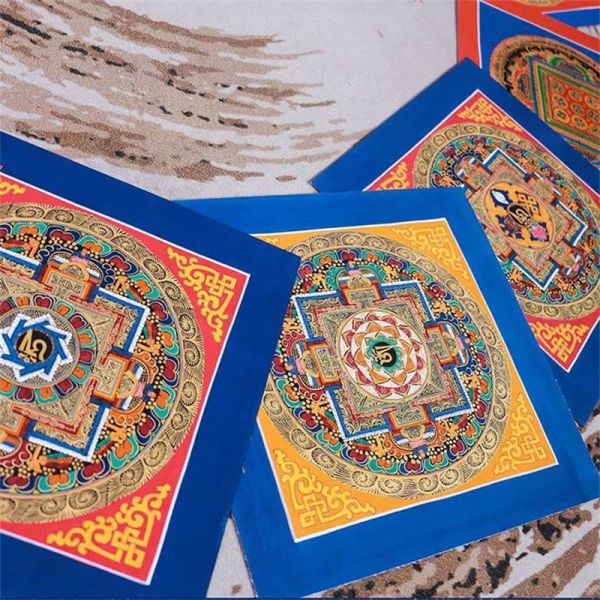 Buddha Stones Tibetan Handmade Thangka Painting Blessing Thangka Blind Box Random Color PatternAs low as $49.59 Regular Price $69.85
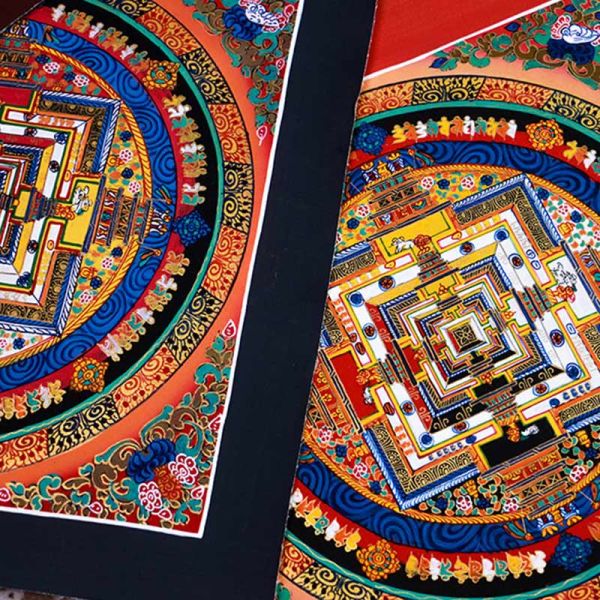 Buddha Stones Tibetan Handmade Thangka Mandala Painting Blind Box Random Color PatternSpecial Price $69.59 Regular Price $92.79
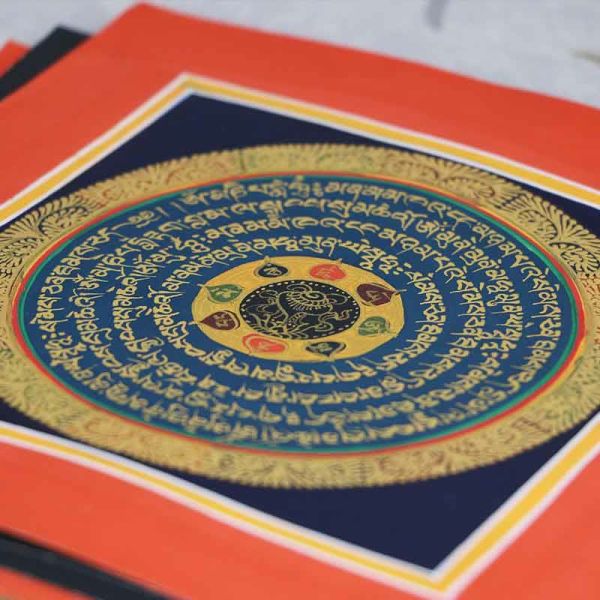 Buddha Stones Tibetan Handmade Thangka Painting Spiritual Blessing Blind Box Random Color PatternAs low as $36.59 Regular Price $48.79
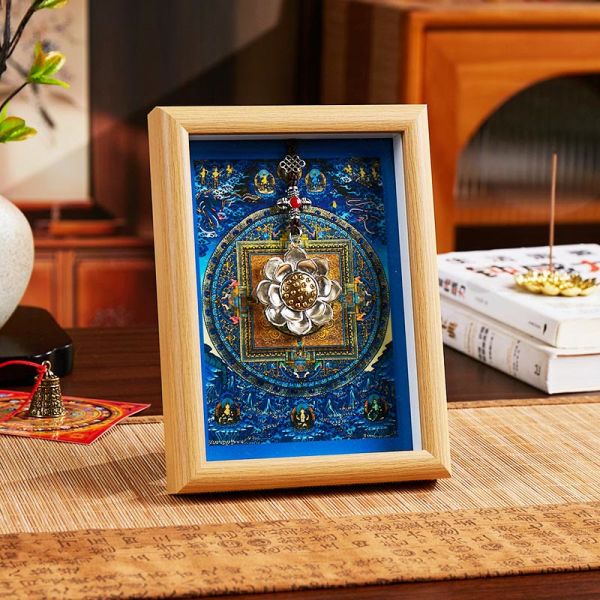 Buddha Stones Lotus Golden Ingot Thangka Photo Frame Ornament Home DecorAs low as $49.59 Regular Price $68.88