Tea Pet Care Calendar: A Season-by-Season Guide
A tea pet is a small clay figure kept on the tea tray during gongfu tea, fed by pouring leftover tea or rinse water over it as part of the brewing routine. The custom grew up alongside Yixing purple clay (zisha) teaware, where unglazed clay gradually takes on the color of whatever passes over it. Over many sessions, that pouring can leave unglazed clay with a soft sheen and a noticeably deeper color, sometimes called a patina. Glazed ceramic pieces respond differently, which we will get to below. Caring for one, in practice, is less a single task than a loose calendar: a few habits in the first session, a routine that settles in over the first month, a slow shift that only becomes visible across a season, and a longer arc that keeps unfolding over a year and beyond.
The first session with a tea pet
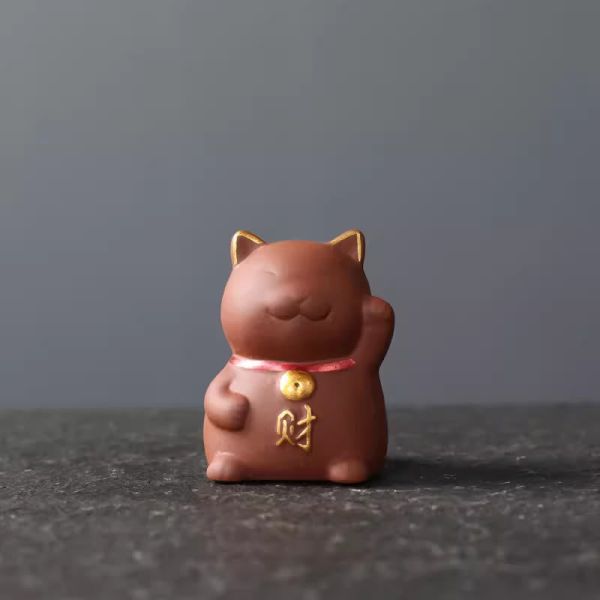
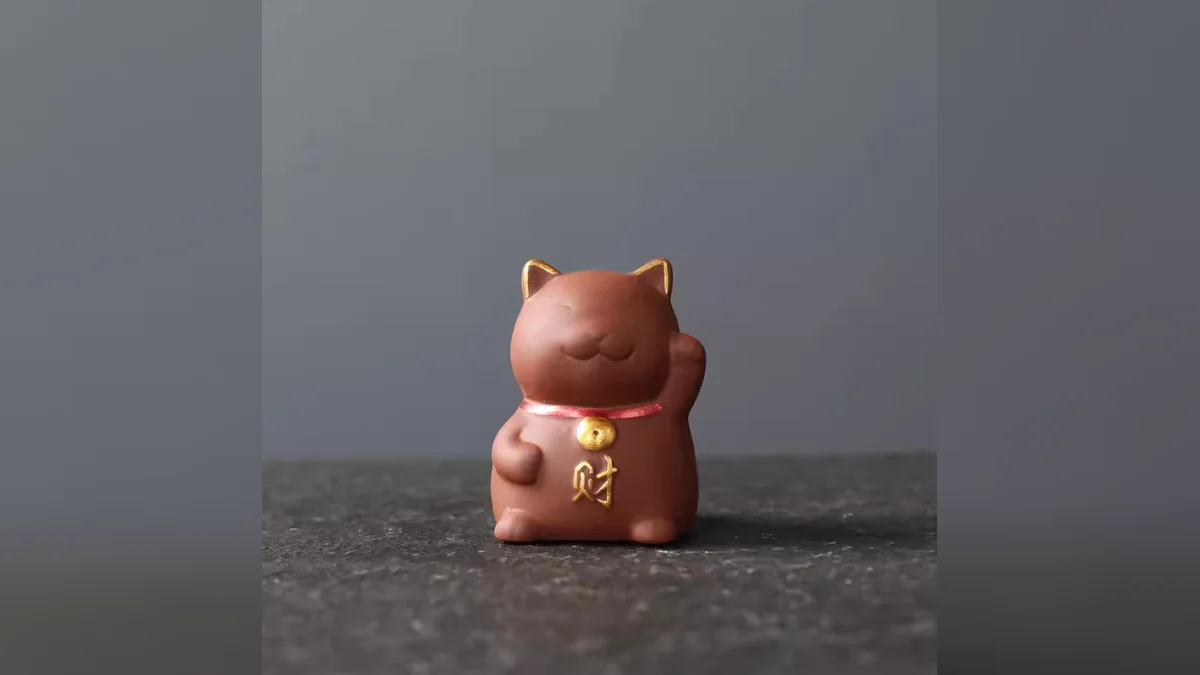
When one first arrives, give it a plain rinse in hot water before anything else. This clears any dust left over from packing and shipping, and it warms the clay gradually so it is not shocked by hot tea right away. Next, choose a spot on the tray where the piece will live for good — a corner that stays clear of the gaiwan or pitcher but is still close enough that leftover tea reaches it without much effort. This is partly why many first figures are small and easy to tuck into a tight space. The Mini Lucky Cat figure, made of purple clay and measuring about 4 x 3.8 x 5.5 cm, tucks beside a teapot without crowding the rest of the tray, which makes it an easy first piece to settle in with.
The first month
For the first few weeks, treat pouring over the figure as part of brewing rather than an extra step tacked on at the end. After filling the cups, let a little of what is left in the pot, or the hot water used to rinse it, run over the figure. A soft tea brush helps spread that liquid evenly across the surface, reaching the parts of the shape that do not sit flat against the tray and would otherwise miss out on a pour. Let the piece air-dry between sessions instead of leaving it to sit in a puddle; a few minutes resting on the tray is usually enough before the next round of tea begins.
Skip soap and scented cleaners on unglazed clay. The surface is porous enough to hold onto fragrance and residue long after a rinse, so plain water and tea is really all it needs, session after session.
The first season
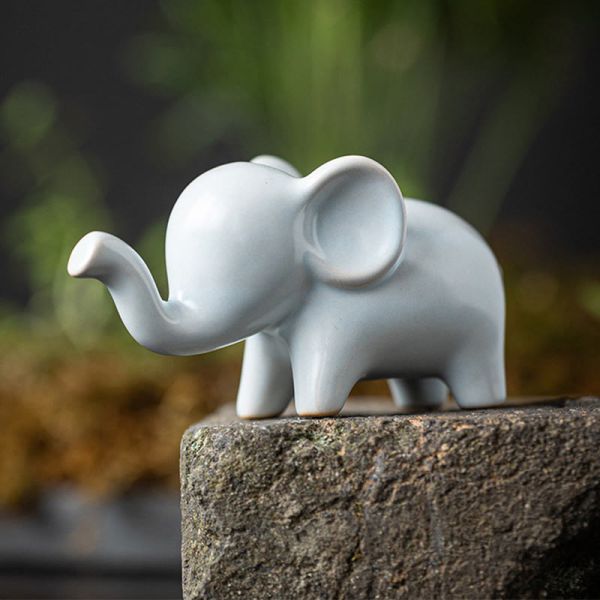
Unglazed purple clay is porous, and regular pouring slowly changes its surface over time. Over a season of steady use, it is common to notice the clay looking a little smoother and a shade or two darker than when it first arrived, following wherever the tea has actually landed rather than changing evenly all at once. Glazed ceramic tea pets behave differently: a glaze seals the surface, so a ceramic piece such as the Small Ceramic Elephant figure, made of ceramic and measuring 10.4 x 4.4 x 5.4 cm, will usually change far less than bare purple clay, however many sessions it sits through. That is not a shortcoming. Glazed pieces are simply chosen for their shape and color rather than for how the surface develops, and there is nothing wrong with wanting a figure that stays put visually while the tea around it changes.
The first year and beyond
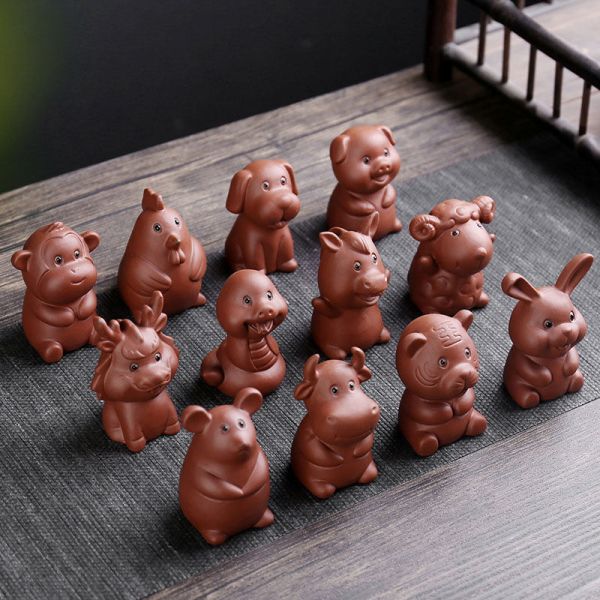
Many tea drinkers add more than one tea pet to the tray over time, and the twelve-animal cycle of the Chinese zodiac is a common way to do it. The Chinese Zodiac purple clay figures cover all twelve animals, each about 6.7 to 7.9 cm tall. The Dragon measures about 3.6 x 5.7 x 7.9 cm and the Rabbit about 4.2 x 4.4 x 7.8 cm, to take two examples from the set. A tray holding several of these figures will show slightly different wear on each one over the years, since the amount of tea that lands on a given piece depends on exactly where it sits and how often hands reach that direction. Mixed-material figures age unevenly too: the PiXiu Ingot Ball figure, made of ceramic and purple clay and standing about 11.5 x 7.5 x 10 cm, combines both in one piece, so any bare purple clay on it may shift in tone across the years while the ceramic parts change less. Beyond the first year, the routine itself does not really change. It is the same pouring and brushing, repeated often enough that the clay keeps responding to it, session after session.
Folk meanings on the tray
These figures come in a wide range of shapes, and tradition has attached a meaning to most of them over the years. These are worth knowing as folklore rather than as anything promised by the figure itself.
- Lucky cat — a beckoning cat figure, a familiar shape across Chinese and Japanese shop and tea culture alike.
- Pixiu — a mythical guardian creature popular in feng shui circles; we cover its meaning in more detail in a separate post on this blog.
- Elephant — associated in folk custom with steadiness, often placed near entryways as well as on tea trays.
- Zodiac animals — tied to the twelve-year birth cycle; some owners pick the animal that matches their own birth year or a family member’s.
- Toad — usually shown holding a coin in its mouth, a long-standing figure in southern Chinese tea culture.
Alongside the figures themselves, most gongfu setups lean on a handful of other pieces — brushes, trays, cups — drawn from the broader range of tea accessories that make the daily pouring routine easier to keep up over time.
A tray that has been through a year or two of ordinary sessions tends to hold more than fresh leaves: a figure or two with a quietly deepened surface, a brush resting within reach, cups set down where hands have learned to find them without looking. That worn-in look is not something to rush toward or manufacture. It is simply what is left behind after enough ordinary pours, one session at a time.
Shop the story
 Buddha Stones Chinese Zodiac Purple Clay Wealth Ceramic Tea Pet Home Figurine DecorationAs low as $31.59 Regular Price $42.69
 Buddha Stones Small Ceramic Elephant Home Tea Pet Figurine Desk DecorationAs low as $32.59 Regular Price $45.26
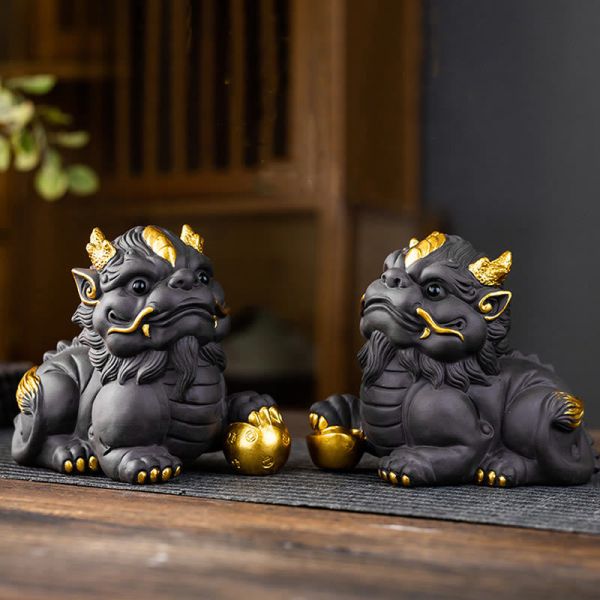 Buddha Stones PiXiu Ingot Ball Purple Clay Ceramic Tea Pet Wealth Home Figurine DecorationAs low as $64.59 Regular Price $90.97