
Turquoise Symbolism in Celebration and Everyday Dress
Ancient Egyptian jewelers set turquoise into gold ornaments, giving blue-green pieces a place among royal treasures. The color was part of a larger language of dress, ceremony, and status. Across different traditions, turquoise symbolism has included protection, good fortune, and associations with sky and water. Those meanings belong to cultural belief; wearing turquoise does not guarantee luck, wealth, or protection.
An ornament can outlast the occasion for which it was made. Its setting may record a style of metalwork, while its place in a family may carry another story entirely. That distinction matters when we discuss turquoise at Buddha Stones. We can describe a traditional association without claiming that a bracelet performs a task. We can also appreciate a design without assigning it a religious meaning its wearer does not share.
Turquoise symbolism in ceremonial dress and craft
The Egyptian ornament offers a useful starting point: turquoise was valued within a particular culture, alongside particular materials and customs. Moving from that setting to another requires care. There is no single worldwide definition of the stone, and a blue-green ornament does not mean the same thing wherever it appears.
In Tibetan jewelry traditions, turquoise appears in necklaces and head ornaments, often alongside coral and silver. Such combinations belong to traditions of dress as well as adornment. A substantial ornament worn for a celebration has a different place in daily life from a small strand of beads. Its importance may involve family ownership, regional style, or the occasion on which it is worn.
Festivals make those relationships visible. Jewelry can accompany special clothing, gathering, and ceremony without being the central object of worship. It would be misleading to call every turquoise necklace a Buddhist ritual instrument. A material may appear in a Buddhist cultural setting while also belonging to local fashion and family custom.
Craft gives these meanings a physical form. A bead has to work within a sequence; a setting has to accommodate a stone. Repeated blue-green elements create a different rhythm from one small accent surrounded by metal. These choices explain part of an ornament's character without requiring a supernatural explanation.
For someone receiving jewelry as a gift, a short explanation can preserve that distinction. “This color carries a traditional wish for good fortune” leaves room for the recipient's own beliefs. Naming the particular tradition, when it is known, is more respectful than describing an object as universally sacred.
From ceremonial ornaments to a modern sleeve
A bracelet changes the scale of the story. Instead of occupying the center of ceremonial dress, it may appear at the edge of a shirt cuff. Its color can be the main feature, or it can punctuate a sequence of darker beads. Modern jewelry allows those visual choices to stand on their own.
You might choose turquoise-colored details because they suit a favorite jacket, because the design relates to a cultural interest, or because the piece is intended as a gift. None of those reasons requires adopting every meaning associated with turquoise. A personal interpretation is yours to explain; it does not establish a historical tradition.
Color combinations can also suggest ideas through design. Dark and pale beads can express contrast. Several different bead materials can create repetition with variation. These are observations about appearance, rather than evidence that the materials alter a person's circumstances. When we use symbolic language, we keep that boundary clear.
Product names need the same attention. Luck and Protection in our bracelet titles refer to traditional wishes, not promised results. Likewise, a symbolic motif does not tell you everything about an item's composition. The material description remains important: two designs can share a color theme while containing different materials. That is why the details below identify synthetic turquoise where our specifications do.
Four Buddha Stones bracelets, with their details kept distinct
These designs bring the discussion back to objects you can describe plainly. Their titles introduce motifs and combinations; their specifications establish what we can say about construction and fit. The older ornaments give us a way to discuss cultural meaning. For these modern bracelets, we describe only the materials and features specified for the designs.
A dark-and-light bead arrangement
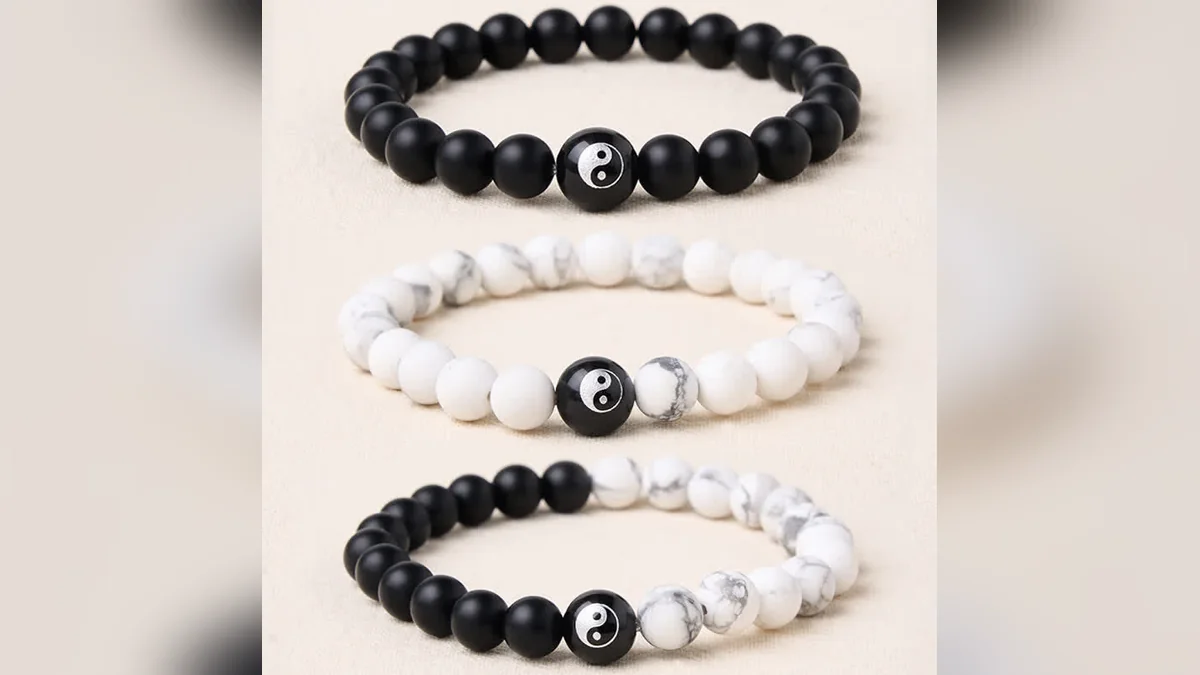
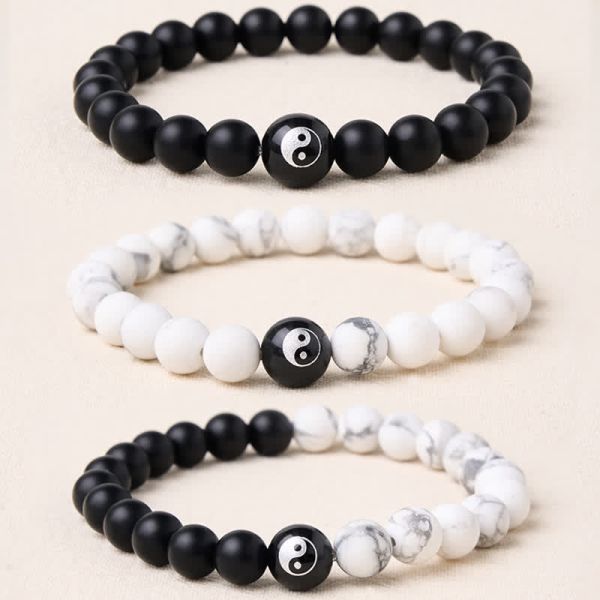
Our Black Onyx White Turquoise Yin Yang Balance Bracelet has Black Onyx, Black Onyx And White Turquoise, and White Turquoise options. The material specification names Black Onyx, White Turquoise, and Black Obsidian. It uses Premium Elastic String, with a wrist circumference of 5.9–6.3 in (15–16 cm) and bead sizes of 8mm, 10mm. Color, details, and overall appearance may vary slightly because of the natural materials.
A cord design with several named motifs
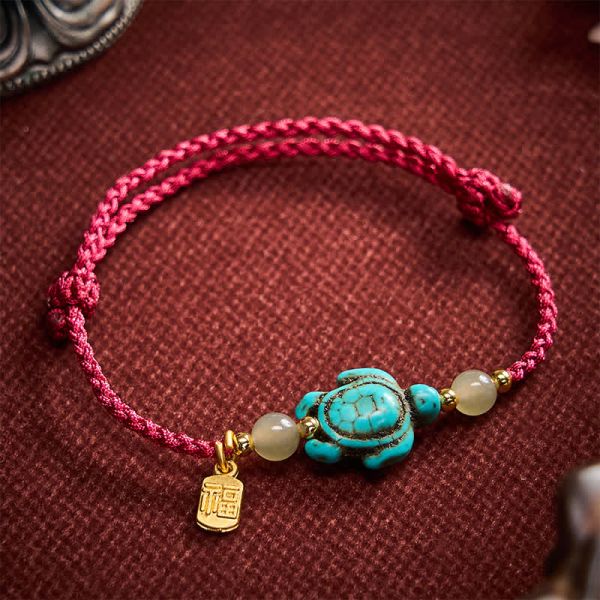
The Hand-Woven Turquoise Turtle Fu Character Jade Beads Luck Rope Bracelet comes in Dark Red and Red options. Its Adjustable Cord accommodates a wrist circumference of 5.9–8.3 in / 15–21 cm. Materials are String, Hetian Jade, Turquoise (Synthetic), Copper Alloy, and Copper Plated Gold Bead. The jade may have slight differences in color, details, and overall appearance. The title brings together turtle and Fu character motifs, while the material details make the synthetic turquoise explicit.
A mix of three bead materials
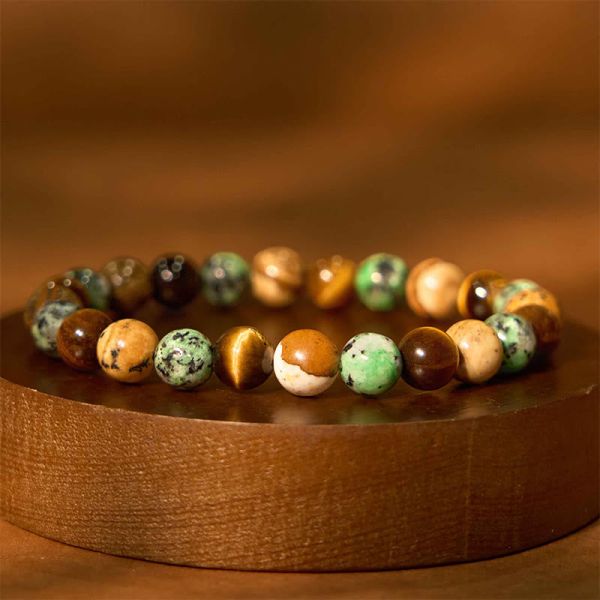
Our Picture Jasper Turquoise Tiger Eye Mix And Match Beads Protection Bracelet combines Picture Jasper, Turquoise(Synthetic), and Tiger Eye. This unisex bracelet uses premium elastic string and 8mm beads; its wrist circumference is 15-17cm. The combination offers another way to include turquoise in a mixed-material design. Its Protection title expresses a symbolic wish, while the specification describes the bracelet itself.
Tiger eye, cyan jade, and turquoise together
The Tiger Eye Cyan Jade Turquoise Beaded Protection Bracelet contains Tiger Eye, Cyan Jade, and Turquoise. It has Premium Elastic String, 8mm beads, and a wrist circumference of 5.9–6.3 in (15–16 cm). Slight variations in color, details, and overall appearance can occur because of the natural materials. Here, the three named materials form the basis for comparison with the picture jasper design, alongside the bead size and fit.
FAQ: Giving the story its proper context
Does turquoise have one fixed meaning?
No. Protection and good fortune are recurring traditional associations, but meanings depend on culture, object, and occasion. A family explanation may also differ from a broad account of jewelry traditions.
Is turquoise jewelry always Buddhist?
No. Turquoise appears in several cultural and jewelry traditions. Its presence alone does not establish a Buddhist purpose, and a bracelet should not be described as a ritual object without that context.
How can I explain a turquoise gift?
Name the design, state its materials accurately, and share any traditional association as a belief. A simple message about why you chose its color or motif gives the gift a clear story without promising an outcome.
Shop the story
 Buddha Stones Black Onyx White Turquoise Yin Yang Black Obsidian Round Bead Balance BraceletAs low as $25.59 Regular Price $35.05
 Buddha Stones Hand-Woven Turquoise Turtle Fu Character Jade Beads Luck Rope BraceletAs low as $25.59 Regular Price $34.58
 Buddha Stones Natural Picture Jasper Turquoise Tiger Eye Mix And Match Beads Protection BraceletSpecial Price $25.59 Regular Price $36.04
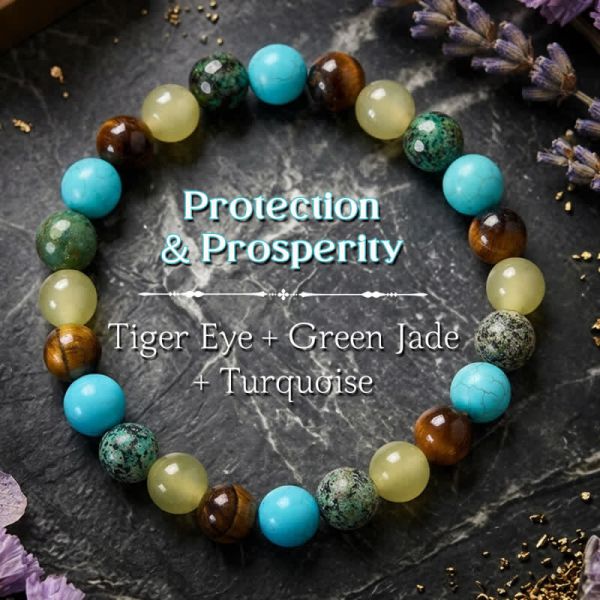 Buddha Stones Natural Tiger Eye Cyan Jade Turquoise Beaded Protection BraceletSpecial Price $25.59 Regular Price $36.04