
Turquoise Meaning: A Plain Guide to Jewelry Labels
Sky-blue beads appear in Tibetan markets and in Southwestern US jewelry, yet similar colors can belong to very different materials. Turquoise is an opaque blue-to-green copper aluminum phosphate mineral. Turquoise meaning in Tibetan, Persian, and Native American Southwestern traditions often centers on sky, water, and protection, with associations that vary by community and context. These are cultural beliefs and symbols, not promises about what a stone will do.
At Buddha Stones, we want the material description to be as clear as the symbolism. A blue bead can carry personal meaning, but its color alone cannot tell you whether it is untreated turquoise, treated stone, or an imitation.
Turquoise meaning beyond the color
When reading a jewelry description, separate three things: the material, any treatment, and the symbolism attached to the design. Each answers a different question. Material tells you what you are buying; treatment describes what has been done to it; symbolism belongs to cultural tradition or personal interpretation.
A name such as “Tibetan” may refer to a design description. By itself, it does not establish where a piece was made, where its materials came from, or whether it has a ceremonial connection.
Turquoise across cultures
Tibet
In Tibetan traditions, turquoise has been worn in jewelry and hair ornaments, often alongside coral. It has also been set into ritual objects. The blue-green stone and red coral create a recognizable color pairing, though their presence alone does not identify an object's age or origin.
Turquoise has traditionally been valued as a sign of status and blessing. We describe those associations as tradition rather than qualities guaranteed by a purchase. A contemporary bracelet should not be assumed to have been blessed.
Persia
Persia, in present-day Iran, has long been a historic source of sky-blue turquoise. Its color is also echoed in architectural tilework. Turquoise-colored tiles are not necessarily made from the mineral; the connection here is the blue seen across surfaces such as domes and walls.
That distinction matters when shopping, too: “turquoise” can name a mineral or describe a color. The materials field should make clear which meaning applies.
The American Southwest
Turquoise appears in Navajo, Zuni, and Pueblo silver and stone work, with distinct approaches to setting, inlay, and design. These communities have their own histories and living artistic traditions. A general symbol list cannot speak for them or assign one meaning to every piece.
When a cultural attribution matters to your purchase, look for specific information about the maker and community. Blue stone and silver-colored metal alone do not establish Native American authorship.
Words you will see on a label
These terms describe different materials, treatments, or visible features. They are not interchangeable, and a photograph cannot reliably settle every distinction.
- Natural: In a clear, specific label, this means untreated turquoise. It has not been impregnated with resin or dyed. Because sellers sometimes use “natural” loosely, ask whether the stone has received any treatment rather than relying on that word alone.
- Stabilized: Porous turquoise has been impregnated with resin to harden it. This is very common. Stabilized turquoise contains the mineral, but it should be disclosed as treated rather than described as untreated stone.
- Reconstituted: Powdered turquoise is bonded into blocks, which can then be shaped. This differs from a bead cut from a continuous piece of turquoise. The term describes a bonded material rather than an intact stone.
- Synthetic or lab-made: These labels refer to manufactured material made to imitate turquoise. Retail usage varies, so the words alone may not identify its composition. Do not assume that every blue synthetic bead has the same mineral structure as turquoise.
- Dyed howlite or magnesite: These are white stones dyed blue as turquoise imitations. They should be named as howlite or magnesite, with the dye treatment disclosed, rather than sold simply as turquoise.
- Matrix: This is the dark veining of host rock visible within some turquoise. Similar patterns can appear in imitations, so dark lines are not proof of authenticity, a particular source, or a treatment status.
For a useful buying comparison, read the material description before comparing prices. A lower price does not explain the material by itself, and a higher price does not verify an origin or treatment claim.
What our pieces are made of
Three of the pages below explicitly list Turquoise (Synthetic). We describe those beads as synthetic turquoise. Synthetic turquoise gives you the color at a lower price, and the meaning people give a piece is personal.
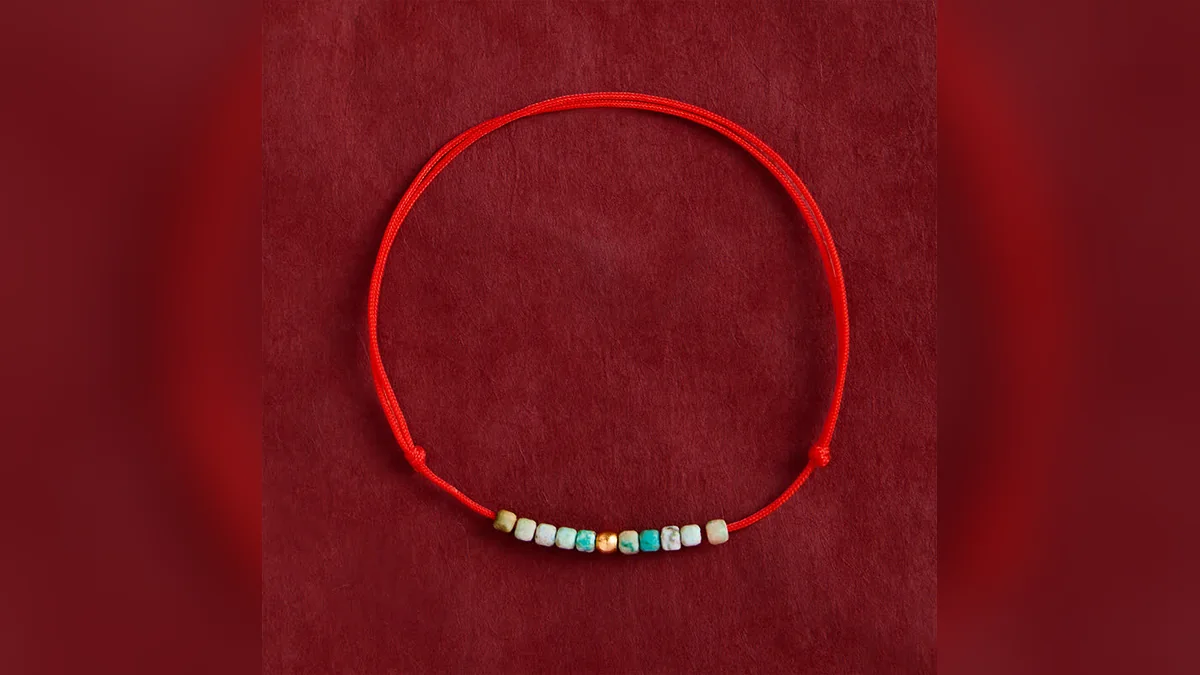
Our Hand-Woven Ultra-fine Turquoise Beads rope bracelet lists string, synthetic turquoise, and copper alloy. The cord adjusts to a listed wrist circumference of 15–17 cm. Compare that range with your wrist measurement before choosing a size.
The Turquoise Inspired 108 Beads Multi Wrap mala lists synthetic turquoise and elastic string. Its bead options are 6, 8, or 10 mm. The page gives an approximate wrist circumference of 16–18 cm and says it typically wraps two to four times, depending on bead size and wrist circumference.
Our Turquoise Tibetan Round 108 Bead mala lists synthetic turquoise, copper alloy, and elastic string. Its bead options are 6 or 8 mm. The listed wrist circumference is approximately 16–18 cm, with two to four wraps depending on bead size and wrist circumference. That wrap range is a guide, not a fixed count for every wrist.
The Copper Turquoise Black Onyx Spiral open cuff lists copper alloy with a turquoise or black onyx option. Its inner diameter is about 59 mm, its width about 5 mm, and its weight about 30 g. The page advises measuring the widest part of the palm to choose a bangle size. Unlike the three bead listings, it does not specify “Turquoise (Synthetic)”; we should not infer an untreated or synthetic classification from that omission.
Care for turquoise and its imitations
Turquoise is porous and relatively soft, and many of its imitations are porous or soft too. Keep these pieces away from oils, lotions, perfume, and soaking. Apply personal care products before putting jewelry on, and allow them to dry first.
Wipe jewelry dry with a soft cloth after wear. Avoid abrasive scrubbing and household cleaning chemicals. Do not use soaking as a shortcut for cleaning around beads, cords, or settings.
Store pieces away from sunlight in a dry place, with enough separation to prevent rubbing against harder jewelry. An unknown imitation deserves gentle care as well; its blue color does not reveal how it will respond to moisture or cleaning products.
Clear labels leave room for both appreciation and informed choices. Turquoise traditions can be understood respectfully, while a piece's actual material is described plainly. Color, construction, fit, and personal significance can each matter without being confused with one another.
Shop the story
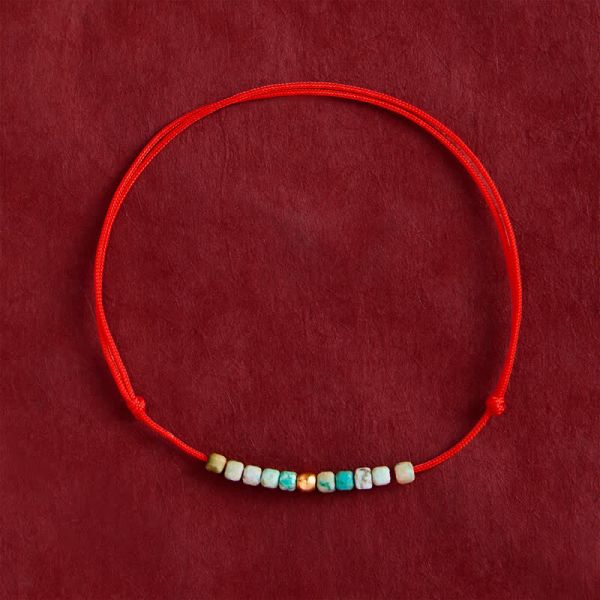 Buddha Stones Hand-Woven Ultra-fine Turquoise Beads Luck Rope BraceletSpecial Price $25.59 Regular Price $35.05
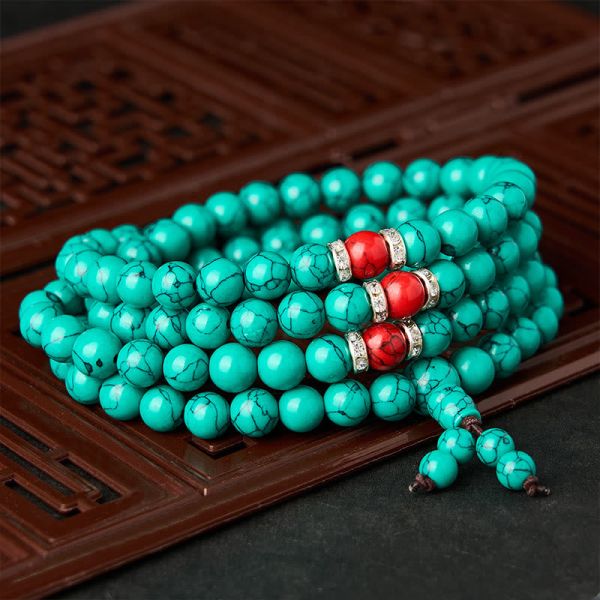 Buddha Stones Turquoise Inspired 108 Beads Multi Wrap Protection MalaAs low as $25.59 Regular Price $34.58
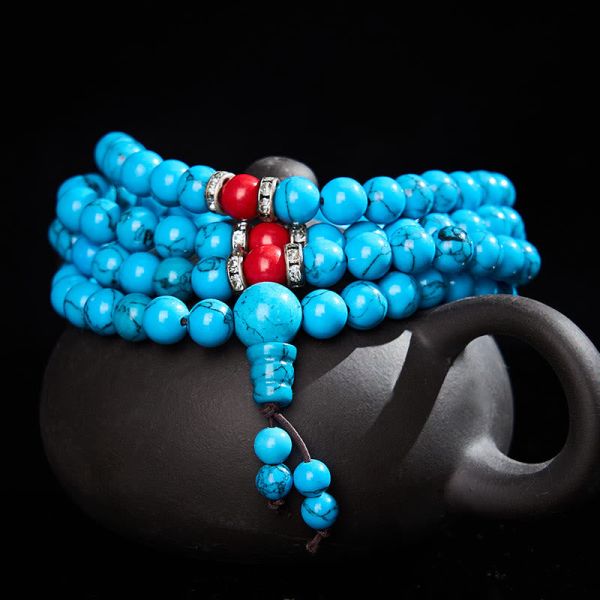 Buddha Stones Turquoise Tibetan Round 108 Bead Protection MalaAs low as $25.59 Regular Price $35.05
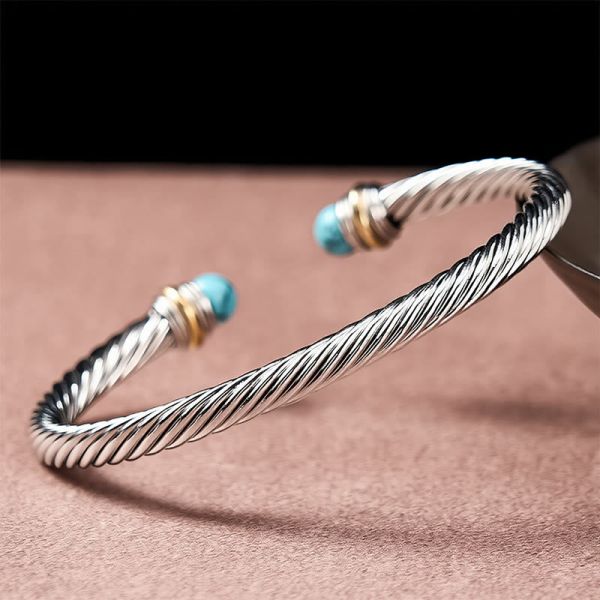 Buddha Stones Copper Turquoise Black Onyx Spiral Growth Open Cuff BraceletAs low as $25.59 Regular Price $35.05