
Turquoise Buying Guide: Care, Wear, and Storage
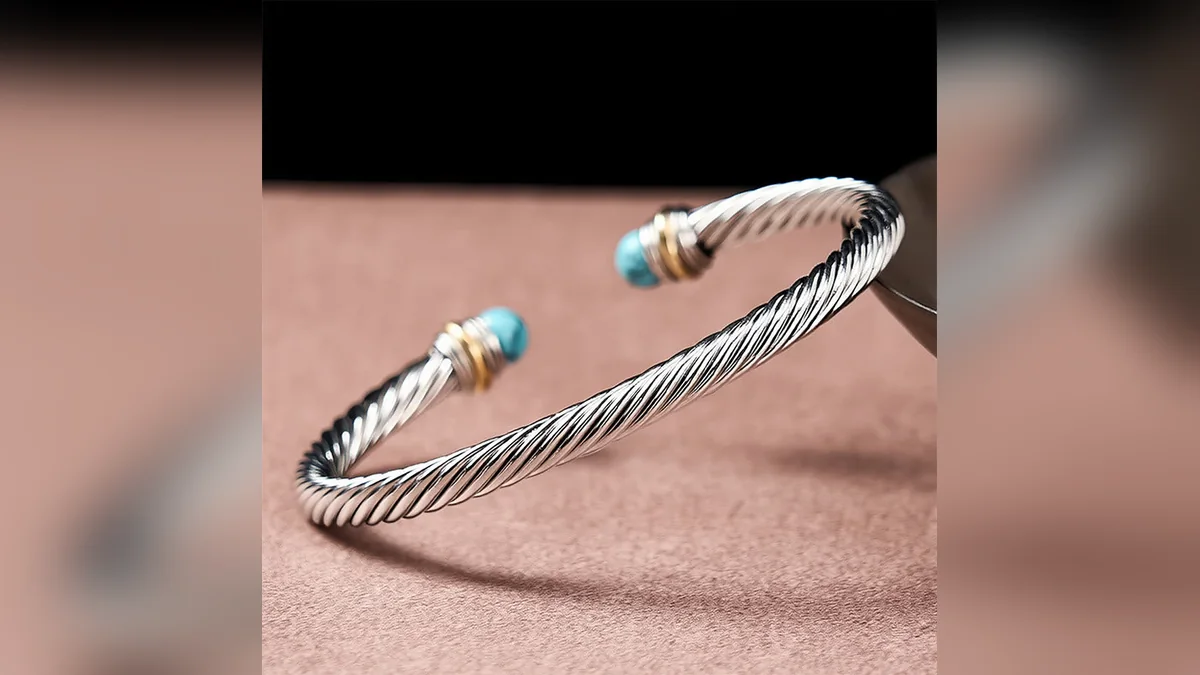
Dust can collect between bracelet beads even when the surface looks clean. This turquoise buying guide explains how to choose jewelry you can maintain, read material and fit details, clean it gently, and recognize wear that calls for repair. At Buddha Stones, we recommend starting with the material description and bracelet construction. A cord, an elastic strand, and an open cuff need different handling, even when their names contain the same stone.
Tools and materials to keep beside your jewelry
Prepare a clean, well-lit surface before removing or cleaning a bracelet. A folded towel keeps beads from rolling if a strand breaks and gives the piece a place to rest during inspection. Work away from an open sink, where small parts can disappear.
- A clean, lint-free cloth for removing loose dust and surface marks.
- A second dry cloth for blotting any moisture.
- Clean water for lightly dampening a cloth when the care instructions permit it.
- A pouch or divided jewelry box that prevents pieces from rubbing together.
- A note of the product's material description, size, and any supplied care directions.
Keep abrasive polishing cloths and metal cleaners out of this basic kit. They serve different purposes and may be unsuitable for a bracelet that combines beads, cord, and metal. If treatment information is unavailable, begin with dry wiping and seek material-specific advice before trying a wet cleaning method.
A turquoise buying guide: step-by-step care
- Read the material description before choosing. Look for explicit terms such as synthetic turquoise, along with the other components. A product name or photograph alone does not establish composition or treatment. Save the wording with your purchase details so future cleaning decisions do not depend on memory.
- Check fit and construction. Compare your wrist measurement with the specified wrist circumference for a cord or elastic bracelet. For a cuff, review its dimensions and sizing directions separately. Inner diameter and wrist circumference describe different measurements. Do not stretch a bracelet or repeatedly bend a cuff to compensate for an uncertain fit.
- Inspect before putting it on. Look at cord exits, knots, bead holes, and metal connections. Check for fraying, gaps, cracks, or a component that moves differently from the surrounding parts. Open an adjustable cord using its adjustment mechanism; avoid tugging on beads or decorative elements. Roll an elastic bracelet over your hand gently instead of pulling it wide.
- Plan around the day's tasks. Put jewelry on after applying lotions, perfume, or other personal products, once the application area is dry. Remove it before washing dishes, swimming, bathing, household cleaning, or work that could knock it against a hard surface. Keep a dedicated resting place nearby so removal becomes easy.
- Wipe after wear. Support the bracelet on the towel and pass the dry cloth gently over accessible surfaces. Do not pull a strand taut while wiping between beads. If its care directions allow damp wiping, use a barely damp cloth locally and blot afterward. Avoid saturating cord, knots, or gaps around components.
- Dry and put away. Allow any remaining moisture to dry at room temperature before closing the storage container. Lay a strand without tension and give a cuff enough room to keep its shape. Choose a dry place away from direct sunlight and household heat sources.
The useful habit is a brief inspection whenever you take the bracelet off. Compare a questionable area with an earlier photo if available. A photo can document a change, but it cannot identify a material or establish whether a repair is sound.
Cleaning shortcuts to leave out
Do not soak mixed-material jewelry or leave it under running water. Liquid can reach places that are difficult to dry, including knots and spaces between components. Synthetic turquoise in a material description does not establish that the complete bracelet can tolerate immersion.
Avoid ultrasonic machines, steam cleaners, hot water, toothpaste, baking soda pastes, vinegar, bleach, and household detergents as default cleaning methods. Do not scrub with a stiff brush or scrape a mark with a pin. A stubborn spot is a reason to stop and identify a suitable method.
Do not apply oil, wax, nail polish, or glue to change a bead's appearance or secure a loose part. These additions can complicate later repair. Also avoid leaving jewelry loose in a pocket with keys or coins, where surfaces can rub and cords can catch.
When to repair, replace, or retire a bracelet
Stop wearing a strand if its cord is visibly frayed, its elastic no longer holds its shape, or a knot begins slipping. Keep it in a closed container until a jewelry repair professional can assess it. Replacing the string may preserve usable components; an entire bracelet does not automatically need replacing because its threading has worn.
Set aside a piece with a cracked bead, a loose attachment, or a bent section that catches on clothing. Do not test its strength by pulling or flexing it. If a bead breaks, collect the parts on the towel and keep them together for assessment.
A change in appearance alone does not establish structural failure. Compare it with the original description and photos, then check for actual damage. Retire a bracelet from regular wear when a sound repair is unavailable or it no longer fits. It can remain a keepsake in a suitable storage box.
Four bracelet formats in our product details
Use these specifications to compare fit and handling. Luck and Protection in product names or option labels express traditional wishes. They do not guarantee good fortune or personal safety.
An open cuff
Our Copper Turquoise Black Onyx Spiral Growth Open Cuff Bracelet has Black Onyx and Turquoise options. Its material specification includes copper alloy, turquoise, and black onyx. The inner diameter is Approx. 2.3 in / 59 mm, the bangle width is Approx. 0.2 in / 5 mm, and the weight is Approx. 30 g.
An adjustable cord
The Hand-Woven Ultra-fine Turquoise Beads Rope Bracelet uses an adjustable cord and specifies a wrist circumference of 5.9–6.7 in / 15–17 cm. Its materials are string, synthetic turquoise, and copper alloy. Include the cord and its adjustment points in your visual inspection.
An elastic strand
The Black Onyx White Turquoise Yin Yang Black Obsidian Round Bead Balance Bracelet uses premium elastic string. Options are Black Onyx, Black Onyx And White Turquoise, and White Turquoise. The specifications give 5.9–6.3 in (15–16 cm) for wrist circumference and bead sizes of 8mm, 10mm.
A cord bracelet with jade
The Hand-Woven Turquoise Turtle Fu Character Jade Beads Rope Bracelet has an adjustable cord for a wrist circumference of 5.9–8.3 in / 15–21 cm. Its materials include string, Hetian jade, synthetic turquoise, copper alloy, and a copper plated gold bead. Dark Red and Red options are available.
Keep care tied to the actual construction
Keep the material description with your jewelry, remove it before wet or abrasive tasks, and inspect it as you put it away. When wear appears, pause and assess the affected part before wearing it again. These small, repeatable steps give you a clear basis for deciding what needs wiping, repair, or retirement.
Shop the story
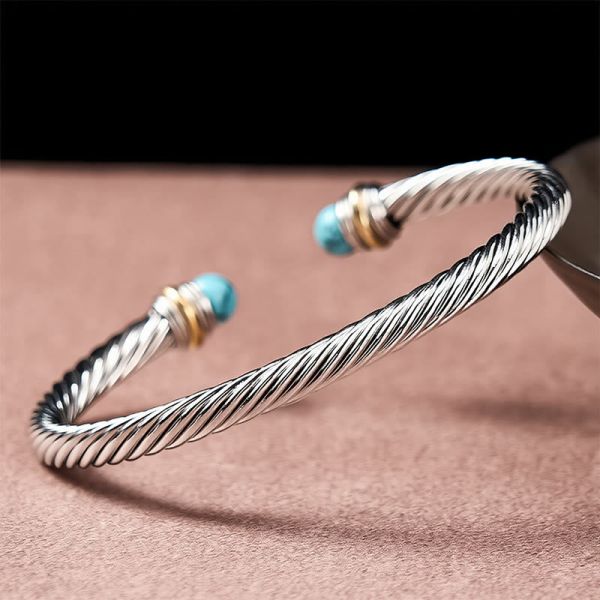 Buddha Stones Copper Turquoise Black Onyx Spiral Growth Open Cuff BraceletAs low as $25.59 Regular Price $35.05
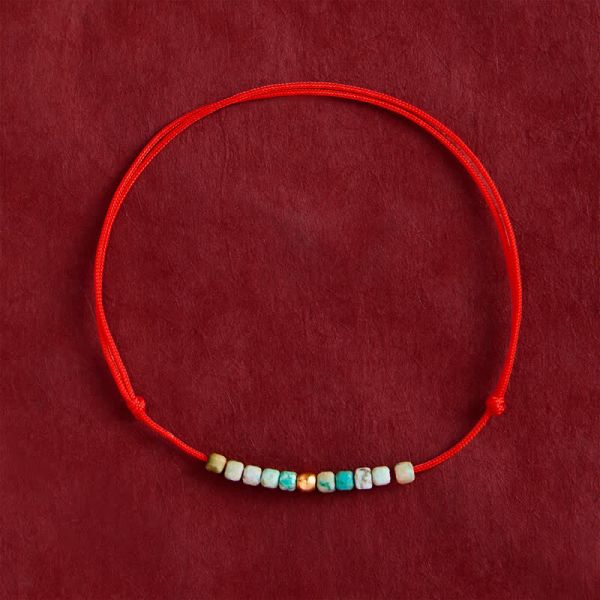 Buddha Stones Hand-Woven Ultra-fine Turquoise Beads Luck Rope BraceletSpecial Price $25.59 Regular Price $35.05
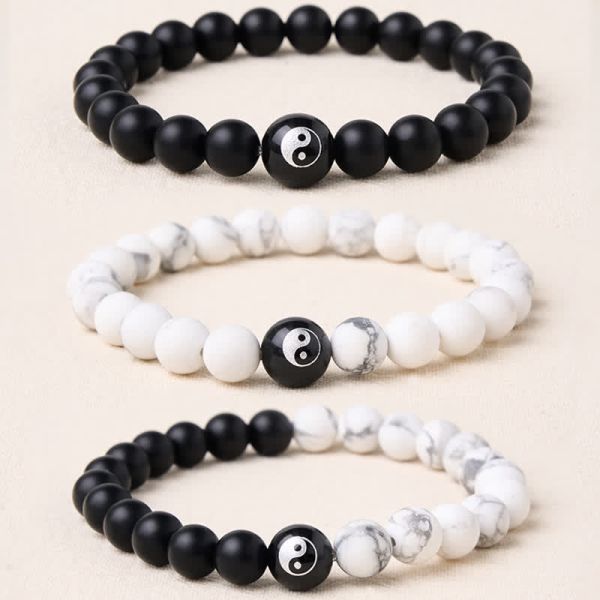 Buddha Stones Black Onyx White Turquoise Yin Yang Black Obsidian Round Bead Balance BraceletAs low as $25.59 Regular Price $35.05
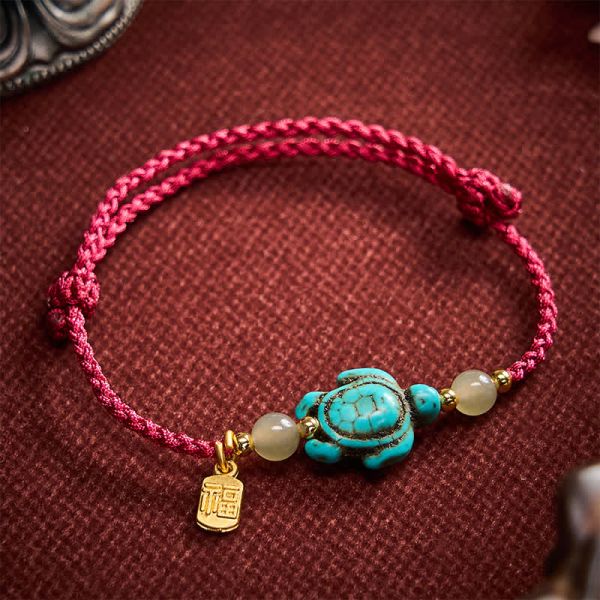 Buddha Stones Hand-Woven Turquoise Turtle Fu Character Jade Beads Luck Rope BraceletAs low as $25.59 Regular Price $34.58