
Tiger Symbolism: From Festival Shoes to Jewelry
Children wore tiger-headed shoes with bright eyes and small ears sewn into the toes. In Chinese folk dress, a formidable animal became a familiar companion to a child's first steps. The shoes carried a family's protective wishes. Traditionally, tiger symbolism centers on courage, strength, authority, and protection. Associations with luck or wealth belong to cultural belief; a tiger image or an object bearing its name cannot guarantee these outcomes.
That change of scale is part of the tiger's appeal. An animal associated with wild places could appear in the intimate setting of clothing made for a child. Its fierce expression did not disappear. It became the feature through which a family expressed care. Following that thread gives the tiger a more particular place in everyday objects than a broad label such as “lucky animal” can offer.
How tiger symbolism entered festival craft
At Lunar New Year, the tiger takes its place among the twelve animals of the Chinese zodiac. During a Tiger year, its image appears prominently in seasonal decorations. Yet tiger motifs also have a life beyond the zodiac calendar, especially in children's clothing and folk textiles. A tiger hat or pair of tiger-headed shoes belongs to that wider tradition of making an animal emblem part of ordinary family life.
In these crafts, recognition matters more than a lifelike portrait. Large eyes, small ears, a broad mouth, and stripes can suggest a tiger through a handful of shapes. Sewing and embroidery allow those features to become part of the garment itself. The face sits where it can be seen, turning a useful item into a bearer of meaning.
Such objects also show why a single explanation cannot cover every tiger image. Regional customs and family practices differ. One household might emphasize bravery, another the wish for a child's safety. Festival gifts can gather several wishes together without giving every stitch a separate definition. The meaning belongs partly to the occasion and to the relationship between giver and recipient.
It is helpful to keep that human setting in view. A protective emblem records what people hoped for; it does not establish that the object could deliver it. The distinction leaves room to appreciate the care expressed through a gift, the skill involved in a traditional textile, and the animal's recognizable form.
From a stitched face to a jewelry choice
Modern accessories carry the tiger in different ways. A printed animal motif makes the reference direct. A bracelet containing tiger eye makes a connection through a material name. Those are different design choices, and neither requires the wearer to adopt a fixed set of beliefs.
A tiger image can stand for courage or resolve as a personal emblem. It can also be chosen simply for its pattern. Tiger eye beads do not need to represent a literal animal, and a bracelet containing them should not automatically be read as a traditional tiger talisman. The animal, the stone's name, and the meanings attached to a particular design are related ideas rather than interchangeable ones.
At Buddha Stones, we describe these associations as symbolism and tradition. Names such as Courage or Happiness express themes, not effects a bracelet will produce. That approach also makes a gift easier to explain plainly: the giver can describe the quality the design represents without making promises for the recipient.
For everyday selection, the practical details remain useful. Compare the bead size and wrist measurements supplied for a bracelet. For a bag, check its dimensions, closure, and strap. Meaning can guide a preference, while those details help you judge the item itself.
Tiger prints and bead combinations at Buddha Stones
Our selection below approaches the theme through a printed bag option and three bracelet designs containing tiger eye. Their product details offer concrete points of comparison alongside the cultural associations.
A Tiger Flowers bag option
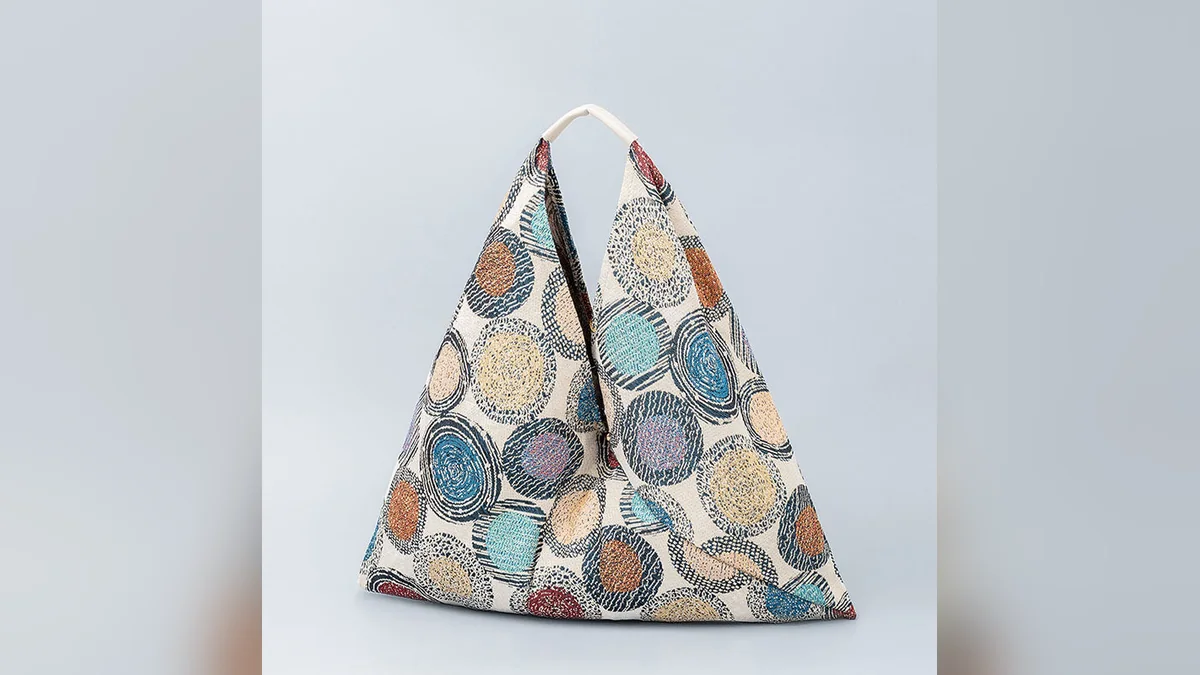
The Buddha Stones Geometry Tiger Flowers Shoulder Bag includes a Tiger Flowers option. Other choices include Beige Geometry, Beige Stripes, Blue Stripes, Colorful Circles, Leopard Print, and White Black Triangles. Its size is 58*5*58cm. Cotton Fabric, Polyester, Leather, and Metal are the specified materials. The bag has one main pocket, a buckle closure, and a non-adjustable strap; its weight is about 200g. The Tiger Flowers name identifies one option within this selection, so the pattern choice deserves attention.
A double wrap with Pi Xiu
The Buddha Stones Tiger Eye and Silver Sheen Obsidian Pi Xiu Double Wrap Bracelet combines Tiger Eye, Silver Sheen Obsidian, and Copper Alloy. It uses Premium Elastic String and 6mm beads, with wrist circumference given as 5.9–6.3 in (15–16 cm). Some options are named for blue or yellow tiger eye and gold or silvery Pi Xiu. The auspicious wording in the full product name expresses a traditional wish.
Tiger eye with blue tiger's eye and obsidian
The Buddha Stones Tiger Eye, Blue Tiger's Eye, and Black Obsidian Courage Bracelet contains those three materials together with Copper. Its beads measure 8mm, and its band is Premium Elastic String. The supplied wrist circumference is 6.3–6.7 in (16–17 cm). Courage serves as the design's symbolic theme. Natural materials may vary slightly in color, details, and overall appearance, so an individual bracelet may differ in those respects.
Tiger eye with citrine and green strawberry quartz
The Buddha Stones Citrine, Tiger Eye, and Green Strawberry Quartz Happiness Bracelet combines Citrine, Tiger Eye, Green Strawberry Quartz, and Copper. It has 8mm beads on Premium Elastic String and a wrist circumference of 5.9–6.3 in (15–16 cm). Happiness is a theme in the name, not a promised feeling. Its natural materials can show slight differences in color, details, and overall appearance.
FAQ: The tiger as an everyday emblem
Does a tiger always represent the same thing?
No. Courage, strength, and protective wishes are common associations in Chinese tradition, but the occasion matters. Children's festival clothing, zodiac decorations, and modern accessories give the animal different settings.
Is tiger eye the same as a tiger motif?
No. Tiger eye is a material name; a tiger motif depicts or suggests the animal. A bracelet can contain tiger eye without showing a tiger at all.
Can a tiger-themed gift promise good fortune?
No. It can express a wish for the recipient or mark an interest in the animal's traditional meaning. As with the tiger faces sewn onto children's shoes, the wish belongs to the gesture.
Shop the story
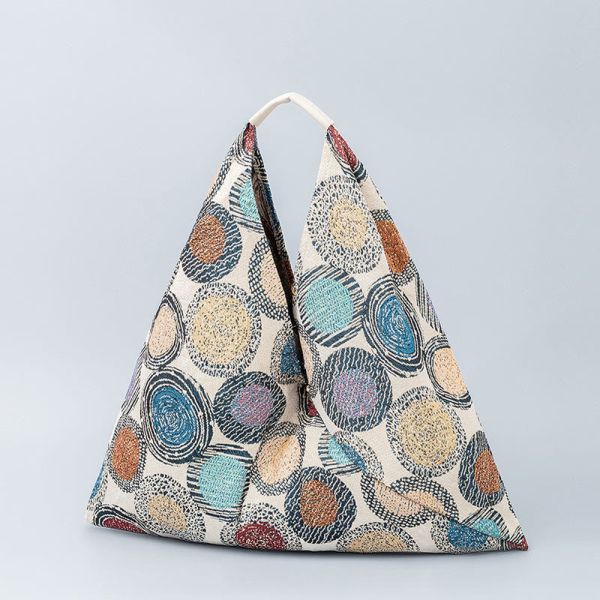 Buddha Stones Geometry Tiger Flowers Leopard Stripes Print Underarm Triangle Shoulder BagAs low as $35.59 Regular Price $50.13
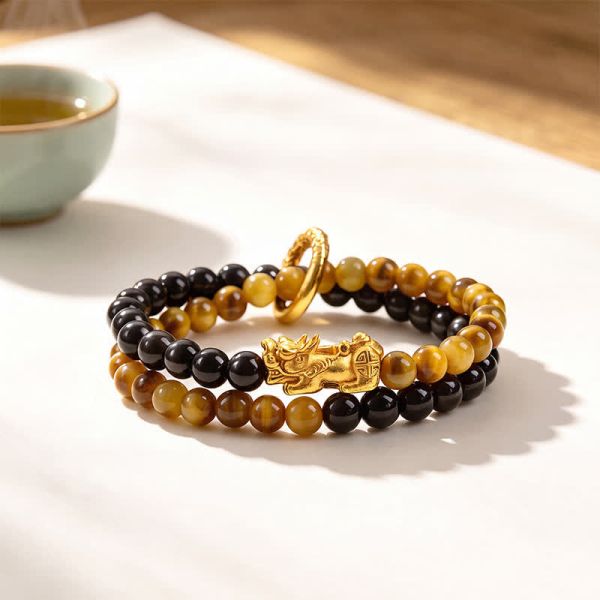 Buddha Stones Tiger Eye Silver Sheen Obsidian Pi Xiu Double Wrap Auspicioisness BraceletAs low as $28.59 Regular Price $38.12
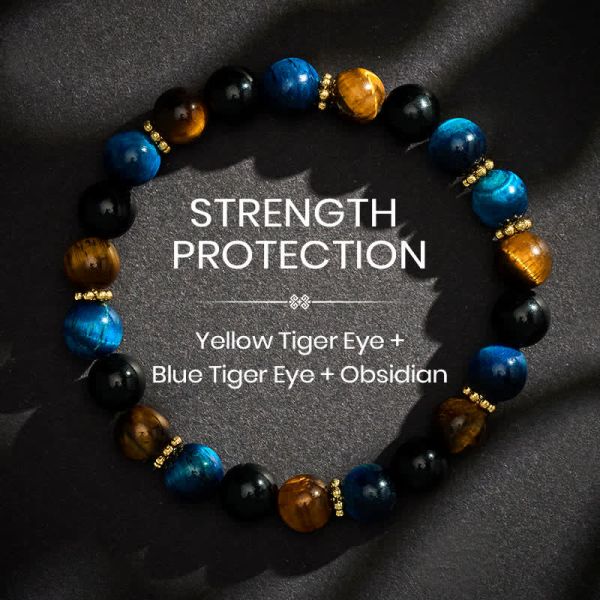 Buddha Stones Tiger Eye Blue Tiger's Eye Black Obsidian Beads Courage BraceletSpecial Price $25.59 Regular Price $34.12
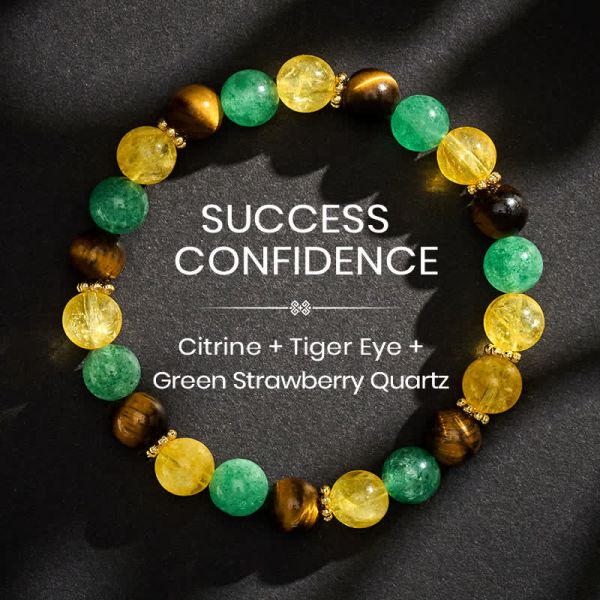 Buddha Stones Citrine Tiger Eye Green Strawberry Quartz Beads Happiness BraceletSpecial Price $25.59 Regular Price $34.12