
Tiger Eye Care: A Practical Bracelet Cleaning Manual

Dust can collect between bracelet beads and around the string openings. Tiger eye care means removing that buildup gently, keeping the string and other materials in mind, and checking for damage before wearing the bracelet again. This manual explains what to prepare, how to wipe and dry a piece, which cleaning methods to avoid, and when to stop wearing it. For mixed-material jewelry, we recommend choosing a routine that suits the complete bracelet, including its elastic and any metal components.
Tools and materials for a gentle cleanup
Set up a clear workspace before taking off the bracelet. A folded towel helps prevent beads from striking a hard counter and keeps a loose component from rolling away.
- Two clean, lint-free cloths: use one for wiping and keep the other dry.
- A little lukewarm water: dampen the cloth lightly; you do not need to immerse the jewelry.
- A folded towel: choose a clean surface without grit or cleaning-product residue.
- A small dish: keep any detached parts together if you discover damage.
Start with water and a cloth. Leave abrasive pads, metal polishing compounds, and household cleaners out of the routine. If a bracelet has an unknown coating, added decoration, or previous repair, have a jeweler assess it before attempting anything beyond gentle surface wiping.
A step-by-step tiger eye care routine
- Inspect the bracelet while it rests on the towel. Look for chipped edges, a widening crack, loose metal parts, and string that appears fuzzy or stretched. Check the areas beside bead holes without pulling the beads apart. If something looks unstable, set the bracelet aside for repair before cleaning it.
- Remove loose dust with the dry cloth. Support a short section of beads in your hand or against the towel. Wipe lightly, moving to a clean part of the cloth as it picks up dust. Do not drag visible grit across the polished surface.
- Dampen a clean corner of the wiping cloth. Wring it out until it feels barely damp and releases no drops when squeezed. Pass it over the bead surfaces using light pressure. Work in small sections so you can control where the moisture goes.
- Handle mixed materials cautiously. Wipe around metal components without forcing cloth beneath them or catching their edges. Keep moisture away from the string openings as much as possible. Do not pull the bracelet taut to reach between beads.
- Remove remaining moisture. Use the second cloth to blot and wipe the surfaces gently. Inspect the spaces around beads and decorative components for droplets. Leave the bracelet resting flat on the towel until dry before putting it away.
- Check it once more before wearing. Make sure no component has shifted and the string still holds the beads together normally. If residue remains after a gentle wipe, stop and seek material-specific cleaning advice instead of increasing pressure.
Use visible dirt and exposure to guide cleaning frequency. A brief dry wipe may be enough after ordinary wear; a damp wipe is useful when surface residue remains. Repeated washing simply to follow a calendar adds handling without necessarily improving the result.
For daily use, put jewelry on after lotions, perfume, and other applied products have dried. Remove it before washing dishes, bathing, swimming, or working with household cleaners. When taking off an elastic bracelet, ease it over your hand gradually instead of stretching one section sharply.
What not to do during cleaning or storage
Do not soak a strung bracelet. Cleaning a loose stone and cleaning an assembled piece are different tasks. Water can reach string openings and spaces beneath metal components, where drying is harder to judge. Keep the routine focused on accessible surfaces.
Avoid steam cleaners, ultrasonic machines, hot water, and sudden temperature changes unless a qualified jeweler has confirmed a method for the complete piece. Toothpaste, scouring powders, and rough brushes also have no place in this routine. Do not use vinegar, bleach, alcohol, or general-purpose disinfectants as jewelry cleaners.
Do not leave the bracelet on a radiator, use a hair dryer, or place it in direct sun to speed drying. Let it dry at room temperature. Never sand, drill, or attempt to polish a damaged bead at home.
For storage, give the bracelet its own compartment or pouch so neighboring jewelry cannot rub against it. Lay it down without stretching the string around a display stand. Keep it away from damp windowsills, bathroom splashes, and places where it could fall onto tile.
When to replace the string or retire a piece
Stop wearing a bracelet if the elastic stays elongated, develops visible fraying, or allows unexplained gaps between beads. A knot that has moved or become exposed also deserves attention. Do not keep stretching the band to test whether it will break.
A jeweler can assess whether restringing is suitable. Keep detached beads and components together, and describe any cleaning products or accidental impacts involved. Replacement string should be selected for the bead holes and construction; do not assume any household cord will work.
Retire a damaged component from wear if it has a sharp chip, an unstable crack, or a broken fitting. A sentimental piece can remain stored while you decide about repair. Slight differences in color or appearance are not, by themselves, reasons to discard jewelry; distinguish those differences from a new break or loose part.
Our tiger eye bracelets and their care considerations
These product details help identify the materials and fit of the bracelet you are handling. Wealth and Protection in product names express traditional wishes. No result is promised.
Tiger eye and jade round beads
The Buddha Stones Tiger Eye Jade Strength Round Beaded Bracelet combines Tiger Eye and Jade with 8mm beads and Premium Elastic String. Its wrist circumference is 5.9–6.3 in (15–16 cm). Support the beads while wiping so the cleaning motion does not repeatedly stretch the string.
Pi Xiu with golden rutilated quartz
The Buddha Stones Tiger Eye Pi Xiu Golden Rutilated Quartz Bracelet contains Tiger Eye, Golden Rutilated Quartz, and Copper Alloy, with Premium Elastic String. The specifications give bead sizes of 6mm and 8mm and an overall wrist circumference of 5.5–6.3 in (14–16 cm). Check the selected option for its corresponding fit. Keep metal polishing products off the assembled bracelet.
Tiger eye with turtle accessories
The Buddha Stones Natural Tiger Eye Turtle Accessories Courage Beads Bracelet uses Tiger Eye, Copper Alloy, and premium elastic string. The specifications give bead sizes of 6mm, 8mm, and 10mm, with wrist circumference of 5.5-6.7 in (14-17 cm). Wipe around the accessories gently, taking care that the cloth does not snag.
Black obsidian, tiger eye, and hematite
The Buddha Stones Black Obsidian Tiger Eye Hematite Faceted Bracelet combines Hematite, Black Obsidian, and Tiger Eye. It has Premium Elastic String, 8mm beads, and wrist circumference of 5.9-6.3 in / 15-16cm. Clean the assembled bracelet gently without choosing a treatment solely for one of its materials.
These product specifications allow slight variations in color, details, and overall appearance associated with natural materials or stone. Such differences do not automatically indicate wear or damage.
Keep the next cleaning simple
Return the bracelet to storage only when it is dry, and pause wear whenever the string or a component looks unstable. Gentle wiping, controlled handling, and prompt attention to damage give you a practical routine you can repeat without unnecessary equipment.
Shop the story
 Buddha Stones Tiger Eye Jade Strength Round Beaded BraceletSpecial Price $25.59 Regular Price $35.05
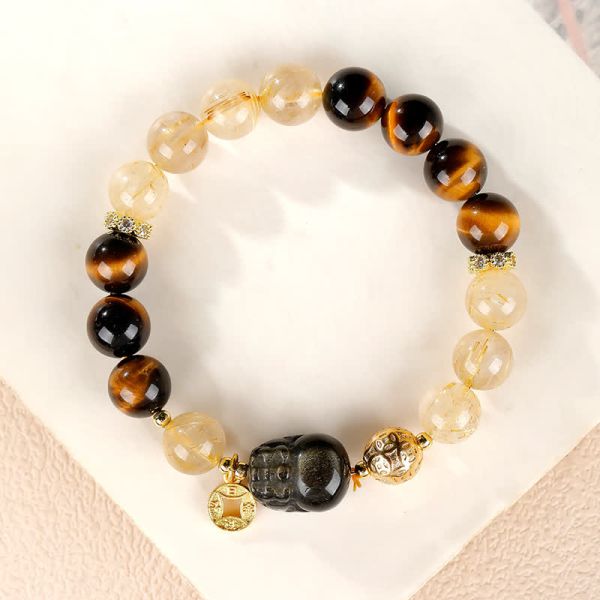 Buddha Stones Feng Shui Tiger Eye Pi Xiu Golden Rutilated Quartz Wealth Beaded BraceletAs low as $38.95 Regular Price $54.23
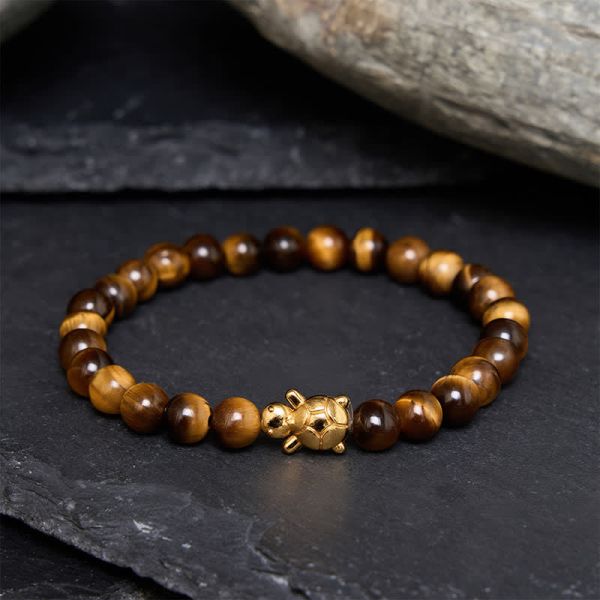 Buddha Stones Natural Tiger Eye Turtle Accessories Courage Beads BraceletAs low as $25.59 Regular Price $34.12
 Buddha Stones Black Obsidian Tiger Eye Hematite Faceted Protection BraceletSpecial Price $25.59 Regular Price $35.54