
Stud Earring Guide: Choose Size, Posts, and Backings
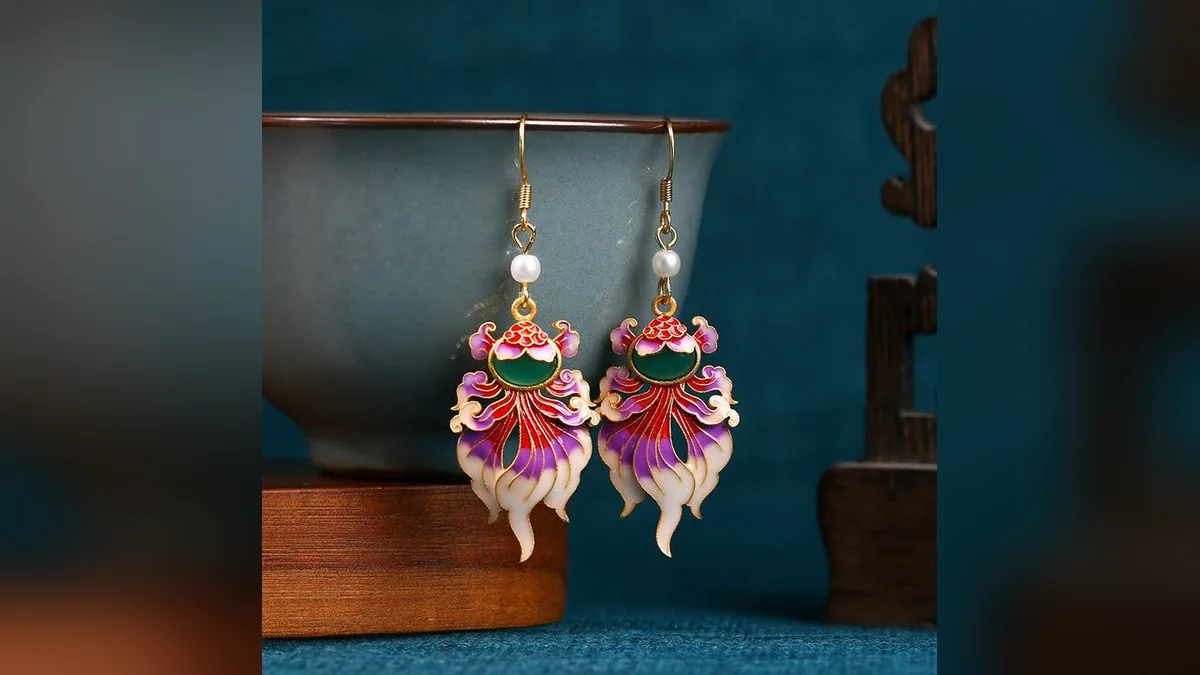
A stud earring sits close to the earlobe. This stud earring guide explains how to choose its size, read the material details, match a backing, and check how it sits before building an outfit around it. Start by separating the front decoration from the post and fastening: those parts answer different shopping questions. We also compare four earrings from our pages, keeping their stated specifications separate from general advice about studs.
1. Identify the shape in this stud earring guide
A stud usually has a decorative front attached directly to a post that passes through the piercing. Its main feature stays near the ear instead of hanging from a length of chain or a suspended ornament. A drop earring extends below its attachment point. A drop can also use a post, so the word “post” alone does not make an earring a stud.
Check the full outline in the product photos, then read the description. Ask where the decoration ends relative to the attachment point. If your goal is a small accent close to the lobe, focus on studs. If you want a design that hangs below it, compare drops using their stated length.
2. Check the front size and post details separately
Look for the dimensions of the decorative front before deciding how prominent a stud will appear. A round front needs a diameter; an elongated design needs both height and width. Product photos can make a small object fill the screen, so judge scale from measurements rather than the size of the image.
Mark the stated dimensions on paper with a ruler. Cut out that outline and hold it beside your ear in a mirror without inserting anything into the piercing. This gives you a rough visual reference. It does not show thickness, weight, or how a fastening will sit.
Read the material information for the front and the post separately. A silver-colored decoration does not establish the post material, and a stated silver post does not mean the entire earring is silver. If a detail you need is absent, leave it unresolved instead of filling the gap from the photograph.
3. Match the backing to its fastening system
Identify the closure before putting the earring on. Common stud fastenings include push backs, screw backs, and flat backs. A push back slides onto a compatible post. A screw back turns onto matching threads. Flat-back systems vary: some screw together, while others use a push-in connection.
Follow the instructions for that particular fastening. Do not assume a spare back will fit just because it looks similar. A screw back needs matching threads, and a push back needs a compatible post. Keep the original components together when you remove the earrings.
Before shopping, check whether the description specifies the backing and whether it is included. The material of a post does not tell you the closure type. Our featured product specifications below do not identify their backings, so we do not assign them a fastening system here.
4. Fasten the stud and inspect its position
Work over a clear surface with enough light to see the small components. Hold the decorative front while aligning the post with an existing piercing. Attach the matching back according to its mechanism, using gentle movements rather than forcing parts together.
For a push back, slide it into position without pressing it tightly against the lobe. For a threaded closure, align the parts before turning; stop if the threads resist. Follow the maker’s directions for a push-in flat back rather than treating it as a screw fastening.
Use a mirror to check the front, then inspect the fastening behind the ear. The decoration should face the direction you intend, and the closure should engage properly. If the parts do not connect as instructed, take the earring off and check their compatibility. Do not bend a post to make an unsuitable back fit.
5. Plan the spacing around the earring
Choose one visual priority: the stud itself, a necklace, or another accessory. A small stud can leave room for a patterned collar or a detailed necklace. A broader decorative front may need more open space around it for its outline to remain clear.
If you wear several earrings, compare their widths and positions before combining them. Leave enough separation for the fronts to sit without overlapping, unless overlap is an intentional part of the design. There is no required sequence of sizes; use the actual space available.
Check the outfit from the front and side. Hair, glasses, scarf edges, and raised collars can obscure a design or catch on projecting parts. For drop earrings, also compare the hanging length with your collar. Keep studs and their matching backs in separate compartments so small components remain easy to find.
Mistakes to avoid when choosing earrings
- Calling every post earring a stud. Look at the full construction; a post can support a hanging drop.
- Estimating dimensions from a close-up. Read the measurements and make a paper outline when scale is unclear.
- Assuming one material describes every component. Check the front, post, and backing information independently.
- Buying a backing by appearance alone. Match the fastening mechanism and the post specifications.
- Inventing missing details. An unspecified length, weight, or closure remains unknown, even if a photo suggests an answer.
- Reading a symbolic name as a result. Decorative names do not establish what wearing an earring will do.
Four earring options and their stated specifications
Use these specifications to compare materials and available measurements. In our product names, Wealth and Protection express traditional wishes. Neither word guarantees a result. We distinguish the material details from the names where their wording differs.
Retro copper koi fish drop earrings
Our Retro Copper Koi Fish Wealth Drop Earrings use Copper Alloy, 925 Sterling Silver Posts, and Enamel. The stated earring size is Approx. 58mm X 19mm. Length is measured from the top of the hook or post to the bottom of the pendant, so use that starting point when comparing the measurement with another drop design.
Red agate and blue spot jasper drop earrings
The Red Agate Unakite Blue Spot Jasper Confidence Drop Earrings have a stated length of Approx. 4 cm. The material specification names Red Agate, Blue Spot Jasper, and Copper Posts. Although Unakite appears in the product name, it is absent from that material specification. Natural materials may produce slight differences in color, details, and overall appearance.
Tiger eye, blue spot stone, and liuli earrings
Our Tiger Eye Blue Spot Jasper Liuli Beaded Protection Earrings measure Approx. 3.0 × 2.4 cm. Their material specification gives Tiger Eye, Blue Spot Stone, Liuli, and Copper Posts. Keep both dimensions in view when comparing their outline with a smaller stud. The natural-material note allows for slight variations in color, details, and overall appearance.
Synthetic turquoise long drop earrings
The Turquoise Beads Balance Long Drop Earrings specify Alloy and Synthetic Turquoise. No numerical length appears in the supplied specifications. Use the stated synthetic material description when comparing options, and do not estimate a measurement from the words “long drop.” The measurement guidance runs from the top of the hook or post to the pendant’s bottom.
Choose the earring shape first, then check scale, component materials, and fastening details. A clear distinction between a close-fitting stud and a hanging drop makes the rest of the decision easier. Keep missing specifications visible in your comparison, and let the confirmed details guide your choice.
Shop the story
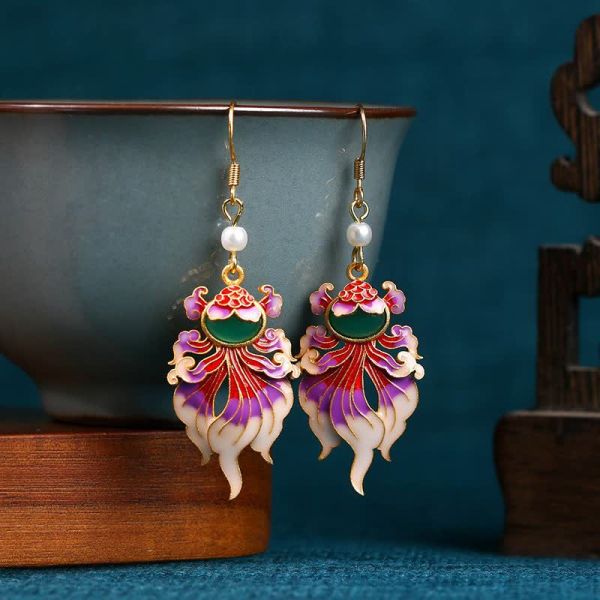 Buddha Stones Retro Copper Koi Fish Wealth Drop EarringsSpecial Price $27.59 Regular Price $38.86
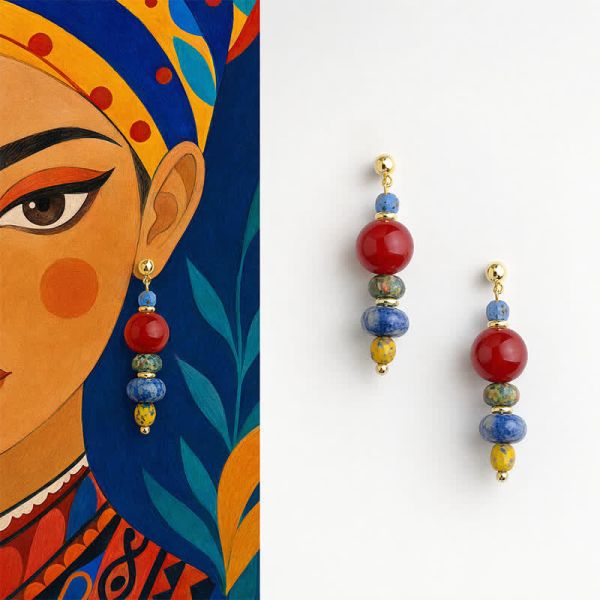 Buddha Stones Red Agate Unakite Blue Spot Jasper Confidence Drop EarringsSpecial Price $25.59 Regular Price $35.05
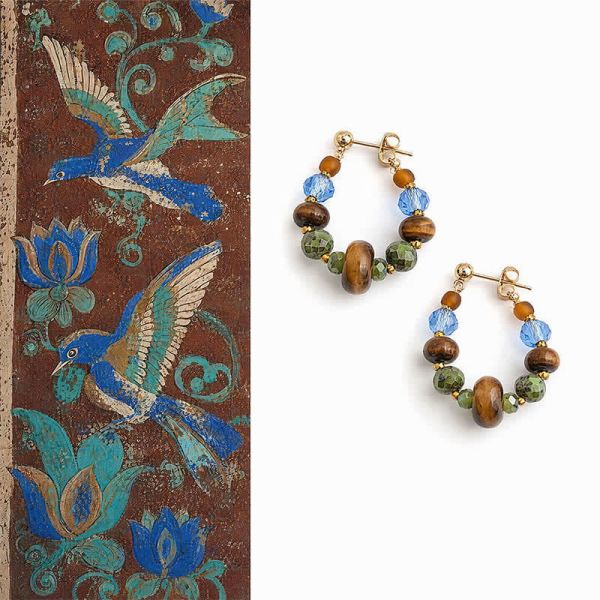 Buddha Stones Tiger Eye Blue Spot Jasper Liuli Beaded Protection EarringsSpecial Price $25.59 Regular Price $34.12
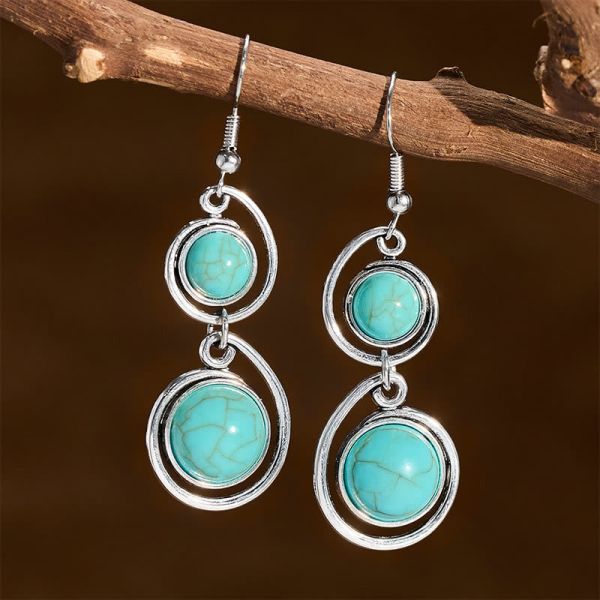 Buddha Stones Turquoise Beads Balance Long Drop EarringsSpecial Price $25.59 Regular Price $34.12