
Stretch Bracelet Care: 6 Steps for Beads and Elastic
A clean, dry cloth is the first tool for caring for a stretch bracelet. Stretch bracelet care means limiting unnecessary pulling, wiping away residue, keeping the cord dry, and checking for wear before wearing it. Our steps explain how to handle elastic bead bracelets, clean them gently, and recognize when a cord needs attention. An adjustable cord needs a different opening method, which we explain below.
1. Begin stretch bracelet care with a cord check
Place the bracelet on a clean surface and look at the cord visible between the beads. Watch for fraying, flattened sections, a loose knot, or gaps that remain when the bracelet is resting. Avoid stretching the bracelet to search for hidden damage; that adds pulling where you are trying to assess wear.
Check the bead edges and any attached charm for chips, rough spots, or a loose connection. If something catches on clothing or the cord looks damaged, set the bracelet aside for inspection or restringing. A strand that still forms a circle may need attention even before it breaks.
Read the band type before choosing how to put the bracelet on. An elastic strand stretches to pass over your hand. An adjustable cord opens through its adjustment mechanism. Pulling an adjustable bracelet as though it were elastic can strain its cord and knots.
2. Guide the beads over your hand gently
Bring your fingers together and ease the bracelet over them, guiding the beads around your hand. Support the strand with your other hand and spread the movement around the circle. Avoid hooking a finger under one section and pulling it into a long loop.
Use the same controlled motion when taking it off. Guide the bracelet over your knuckles instead of tugging on a charm or yanking a few beads toward your fingertips. Charms are decorative details, not handles.
If passing your hand through requires force, stop and reconsider the size. Elastic allows movement during dressing, but it should not be used to make an unsuitable size fit. Compare your wrist measurement with the product dimensions before choosing a bracelet. For an adjustable cord, loosen the opening using its adjustment rather than pulling against the closed loop.
3. Remove the bracelet before wet or messy tasks
Take the bracelet off before showering, bathing, swimming, washing dishes, or using household cleaners. Put it in a dry spot away from the sink edge. A small dish in a separate area makes it easier to keep jewelry away from splashes.
Apply lotion, sunscreen, perfume, and hair products before putting jewelry on, and let the application dry first. Avoid spraying products directly onto beads or cords. If residue reaches the bracelet, use the gentle wiping method in the next step instead of trying a stronger cleaner.
Remove the bracelet for tasks where it might snag, scrape against a surface, or be pulled suddenly. Take it off before bed as well. The aim is to limit avoidable contact and pulling, rather than waiting until a strand catches on something.
4. Wipe the surface without soaking the strand
Start with a dry, lint-free cloth. Support the bracelet in your palm or on a folded cloth, then wipe accessible bead surfaces gently. Turn the bracelet as you work so you do not need to pull the beads apart.
For a small mark that will not lift dry, lightly dampen a corner of the cloth with plain water. Use as little moisture as possible and keep it away from exposed cord, knots, and bead holes. Follow with a dry part of the cloth. If the materials have specific care instructions, follow those before adding any cleaning product.
Do not immerse the strand or scrub between beads with a sharp tool. Avoid ultrasonic machines, steam, abrasive powders, and improvised chemical cleaners when suitability has not been confirmed. For an unknown finish or a stubborn stain, seek material-specific advice instead of experimenting.
If the bracelet becomes wet accidentally, blot it gently and leave it flat to air-dry fully. Do not use a hair dryer, radiator, or direct sunlight to speed the process.
5. Give the bracelet its own storage space
Lay the dry bracelet flat in a lined compartment or pouch where other jewelry cannot press against it. Keep charms from getting trapped beneath heavy objects. Avoid hanging the bracelet from a hook, where its weight keeps pulling on the strand.
Choose a dry location away from direct sunlight and heat sources. A bathroom shelf or a sunny windowsill is a poor everyday storage spot. When packing for travel, use a compartment that keeps the bracelet from moving freely among keys, clasps, or loose accessories.
6. Arrange repairs before wearing a damaged strand
Stop wearing the bracelet if the cord frays, a knot opens, or the strand no longer returns to its usual shape. Keep any loose beads and detached parts together in a closed container so they are available for repair.
Ask a jewelry repairer to assess the cord and bead holes before restringing. Cord choice depends on the construction; the word “elastic” alone does not identify a suitable replacement. Avoid applying household glue to a knot or stretching the bracelet repeatedly to test how much longer it will last.
Mistakes that put beads and cords under strain
- Pulling one section hard: guide the full circle over your hand with support.
- Using a charm as a grip: hold the beads while dressing and undressing.
- Soaking the bracelet: begin with a dry cloth and use minimal moisture only where needed.
- Reaching for metal polish: a mixed-material bracelet needs care suited to its complete construction.
- Putting it away damp: allow it to dry fully before closing a pouch or box.
- Ignoring visible wear: pause use and arrange an assessment before the strand breaks.
Our bracelet options and their construction details
The following product details help you distinguish elastic strands from an adjustable cord. Use the band type and materials to guide handling, and check the size before ordering.
Lapis lazuli flat bead bracelet
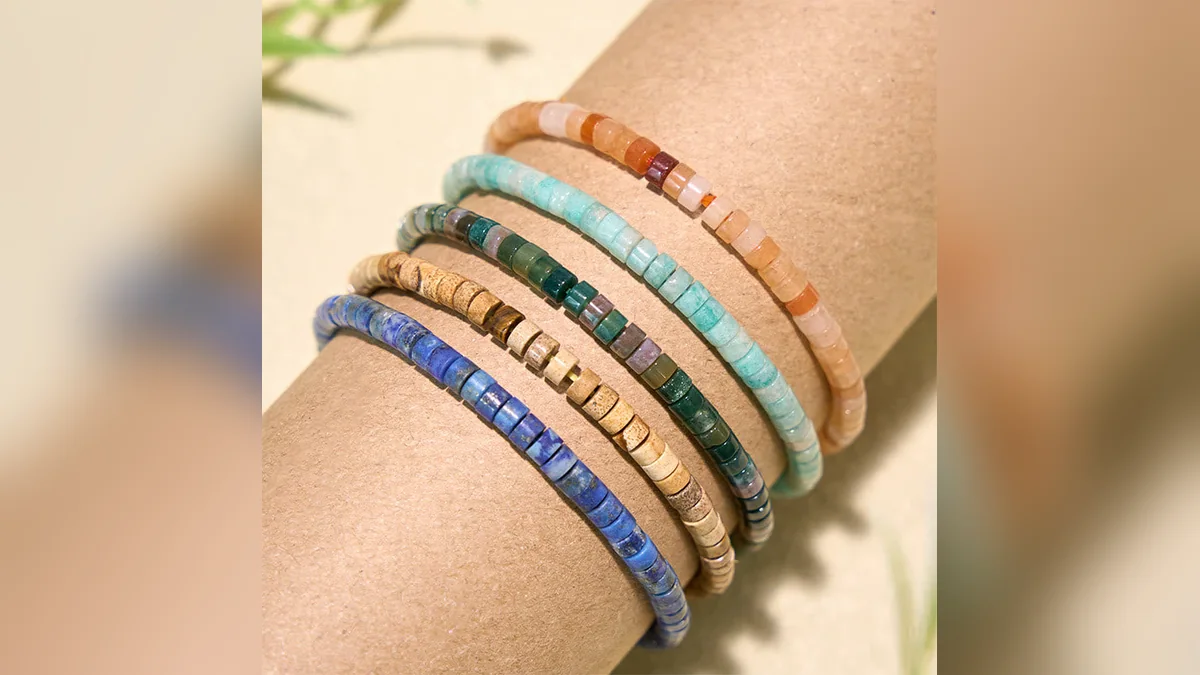
Our Lapis Lazuli Truth Straight Cut Flat Bead Bracelet uses Premium Elastic String. Options include Agate, Amazonite, Lapis Lazuli, Moss Agate, and Picture Jasper. Wrist circumference: 5.9–6.3 in (15–16 cm). Bead size: Approx. 4 × 2 mm. Natural gemstones may show differences in color, details, and appearance; tones can also vary through formation or processing.
Red agate adjustable bracelet or anklet
The Minimalist Red Agate Abacus Bead Bracelet Anklet has an Adjustable Cord and uses String and Red Agate. Wrist circumference: 5.5–7.1 in (14–18 cm). Anklet circumference: 6.7–9.8 in (17–25 cm). The package contains 1 × Bracelet or 1 × Anklet. “Protection” in its full name expresses a traditional wish; it does not guarantee protection.
Blue candy agate gourd charm bracelet
The Blue Candy Agate Liuli Glass Gourd Charm Bracelet combines Candy Agate, Liuli Glass, and Copper Alloy with Premium Elastic String. Wrist circumference: 5.9–6.3 in (15–16 cm). Bead size: Approx. 8mm. The package contains 1 × Bracelet.
Blue candy agate fish tail charm bracelet
The Blue Candy Agate Liuli Glass Bead Fish Tail Charm Bracelet uses Candy Agate, Liuli Glass Bead, and Copper Alloy on Premium Elastic String. Wrist circumference: 5.9-6.3 in / 15-16cm. Bead size: Approx. 8mm. The package contains 1 × Bracelet.
Make stretch bracelet care a brief routine: check the cord, guide the beads gently, wipe away residue, and put the bracelet away dry. When wear becomes visible, set it aside for repair. Consistent handling gives you a clear way to care for the strand without unnecessary pulling or cleaning.
Shop the story
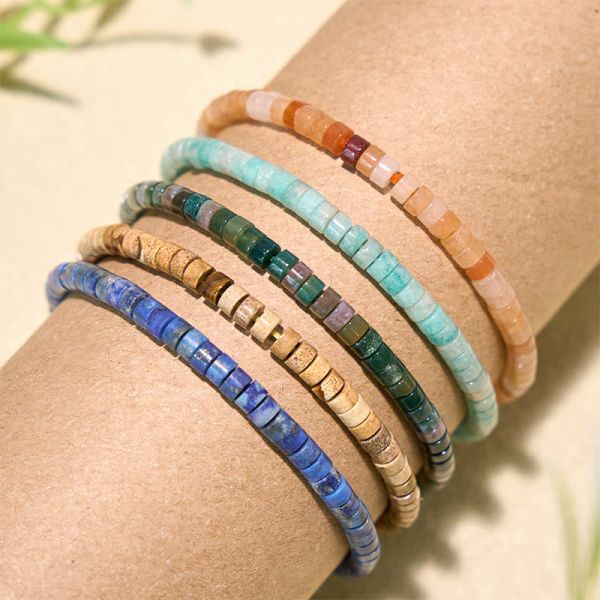 Buddha Stones Lapis Lazuli Truth Straight Cut Flat Bead BraceletAs low as $25.59 Regular Price $34.58
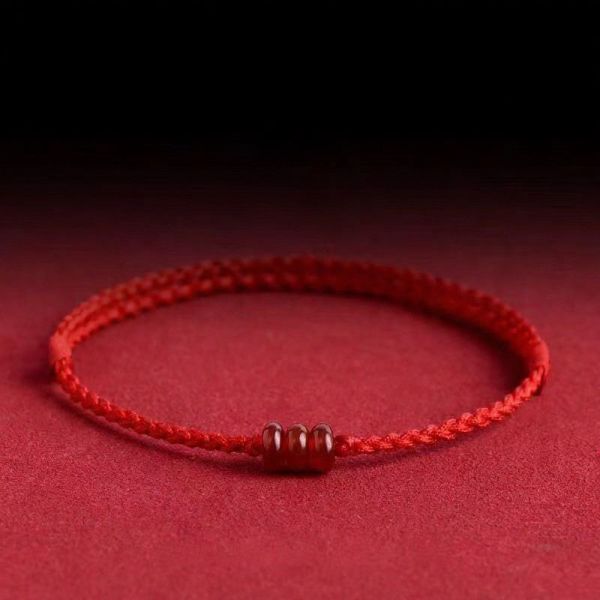 Buddha Stones Minimalist Red Agate Abacus Bead Protection Bracelet AnkletAs low as $25.59 Regular Price $35.05
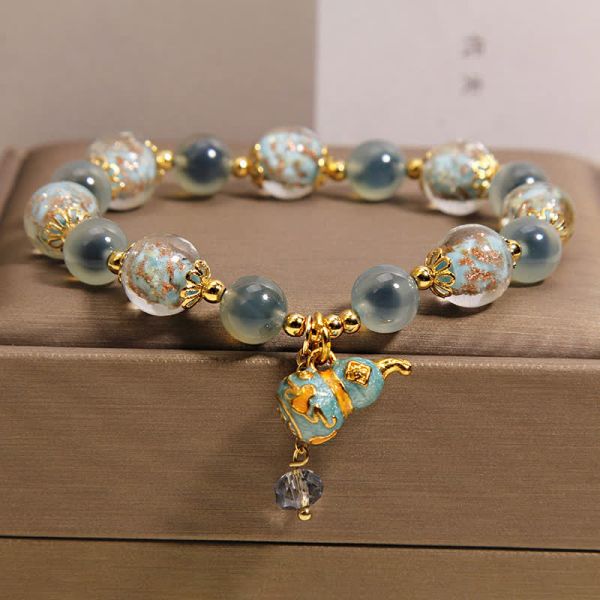 Buddha Stones Blue Candy Agate Liuli Glass Gourd Charm Joy BraceletSpecial Price $25.59 Regular Price $35.54
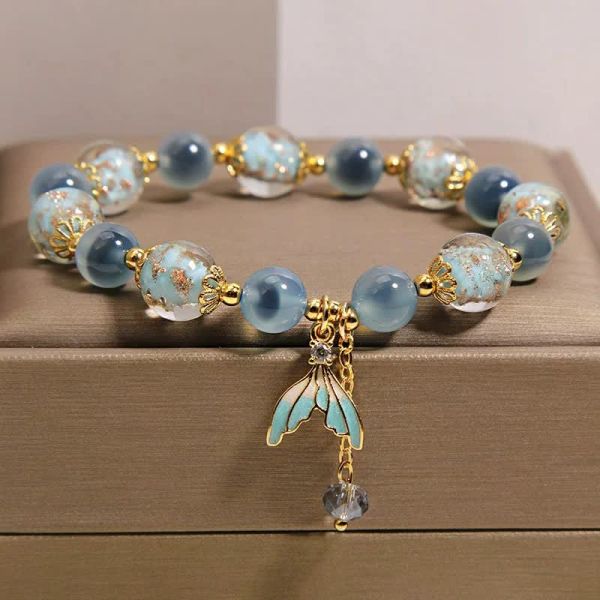 Buddha Stones Blue Candy Agate Liuli Glass Bead Fish Tail Charm Emotional Balance BraceletSpecial Price $25.59 Regular Price $35.05