Statement Necklace Guide: Wear, Care, and Storage
A pendant can collect dust where it rests against a shirt. This statement necklace guide explains how to position a noticeable necklace, inspect its supports, remove surface dust, and put it away after wear. A statement necklace serves as a visual focal point through its shape, color, or scale; it does not need a particular length. At Buddha Stones, we recommend starting with the materials and construction of the piece in front of you. Care suitable for a bare stone may be unsuitable for the wood, cord, or fittings attached to it.
Tools and materials for a careful check
Set up a clear, dry surface with good light before handling your necklace. A folded cloth provides a landing place so the pendant does not knock against a hard countertop. Keep drinks and cleaning sprays away from this area.
- A clean, lint-free cloth: Use it to lift loose surface dust with gentle strokes. Avoid a cloth already used with polish or household cleaner.
- A small tray: Keep the necklace contained while you inspect it, especially near an edge where a pendant could slide off.
- A mirror: Check where the pendant sits against your neckline before leaving it in place.
- A separate storage compartment or pouch: Give the pendant room without pressing its cord into a sharp bend.
You do not need a cleaning solution for a routine dust check. When a mark will not lift with a dry cloth, identify the materials and their care requirements before attempting anything stronger. Unknown finishes and attachments are reasons to pause.
Your statement necklace guide: a step-by-step routine
- Inspect before putting it on. Lay the necklace down and follow the cord or chain from end to end. Look around pendant openings, knots, closures, and any points where parts rub together. Loose connections, split cord fibers, or a newly sharp edge need attention before wear.
- Finish dressing first. Apply perfume and other sprays before bringing the necklace out, and let the application dry. Pulling a sweater over an exposed pendant can catch it. Put the necklace on after clothing that passes over your head.
- Choose a clear resting place. Use the mirror to check that the pendant lies against fabric or skin without catching on a collar edge. A simple neckline can give a detailed pendant space. Move scarf folds, dangling ties, and other necklaces away from its attachments.
- Check movement gently. Turn and lean slightly to see whether the pendant strikes buttons, a zipper, or the edge of a table. If it repeatedly knocks against something, change the clothing arrangement or choose a different piece for that activity. Do not assume an unlisted adjustment feature exists.
- Remove it before water and rough activity. Take the necklace off before washing, swimming, or tasks that could snag the cord. Keep it away from a sink rim. Remove it before bed so its pendant and supports are not pulled or pressed during sleep.
- Wipe and put away. Support the pendant with one hand while gently passing a dry cloth over accessible surfaces. Do not pull the cloth through narrow openings or tug on beads. Lay the necklace down without tangles, keeping its pendant from rubbing against neighboring jewelry.
If the necklace becomes wet, blot accessible moisture gently and let it dry in a ventilated place away from direct heat. Do not seal damp cord in a pouch. For a piece whose instructions say to avoid water, drying afterward does not make washing an appropriate routine.
What not to do during cleaning or wear
Do not soak a mixed-material necklace. One stone’s care instructions cannot stand in for the requirements of the complete necklace. Water may also reach cord, wood, or hidden attachments. Avoid steam and ultrasonic cleaning unless the complete piece has explicit approval for that method.
Skip toothpaste, abrasive powders, kitchen scrubbers, and household cleaners. Do not add oil, wax, or polish to wood without instructions specific to that piece. A change in shine is not, by itself, a reason to coat the surface.
Never yank a trapped pendant free from fabric. Stop moving, support the jewelry, and ease the fabric away from the catching point. Avoid lifting a necklace by a decorative projection or dragging it out of a tangled pile.
Do not stretch a necklace to make it longer or tie extra knots to shorten it without understanding its construction. If its position does not suit your neckline, select another necklace or consult a jewelry repair professional about suitable changes.
When to repair, replace, or retire a piece
Set a necklace aside when you find a cord wearing thin at a pendant opening, a closure that no longer holds, a loose fitting, or a crack with a sharp edge. Repeated slipping or a component that has begun to wobble also deserves inspection. Stop wearing the piece until the cause is resolved.
A repair professional can assess whether a cord, closure, or connection can be replaced while retaining the pendant. Do not cover a failing cord with glue and continue wearing it. If a damaged part cannot be secured reliably, retire the necklace from wear and keep it in a small container as a keepsake.
Separate damage from expected variation. The wood notes for the two necklaces below describe grain and color differences and a richer patina developing over time. Those changes alone do not establish a structural problem. Splits, loose parts, and compromised supports call for a different response.
Products and the care details to check
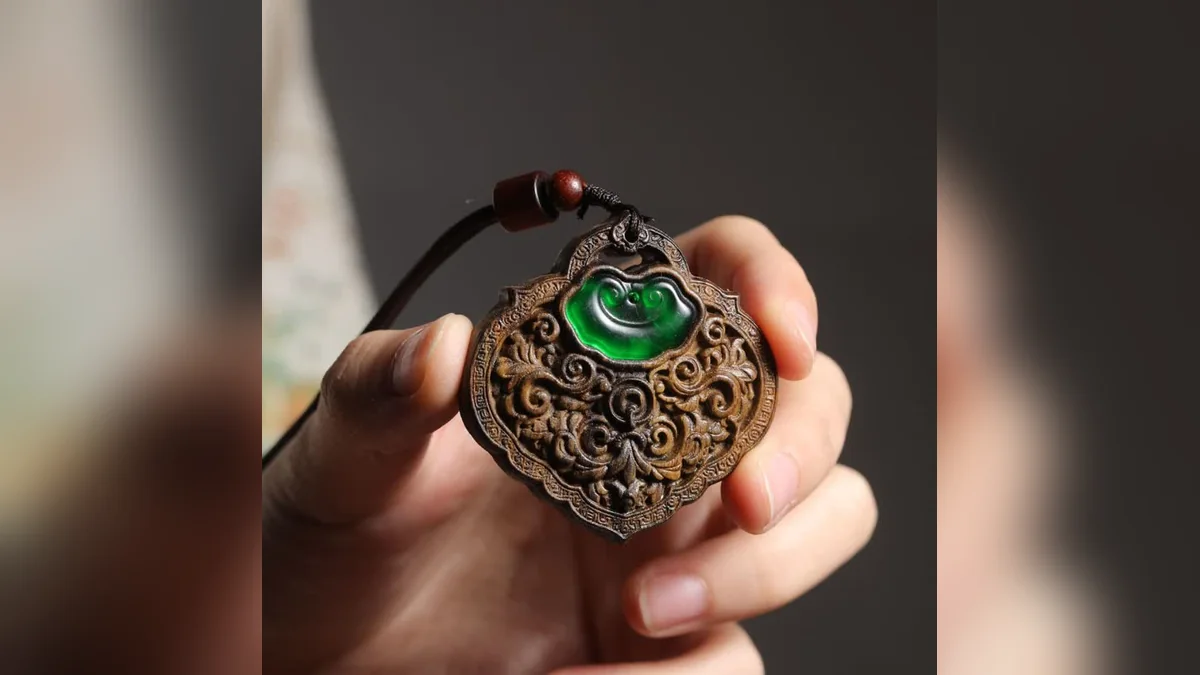
Sappanwood and green agate lock necklace
Our Sappanwood Carved Green Agate Lock of Good Wishes Necklace combines Sappanwood, Teak, Green Agate, and Rope. Its necklace length is Approx. 22 in / 56 cm. The care notes specify avoiding water exposure and describe possible variations in color, details, and appearance. Make dry surface care your starting point for this combination.
Double pendant necklace with stone options
The Natural Stone Opal Double Pendant Necklace offers options including Amethyst, Black Onyx, Blue Turquoise, Clear Quartz, Goldstone, Green Aventurine, Lapis Lazuli, and Opal. Identify your selected option before choosing a cleaning method. Confirm its length and attachment materials before making care or fit decisions; do not transfer those details from another necklace.
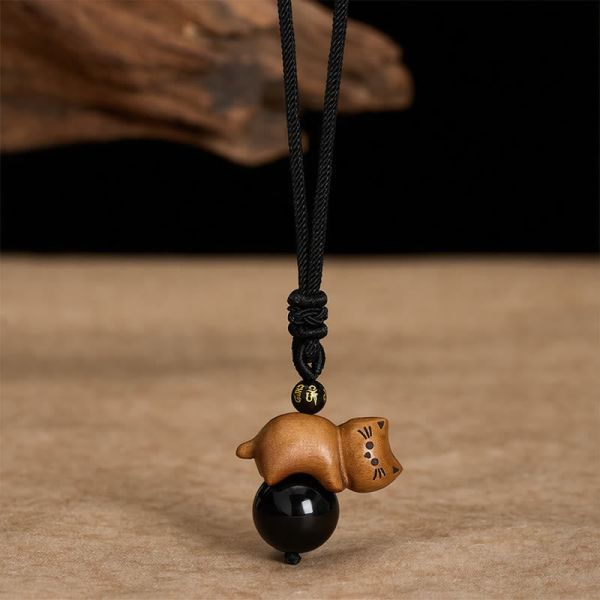
Sandalwood cat and black obsidian necklace
The Sandalwood Cat Black Obsidian Rope Necklace uses Sandalwood, Black Obsidian, and Rope. Its necklace length is Approx. 18 in / 45 cm, and its pendant size is Approx. 1.18 × 1.30 in / 3 × 3.3 cm. Its sandalwood care notes also say to avoid water exposure.
A bracelet to consider alongside a necklace
Our Chinese Inspired Citrine Pi Xiu Gourd Pendant Bracelet is a bracelet made with Citrine, Clear Quartz, and Copper Alloy, with Premium Elastic String. Its bead sizes are 8mm Citrine, 9mm Clear Quartz. Keep its care needs separate from those of a necklace, and roll it gently over your hand instead of pulling on the pendant.
Words such as Luck and Protection in jewelry names refer to traditional wishes. They offer no guarantee of a particular result.
Leave it ready for the next wear
End your routine with the pendant supported, the cord untangled, and the storage space dry. If you notice a new mark or loose connection, address it before putting the necklace back into regular use. A short inspection makes the next care decision clearer: remove dust, seek repair, or set the piece aside.
Shop the story
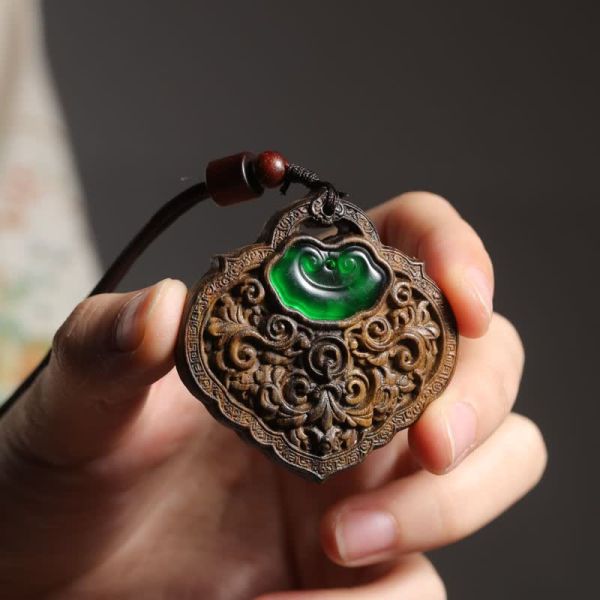 Buddha Stones Sappanwood Carved Green Agate Luck Lock of Good Wishes NecklaceSpecial Price $25.59 Regular Price $34.58
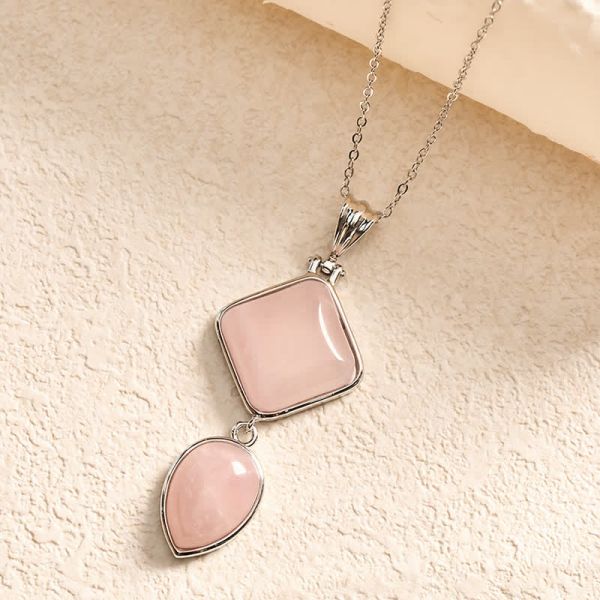 Buddha Stones Natural Stone Opal Double Pendant Calm NecklaceAs low as $25.59 Regular Price $35.54
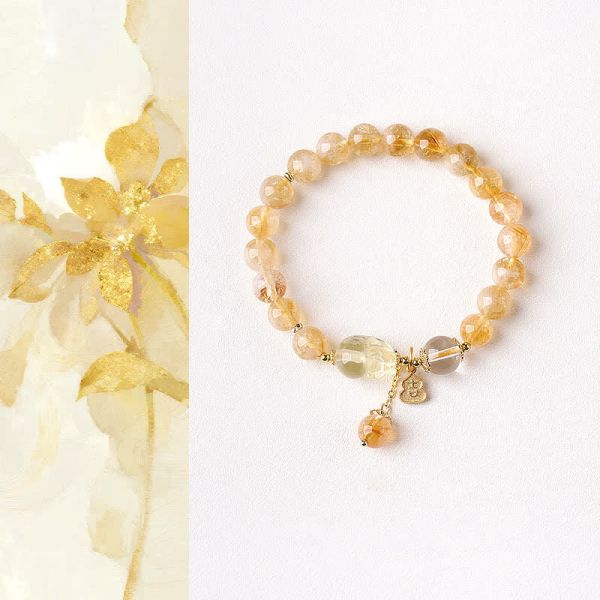 Buddha Stones Chinese Inspired Citrine Pi Xiu Luck And Abundance Gourd Pendant BraceletSpecial Price $33.59 Regular Price $45.39