Sandalwood vs Rosewood: How to Choose Wood Pieces
Your comparison starts with the material field. For sandalwood vs rosewood, the usual shopping distinction is fragrance versus appearance: sandalwood is commonly associated with scent, while rosewood is often chosen for its color and grain. These are starting points, not promises about a finished object. We will show you how to check wood descriptions, compare visible details, read measurements, and choose between jewelry and decorative objects without filling gaps in the specifications.
1. Define your sandalwood vs rosewood comparison
Decide which characteristic matters before comparing names. If fragrance is essential, you need an explicit description of the particular item. If appearance matters more, compare the photographed grain, color, and shape. If you want something to wear, construction and measurements deserve as much attention as the wood.
Sandalwood and rosewood are different wood names, but neither label supplies a complete buying specification. Rosewood does not mean wood from a rose bush, and sandalwood does not describe a single uniform appearance. Common names can cover different woods in commerce. Ask for a botanical name when exact species identification matters; do not supply one yourself from a photograph.
Write a short requirement such as “wooden pendant with a stated necklace length” or “small decoration with clear dimensions.” This gives you a concrete basis for eliminating unsuitable options.
2. Separate the material name from scent and color
Read the title and specifications together. Preserve distinctions such as “sandalwood” and “green sandalwood” in your notes. An added color word is not permission to assume that two descriptions identify the same species. If the page does not establish that connection, leave it unresolved.
Apply the same discipline to rosewood. A reddish or dark appearance cannot confirm a wood's identity, and a product photograph cannot tell you how something smells. Avoid treating a strong scent as proof of authenticity or a faint scent as proof of substitution. A scent description is useful buying information, but it is not a species certificate.
For a visual comparison, view photographs under similar conditions where possible. Check several angles and look at the overall pattern rather than one bright patch. Screen settings and lighting can make close color matching difficult, so avoid planning around an exact shade unless it is explicitly specified.
3. Match the object to the space or way you will wear it
Choose the object type before deciding which wood name you prefer. A decoration needs a suitable display surface. A necklace needs a suitable length and pendant size. A folding fan has a folded measurement that should be checked separately from any open dimensions.
Make a paper outline using the dimensions provided when you need to judge scale. Keep the labels intact: a folded length is not an open width, and an unspecified size should not be silently relabeled as height. If you need a missing measurement to decide, request it before purchasing.
For jewelry, distinguish the pendant measurement from the bead measurement and the necklace length. A photograph showing a close view can make a small detail appear prominent. Reading those figures separately gives you a clearer comparison than judging the image alone.
4. Check construction details and the care instructions
Review the complete materials field, especially for jewelry that combines wood with other components. A wood name in the title does not mean that the necklace consists entirely of that wood. Record the stated components and check whether the description provides instructions for them.
Use care directions as part of your selection. If an item says to avoid water exposure, plan to remove it before washing and choose a dry place to keep it. Do not add oil, perfume, or polish merely to make a wood item smell stronger or look darker. Follow the instructions for the finished object rather than borrowing a treatment intended for furniture.
Before ordering, also distinguish the object shown from what the package includes. Use an explicit package description when one is supplied.
5. Keep symbolic wording separate from selection criteria
Names and motifs may carry cultural meaning, but choose the object using its stated material, dimensions, and form. Words such as luck and protection express traditional wishes when they appear in product names; they do not guarantee a result.
At Buddha Stones, we keep that distinction clear when discussing these pieces. You can appreciate a motif or choose it as a gift without treating its name as a functional specification. If the practical comparison is otherwise close, personal preference for a shape or pattern is a reasonable deciding factor.
Mistakes to avoid before choosing a wood piece
- Ranking by wood name alone. Compare the particular object and its documented features before deciding which material suits your purpose.
- Turning photographs into identification tests. Color and grain images support an appearance comparison, not a confirmed species identification.
- Assuming an unstated feature. Do not infer fragrance, finish, weight, or an adjustable closure from a title.
- Mixing measurement types. Keep folded length, pendant size, bead size, and necklace length in separate notes.
- Expecting a symbolic promise. Traditional wishes attached to names cannot establish what will happen after a purchase.
Product details for four Buddha Stones options
Use the following details to practice the comparison. These selections include green sandalwood decorations and a fan, plus a necklace with sandalwood among its materials. They do not provide a rosewood counterpart for a direct product comparison.
Green sandalwood cat decoration
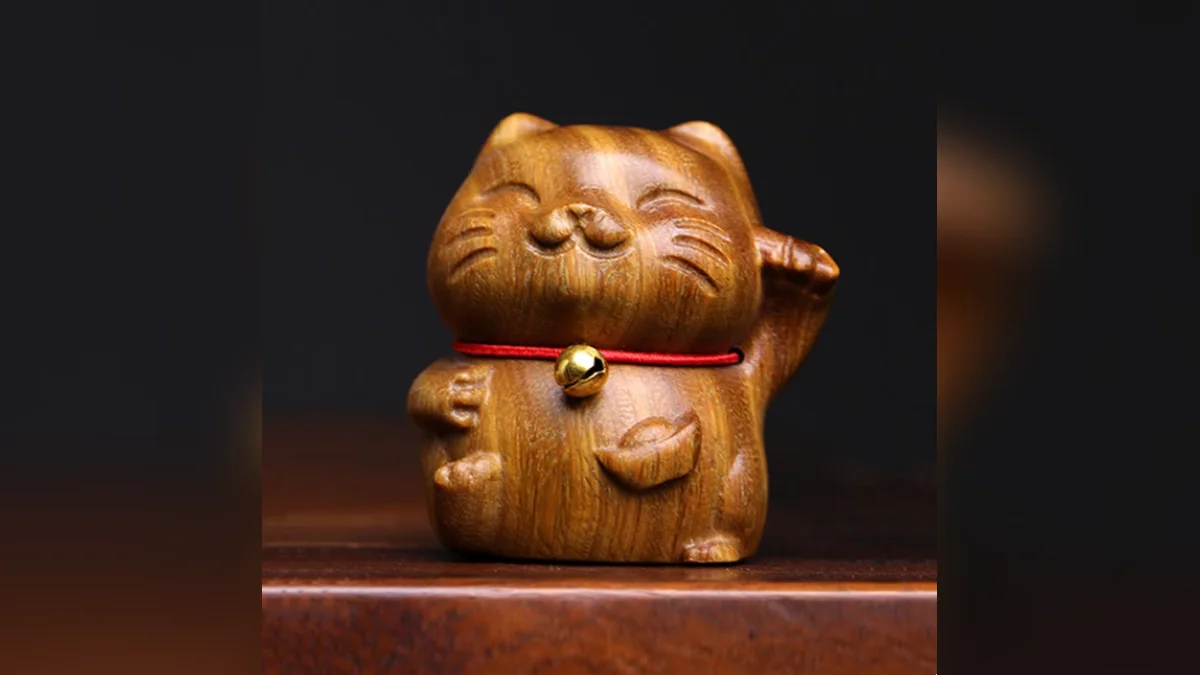
Our green sandalwood lucky cat decoration has an item type of Decorations, a size of 4.5*5cm, and Green Sandalwood as its material. Use that stated size when considering display space. The lucky wording belongs to the tradition of auspicious wishes; it promises no particular outcome.
Green sandalwood rabbit decoration
The green sandalwood rabbit decoration offers Small 3.6cm, Medium 5.2cm, and Large 7cm options. Its item type is Decorations, and its material is Green Sandalwood. Choose the size explicitly rather than assuming the photograph represents the option you intend to select.
Engraved green sandalwood folding fan
The engraved green sandalwood folding fan has a folded length of 23cm. Options are Auspicious Clouds, Chang'e Moon, Crane, Dot, Geometric, and Peacock engraving, with Green Sandalwood and 23cm specified for those options. Its material is Green Sandalwood, and the package includes 1 × Folding Fan.
Sandalwood cat and black obsidian necklace
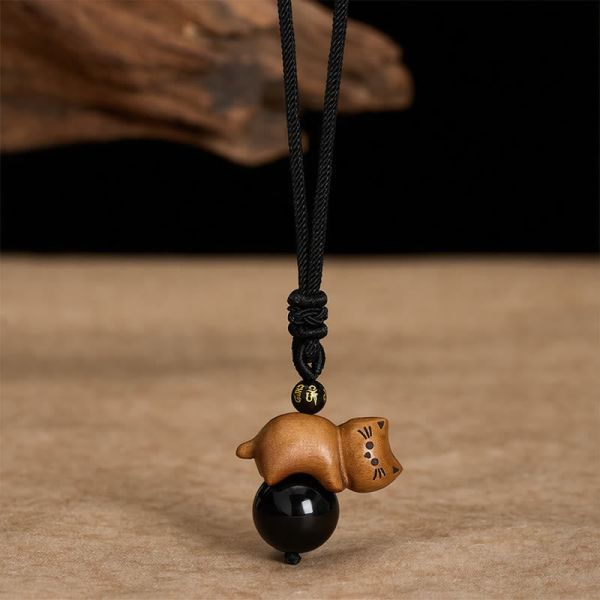
Our sandalwood cat and black obsidian Om Mani Padme Hum necklace has an item type of Pendant. Its materials are Sandalwood, Black Obsidian, and Rope. Necklace length is Approx. 18 in / 45 cm; pendant size is Approx. 1.18 × 1.30 in / 3 × 3.3 cm; bead size is Approx. 0.63 in / 16mm. The package includes 1 × Necklace.
The specifications allow slight variations in color, details, and overall appearance. They also describe possible sandalwood grain and color variations and a richer patina over time. Avoid water exposure. Protection in the full product name refers to a traditional wish, not an assured outcome.
Make the final choice from the details you can confirm
Return to your original requirement and compare it with the specifications. Choose the wood object whose form, measurements, and care directions fit your intended use. Leave undocumented scent, species, and finish details open until they can be confirmed.
Shop the story
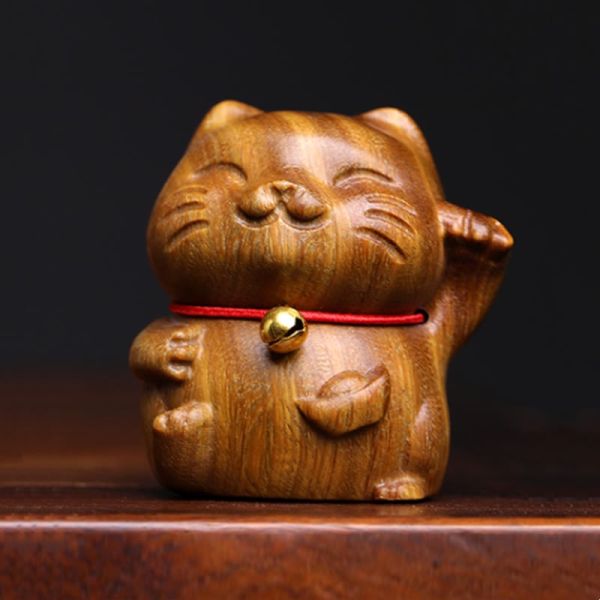 Buddha Stones Green Sandalwood Small Mini Cute Lucky Cat Peace DecorationsSpecial Price $22.59 Regular Price $31.38
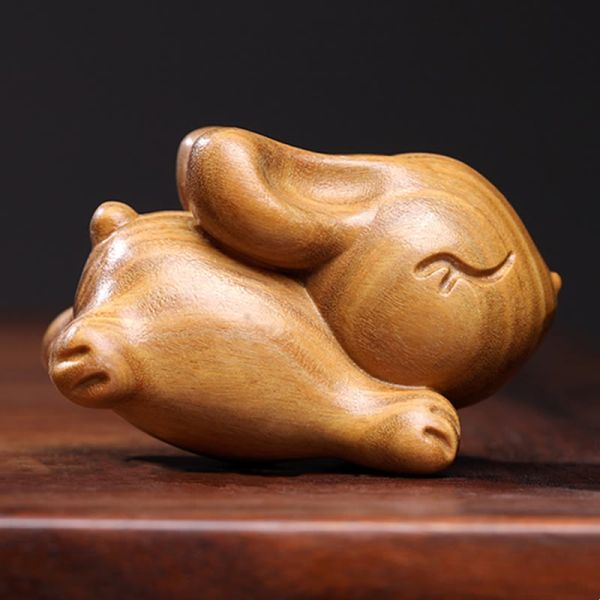 Buddha Stones Green Sandalwood Small Mini Cute Rabbit Bunny Peace DecorationsAs low as $21.59 Regular Price $28.79
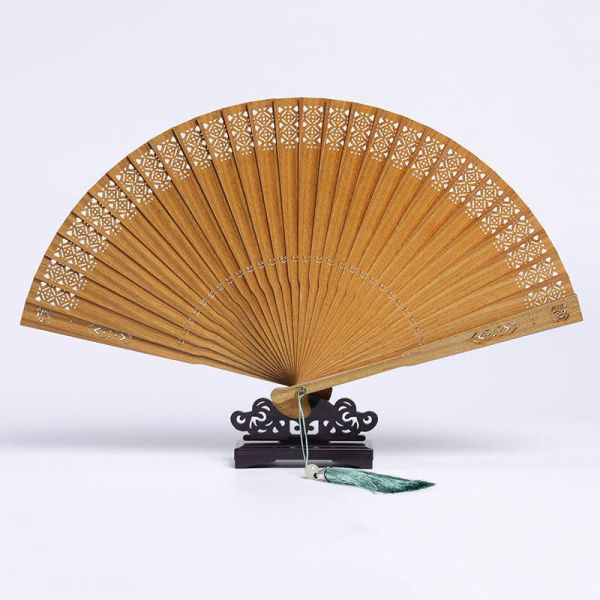 Buddha Stones Auspicious Clouds Crane Peacock Chang'e Moon Engraved Pattern Handheld Green Sandalwood Folding FanAs low as $83.59 Regular Price $111.45