Sandalwood Symbolism: From Temple Paste to Jewelry
A priest rubs sandalwood against a wet grinding stone, preparing paste for a temple offering. This longstanding practice in Hindu worship gives the wood a place beside flowers, lamps, and other devotional materials. Sandalwood symbolism centers on sacredness, purity, reverence, and devotion in Hindu and Buddhist traditions. Associations with luck, wealth, and protection are traditional beliefs, and no object can guarantee those outcomes.
The scene begins with preparation. Wood, water, and a stone become part of an offering through a deliberate act. The paste has a purpose within worship; its meaning comes from the religious setting and the customs surrounding its use. Fragrance is part of that setting, but devotion is not measured by the strength of a scent.
At Buddha Stones, we approach sandalwood through that relationship between material and meaning. A pendant or keychain belongs to a different setting from a temple offering, yet it can carry a reference to the same vocabulary of respect and good wishes. Understanding the difference leaves room for both religious practice and personal adornment.
Sandalwood symbolism in festival offerings and craft
During Hindu festivals that include puja, sandalwood paste may accompany flowers and other offerings. It can also be used for devotional marks, with practices differing among communities and religious traditions. There is no single festival arrangement that represents everyone. A household ceremony and a temple observance may use familiar materials in different ways.
Preparation helps explain why the material matters. Grinding sandalwood into paste makes it suitable for application within a ritual. The process turns a piece of wood into something offered or applied for a particular religious purpose. Its significance cannot be separated entirely from what people do with it.
In Buddhist settings, sandalwood has also been used for incense, devotional images, and prayer beads. These forms serve different purposes: an image is an object of reverence, incense may be an offering, and beads can mark repetitions of a prayer or mantra. Sharing a material does not make these objects interchangeable.
Craft traditions give this distinction a visible form. A maker preparing paste works toward something that will be used during an observance. A woodworker shaping a devotional object works toward a form intended to remain. One use is temporary; the other preserves a recognizable shape. Both help explain how sandalwood became associated with religious life beyond any single ceremony.
That context also matters when an object is given during a celebration. A gift can express respect or an auspicious wish without claiming to control the recipient’s future. The occasion and the giver’s intention help explain its meaning.
From an offering to something carried
Modern jewelry moves sandalwood into daily dress. A pendant may be chosen for its material, its design, or a connection to devotional traditions. Those reasons can exist together. Wearing a religious reference does not establish a person’s beliefs, and owning a wooden accessory does not require participation in a particular ceremony.
The shift from temple to personal object also changes how symbolism is expressed. In worship, a community or religious tradition supplies much of the context. With jewelry, the wearer may need to explain what an object means to them. A brief description such as “a reminder of reverence” says more than a claim that the material will produce a result.
Designs can combine several references. A money bag or yuanbao refers to traditional prosperity imagery, while mantra wording belongs to a devotional context. These elements should be understood separately before being read together. A money motif expresses a wish for material sufficiency; it does not turn the accessory into a financial promise.
For a gift, a short explanation can preserve that distinction. You might describe the design as a wish for good fortune and acknowledge its religious references where relevant. Avoid assigning beliefs to the recipient. An object can be offered respectfully while leaving its personal meaning for that person to decide.
We use symbolic language to explain these associations. Words such as Blessing, Fortune, and Protection in product names express traditional wishes, rather than assured results.
Four sandalwood designs in our collection
Our selection includes a necklace and several keychain designs. The details below distinguish their materials, options, and dimensions. These practical differences deserve attention alongside the symbols in their names.
A cat pendant with black obsidian
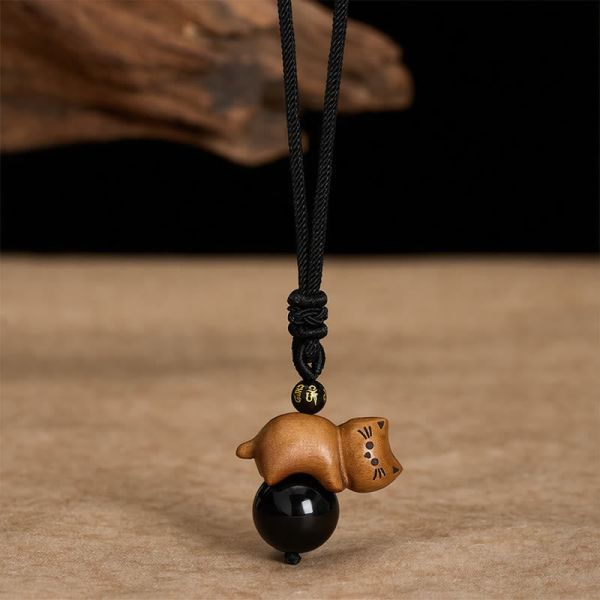
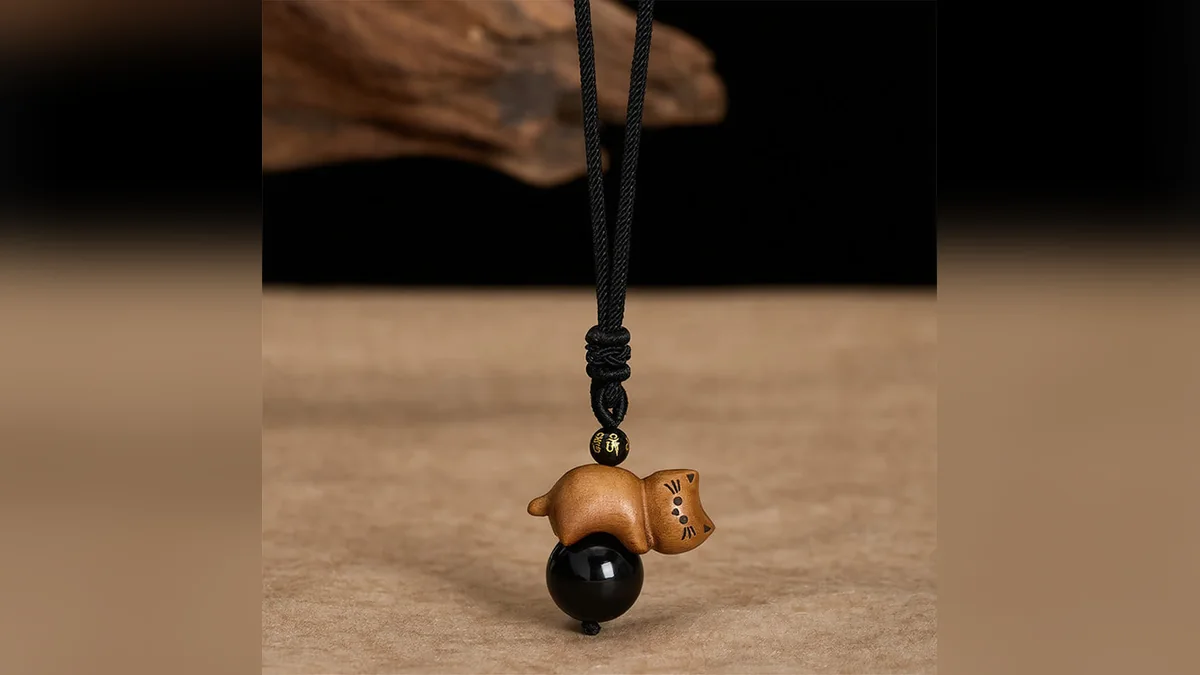
The Buddha Stones Sandalwood Cat and Black Obsidian Rope Necklace combines sandalwood, black obsidian, and rope. Its necklace length is Approx. 18 in / 45 cm, with a pendant size of Approx. 1.18 × 1.30 in / 3 × 3.3 cm. The bead size is Approx. 0.63 in / 16mm. The sandalwood may show differences in grain and color and develop a richer patina over time. Avoid water exposure. Protection in the full product name refers to a traditional wish.
Coin and money bag design options
The Buddha Stones Sandalwood Chinese Coin and Money Bag Keychains offers green sandalwood, red sandalwood, and sandalwood choices, with keychain and phone hanging options. The stated size is Approx. 38*29*15mm, and the keychain length is Approx. 10-13cm. Green sandalwood may gradually shift from yellow to green with light exposure; the care instructions call for avoiding water and prolonged sun exposure. The coin and money bag references belong to traditional prosperity symbolism.
A red sandalwood money bag
The Buddha Stones Red Sandalwood Money Bag Keychains comes in Money Bag Tassel and Simple Money Bag options. Its materials are red sandalwood, cord, and copper alloy. The size is Approx. 2.5*9cm, and the weight is Approx. 14-16g. Wood grain and color may vary, and a natural patina may develop with wear. Avoid water exposure. Here, the money bag expresses a conventional wish for prosperity rather than a prediction about its owner.
A yuanbao form in red sandalwood
The Buddha Stones Red Sandalwood Yuanbao Keychains has Simple Yuanbao and Tassel Yuanbao options. It uses red sandalwood and rope, measures Approx. 2.5 cm × 9 cm / 0.9 in × 3.5 in, and weighs 17 g. Natural wood may vary in color and grain, and its color can deepen over time with wear. The yuanbao form refers to traditional ingot imagery associated with prosperity.
FAQ
Does sandalwood have one universal meaning?
No. Sandalwood symbolism depends on the religious tradition, occasion, and object. Purity and devotion are common associations, but temple paste, prayer beads, and a decorative keychain have different roles. Context makes the meaning more specific.
Does sandalwood promise luck or protection?
No. Those associations belong to traditional belief and auspicious wishes. We describe them as cultural meanings, not abilities a material possesses. A gift can communicate goodwill without promising an outcome.
Must sandalwood jewelry be used religiously?
No. It can be chosen as jewelry, though sacred wording and devotional references deserve respectful treatment. The temple offering and the personal accessory remain distinct uses of a material whose meaning has developed through practice, craft, and tradition.
Shop the story
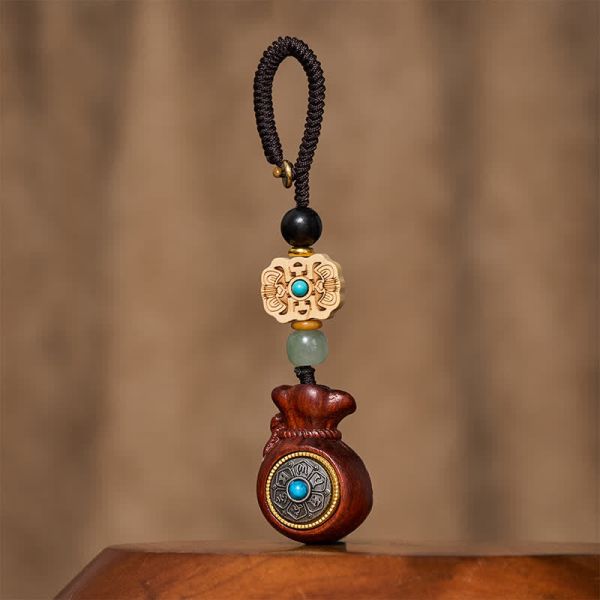 Buddha Stones Red Sandalwood Green Sandalwood Om Mani Padme Hum Blessing Chinese Coin Money Bag Design Serenity KeychainsAs low as $25.59 Regular Price $34.58
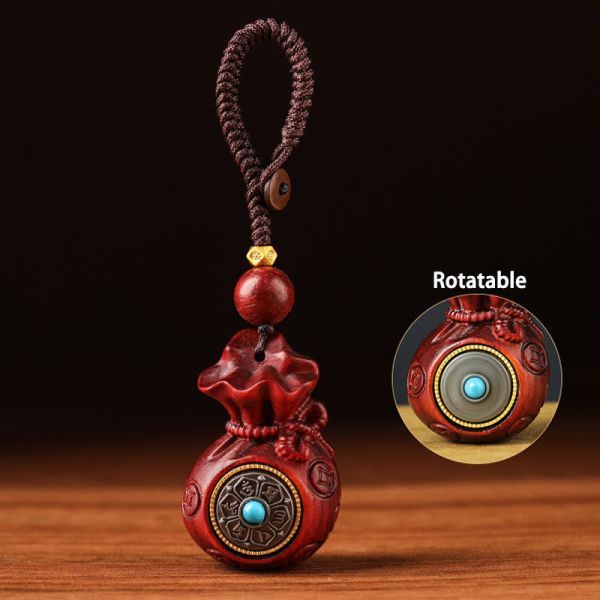 Buddha Stones Red Sandalwood Money Bag Om Mani Padme Hum Wisdom Fortune KeychainsAs low as $25.59 Regular Price $35.54
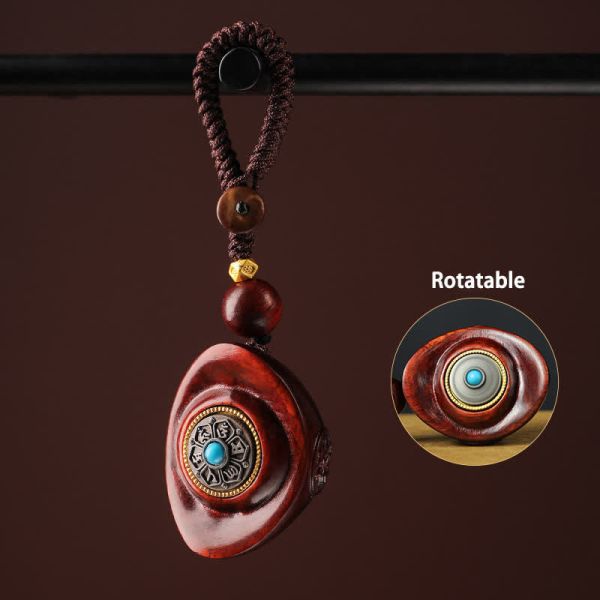 Buddha Stones Red Sandalwood Om Mani Padme Hum Yuanbao Wisdom KeychainsAs low as $25.59 Regular Price $36.04