Sandalwood Incense Guide for Thoughtful Home Use
An incense burner sits on a table with room around it. This sandalwood incense guide explains how to choose a compatible holder, arrange a clear place for burning, and care for the objects afterward. In Buddhist practice, incense may be presented as an offering before an image or used alongside chanting and meditation. At home, we suggest letting that sense of respectful attention guide the arrangement: a stable surface, space for falling ash, and a place where you can remain present while incense burns.
Choose a burner by format, size, and material
Sandalwood describes an incense ingredient or scent, while stick, cone, and spiral describe its form. Read the incense packaging to understand what you are buying. A sandalwood name alone does not establish the full ingredient list, origin, or proportion of wood in a blend. We recommend choosing by the information provided rather than assuming that a particular color or shape proves composition.
Match the holder to the format. A stick needs secure support and a catching area beneath the path of its ash. A cone needs a suitable resting surface. Spiral incense needs support that fits its shape. Backflow cones require a compatible burner; ordinary cones should not be assumed to produce the same smoke pattern.
Size matters beyond the burner’s footprint. Allow room for the incense itself, access for lighting and extinguishing, and clearance above it. Materials also affect care: clay, wood, and metal should not automatically receive the same cleaning treatment. A decorative wooden exterior does not mean that an ember can rest directly against it. Follow the holder’s intended arrangement and instructions.
Sandalwood incense guide to placing a home station
A clear table or open surface
Choose a level, steady surface away from the edge. Put a heat-resistant, noncombustible tray beneath the burner, with enough area to catch stray ash. Keep paper, curtains, dried flowers, cords, and loose fabric away from the burning area. A decorative cloth should not sit beneath exposed embers.
A shelf can hold an unlit burner, but an enclosed cubby or a shelf with another board directly overhead is unsuitable for burning. Before lighting, move the burner to an open location with ample clearance. Keep it beyond the reach of children and pets, and out of routes where someone could brush against it.
A place within a traditional arrangement
In many Buddhist household arrangements, an incense holder stands before a sacred image as a place for offerings. Customs differ among communities, so follow your own tradition if you have one. There is no single compass direction required for an ordinary home incense station.
Leave enough space to tend the incense without reaching across other objects. Keep jewelry in a separate dish away from ash and heat. If the same table serves tea, give teaware its own area so that cups, lids, and pouring movements do not crowd the burner. A permanent display can remain modest; it does not need a large group of objects.
Make room for attentive, occasional use
Choose a time when you can stay nearby until the incense is extinguished. Provide ventilation without placing the burner in a strong draft. Never leave burning incense unattended or carry a hot burner from room to room. If a placement requires frequent adjustments during use, choose another location before lighting.
Follow the directions supplied with both the incense and its holder. Check that the incense stands or rests securely before lighting it. Use a suitable snuffer or the extinguishing method recommended for that incense, then confirm that no ember remains. Do not put warm ash into a wastebasket.
Incense can accompany an offering or a period of chanting, but burning it is optional. An unlit holder may stay in the arrangement between uses. Keep spare incense in its packaging, apart from matches, drinking vessels, and jewelry.
Clear ash and care for the materials
Wait until the burner and its contents are completely cool before cleaning. Remove spent incense and loose ash carefully, without blowing it across the table. A small, dry brush can reach shallow details; avoid scraping with sharp tools. Check openings and supports for buildup before the next use.
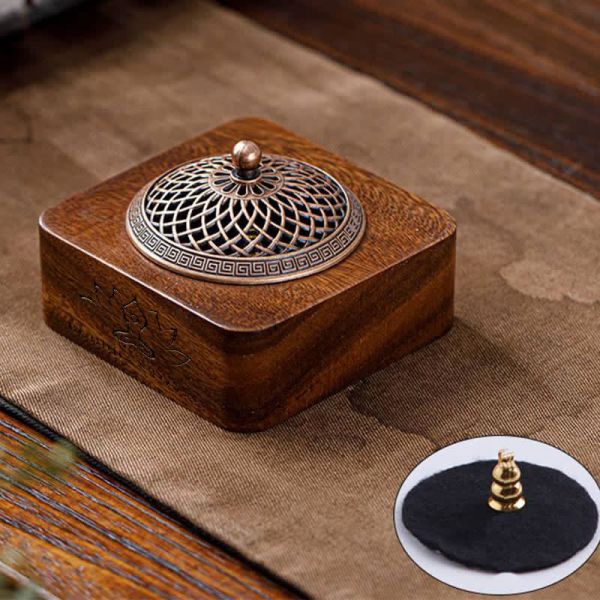
For clay, begin with gentle dry cleaning and consult the maker’s directions before adding water or cleaning products. Avoid sudden temperature changes. For a holder combining wood and alloy, keep the wood from soaking and follow any separate instructions for removable components. Do not assume that a metal section can be detached.
Wipe the tray and surrounding surface after removing the cooled burner. Check the holder for cracks, loose parts, or damaged supports before using it again. Store it dry. Sandalwood jewelry needs separate care: keep it away from the burning station and avoid water exposure where specified.
Our burners and a sandalwood jewelry option
The following details distinguish the incense holders from the necklace. Luck and Protection in product names express traditional wishes; these terms carry no promise of results.
Purple clay with koi and lotus details
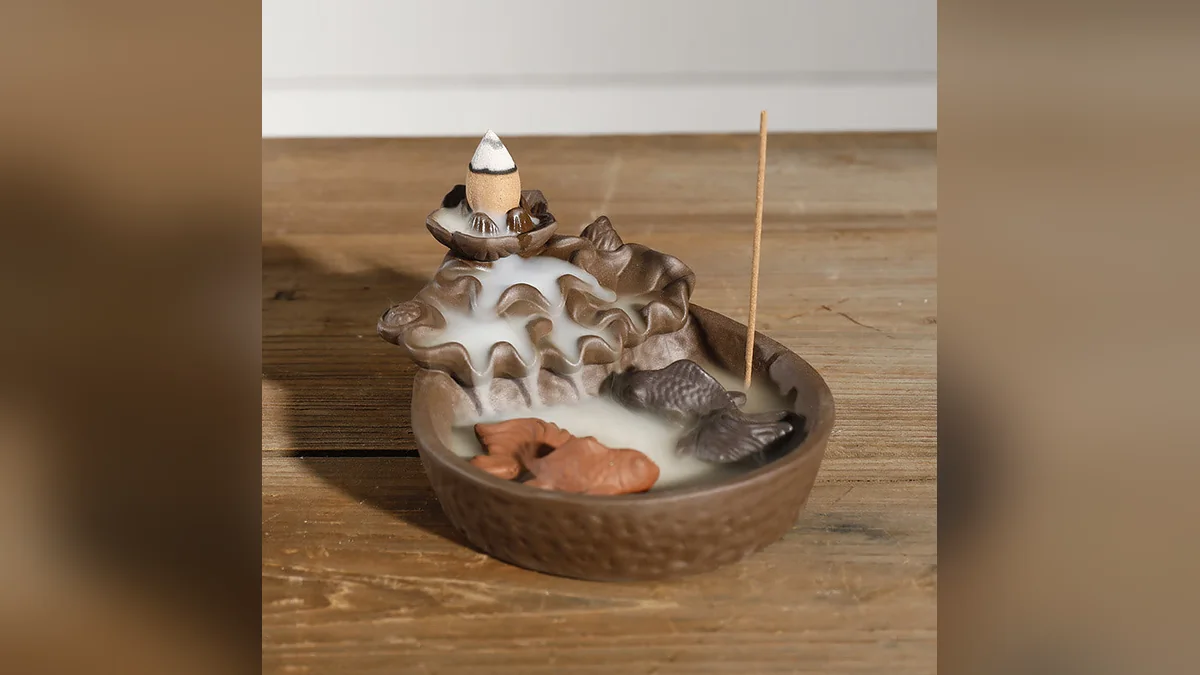
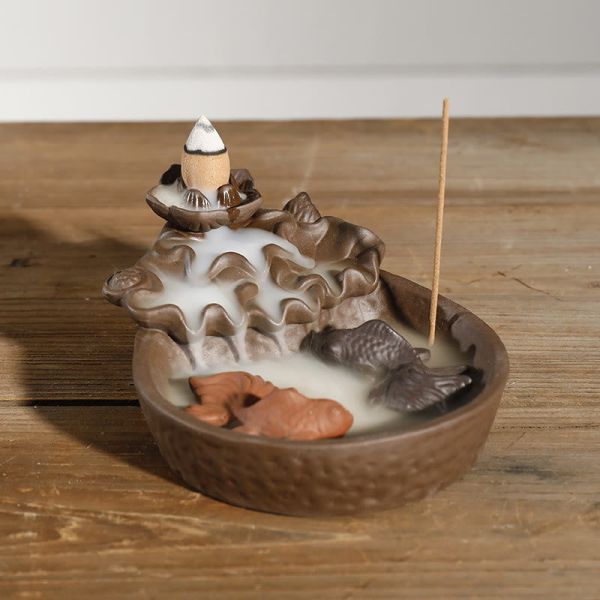
The Buddha Stones Purple Clay Koi Fish Lotus Incense Burner is made of purple clay and accepts stick incense or backflow cones. Its size is Approx. 14.5 cm × 14.5 cm × 5 cm (L×W×H) / 5.7 in × 5.7 in × 1.9 in (L×W×H). The package contains one incense burner; incense is not included. Handmade production can result in slight differences in color, shape, and size.
Round bag burner options
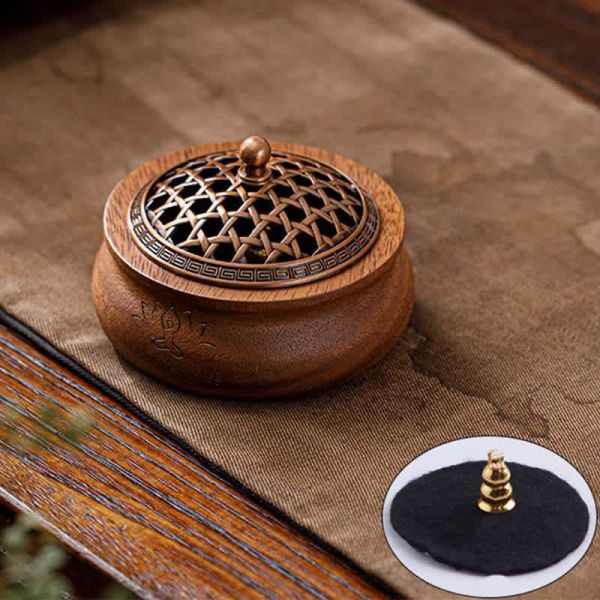
The Buddha Stones Peach Wood Dragon Phoenix Round Bag Incense Burner combines peach wood and alloy. It supports stick, cone, and spiral incense. Size: Approx. 10 cm × 10 cm × 4 cm (L × W × H) / 3.94 in × 3.94 in × 1.57 in (L × W × H). Options are Bowl-shaped, Dragon Phoenix, Green Woven Design, Jar-shaped, Lotus Design, and Woven Design. One burner is included, without incense. Its handmade nature allows slight color, shape, and size variations.
Square burner options
The Buddha Stones Peach Wood Dragon Phoenix Square Incense Burner uses peach wood and alloy, with compatibility for stick, cone, and spiral incense. Size: Approx. 10 cm × 10 cm × 4 cm (L × W × H) / 3.94 in × 3.94 in × 1.57 in (L × W × H). Choose from Dragon Phoenix, Green Woven Design, Lotus Design, and Woven Design. The package contains one burner and no incense. Slight variations in color, shape, and size can occur because it is handmade.
Sandalwood worn as jewelry
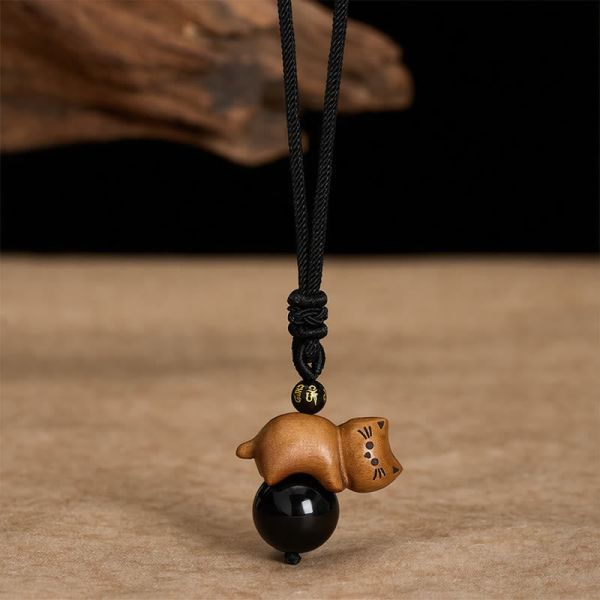
The Buddha Stones Sandalwood Cat Black Obsidian Om Mani Padme Hum Rope Necklace combines sandalwood, black obsidian, and rope. Necklace length is Approx. 18 in / 45 cm; pendant size is Approx. 1.18 × 1.30 in / 3 × 3.3 cm; bead size is Approx. 0.63 in / 16mm. One necklace is included. Natural materials can vary in color, details, and appearance. The sandalwood may develop a richer patina over time; avoid water exposure.
Leave the space ready for next time
After the incense has gone out and everything has cooled, clear the ash and return the burner to its place. Keep the tray accessible and the surrounding surface uncluttered. We favor an arrangement that gives the practice room: somewhere to make an offering, somewhere to handle the incense safely, and enough open space to care for the objects afterward.
Shop the story
 Buddha Stones Purple Clay Koi Fish Lotus Peace Backflow Incense BurnerSpecial Price $68.59 Regular Price $91.45
 Buddha Stones Peach Wood Dragon Phoenix Luck Round Bag Incense BurnerAs low as $38.59 Regular Price $51.45