Sandalwood Care Guide for Beads and Wooden Pieces
Sandalwood grain can vary from one bead to the next. This sandalwood care guide starts with a simple routine: keep wooden pieces dry, wipe away surface dust gently, and avoid adding oils unless specific instructions call for them. Sandalwood is a wood used traditionally for mala beads and bracelets, while retail descriptions such as green sandalwood need their own care notes. At Buddha Stones, we recommend reading the material and handling details before choosing how to clean or store a piece.
What a sandalwood name tells you
In botanical usage, sandalwoods belong to the genus Santalum. A retail material name, however, does not establish the exact species used in an object. Green sandalwood is a trade description that should not automatically be treated as a botanical identification. The product specifications here do not provide Latin species names, so we retain their stated material names without assigning a species, growing region, or source.
That distinction matters when comparing wood with seeds or stones. A wooden bead is shaped from timber; a seed bead begins with a seed. Similar colors or rounded shapes do not make their care requirements identical. For wooden jewelry, the finish, stringing material, and any additional components also matter. A bracelet containing wood, resin, and stone needs a cleaning method suitable for the complete bracelet.
From a wood blank to a bead strand
Wooden beads are commonly made by cutting small blanks, shaping them into rounds or other forms, drilling a hole, and smoothing the surface. Turning involves rotating the wood against a cutting tool. Other shaping methods are also possible. These are general descriptions of bead making, rather than a statement about how a particular Buddha Stones product was produced.
The finished holes allow beads to be threaded onto cord or elastic. Knots, spacers, and other components depend on the design. In traditional mala use, beads serve as counters for repeated recitations; bracelets may carry a personal or religious meaning. Care does not require a particular ritual. Handle the strand without pulling hard on its cord, and check for fraying or stretched elastic before wearing it.
Grain, scent, and changes at the surface
Sandalwood is associated with an aromatic scent, but a material name cannot tell you how strongly a finished object will smell. The specifications for the products below do not promise a scent level or duration. Avoid judging identity from fragrance alone, and do not add perfume to make a wooden piece smell stronger.
Grain is the visible pattern of the wood. Patina describes surface changes that develop over time through use and exposure. Our sandalwood cat necklace specifications allow for grain and color variation and a richer patina over time. The green sandalwood bracelet and fan have a different stated note: their wood may shift from yellow toward green with light exposure. Those notes describe possible changes, not a fixed timetable or an exact final shade.
A sandalwood care guide for daily handling
Use a dry approach to cleaning
Begin with a clean, dry, lint-free cloth and light pressure. Work around beads and fittings without tugging the string. A soft brush can lift loose dust from a recess; stop if it catches on an edge or thread. Avoid soaking, rinsing under a faucet, and ultrasonic cleaners. The necklace specifically requires avoiding water exposure, and the green sandalwood bracelet also carries a water warning.
Remove wooden jewelry before bathing, swimming, or washing dishes. If an accidental splash occurs, blot it promptly and allow the piece to dry at room temperature. Skip hair dryers, heaters, and direct sun as drying shortcuts. Do not scrub a stubborn mark or apply household cleaner without instructions suitable for that particular finish.
Leave added oils out of the routine
Do not assume wooden beads need feeding with oil. The specifications supplied here do not recommend an oil treatment. Cooking oils, essential oils, perfume, wax, and furniture polish can change a surface or leave residue, and their suitability depends on the finish. Put on lotions and fragrance before handling jewelry, allowing them to dry first. Gentle dust removal is a more cautious starting point than an improvised treatment.
Choose shade and careful storage
Keep wooden pieces away from strong direct sunlight and concentrated heat. The green sandalwood fan explicitly warns against strong direct sunlight, while the bracelet calls for avoiding prolonged sun exposure. A possible color change is not a reason to place either item on a sunny windowsill. Choose an indoor location with ordinary, indirect light.
For jewelry, use a clean pouch or a lined compartment that keeps beads from rubbing against nearby objects. Put pieces away dry, without tightly stretching the elastic or bending a pendant against its cord. For decor, choose a stable surface away from splash zones. Inspect an item before cleaning it so a loose fitting, crack, or worn string does not become a larger problem during handling.
Sandalwood products with different care details
A cat pendant with black obsidian
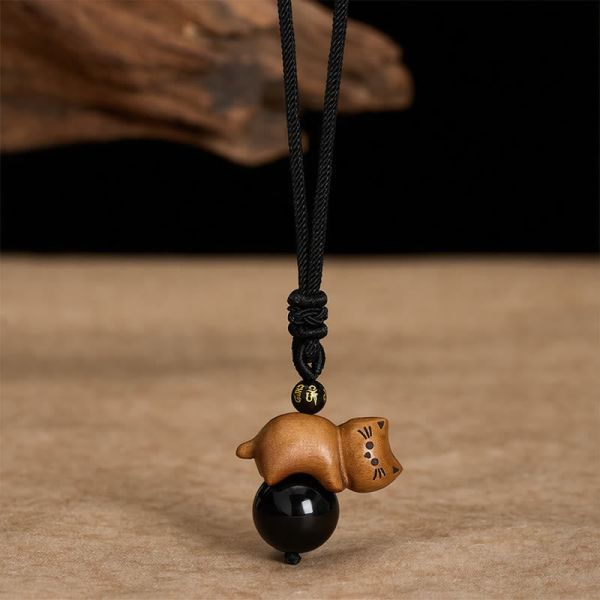
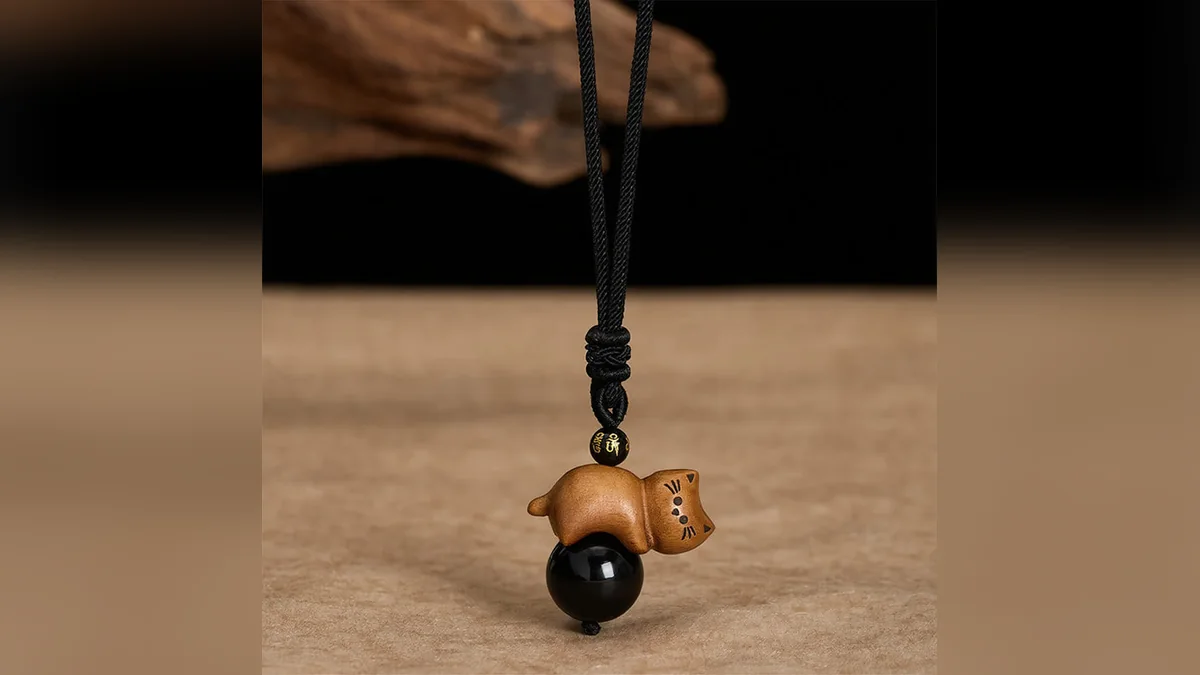
Our Sandalwood Cat and Black Obsidian Rope Necklace combines sandalwood, black obsidian, and rope. Its necklace length is Approx. 18 in / 45 cm, and its bead size is Approx. 0.63 in / 16mm. Avoid water exposure as directed, including when cleaning around the bead. Protection in the full product name expresses a traditional wish; it does not guarantee safety or any other result.
A bracelet with green sandalwood
The Green Sandalwood Cat's Eye Flower Charm Bracelet uses green sandalwood, resin, and cat's eye stone, with premium elastic string. Options are 10mm Pink Beads, 8mm Cat's Eye Stone, and 8mm Pink Beads. Check the selected option rather than assuming one bead arrangement applies throughout. Avoid water and prolonged sun exposure; the stated yellow-to-green change does not override those instructions.
A wooden cat for a dry display
The Sandalwood Rotating Small Cat Tea Pet is sandalwood animal decor weighing Approx. 70 g. Brown, Golden, Red&Small Base, and Tan&Small Base options are available. Its specifications describe handmade variation in color, shape, and size. Although tea pet appears in the name, general wood care calls for a dry display position beside your tea setup. Do not assume that pouring tea over it is appropriate.
A fan with wooden frame and surface
Our Green Sandalwood Openwork Butterfly Pattern Tassel Fan has green sandalwood in both its frame and surface. Its open size is Approx. 31 cm / 12.2 in; closed size is Approx. 18 cm / 7.1 in. Support it gently during handling, and avoid strong direct sunlight. Its stated yellow-to-green color change does not require deliberate sun exposure.
Let the material set the routine
Keep care simple: remove loose dust, avoid unnecessary treatments, and follow the specific water and sunlight cautions supplied with an item. Let grain and stated color variation remain part of its appearance. If a strand needs attention, deal with worn stringing before further wear rather than trying to correct it by cleaning the wood.
Shop the story
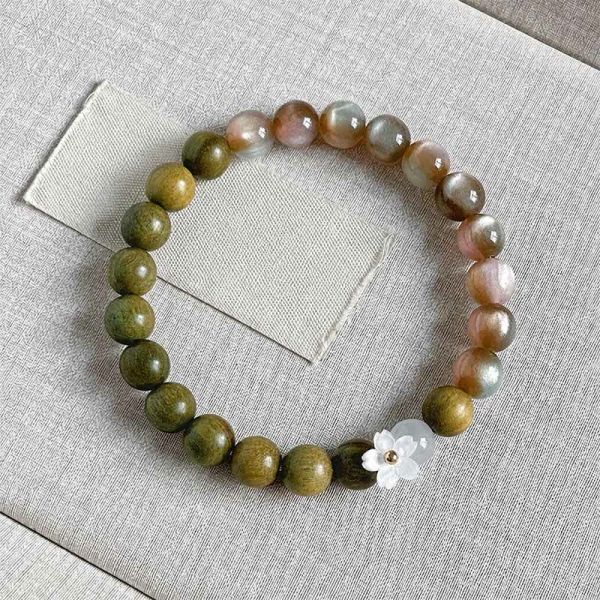 Buddha Stones Green Sandalwood Cat's Eye Flower Charm Serenity BraceletAs low as $25.59 Regular Price $34.12
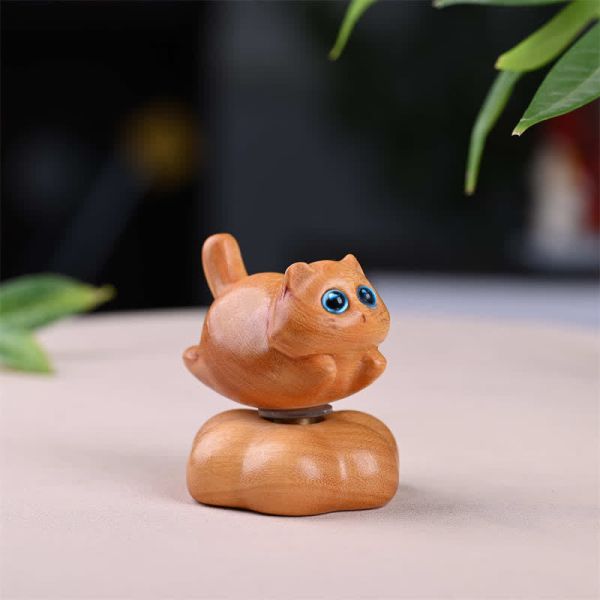 Buddha Stones Sandalwood Rotating Small Cat Tea Pet Meditation Cute Animal DecorAs low as $29.59 Regular Price $40.53
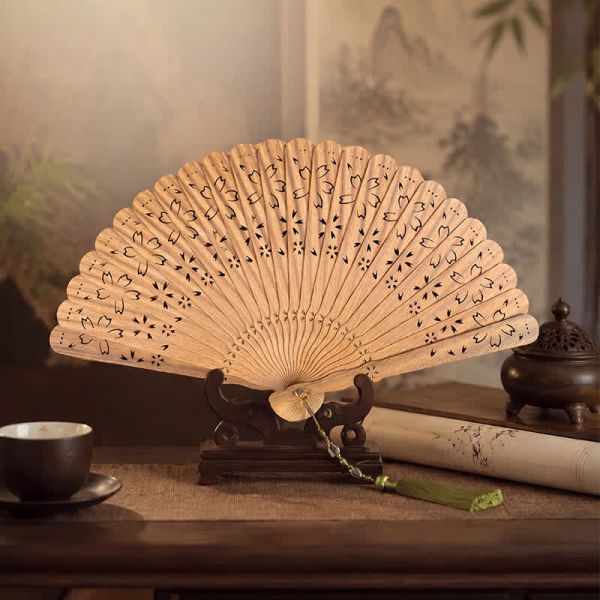 Buddha Stones Green Sandalwood Openwork Butterfly Pattern Tassel FanAs low as $47.59 Regular Price $63.45